Uncategorized

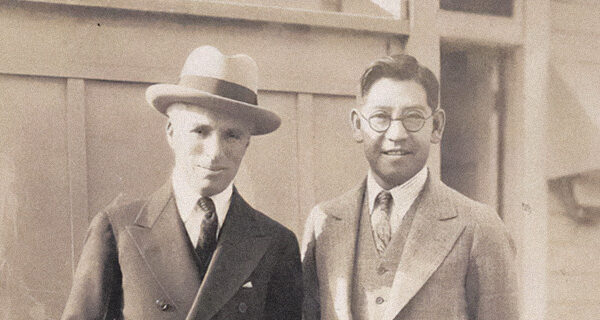
Charlie Chaplin and Toraichi Kono, 1927

Toraichi Kōno

In 1932, ultranationalists plotted to assassinate Charlie Chaplin during his visit to Japan. Toraichi Kōno persuaded him to attend a sumo match instead of visiting Prime Minister Inukai Tsuyoshi. That evening, the Prime Minister was killed in the May 15 Incident. Chaplin survived.

Read More
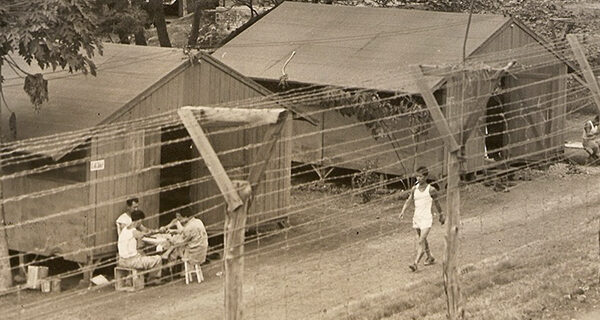
Honouliuli Internment Camp c1945, photo by R.H. Lodge, courtesy of Hawaii's Plantation Village

Honouliuli Internment Camp

On March 1, 1943, Honouliuli Internment Camp opened on Oʻahu, the largest confinement site in Hawaiʻi during World War II. Under martial law, more than 2,200 people of Japanese ancestry were imprisoned across the islands. Known as Jigokudani, or “Hell Valley,” the camp held civilian internees and POWs before being abandoned and forgotten for decades.

Read More
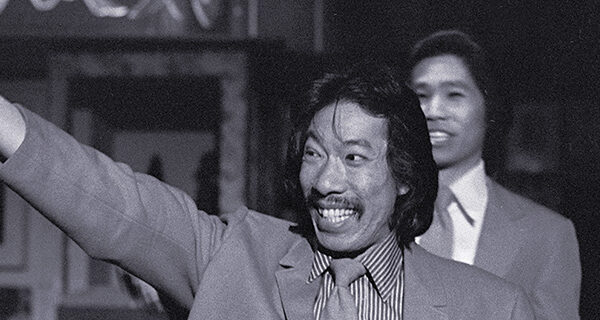
Frank Chin and Mike Lee in “The Year of the Dragon,” San Francisco 1978, Photography by Nancy Wong

Frank Chin

In 1978, when redress seemed stalled and political leaders dismissed reparations as “guilt mongering,” playwright Frank Chin helped rewrite the script. He helped launch the first Day of Remembrance, urging a community to publicly relive incarceration, reigniting a movement that would eventually lead to the Civil Liberties Act of 1988.

Read More
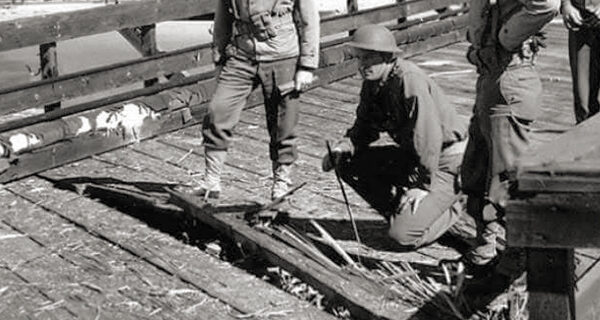
soldiers inspecting the splintered decking at Ellwood oil pier

Bombardment of Ellwood

On February 23, 1942, a Japanese submarine shelled the California coast in the Bombardment of Ellwood. The damage was minor, but panic spread. The next night, the so-called “Battle of Los Angeles” sent more than 1,400 U.S. anti-aircraft shells into the sky. Within days, mass removal of Japanese Americans formally began.

Read More
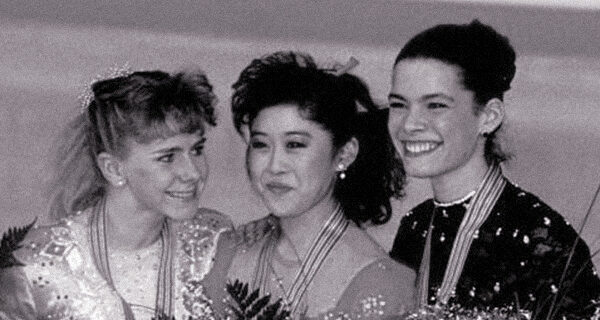
Tonya Harding, Kristi Yamaguchi, and Nancy Kerrigan

Kristi Yamaguchi

When Kristi Yamaguchi won Olympic gold in 1992, she made history as the first Asian American woman to do so in winter sports. But her victory also exposed deeper tensions about race, identity, and who was seen as marketable in America.

Read More
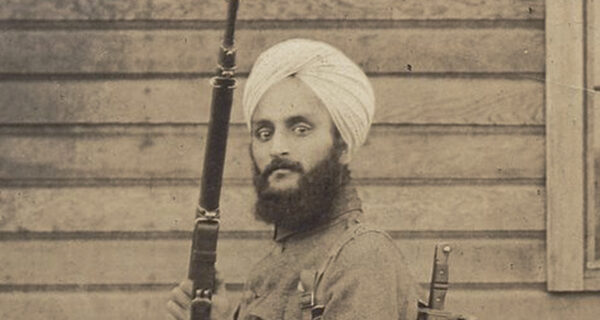
Bhagat Singh Thind with a rifle. Courtesy of SAADA

Bhagat Singh Thind

In 1923, the Supreme Court ruled that “white” meant what the “common man” believed it meant — not what science said. Bhagat Singh Thind, a World War I veteran classified as Caucasian, lost his U.S. citizenship because he was not considered white enough.

Read More
San Francisco, California. On a brick wall beside air raid shelter poster, exclusion orders are posted. Photo by Dorothea Lange. NARA - 536018

Day of Remembrance

February 19 marks the signing of Executive Order 9066 in 1942. In 2022, it was formally designated as the national Day of Remembrance of Japanese American Incarceration, recognizing decades of survivor testimony and the movement that led to the Civil Liberties Act of 1988.

Read More
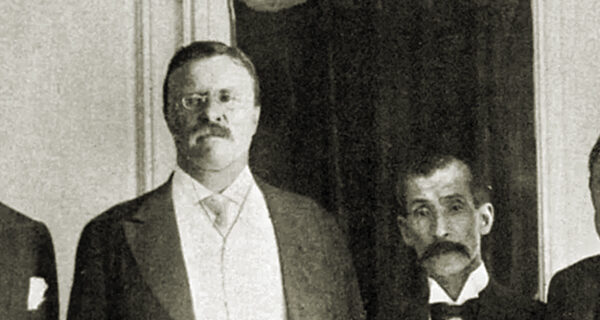
President Theodore Roosevelt facilitating the signing of the Treaty of Portsmouth between Japan and Russia, 1905, courtesy of Portsmouth Athenae

Gentlemen’s Agreement of 1907

In 1907, amid rising racial tensions in California, the United States quietly pressured Japan to stop sending laborers. The “Gentlemen’s Agreement” avoided formal legislation, but it set a precedent: immigration would be limited not by equality, but by race.

Read More
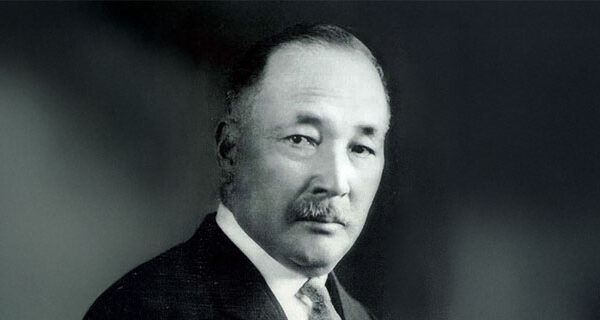
George Shima, Potato King, courtesy of Kurume City Board of Education

George Shima

After failing English in Japan, George Shima emigrated to California and became the state’s first Japanese millionaire and “Potato King.”

Read More