Thousands of enemy aliens were imprisoned just six miles from Glendale. But most people didn’t even notice it.
December 16, 1941: The Tuna Canyon Detention Station quietly began receiving detainees and functioned until its closure on October 30, 1943.
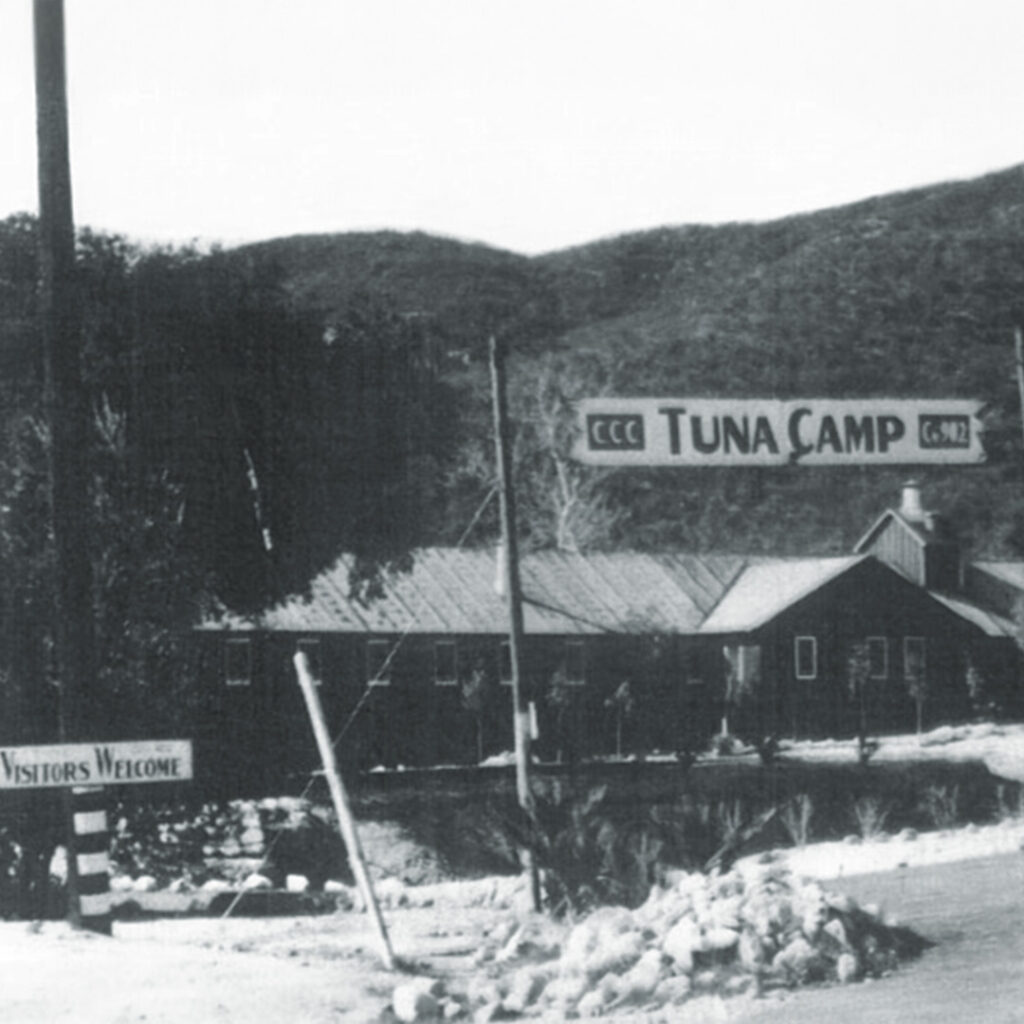
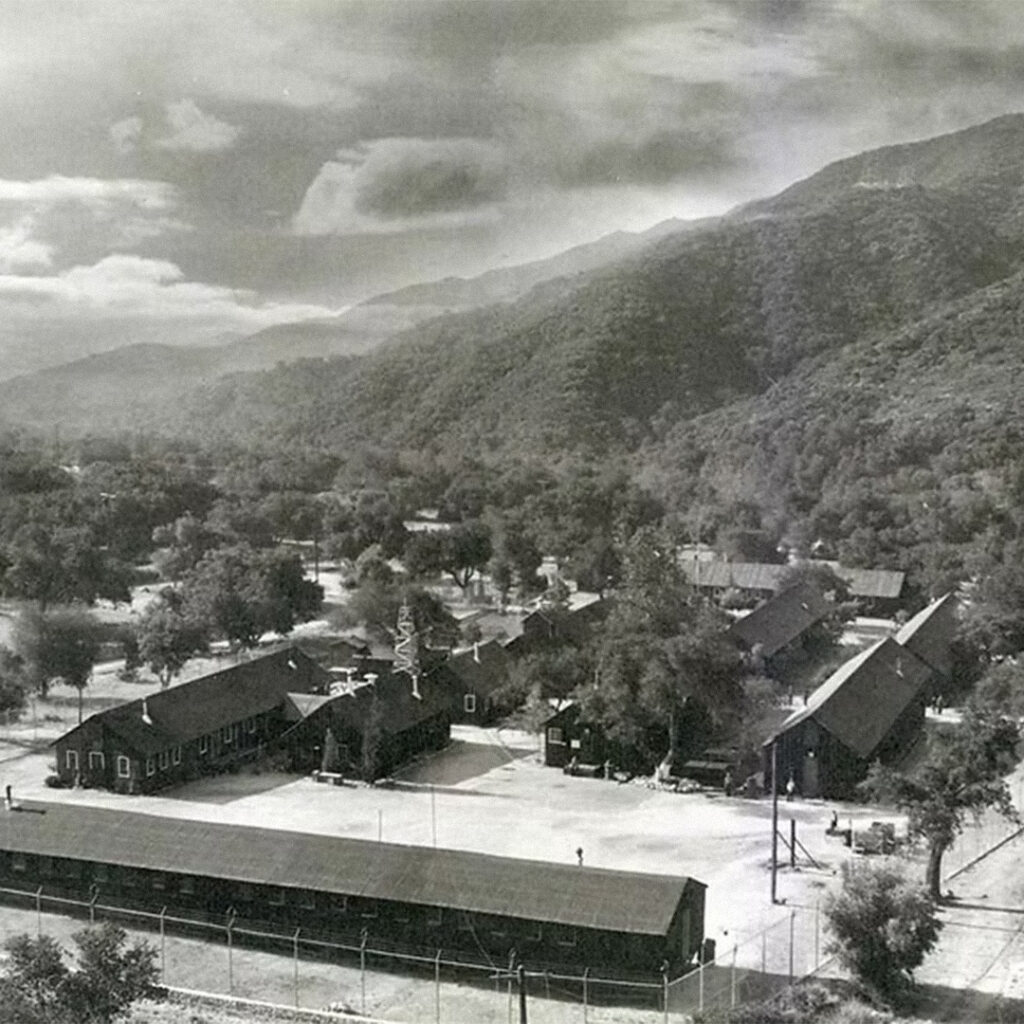
Tuna Canyon Detention Station was not built as a prison. The site began as a Civilian Conservation Corps (CCC) camp, constructed in 1933 during the Great Depression. Known as La Tuna Camp, it opened in May of that year at 6330 Tujunga Canyon Boulevard, about fourteen miles northwest of downtown Los Angeles and six miles north of Glendale.
After Pearl Harbor, the Department of Justice repurposed the former CCC camp almost overnight. On December 16, 1941, the first detainees arrived from towns and cities across Southern California. Most were Issei men, arrested by the FBI without charges, hearings, or clear evidence. Their crime was ancestry.
The camp had a maximum capacity of 300. Over its lifetime, however, more than 2,000 Japanese, German, and Italian immigrants, along with Japanese Peruvians and others, were imprisoned there.
The Tuna Canyon CCC Camp, c1934. Originally constructed for New Deal relief efforts, it would later serve a very different purpose during wartime.
Courtesy of the Merrill H. Scott Family
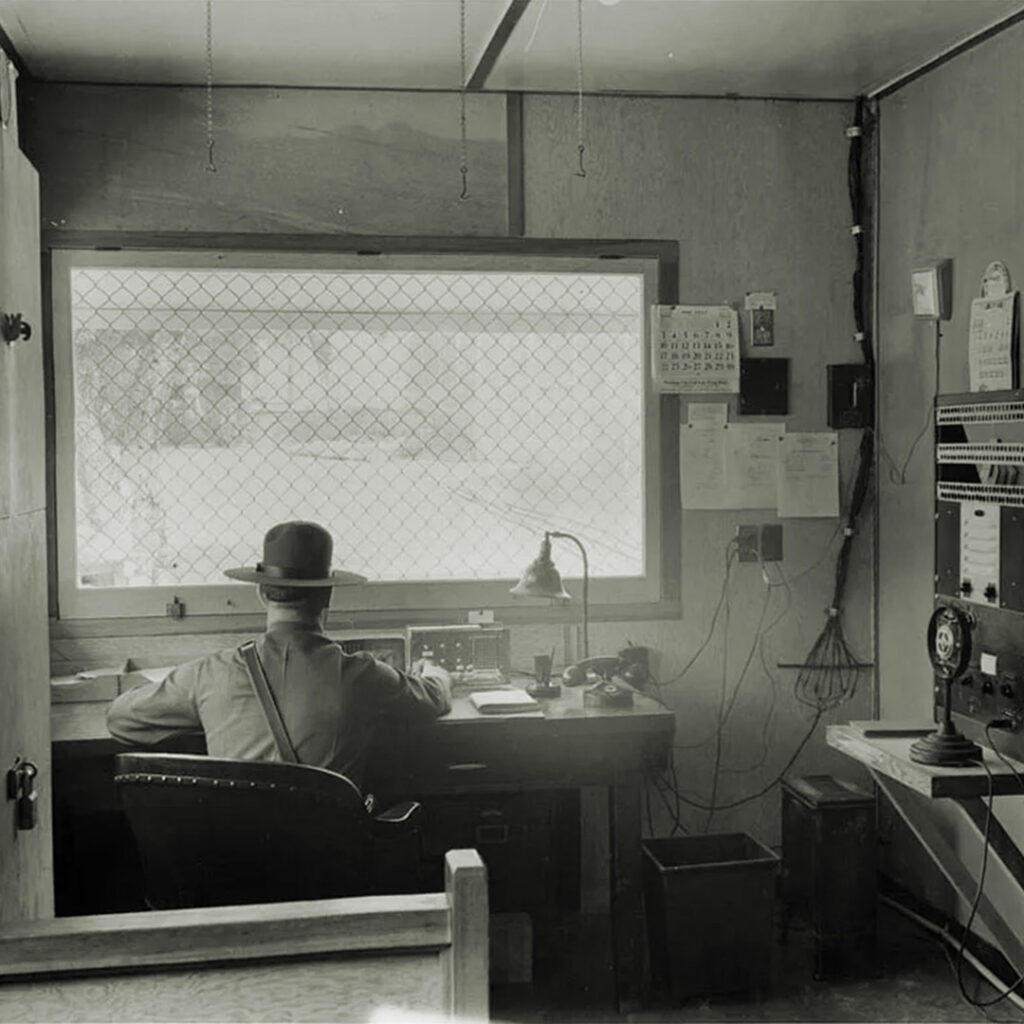
At Tuna Canyon Detention Station, a small staff oversaw communications, surveillance, and daily operations for a prison holding hundreds of men deemed “enemy aliens.”
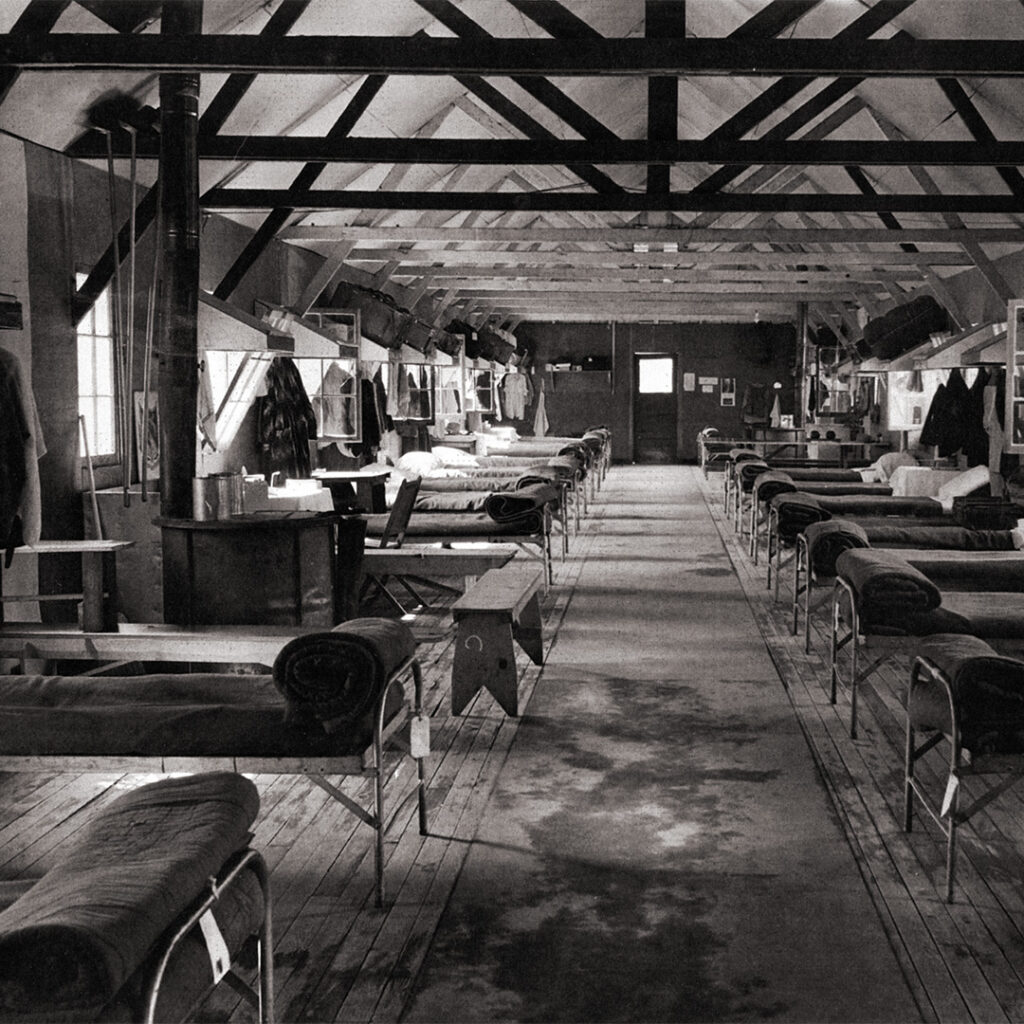
Barracks at Tuna Canyon Detention Station, where detainees slept under constant surveillance while awaiting transfer to larger camps.
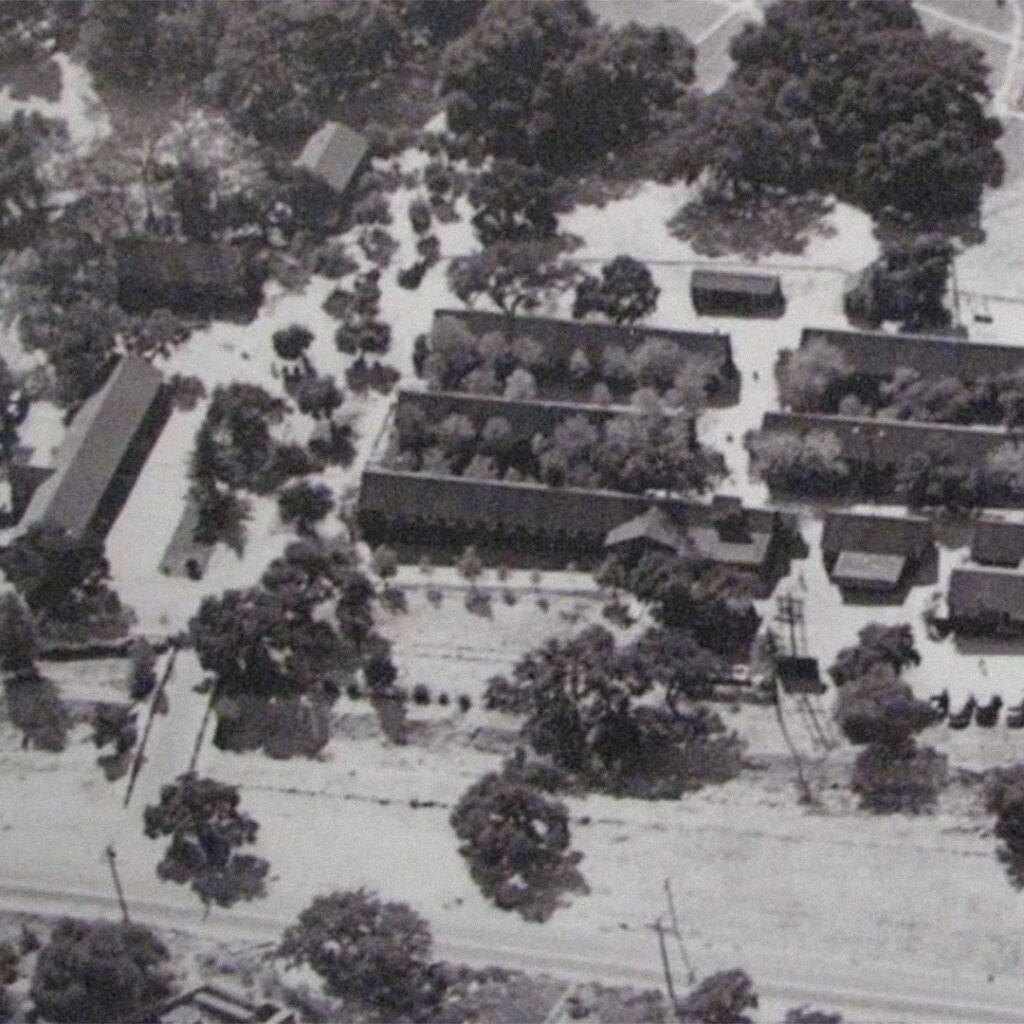
Aerial view of Tuna Canyon Detention Station, a complex of seven barracks, an infirmary, a mess hall, and offices, operating just miles from residential Los Angeles.
Credit Merrill H. Scott family
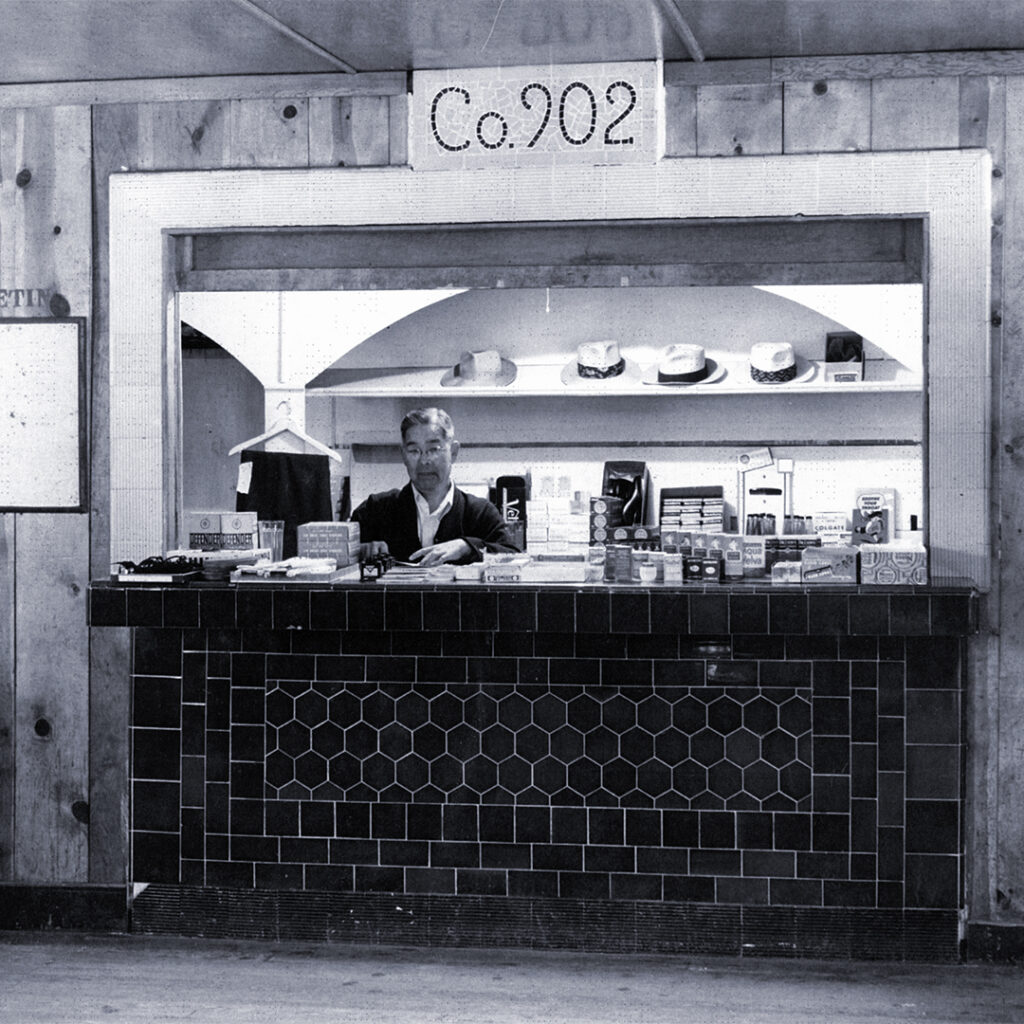
An Issei detainee staffing the commissary at Tuna Canyon Detention Station, where civilians arrested as “enemy aliens” performed the daily labor of camp life.
Courtesy of the Merrill H. Scott Family
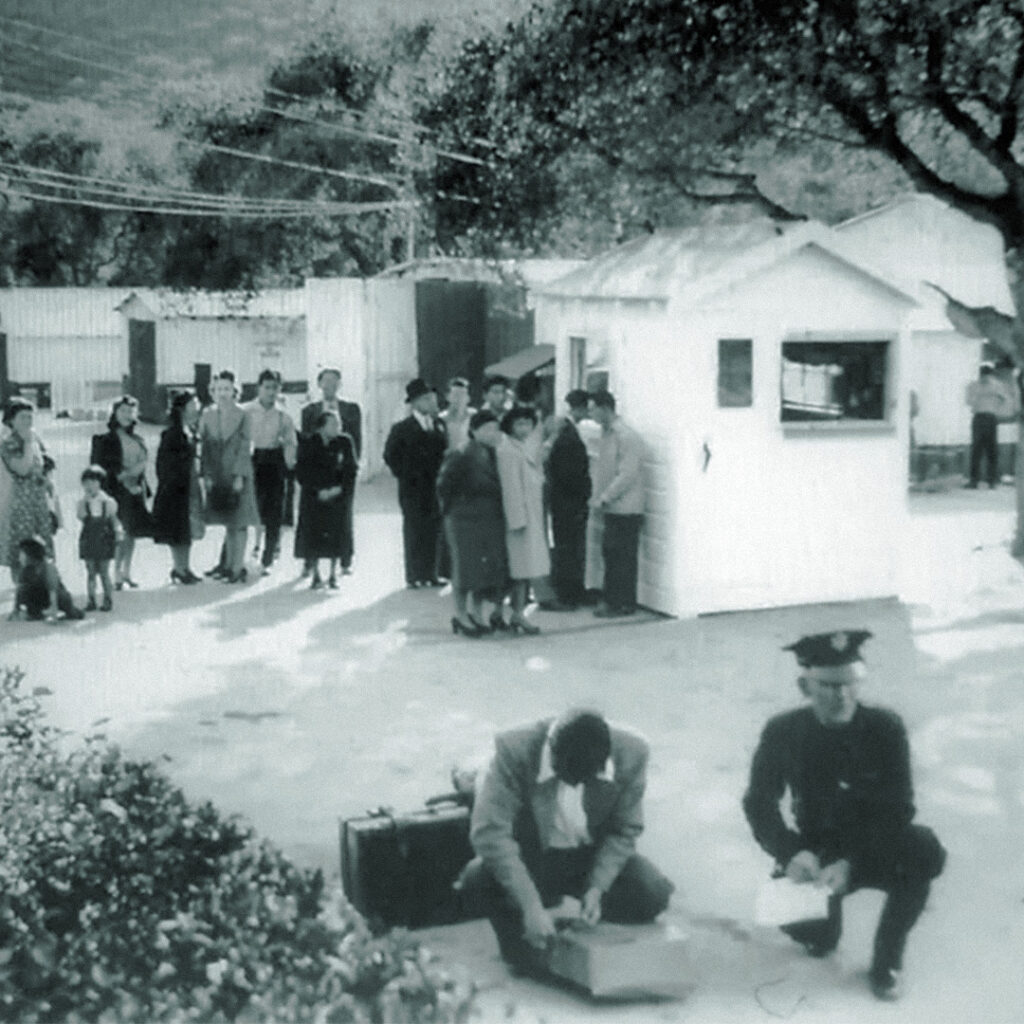
Family members waiting to visit detainees at Tuna Canyon. After crowds overwhelmed the camp, visits were restricted to two minutes per person.
Life Inside Tuna Canyon
According to memoranda from Officer-in-Charge Merrill H. Scott, Tuna Canyon consisted of seven barracks, an infirmary, a mess hall, and administrative buildings. There was medical care, a barbershop, and a small canteen that sold basic goods at wholesale prices.
Despite its purpose, the camp developed a form of daily routine. Scott initiated a self-government honor system that allowed detainees to elect barrack captains and even a mayor of the station. It was a limited autonomy, but one that helped maintain order and dignity inside confinement.
Mail was strictly censored. Families were allowed to send food and clothing, and during a 160-day period, nearly 5,000 packages arrived at the camp.
Visitors were permitted at first, but the policy quickly tightened. On one Sunday alone, 1,837 visitors arrived. Soon after, visiting time was limited to just two minutes per family member.
“Friend Herbert” and Officer M. H. Scott
One of the most important figures associated with Tuna Canyon never wore a uniform.
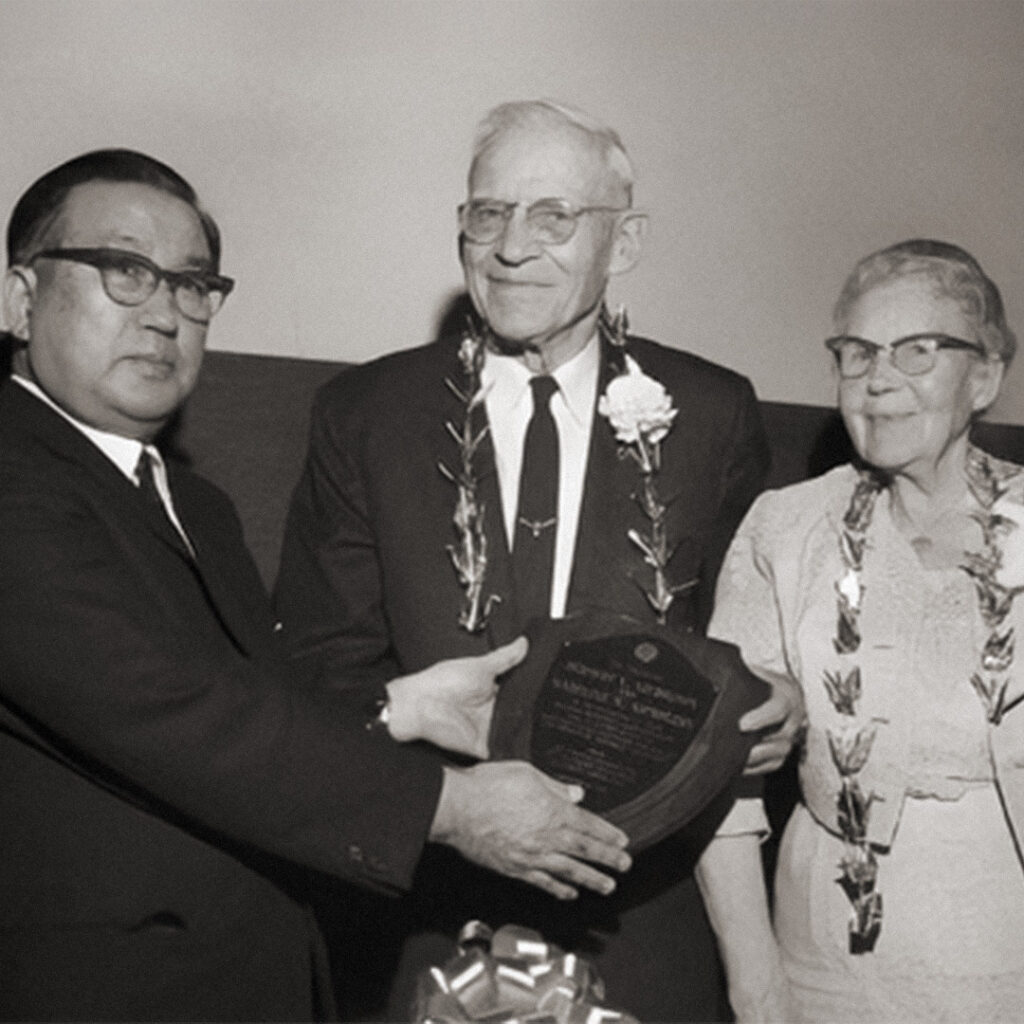
Herbert Victor Nicholson (1892–1983), known widely as “Friend Herbert,” was a Quaker missionary and longtime ally of Japanese Americans. He was among the earliest visitors to Tuna Canyon and other detention camps.
Nicholson spoke fluent Japanese and used it to serve as an interpreter and character witness during detainees’ hearings. Many of the men imprisoned at Tuna Canyon were his friends from Terminal Island. He carried news between camps and families, reporting on conditions and well-being when official channels offered little information.
Nicholson later wrote that Officer Merrill H. Scott treated the Issei men with compassion. Letters of gratitude praising Scott’s conduct remain on file at the National Archives.
Photo by Toyo Miyatake Studio
Reverend Herbert “Friend Herbert” Nicholson with his wife Madelaine, 1971. A rare ally who stood with Japanese American detainees during WWII.
Courtesy of David Scott
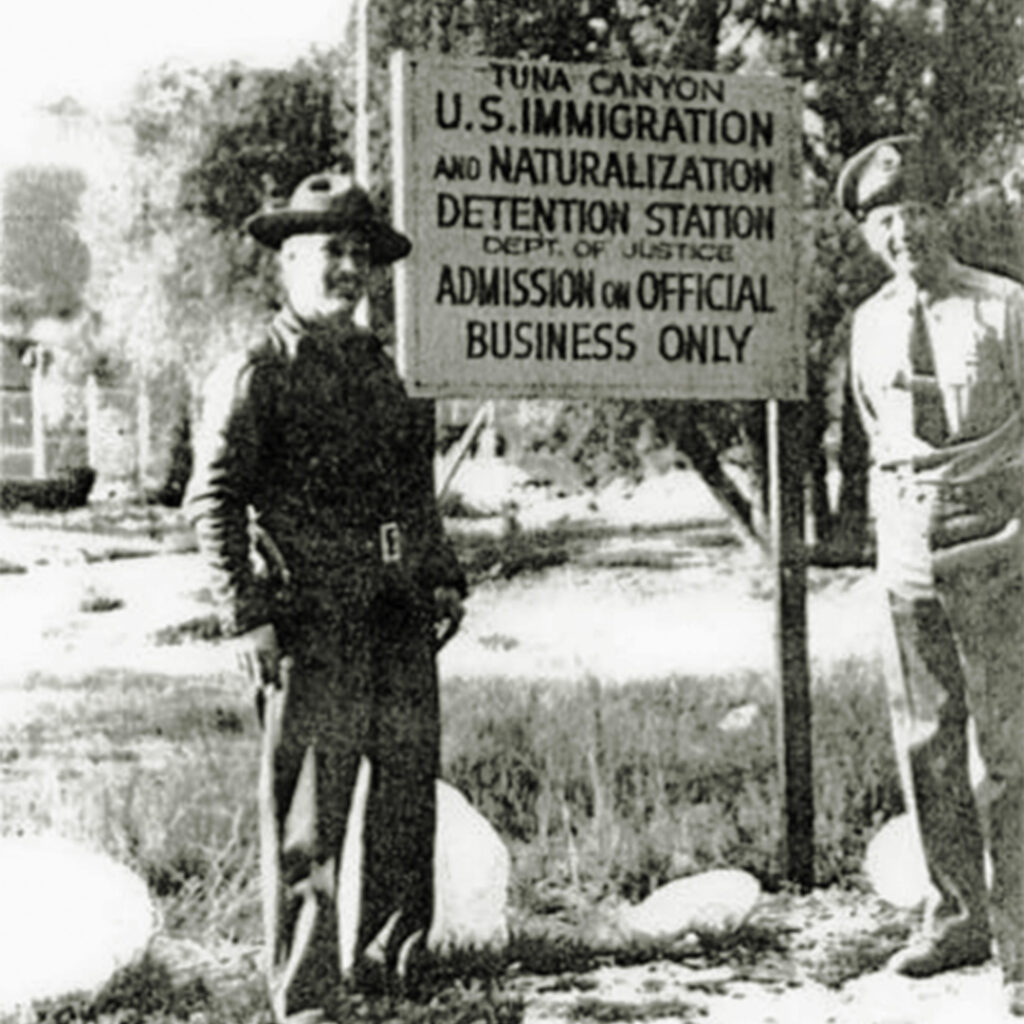
Merrill H. Scott at the entrance to Tuna Canyon Detention Station. While operating within a system of mass detention, Scott was remembered for exercising rare compassion.
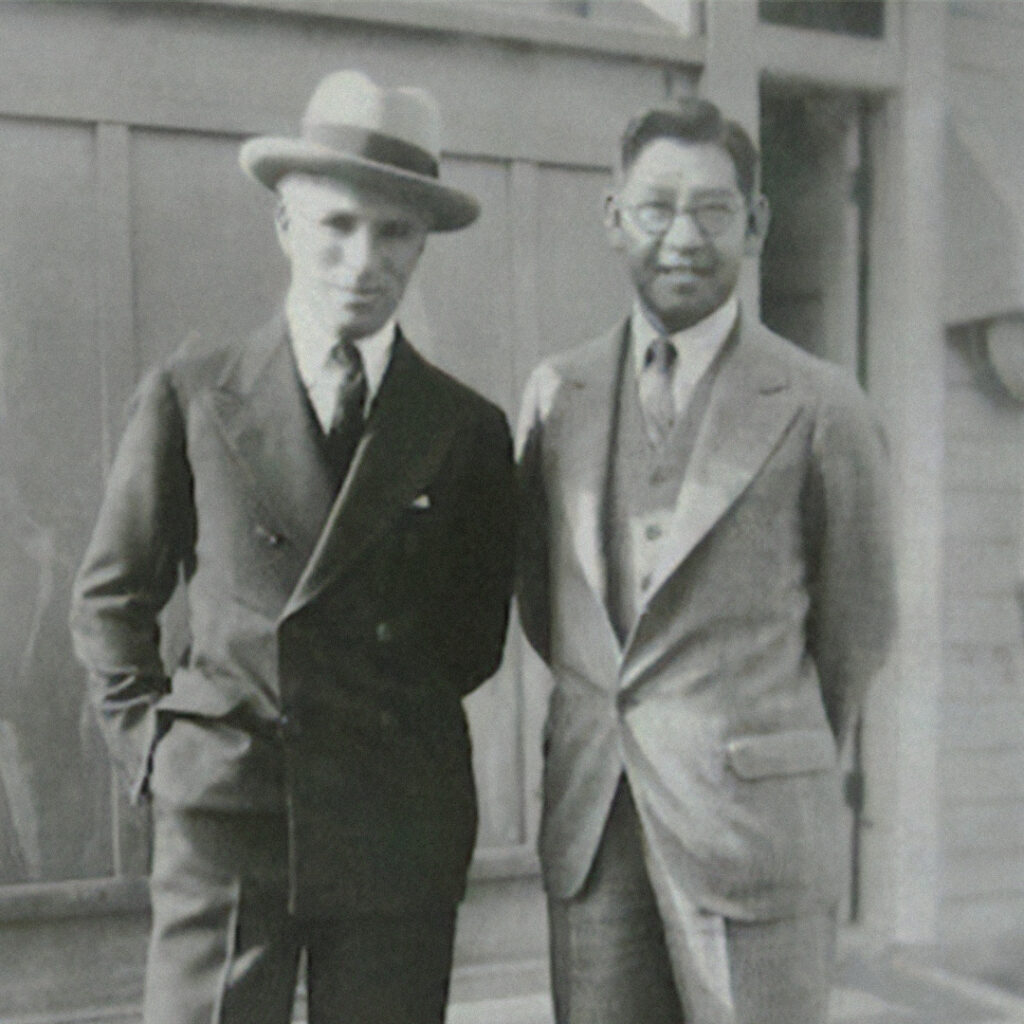
Toraichi Kono with Charlie Chaplin. Fame offered no protection. Kono was detained at Tuna Canyon in December 1941 and accused without proof of espionage.
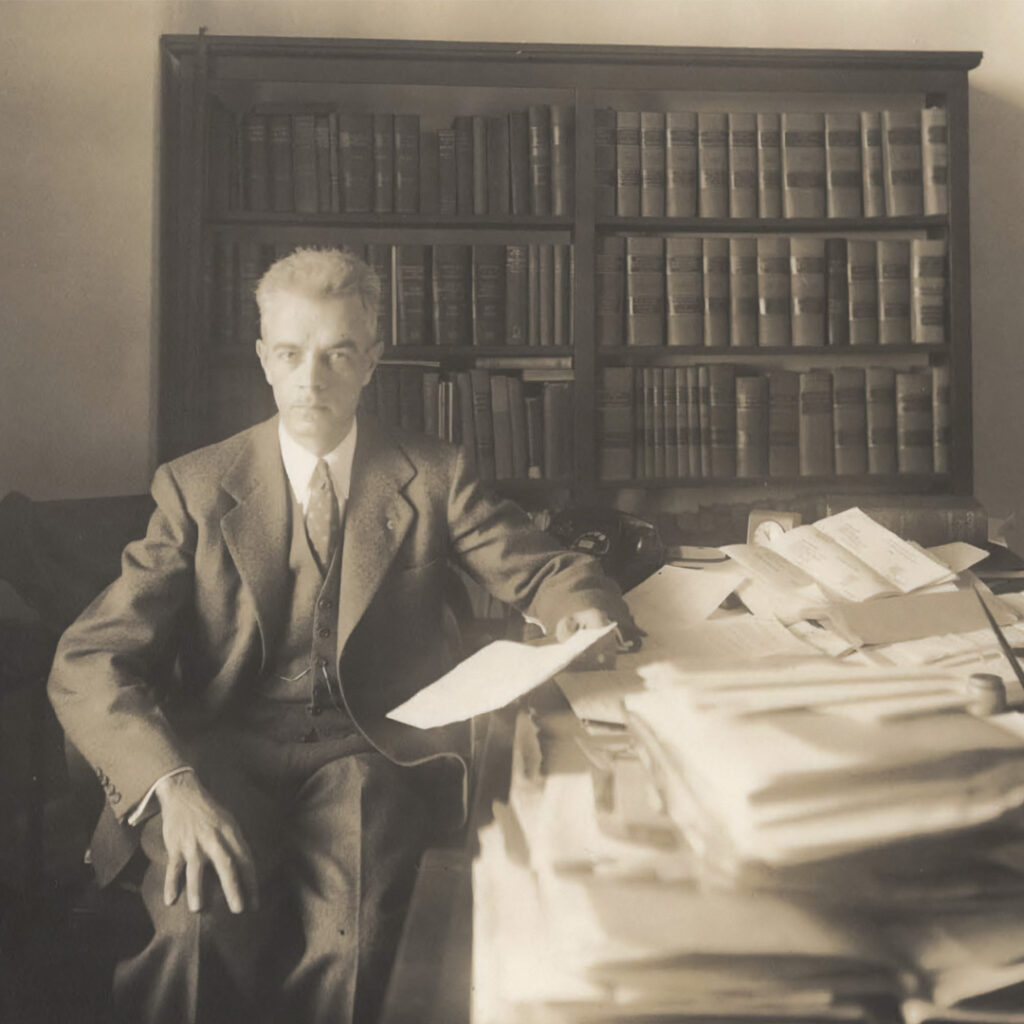
Attorney Wayne Collins in his San Francisco office, c1942. He worked tirelessly through stacks of case files as he worked through the legal challenges of the wartime years.
A Notable Prisoner: Toraichi Kono
Among the men held at Tuna Canyon was Toraichi Kono, best known as Charlie Chaplin’s chauffeur and personal secretary until 1934.
Kono was arrested before and again after Pearl Harbor, accused without proof of being a Japanese military spy. On December 19, 1941, he was sent to Tuna Canyon. From there, he was transferred repeatedly, to Fort Missoula, Santa Fe (twice), and Kooskia, Idaho, before eventually reuniting with his family at Crystal City, Texas.
After the war, Kono returned to Little Tokyo, where he worked alongside attorneys Wayne Collins and Tetsujiro “Tex” Nakamura, assisting in legal cases involving Nisei and Kibei who had been pressured into renouncing their citizenship.
A Waystation to Elsewhere
Tuna Canyon was rarely the final destination.
From December 16, 1941, through May 25, 1942, 1,490 Japanese men passed through the camp before being transferred to longer-term detention centers in Fort Missoula, Montana; Fort Lincoln, North Dakota; and Santa Fe, New Mexico.
Historian Tetsuden Kashima noted that Issei men remained at Tuna Canyon anywhere from a few weeks to three months. When they left, they boarded trains with blackout shades pulled down, beginning long journeys eastward into deeper confinement.
What remains of Tuna Canyon is quiet and easily overlooked. But for nearly two years, it was a gateway into America’s system of wartime imprisonment, operating just miles from ordinary neighborhoods, schools, and homes.
The history was never hidden. It was simply ignored.
Courtesy of the Merrill H. Scott Family
Just miles from ordinary neighborhoods, schools, and homes, thousands were detained at Tuna Canyon before being sent deeper into the incarceration system.