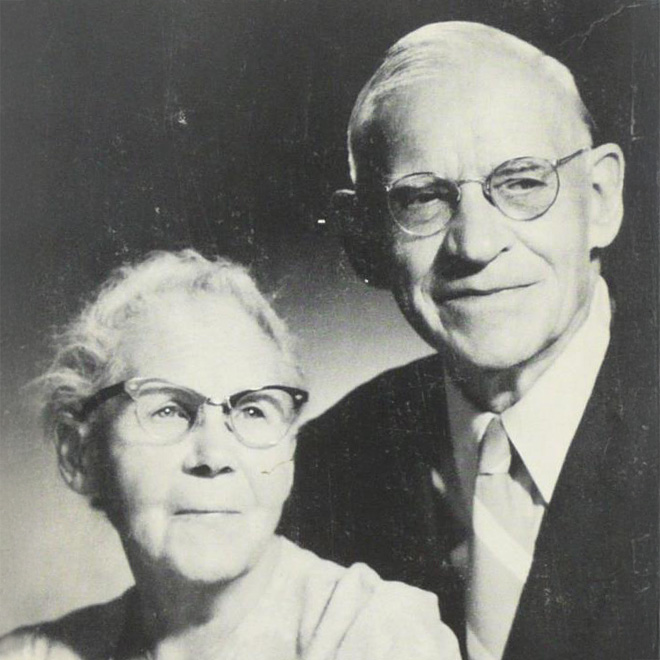
January 30, 1892: Herbert Victor Nicholson, affectionately known as “Friend Herbert” by many Japanese Americans, was born in Rochester, New York.
Herbert Nicholson was raised in the Quaker tradition, which shaped one core belief that would guide his life: the equality of all people.
That belief would eventually carry him across the Pacific, into the lives of Japanese Americans at their most vulnerable moment, and into quiet acts of resistance that history almost forgot.
As a young man, Nicholson traveled to Japan as a missionary. He learned the language fluently, immersed himself in the culture, and came to deeply respect the people he lived among. It was there that he met his wife, Madelaine.
As political tensions between Japan and the United States intensified, the couple was forced to leave. But Nicholson did not leave Japan unchanged. He returned with language skills, cultural understanding, and relationships that would later matter far more than he could have known.
From “Treasure in Earthen Vessels”
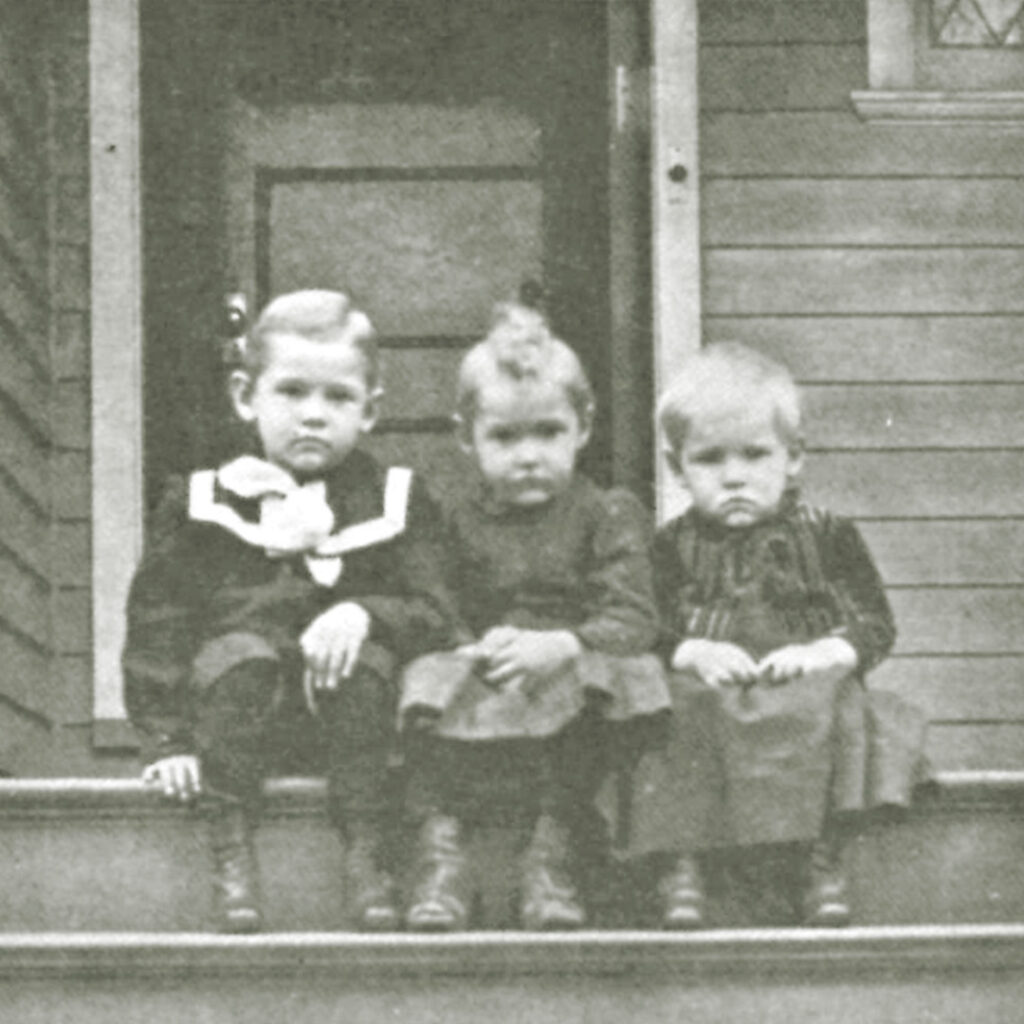
Ernest, Arthur, and Herbert Nicholson, New York, 1894. Raised in a Quaker family, Herbert Nicholson grew up with a belief in the equality of all people.
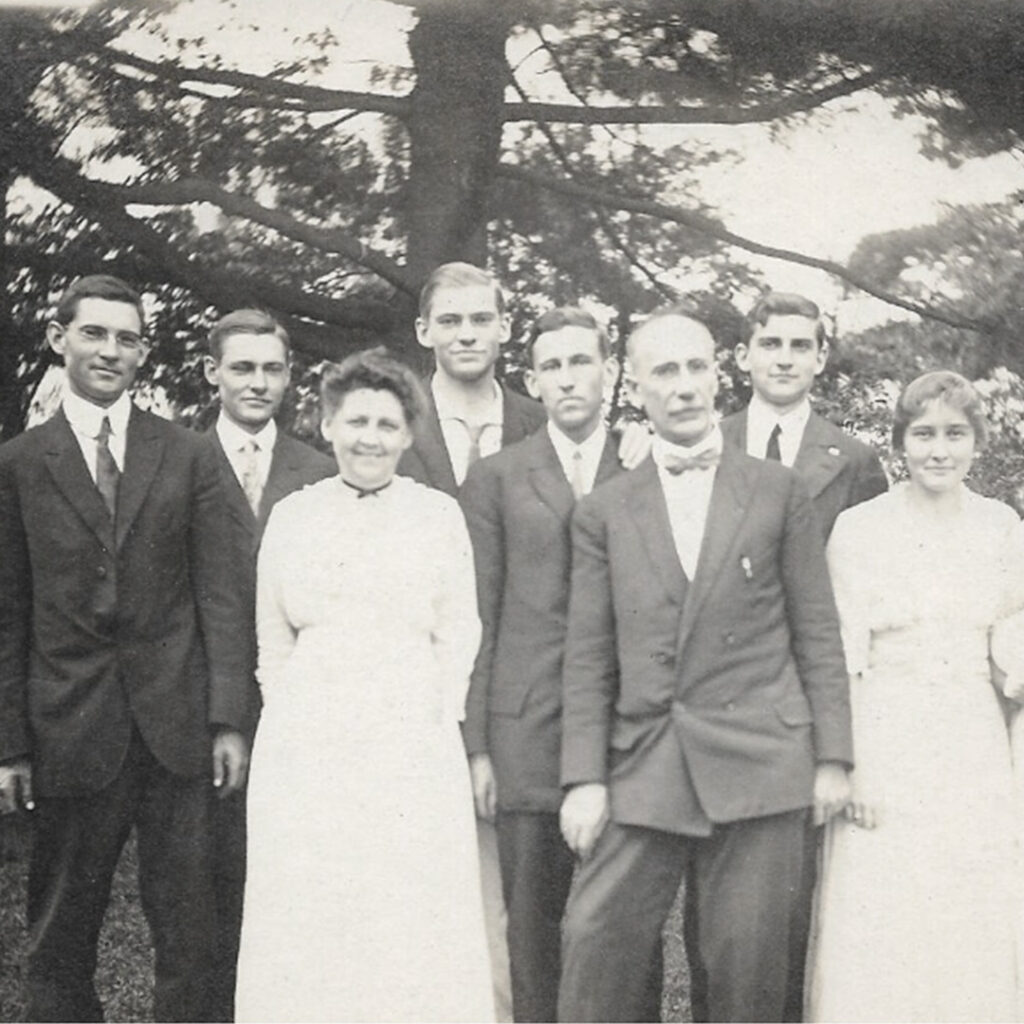
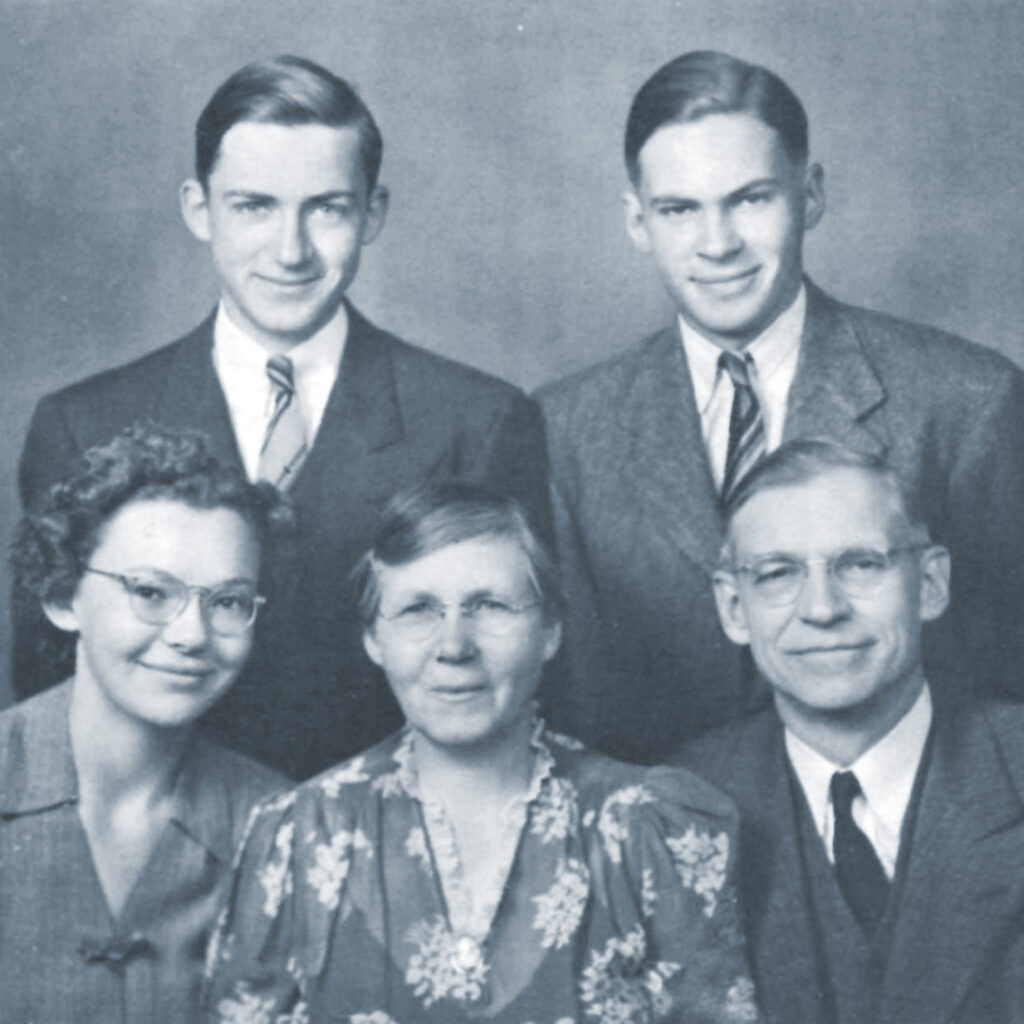
The Nicholson family. Herbert Nicholson stands in the back row near the center. In his early 20s, he traveled to Japan for the first time as a missionary.
Dorothea Lange
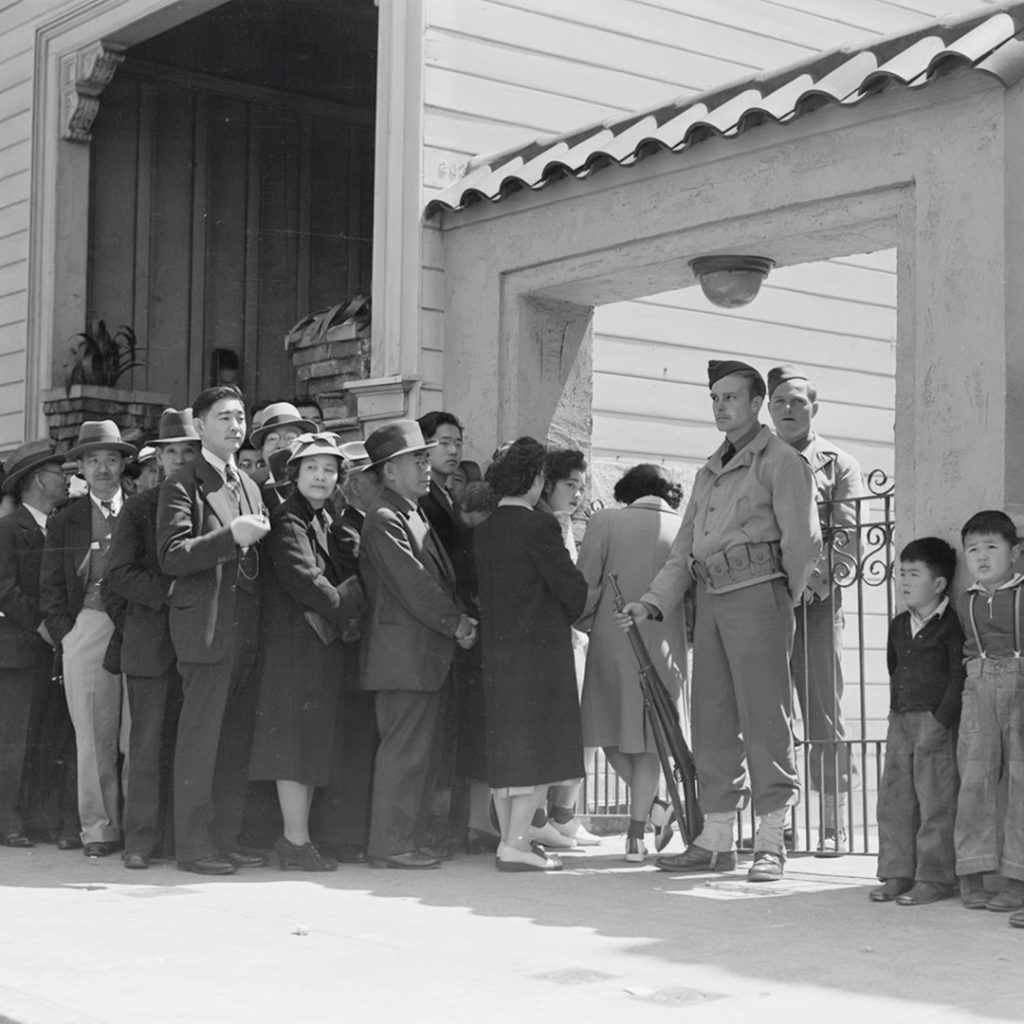
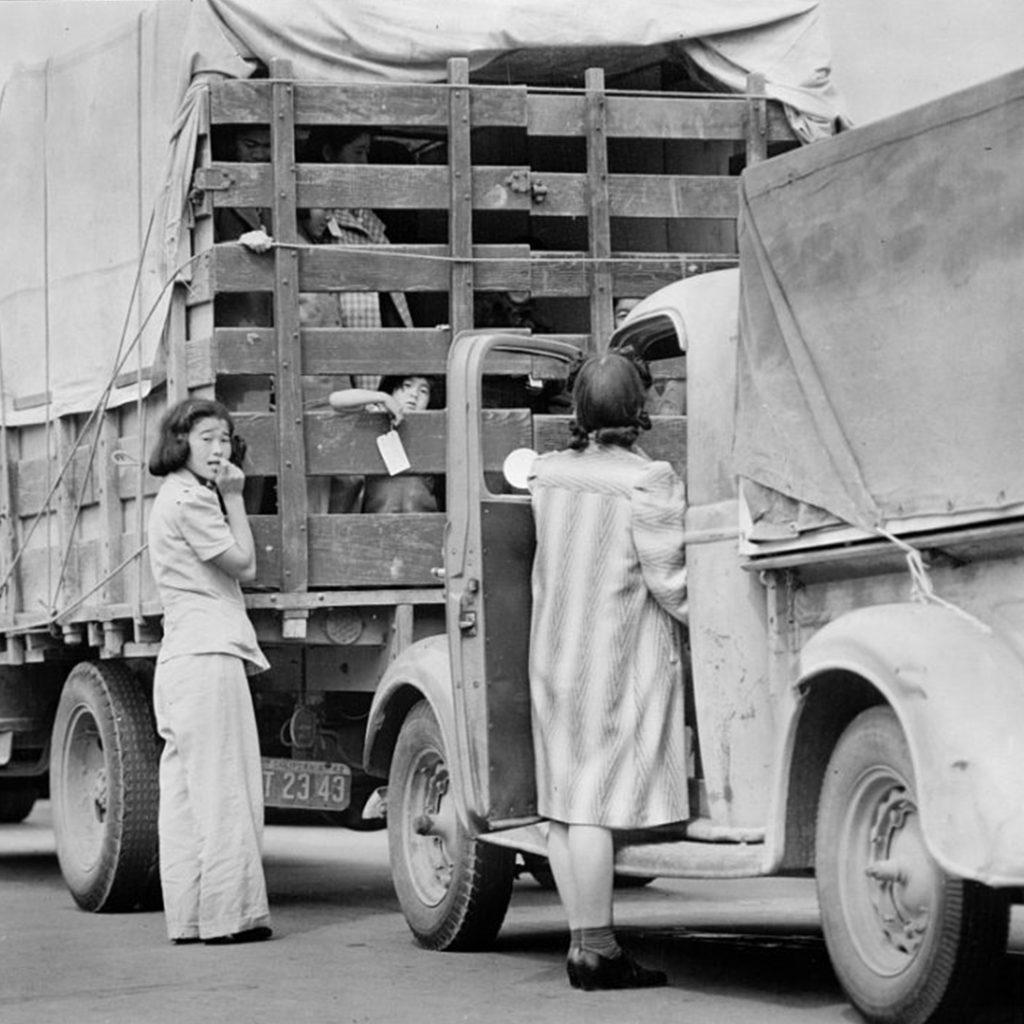
San Francisco’s Japantown, April 1942. Japanese Americans waited in line — not because of anything they had done, but because of who they were.
Dorothea Lange
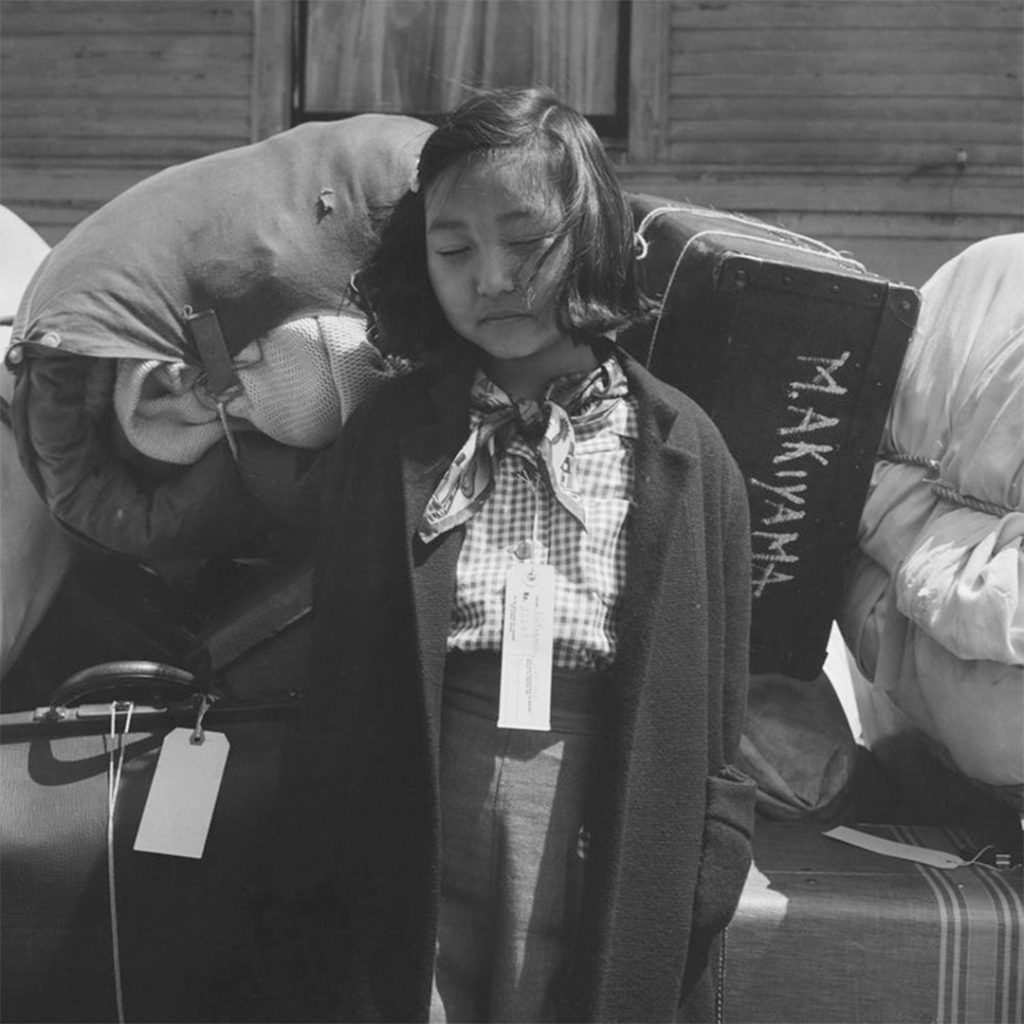
Kimiko Kitagaki guarding her family's belongings, while being tagged like a luggage herself. Oakland, California, May 6, 1942.
Going Back to California
The Nicholsons settled in Southern California, where Herbert took over leadership of a Methodist church serving a largely Japanese American congregation. He preached in both English and Japanese.
When war came, it came quickly.
With the signing of Executive Order 9066 after the Pearl Harbor attack, Japanese American families were given days, sometimes hours, to prepare. Businesses were abandoned. Homes were sold for pennies or simply locked and left behind. Bank accounts were frozen. Pets were not allowed. Personal belongings were restricted to what could only be carried by hand.
Herbert Nicholson did not ask what side people were on. He asked what they needed.
Helping People Leave — With Dignity
As removal orders spread across California, Nicholson helped Japanese American families pack. He visited places like Terminal Island, where families were removed with brutal speed, and helped however he could in the few remaining hours before departure.
He helped store belongings inside his church, which he converted into a makeshift warehouse. He safeguarded furniture, books, photographs, tools, and instruments. He helped settle business affairs when Issei were suddenly cut off from their own bank accounts.
He began driving, delivering possessions the government deemed unnecessary: family heirlooms, hymn books, musical instruments, gifts, food, and even pets.
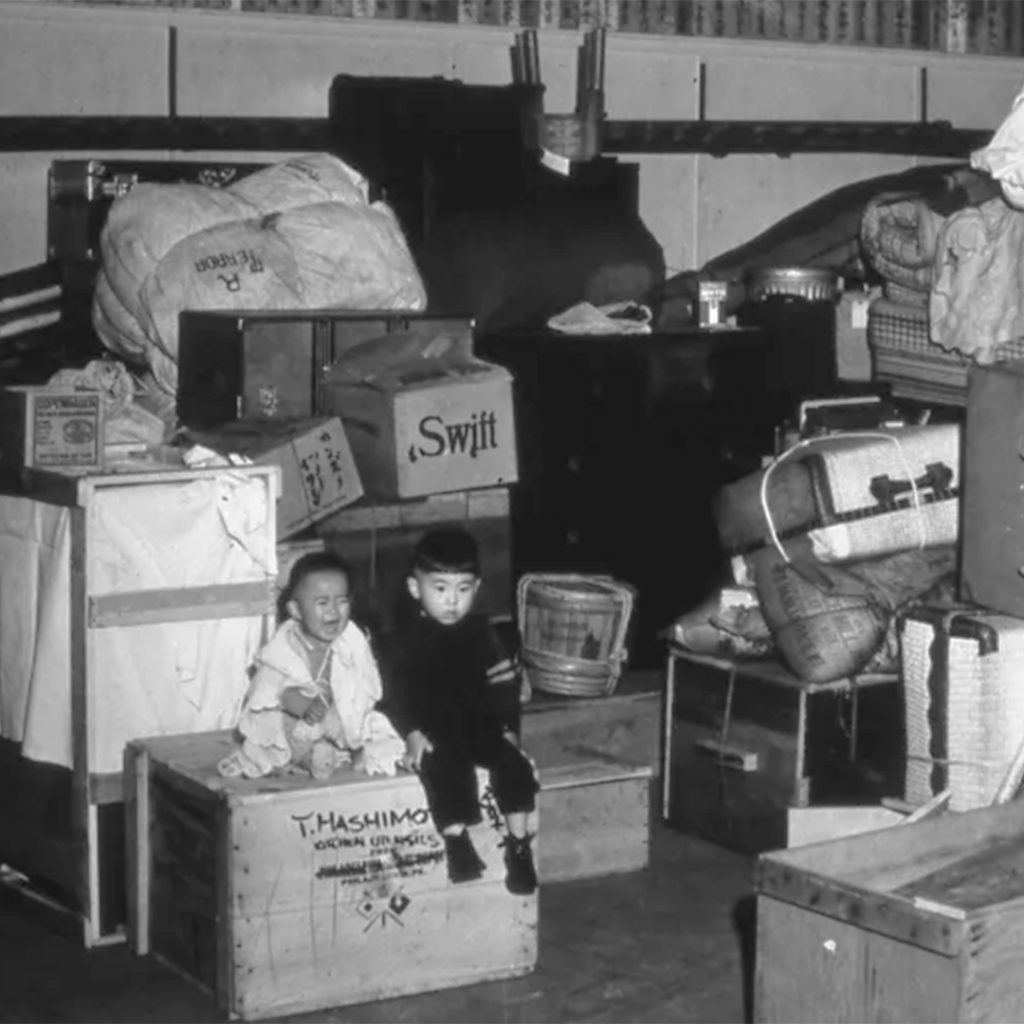
The final residents of Terminal Island being forcibly removed by the U.S. military. Many were given only a couple of days to abandon homes, businesses, and belongings.
Courtesy of Angel City Press
Two children on Terminal Island after being ordered to be removed within 48 hours
Courtesy of Yakima Valley Museum
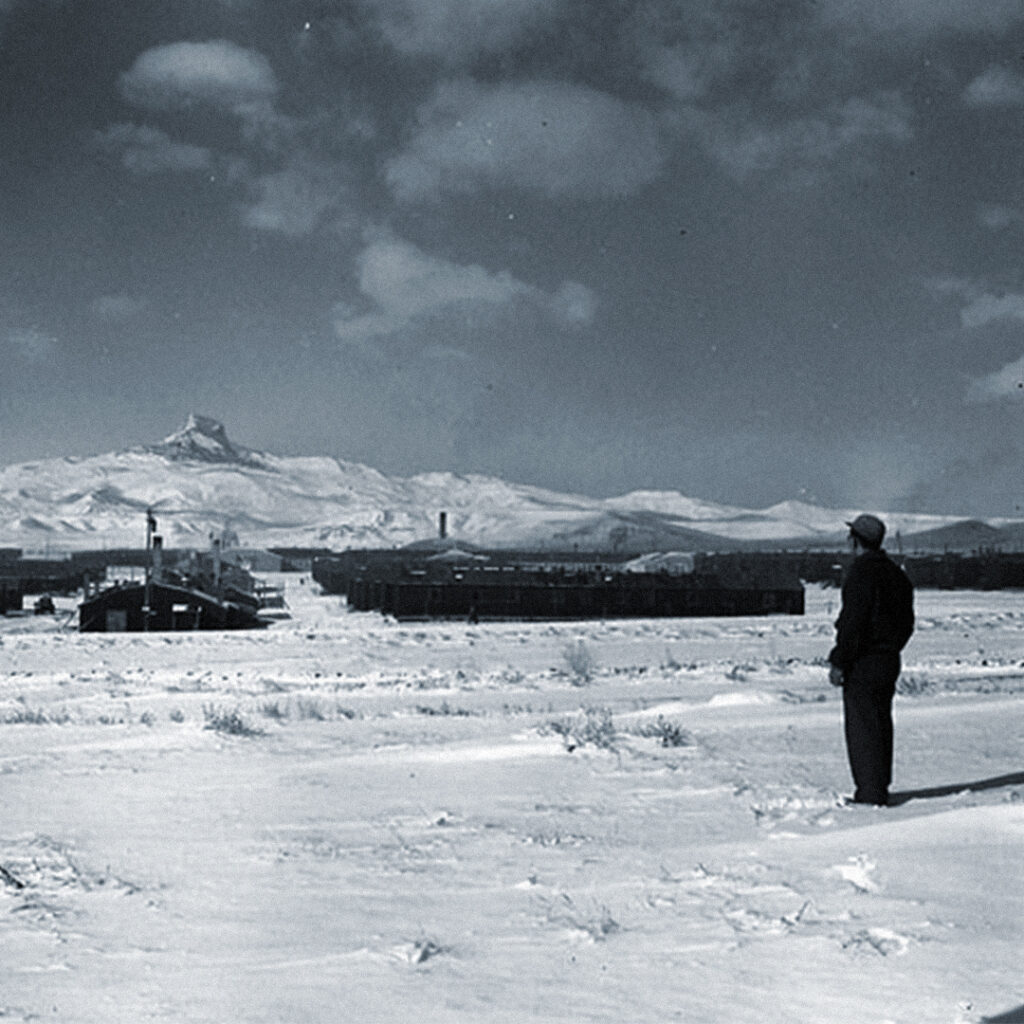
From California to Heart Mountain in Wyoming, Friend Herbert drove tens of thousands of miles delivering belongings, letters, and hope.
Kango Takamura
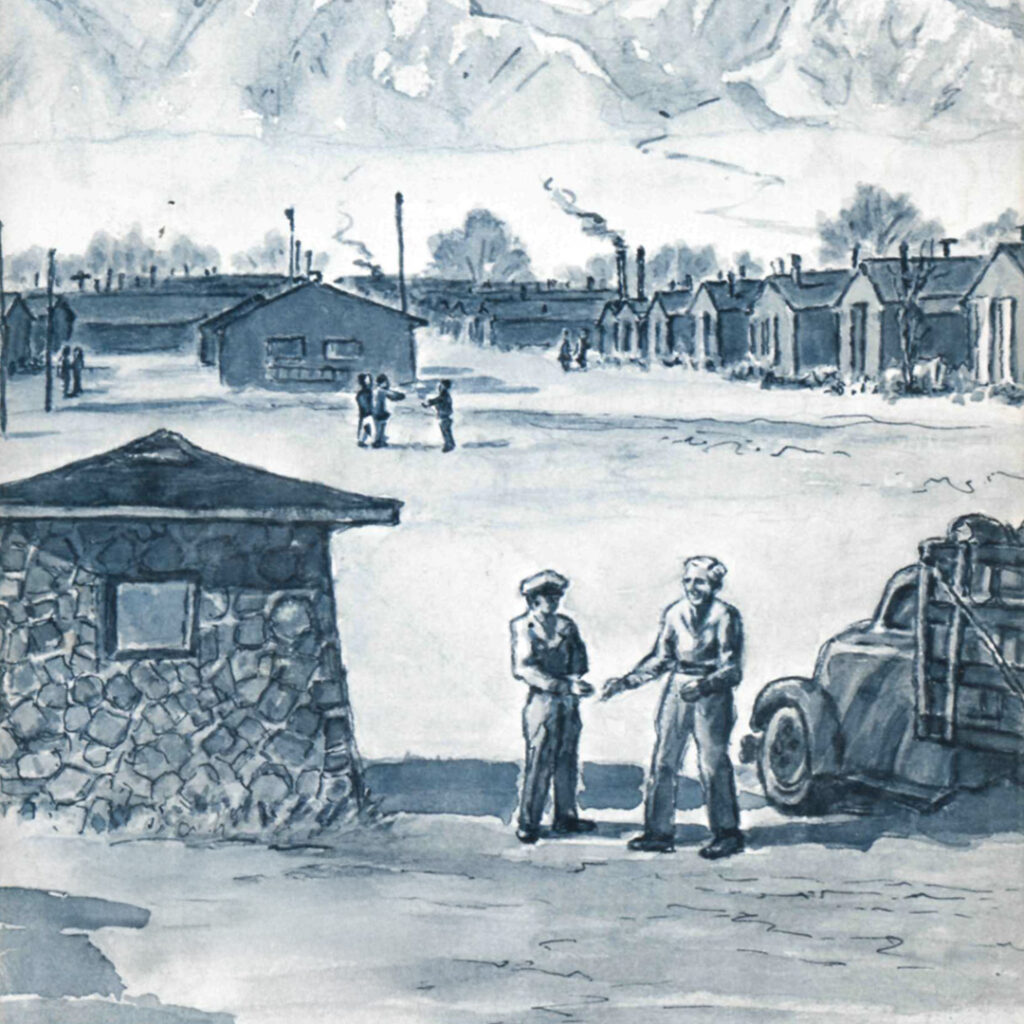
Cover illustration for Treasure in Earthen Vessels (1972), reflecting Herbert Nicholson’s quiet, persistent presence inside the incarceration camps.
Toyo Miyatake
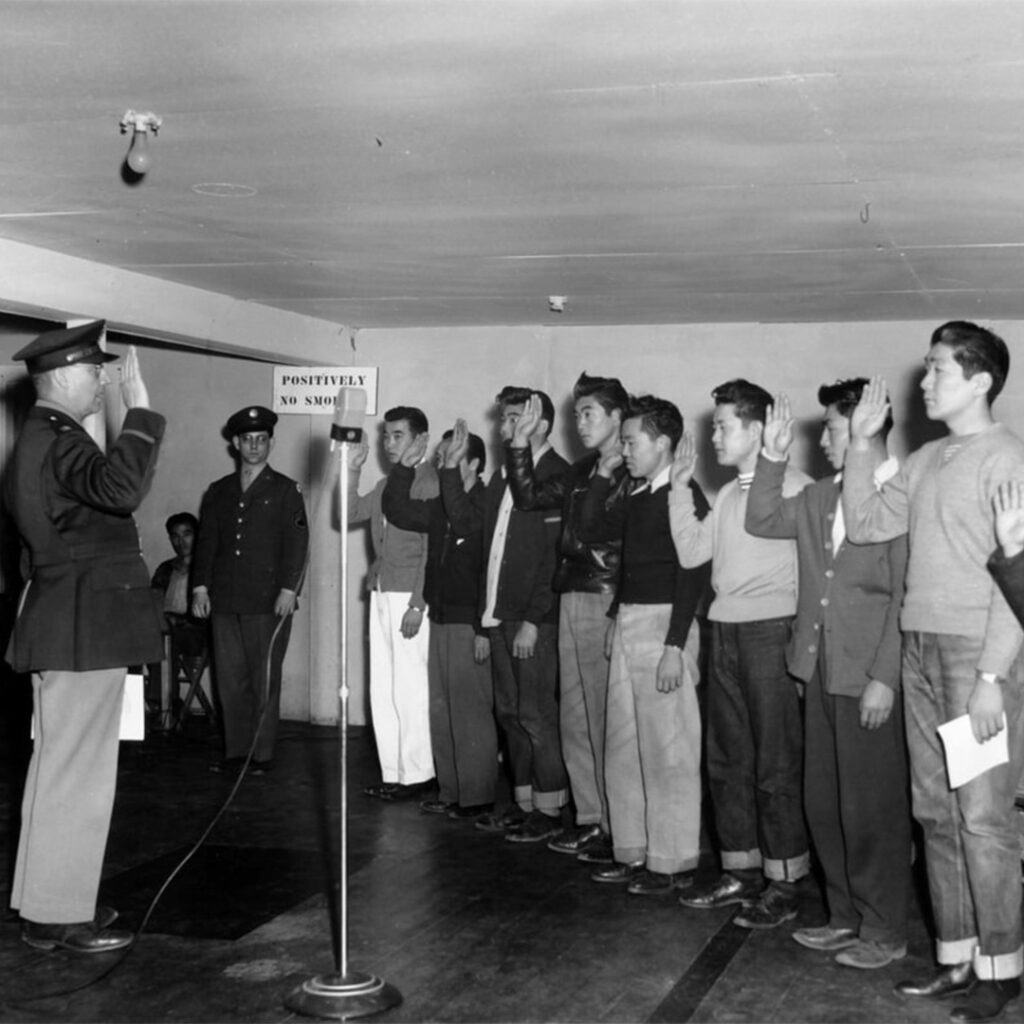
Taking the oath at Manzanar. These young Japanese American men swore loyalty to a country that had stripped them of their freedom.
Courtesy of Densho, Hamanaka Family Collection
Dillon S. Myer, head of the WRA. He wanted the camps closed, but also believed Japanese American military service would make that politically possible.
Against Injustice
When offered a government position at Manzanar, Nicholson refused. He opposed incarceration itself and would not lend his presence to it. Instead, he worked around it.
Nicholson organized a public letter-writing campaign that generated more than 150,000 letters to government officials. At a time when many Americans accepted incarceration as necessary, he insisted on reminding the country of what it claimed to stand for.
When selective service opened to Nisei in 1943, Nicholson met with WRA director Dillon Myer and traveled to Washington to meet Assistant Secretary of War John J. McCloy, urging the release of incarcerated families if their sons were expected to fight for the United States.
These actions did not stop the camps. But they documented dissent. They recorded that not everyone agreed. That mattered later.
Staying When Others Moved On
When the camps began closing in 1945, Japanese Americans were released with little support. Many returned to communities that no longer welcomed them. Jobs were scarce. Housing was worse.
Nicholson helped people resettle. He helped them find work. He helped them return to cities that had erased them.
Madelaine Nicholson quietly carried her own share of the work. She obtained a driver’s license so she could regularly visit Japanese Americans confined to Hillcrest Sanitarium. She made sure people were not forgotten.
Herbert once said, “Trouble seems to bring out the best and worst in people.” Even some Federation of Churches personnel turned against Japanese Americans, believing false propaganda reports.
But Nicholsons did not disappear when the war ended. They stayed.
Courtesy of UCLA Library
With their homes taken, vandalized, or sold off during incarceration, some were forced to move into trailer camps like this one in Burbank’s Winona Housing Project
From “Treasure in Earthen Vessels”
The Nicholson family in Pasadena, 1949. Herbert Nicholson (bottom right) and Madelaine Nicholson (bottom center) with their children, Donald, Samuel, and Virginia.
Courtesy of the Higa family
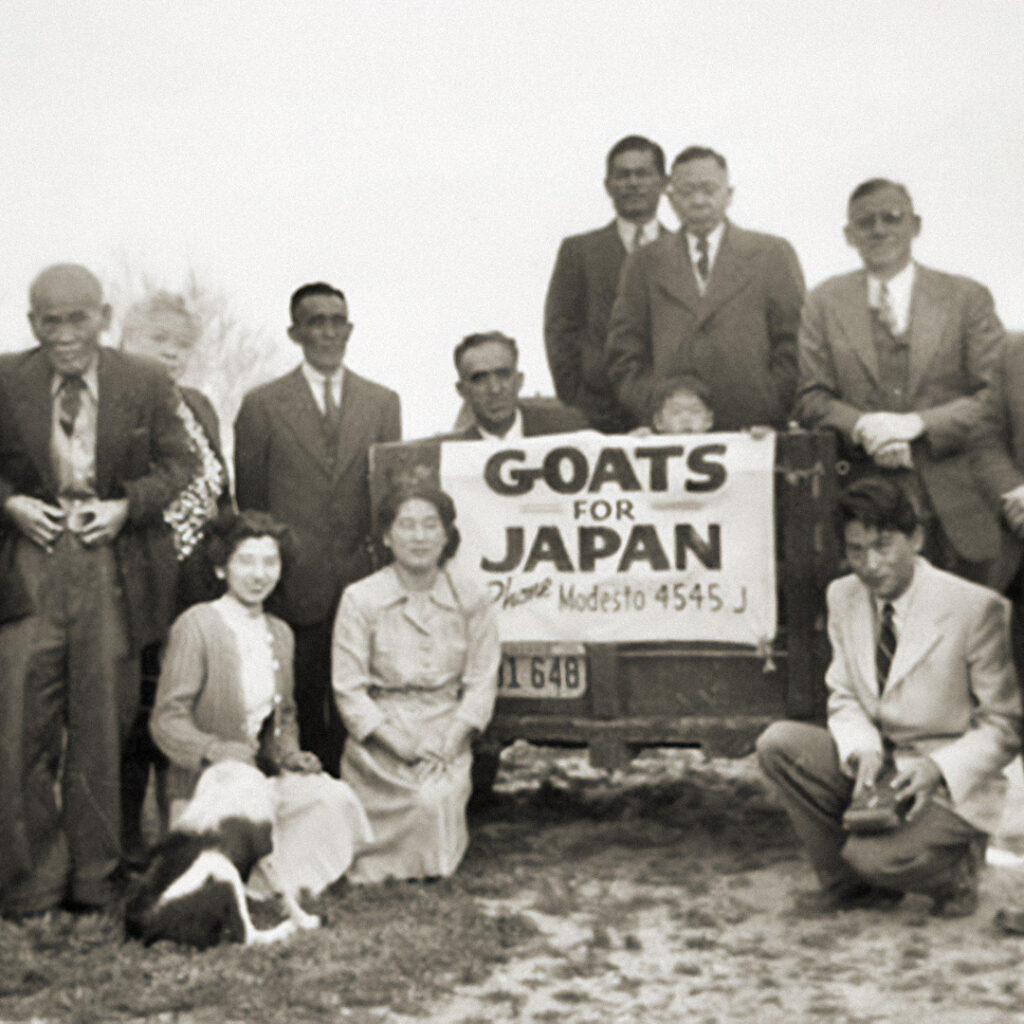
Reverend Herbert Nicholson at Manzanar, 1944, with supporters of Goats for Japan. Even during incarceration, he was already planning how to help rebuild lives overseas.
From “Treasure in Earthen Vessels”
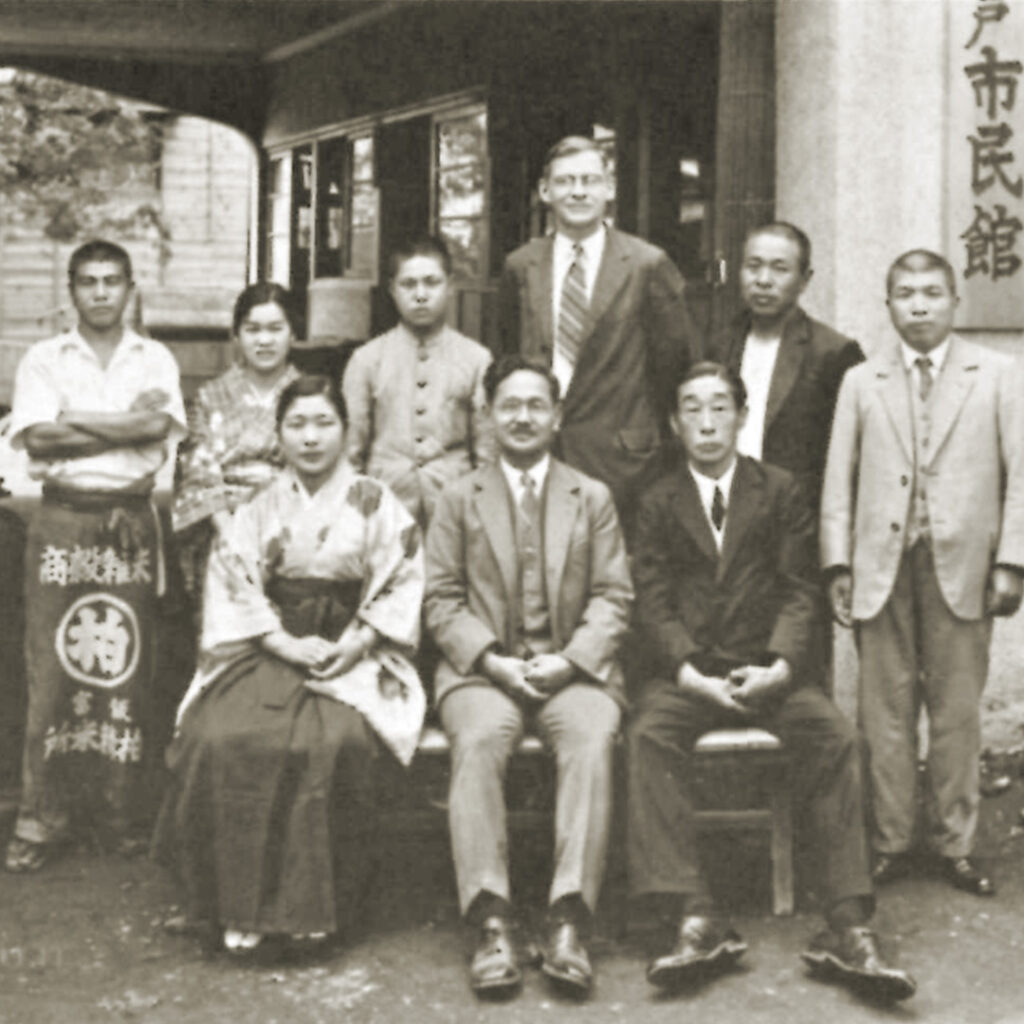
Herbert Nicholson with staff of the cooperative and civic center at Mito Shiminkan in Ibaraki, where he worked closely with local communities in Japan.
From “Treasure in Earthen Vessels”
Herbert and Madelaine Nicholson devoted their lives to serving others, often without recognition and for little or no pay. Their work quietly changed thousands of lives.
Uncle G-O-A-T
In 1950, the Nicholsons returned to Japan, knowing the country was devastated after the war. Food shortages were severe. Rural families struggled to survive.
Nicholson helped organize a program that brought more than 5,000 goats to Japan, providing milk, food security, and income to thousands of families. He became affectionately known as “Yagi no Ojisan” — Uncle Goat.
The Nicholsons returned to Pasadena in 1961 and continued their work in the Japanese American community. In 1972, Herbert Nicholson published his autobiography, Treasure in Earthen Vessels, later released in Japanese as Yagi no Ojisan.
Sometimes, what we really need is a good friend. And Friend Herbert was there, when they really needed one.