They arrested the wrong brother, then kept him anyway.
January 7, 1942: Kakurō Shigenaga was arrested in Honolulu after authorities mistook him for his brother, Shigeo.
Kakurō Shigenaga was born in Hiroshima and came to Hawaiʻi as a teenager. By the time of his arrest, he was a husband, a father of four American-born children, and a salesman working for the Kobayashi General Store. He had lived quietly, building a life on Maui.
On the day of his arrest, Kakurō was visiting his brother Shigeo Shigenaga in Honolulu. The brothers were planning a move so they could run a store together.
When the police arrived, they asked for “Mr. Shigenaga,” and Kakurō answered honestly: “I am.”
They arrested him and sent him to Sand Island, where Japanese Issei detainees were already being held. Later, authorities discovered they had detained the wrong brother. They returned to the house, waited for Shigeo to come home, and arrested him too.
They kept both brothers.
Kakurō Shigenaga, after his arrest in January 1942. Mistaken for his brother, he was imprisoned without charges and held for the duration of the war.
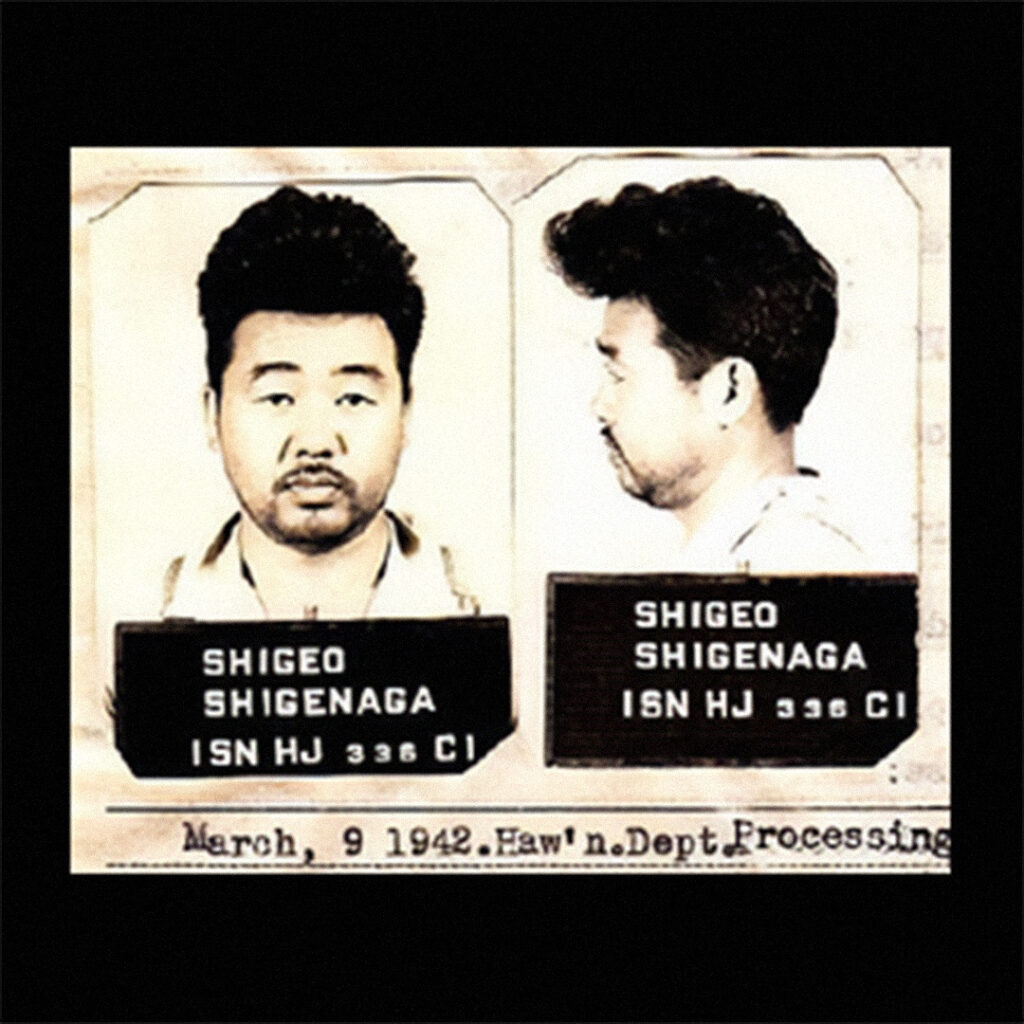
Shigeo Shigenaga's photograph during his detention. Authorities came for him after discovering they had already imprisoned the wrong brother.
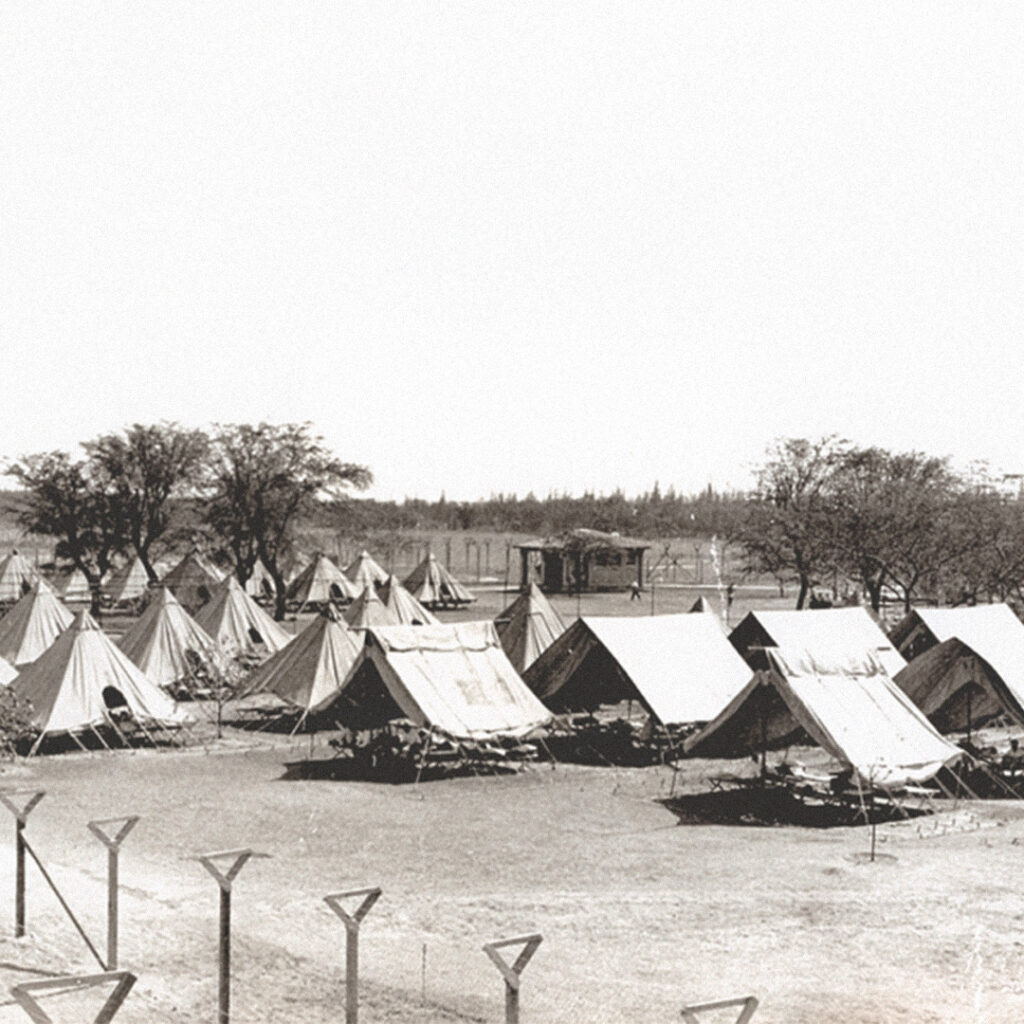
Open tents at Sand Island, the only shelter many detainees had in the camp’s first months.
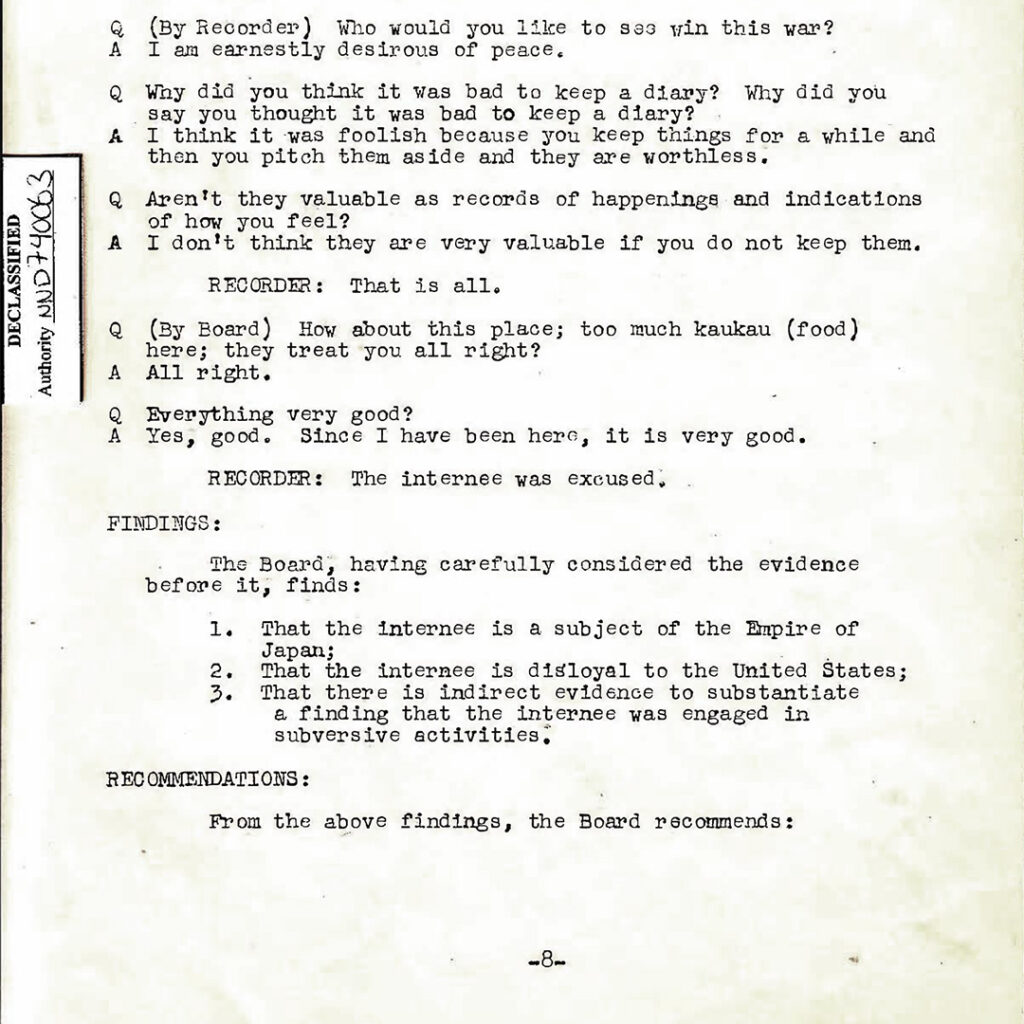
Page 8 of Kakuro Shigenaga Testimony Transcript, showing the board’s findings listing three reasons for internment — none supported by evidence in the file.
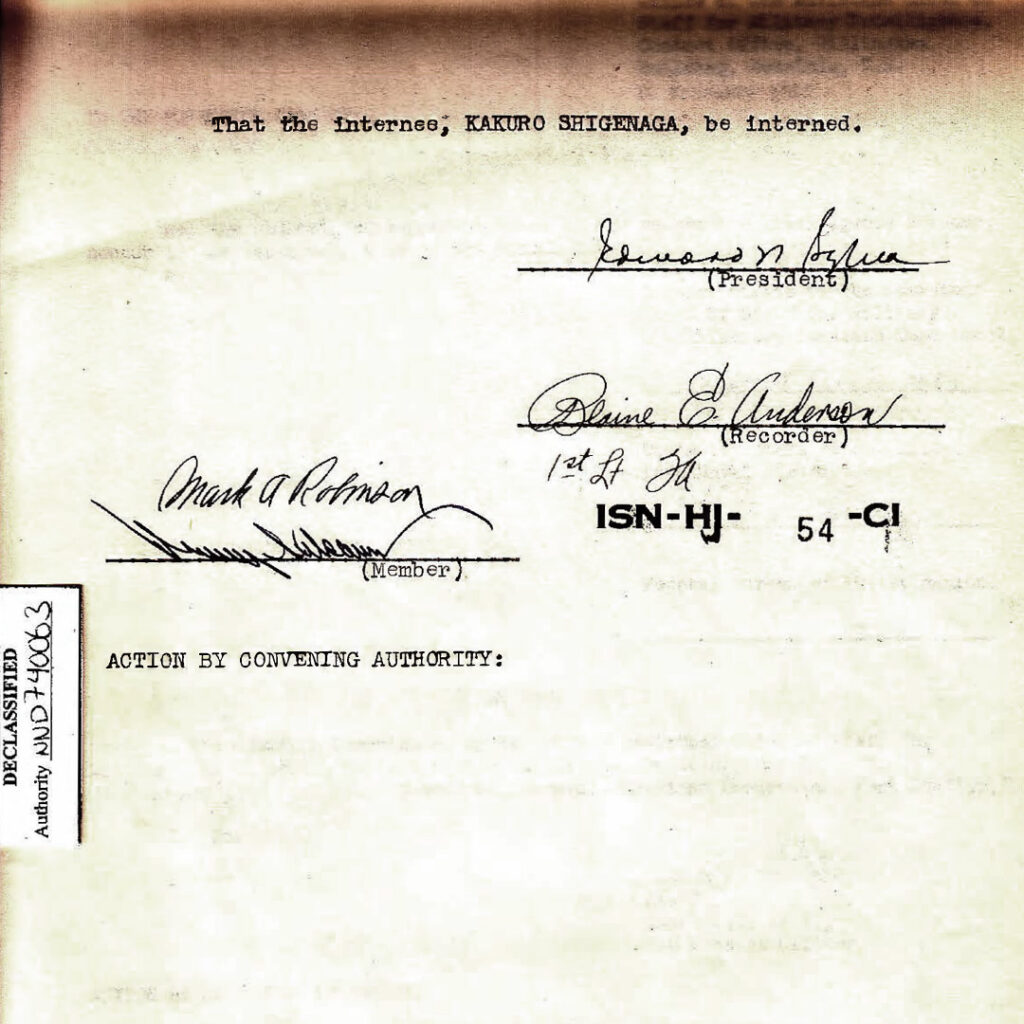
Page 9 of Kakuro Shigenaga Testimony Transcript, showing the board’s recommendation: internment. Signatures affixed. Decision finalized.
A Decision Without Evidence
During his hearing, Kakurō stated plainly that the attack on Pearl Harbor was treasonous and pitiful. It did not matter. On February 17, 1942, after weeks in detention, he was ordered to be interned.
The board cited three reasons:
He was a subject of the Japanese Empire
He was disloyal to the United States
There was “indirect evidence” of subversive activity
That evidence was never produced. It wasn’t even included in his file. His son Winston later noted that before the war, Kakurō had once hosted Japanese sailors at the family home while a maritime training ship visited Maui. The visit may have been interpreted, after the fact, as proof of disloyalty.
Suspicion did not need to be proven. It only needed to exist.
Shigeo’s Words
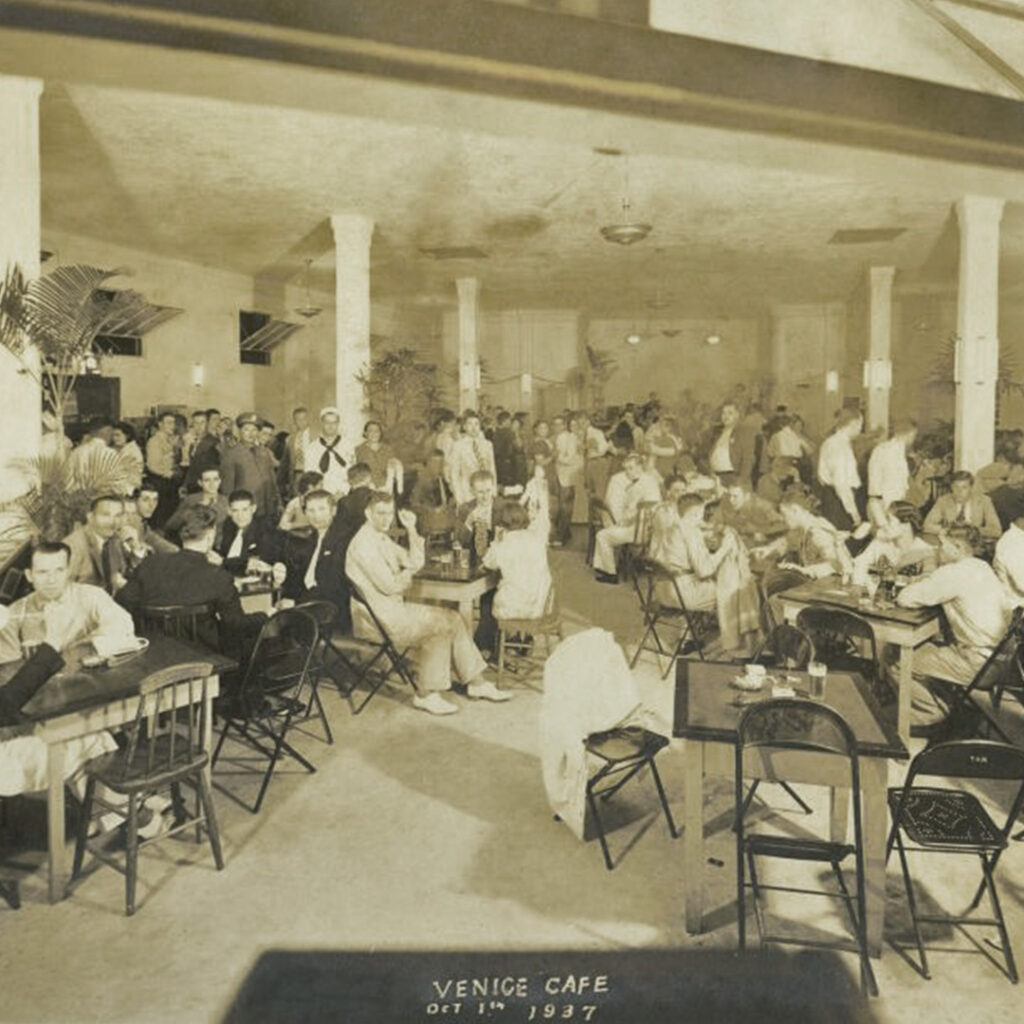
Shigeo Shigenaga, the brother the police were originally seeking, was also born in Hiroshima. He had lived in Hawaiʻi for twenty-five years and managed the Venice Café, owned by his wife Akino.
When Shigeo was arrested, Akino was pregnant. She gave birth to their son Paul alone.
During questioning, Shigeo tried to understand why he was there at all: “I cannot understand why I come down here,” he said. “I am living 25 years in Hawaii. My father die here. My brother, my sister, all family here. I have got five children all American citizens… This is the place for me. I would die in Hawaii.”
He quoted President Roosevelt’s promise that law-abiding people would be allowed to continue their lives: “I did nothing wrong,” he said. “I pay my allegiance to America.”
It did not change the outcome.
The Venice Café in Honolulu, October 1937. Managed by Shigeo Shigenaga, who would later be imprisoned despite decades of life and work in Hawaiʻi.
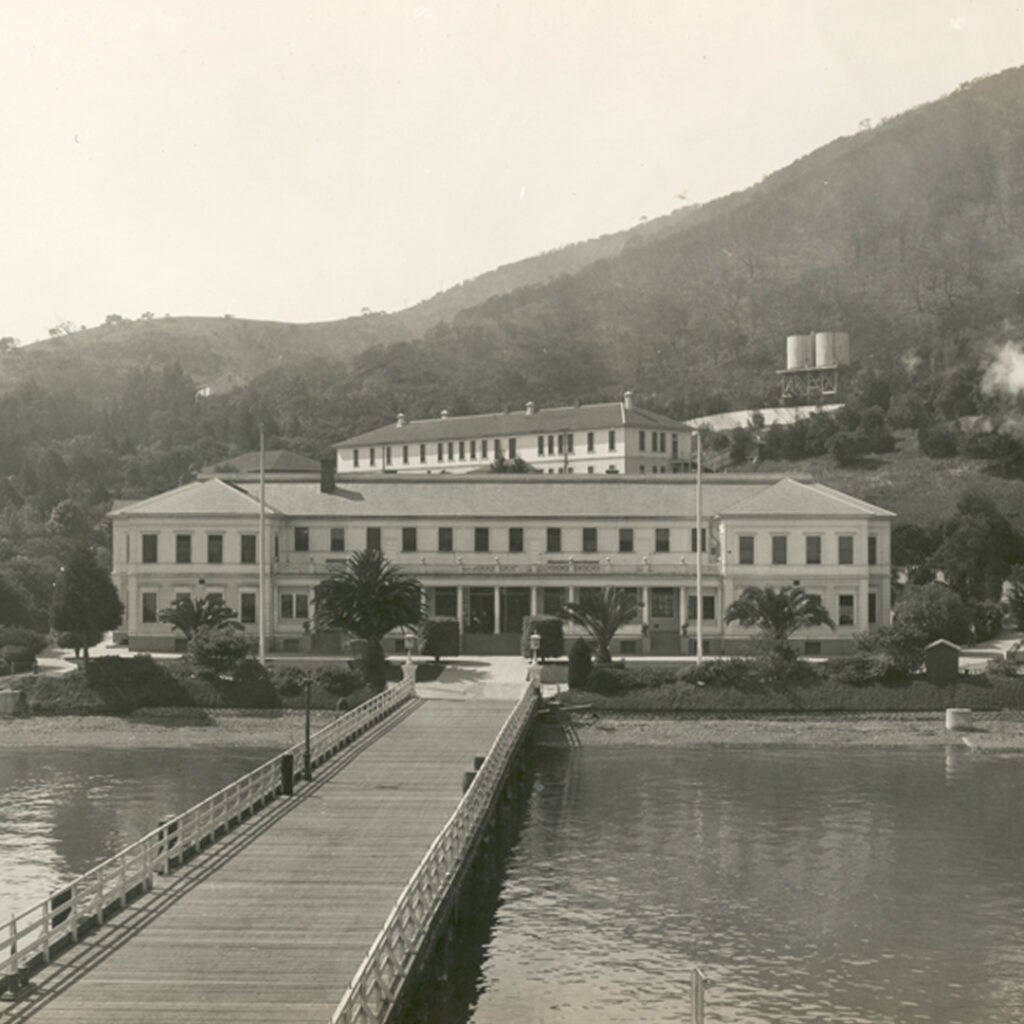
Angel Island Immigration Station — Japanese American men were confined here in the same barracks where Chinese immigrants had been detained for decades under exclusion laws.
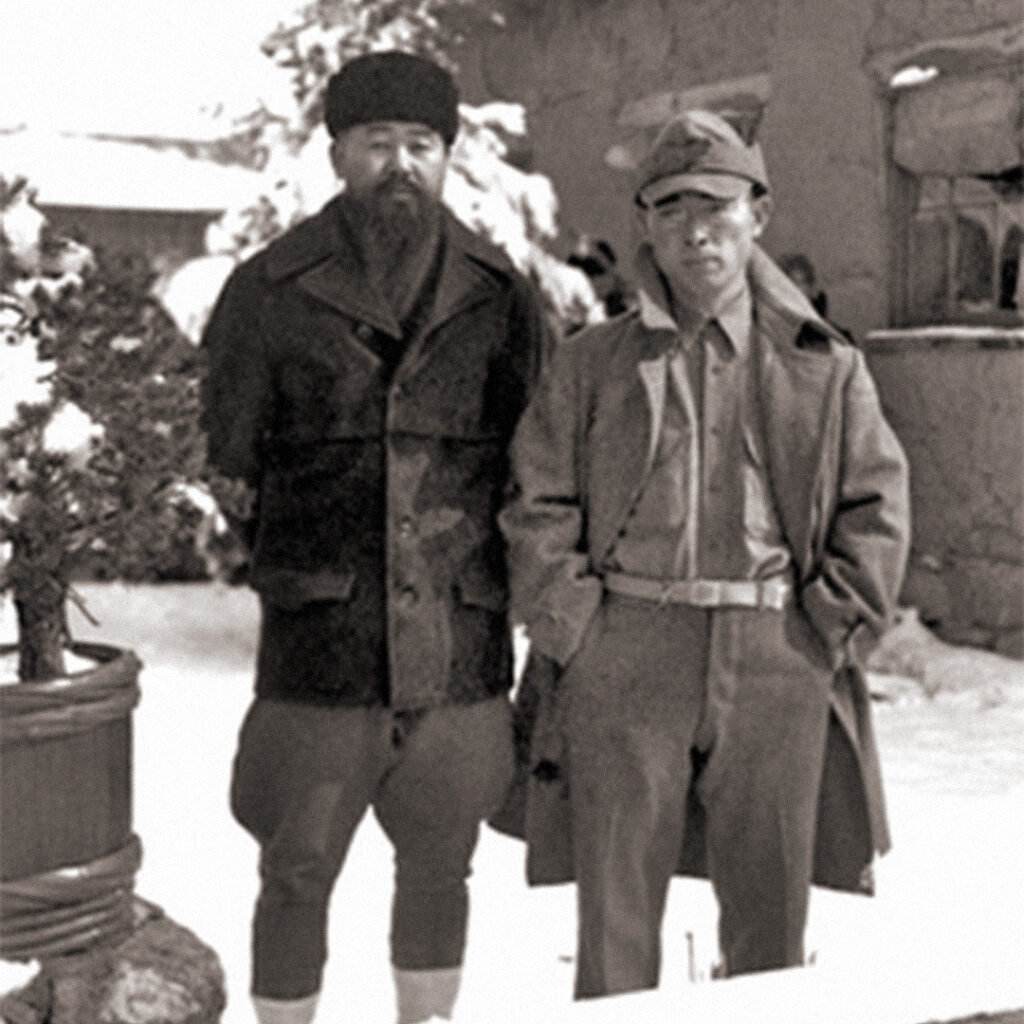
Kakurō and Shigeo Shigenaga at the Santa Fe internment camp, New Mexico. After being arrested separately, both brothers were held for years without charges.
Removed From Home
Shigeo’s journey took him by military transport to Angel Island, where men were packed into rooms so crowded they could barely move. They slept on shelves and floors. Guards escorted them to makeshift latrines after hours locked inside.
From there, both brothers were sent through a series of mainland camps, including Camp McCoy, Camp Forest, Fort Sam Houston, Fort Missoula, Camp Livingston, Lordsburg, and Santa Fe.
Kakurō would spend nearly four years moving between Wisconsin, Tennessee, Louisiana, Montana, New Mexico, and finally back to Hawaiʻi in late 1945.
He would not see his family again during the war.
After Release
When Kakurō returned, he pumped gas at a service station before opening a small grocery store with his family. Slowly, he rebuilt a business route across Maui.
Shigeo returned to Honolulu and resumed running the Venice Café. Years later, he would open the Hotel Kaimana, a long-held dream completed after incarceration.
Their success did not undo what had been done to them. They were not imprisoned for what they did. They were imprisoned because, once arrested, the government decided it no longer mattered who was guilty.
The mistake was known. The detention was deliberate. Or maybe, the brothers just looked the same to them.
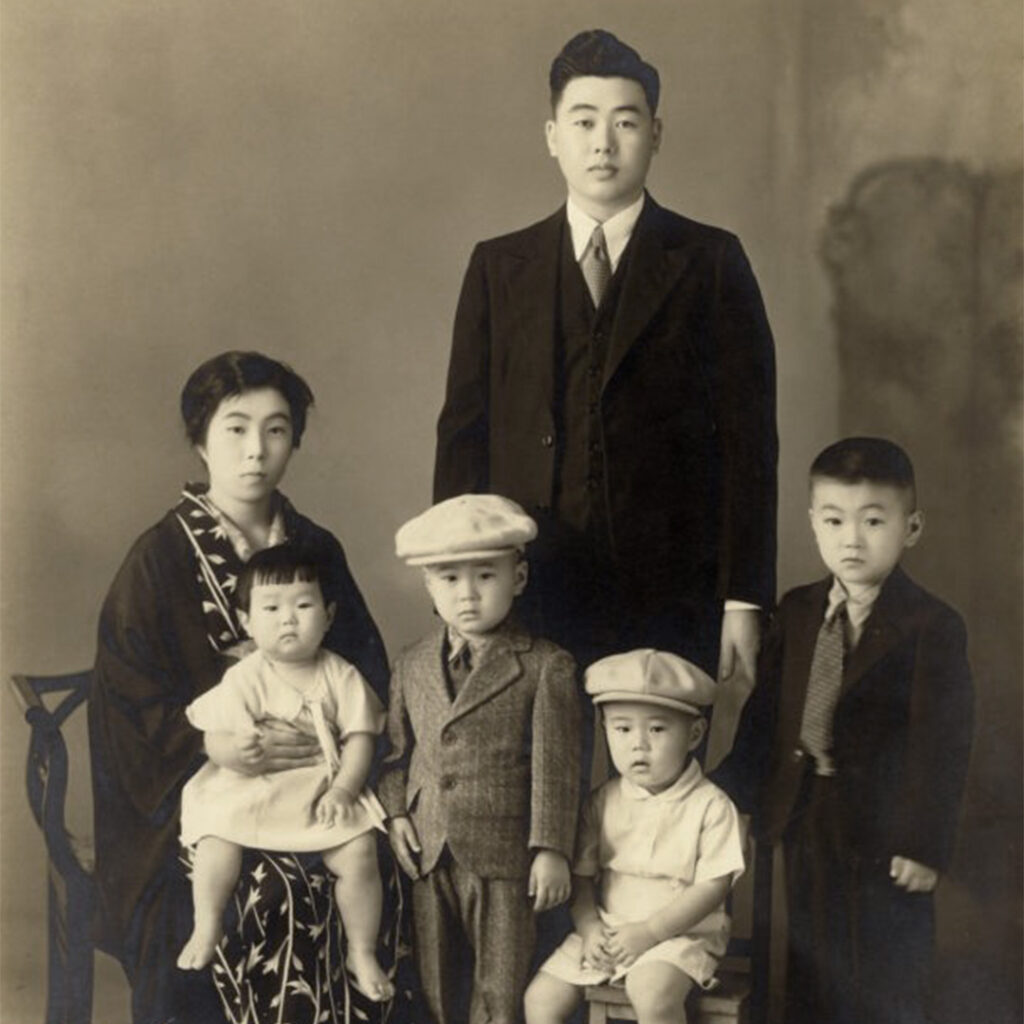
Shigeo Shigenaga with his wife Akino and their children. After years of imprisonment, he was finally able to return home and rebuild his family.
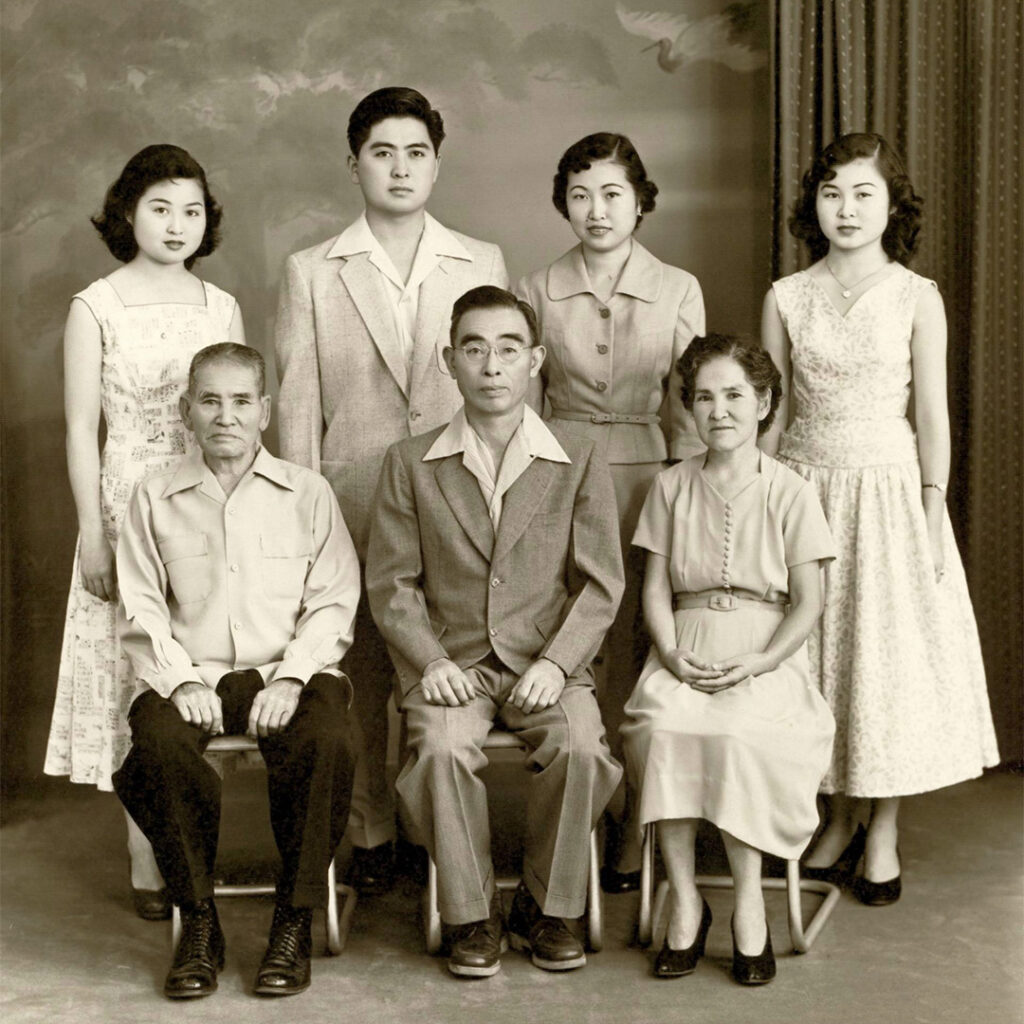
Kakurō Shigenaga with his family, 1955. After years of imprisonment, he was finally able to return home and watch his children grow up.