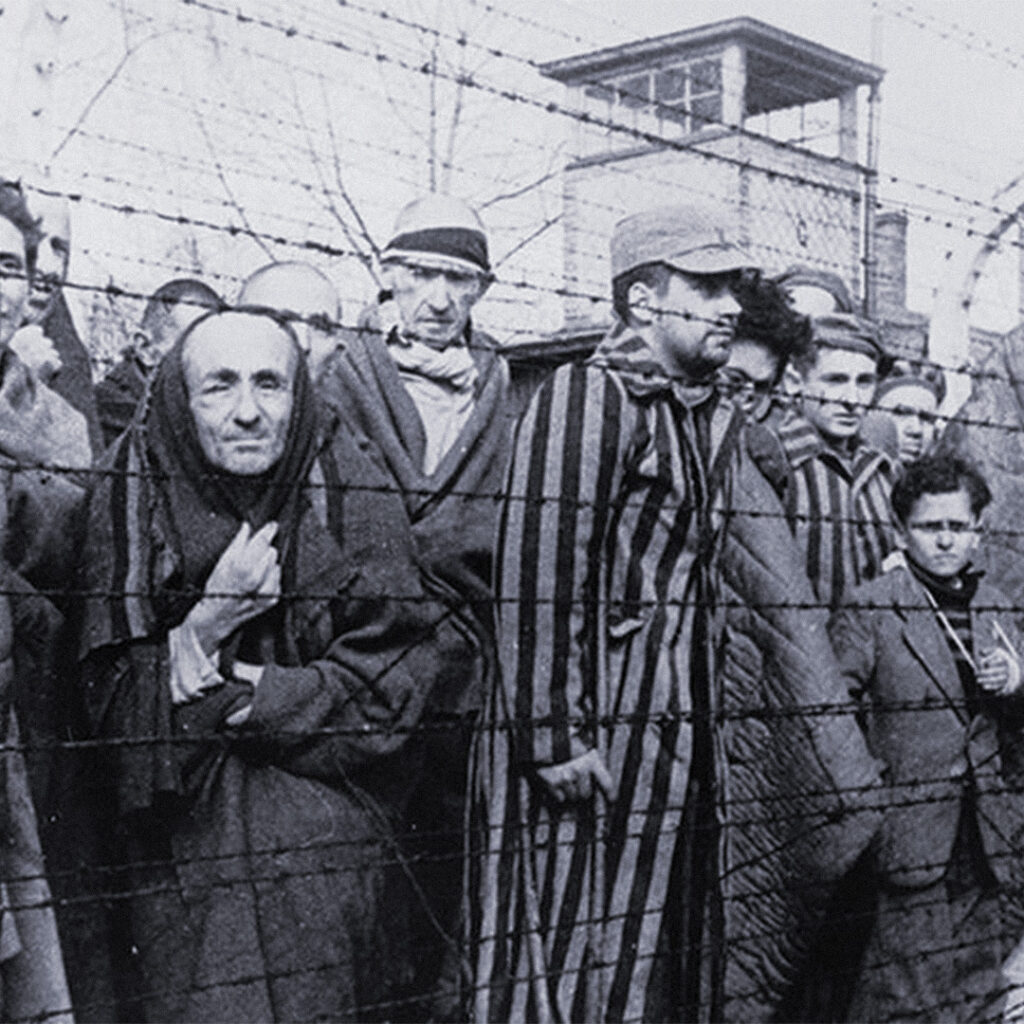
Were they “internment camps” or “concentration camps?” Let’s ask the man who signed the Executive Order.
October 20, 1942: In a press conference at the White House, President Franklin D. Roosevelt was recorded calling the camps what they really were: “concentration camps.”
During a White House press conference on October 20, 1942, President Franklin D. Roosevelt was asked a routine question by a reporter:
Q: “Where did the Japanese come from who are being shipped off to Montana, sir?”
A: The President: “Concentration Camps.”
Just two words. But they revealed more honesty than many official government documents ever did. In that moment, Roosevelt used the term that had been carefully avoided by his administration. Instead of the preferred euphemisms like “relocation centers” or “assembly centers,” he said the quiet part out loud.
President Franklin D. Roosevelt during one of his famous “fireside chats,” where he spoke directly to the American public over the radio, and sometimes slipped.
The first group of Japanese-Americans arrive at the Manzanar War Relocation Center, one of ten major incarceration camps during WWII, 1942
The definition of a “concentration camp” fits what happened to Japanese Americans during WWII very accurately. Interestingly, the term “internment camp” isn’t even included.
Internment? Concentration? What Do We Call Them?
To this day, people debate the terminology surrounding the forced removal and incarceration of over 125,000 Japanese Americans during World War II. Many still refer to these sites as “internment camps,” a term that sounds sterile, even legalistic. But internment, by definition, refers to the detention of foreign nationals during wartime. Two-thirds of those incarcerated were U.S. citizens. Internment, therefore, is both misleading and inaccurate.
Webster’s dictionary defines a concentration camp as: “a prison camp in which political dissidents, members of minority ethnic groups, etc. are confined.”
That description matches the camps that held Japanese Americans — loyal citizens imprisoned not because of what they had done, but because of who they were.
Roosevelt Wasn’t the Only One
FDR’s 1942 comment wasn’t the only time someone in his administration let the truth slip. In fact, both Roosevelt and his administration members have been caught a number of times calling them “concentration camps.” His Attorney General Francis Biddle expressed in 1943:
“The present practice of keeping loyal American citizens in concentration camps for longer than is necessary is dangerous and repugnant to the principles of our government.”
Harold Ickes, Secretary of the Interior, later admitted in 1946:
“Crowded into cars like cattle, these hapless people were hurried away to hastily constructed and thoroughly inadequate concentration camps… We gave the fancy name of ‘relocation centers’ to these dust bowls, but they were concentration camps nonetheless.”
Francis Biddle, U.S. Attorney General during WWII, helped enforce the exclusion and incarceration orders. But even he advised the program was unnecessary.
Harold Ickes, Secretary of the Interior under FDR, didn’t hold back after the war. He plainly called them what they were: “Concentration Camps.”
They were all concentration camps, but there were ones with gas chambers and barbarous medical experiments — by no means the same as Japanese American incarceration.
A Joint Statement, Decades Later
In 1998, during preparations for Ellis Island Immigration Museum hosting a traveling exhibit on the Japanese American WWII camps, there was controversy over whether to use the term “concentration camp.” Some felt it would diminish the memory of the Holocaust. But in a rare moment of cross-community dialogue, leaders from the Japanese American and Jewish American communities met and issued a joint statement:
“A concentration camp is a place where people are imprisoned not because of any crimes they have committed, but simply because of who they are… Despite differences, all had one thing in common: the people in power removed a minority group from the general population and the rest of society let it happen.”
Some were death camps. Some were prison camps. They weren’t the same. But if people in there were imprisoned only because of who they were, those were all, by definition, concentration camps.
Words Matter
Calling these sites concentration camps doesn’t minimize the Holocaust. And by no means are we equating them. But it clarifies what happened on American soil — and ensures it won’t be sanitized by language.
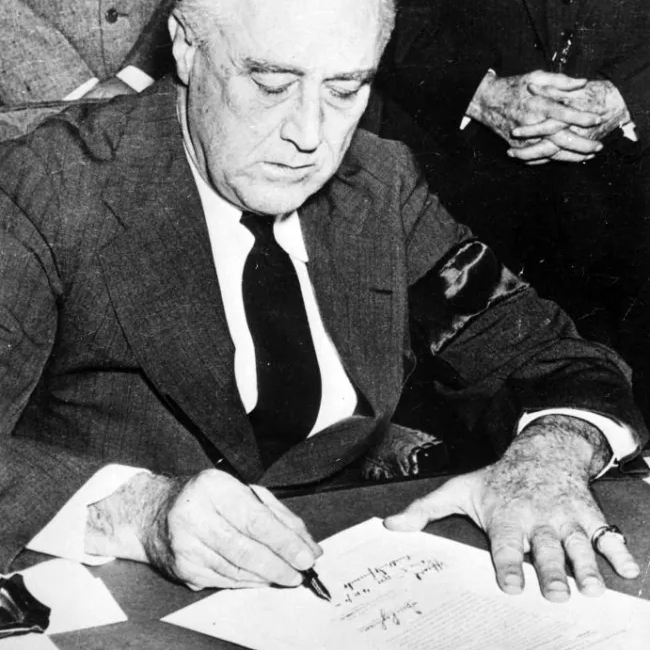
Roosevelt signed Executive Order 9066. He authorized the incarceration. And when pressed in a moment of candor, he often called them what they were: concentration camps.
Maybe it’s good to say the quiet part out loud.
February 19, 1942 — Franklin Roosevelt signs Executive Order 9066, setting in motion the mass incarceration of over 120,000 Japanese Americans during WWII
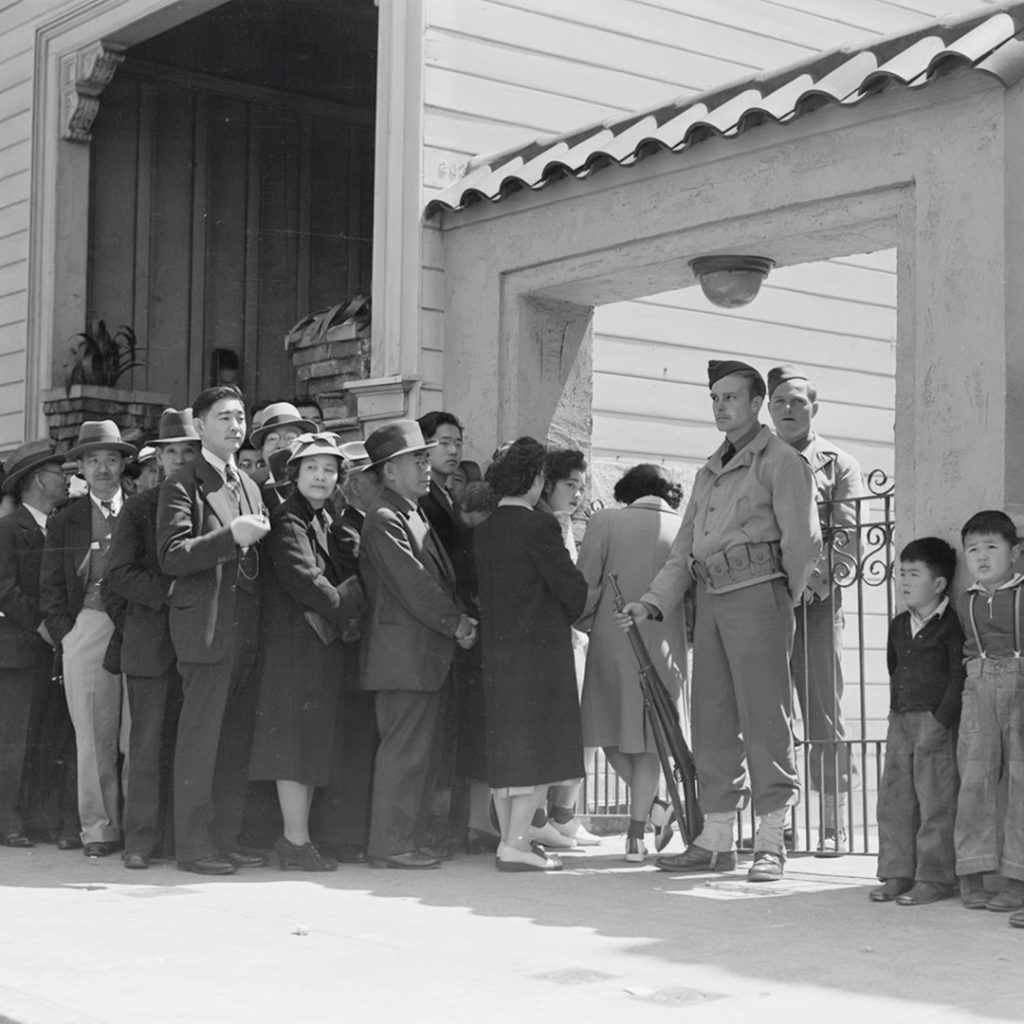
San Francisco’s Japantown, April 1942, photo by Dorothea Lange. Japanese Americans waited in line — not because of anything they had done, but because of who they were.