The Supreme Court said the government’s actions were illegal, but still had to be obeyed.
December 18, 1944: In Ex parte Endo, the Court ruled that the government could not detain loyal Japanese Americans. But hours later, in Korematsu v. United States, it also ruled that refusing to comply with such unlawful incarceration was punishable.
On December 18, 1944, the U.S. Supreme Court decided two cases involving Japanese Americans during World War II.
In Ex parte Endo, the Court ruled unanimously that the U.S. government had no authority to detain a loyal American citizen. Mitsuye Endo had never been charged with a crime. The Court concluded that once loyalty was established, continued imprisonment was unlawful.
The decision effectively made the incarceration camps indefensible.
That same day, the Court ruled in Korematsu v. United States that Fred Korematsu’s conviction for violating military exclusion orders was valid. Korematsu had refused to leave his home and report for forced removal. The Court upheld his conviction by a 6–3 vote.
The government could not detain you. But it had every right to punish you for refusing to comply.
Mitsuye Endo, a loyal U.S. citizen, fired from the state of California without a cause. Her courage helped bring the camps down.
Fred Korematsu with his parents in their nursery in Oakland, c1940. He refused to comply with unconstitutional exclusion orders during World War II.
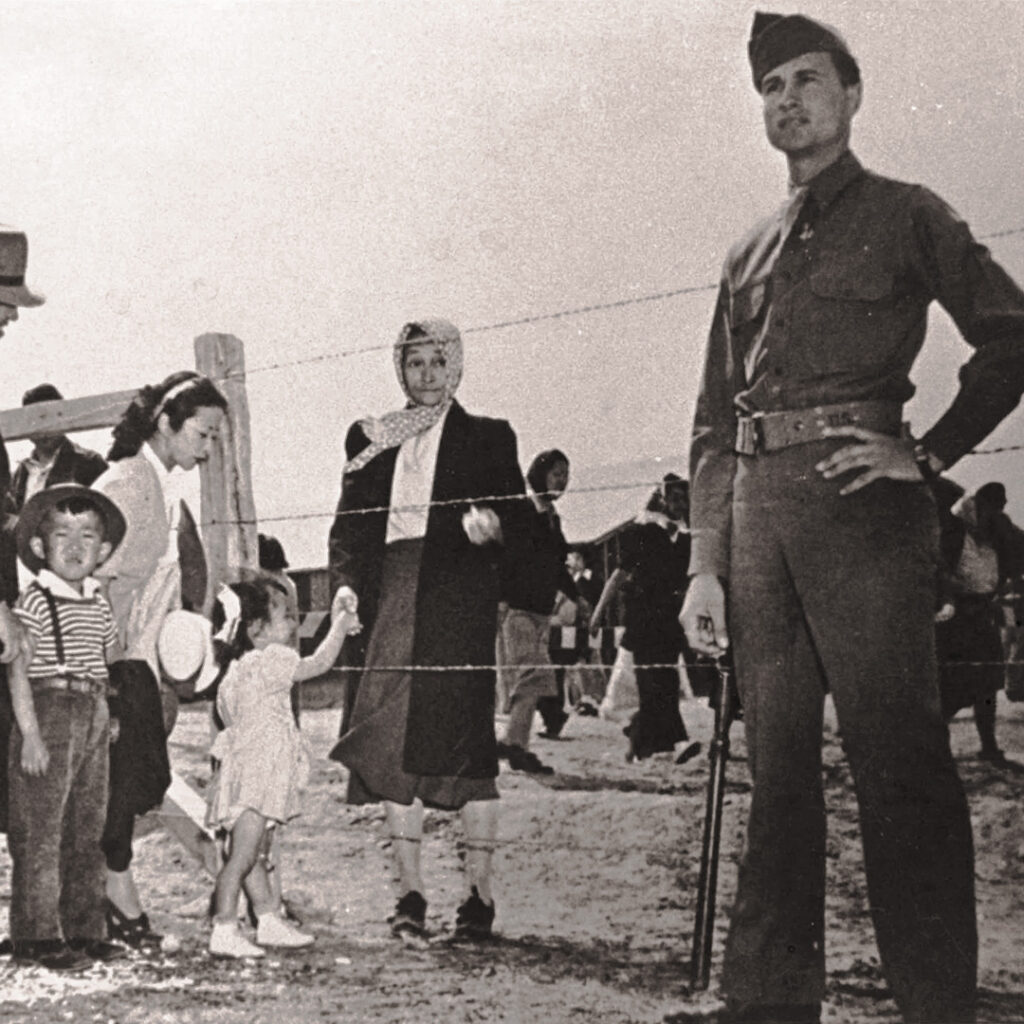
By 1944, it had become increasingly difficult to justify the mass detention of Japanese Americans. Loyalty had been established, yet families remained behind barbed wire.
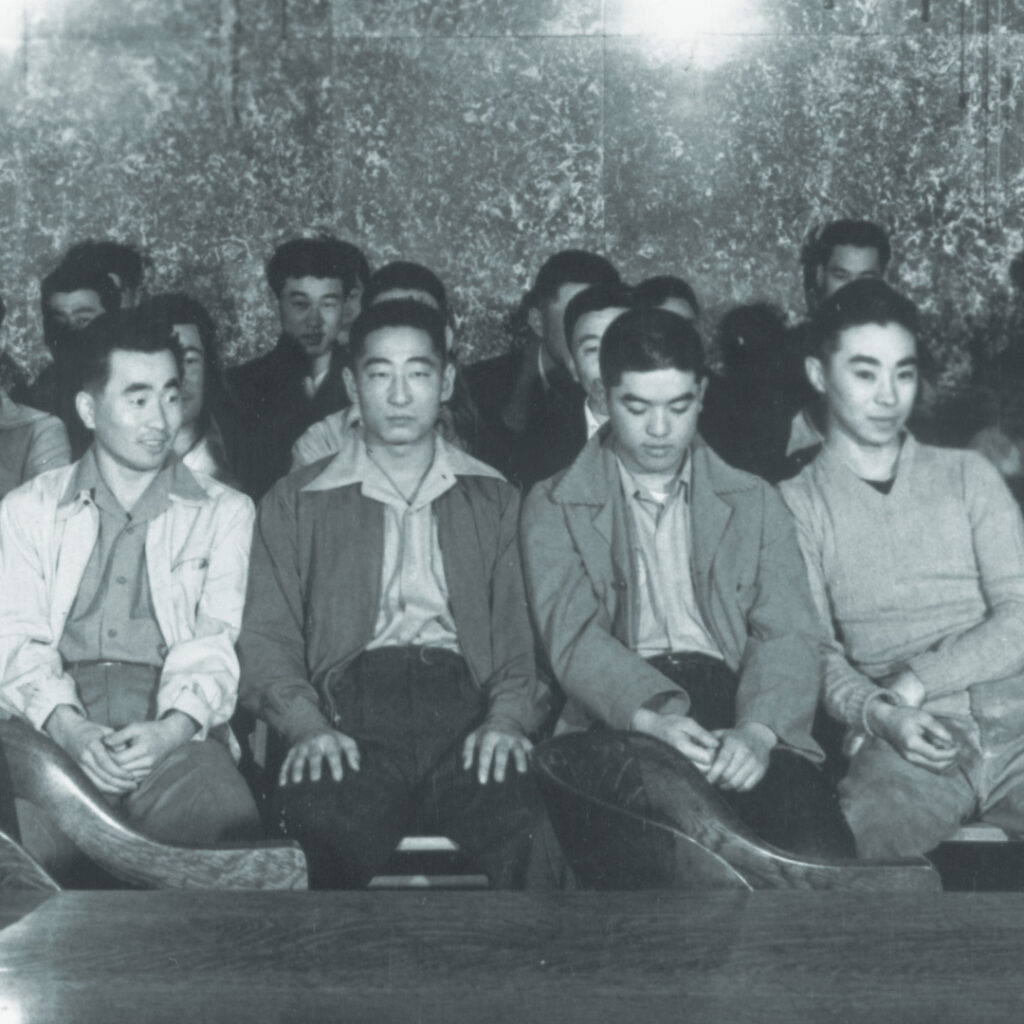
Loyalty no longer justified incarceration. But resistance still carried a sentence. Draft resisters, like these 63 men from Heart Mountain, still had to pay the price.
The Endo-Korematsu Paradox
The Court did not reconcile these rulings. It avoided doing so.
In Endo, the justices sidestepped the constitutionality of mass incarceration itself, instead ruling narrowly on the government’s authority to detain a loyal citizen.
In Korematsu, the Court deferred to military judgment, accepting the claim that exclusion was a wartime necessity, even without evidence of individual wrongdoing.
Together, the rulings created a legal fiction: The imprisonment was unjustified, but resistance to it was unlawful.
For Japanese Americans, the contradiction was not theoretical.
The Cost of Compliance
Obeying exclusion orders meant losing homes, businesses, farms, and freedom. Refusing to obey meant arrest, prosecution, and imprisonment.
The law offered no safe choice.
Mitsuye Endo’s quiet persistence helped end the camps. Fred Korematsu’s resistance made him a criminal in the eyes of the Court.
Both were right. Only one was vindicated in 1944.
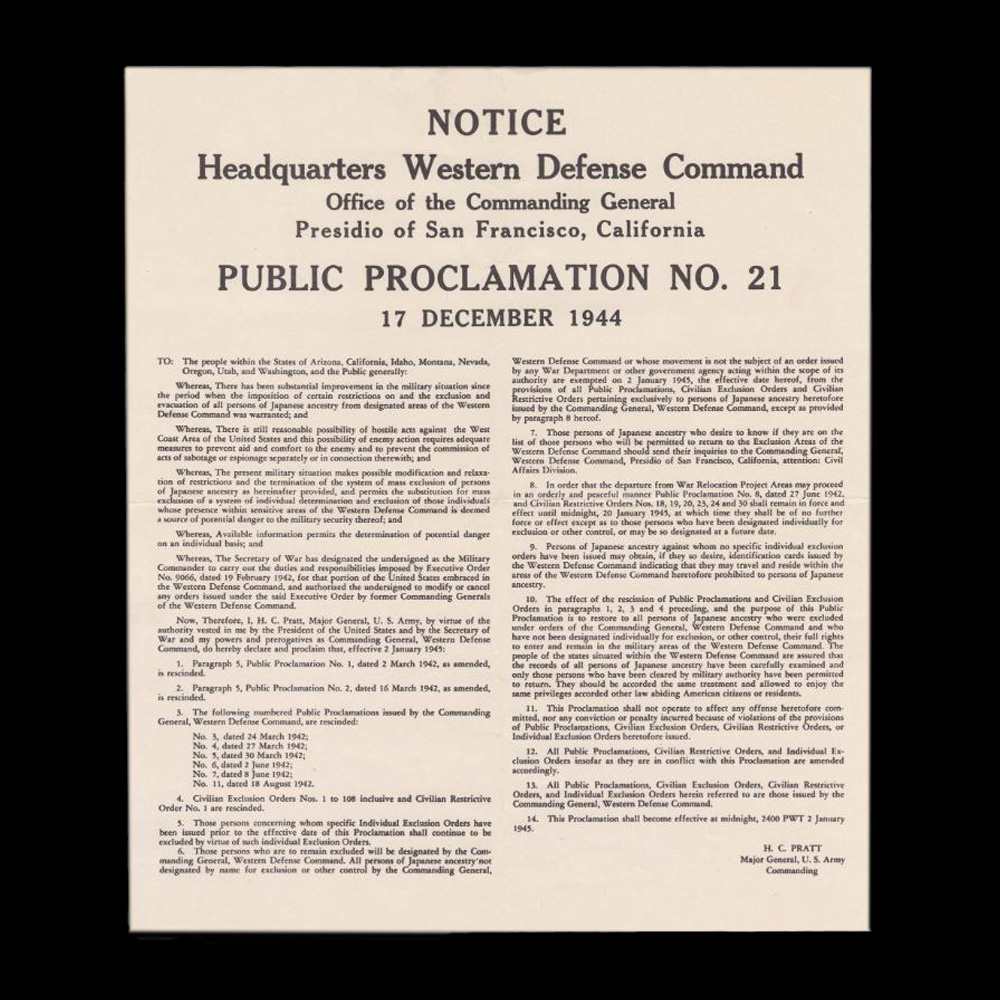
The day before the Endo ruling, the Roosevelt administration quietly moved to close the camps. They were tipped off with the outcome beforehand, and made a decision to sidestep embarrassment. No apology followed. No admission of wrongdoing was made.
Public Proclamation No. 21 formally ended the mass incarceration of Japanese Americans. It arrived not as an apology, but as a quiet, preemptive administrative retreat.
Fred Korematsu speaks after his wartime conviction was overturned — a decision made possible by the decades-long efforts.
The Stone Court decided Ex parte Endo and Korematsu v. United States on the same day in 1944. Six justices voted to punish resistance. Three called out civil rights violations.
What It Still Teaches Us
Korematsu remained on the books for decades, cited in later cases as precedent for expansive executive power in times of crisis.
It was not overturned until 1983.
December 18, 1944 did not deliver justice. It barely even began to undo the injustice that had been done. But it delivered an escape hatch for the authorities.
The Supreme Court helped end mass incarceration without fully confronting it, and punished resistance while acknowledging innocence.
The contradiction wasn’t resolved. The Court simply moved on.