He broke the color barrier in basketball, but nobody cared.
December 21, 1923: Wataru “Wat” Misaka, first non-white and first Asian American player in BAA (precursor to NBA), was born in Ogden, Utah.
Wat Misaka grew up in Ogden during an era when Japanese Americans were confined not by law, but by unwritten rules. His family lived in a segregated neighborhood where Japanese families clustered together, cut off from much of the city’s social and economic life.
As a child, Misaka lived in the basement of a barber shop. He recalled restaurants that would not serve him, neighbors who crossed the street to avoid him, and leagues where Nisei children were allowed to play only among themselves.
Basketball became his refuge. At Ogden High School, Misaka led his team to state championships in 1940 and 1941. On the court, his talent was undeniable. Off the court, he was still treated as an outsider in his own hometown.
But Ogden also spared Misaka one of the war’s harshest consequences. When Japanese Americans were forcibly removed from the West Coast during World War II, Misaka’s family wasn’t.
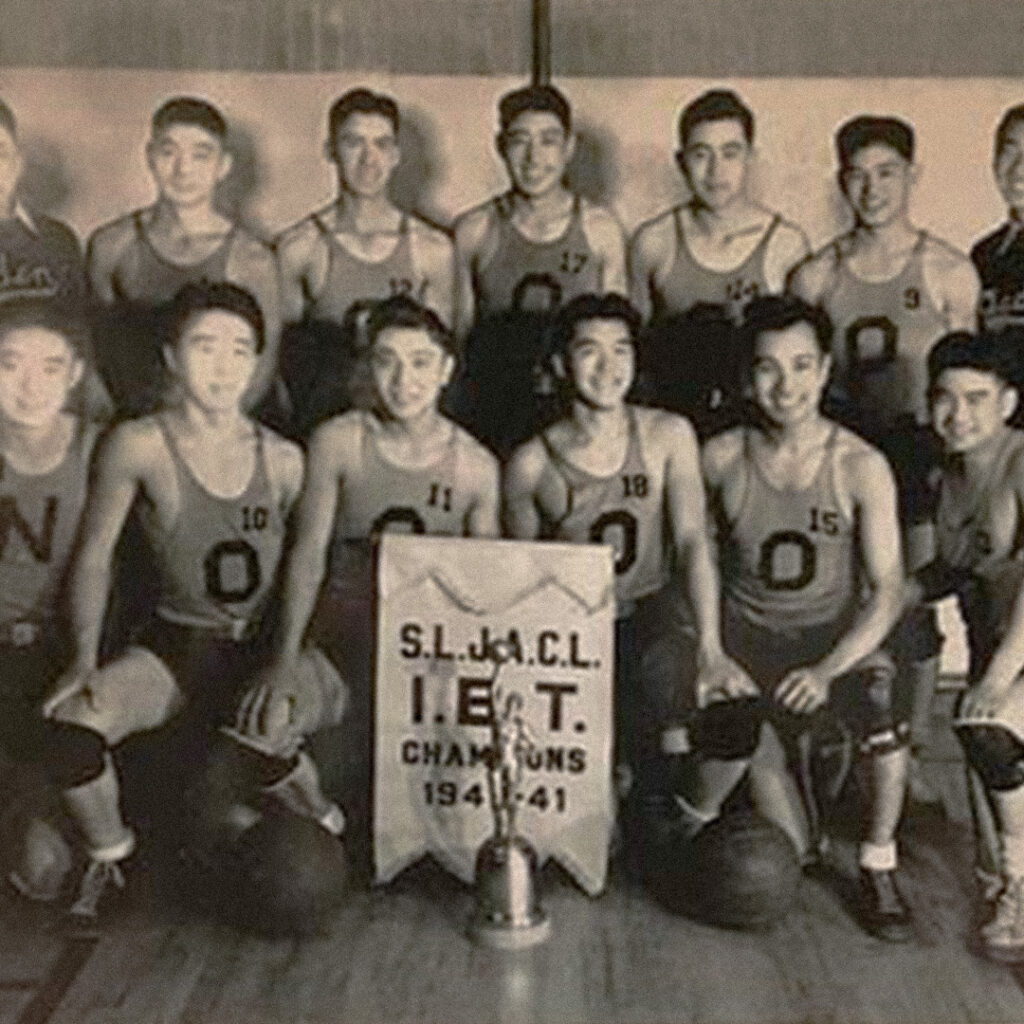
Wat Misaka (No. 11) played one season in the Japanese American leagues for the Ogden Nippons, while also leading Ogden High School to two Utah state titles.
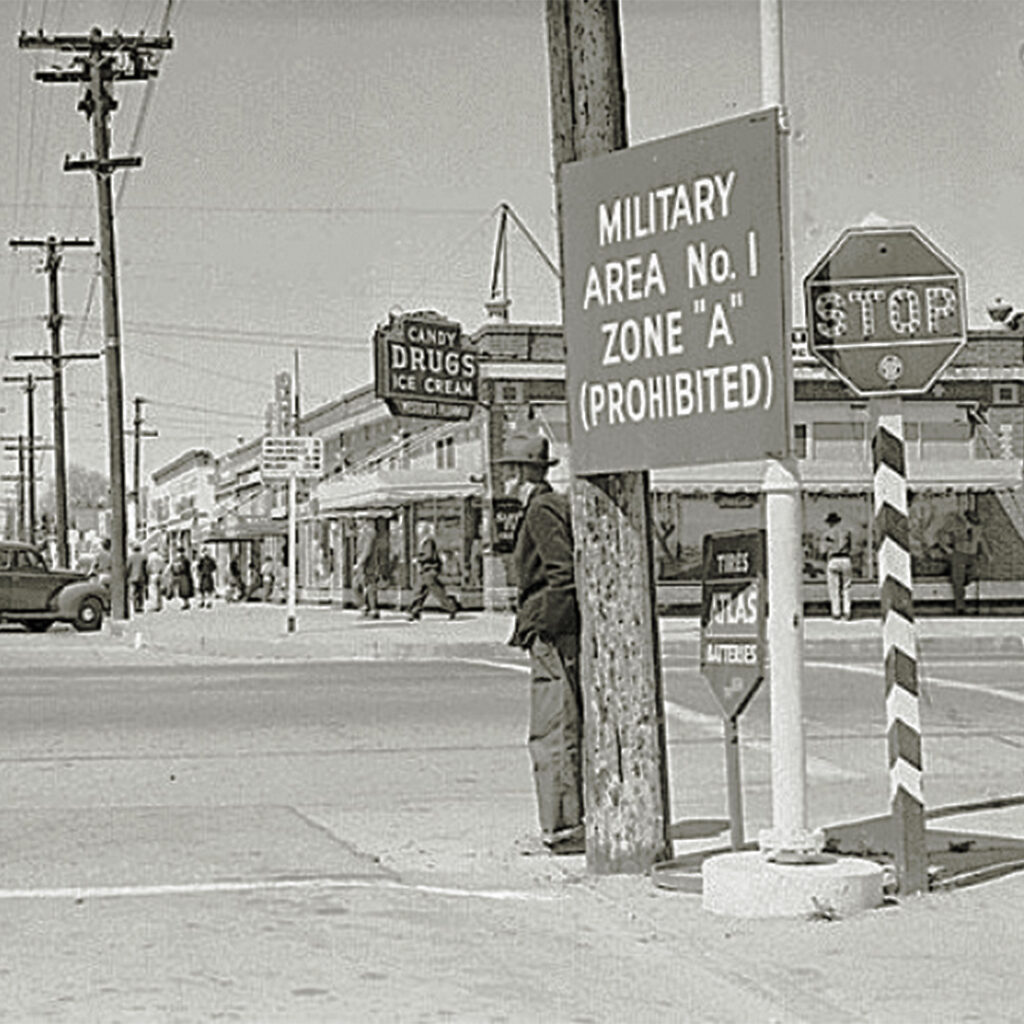
Utah was outside the West Coast Exclusion Zone, where forced removal initially did not apply, creating a fragile refuge for Japanese Americans.
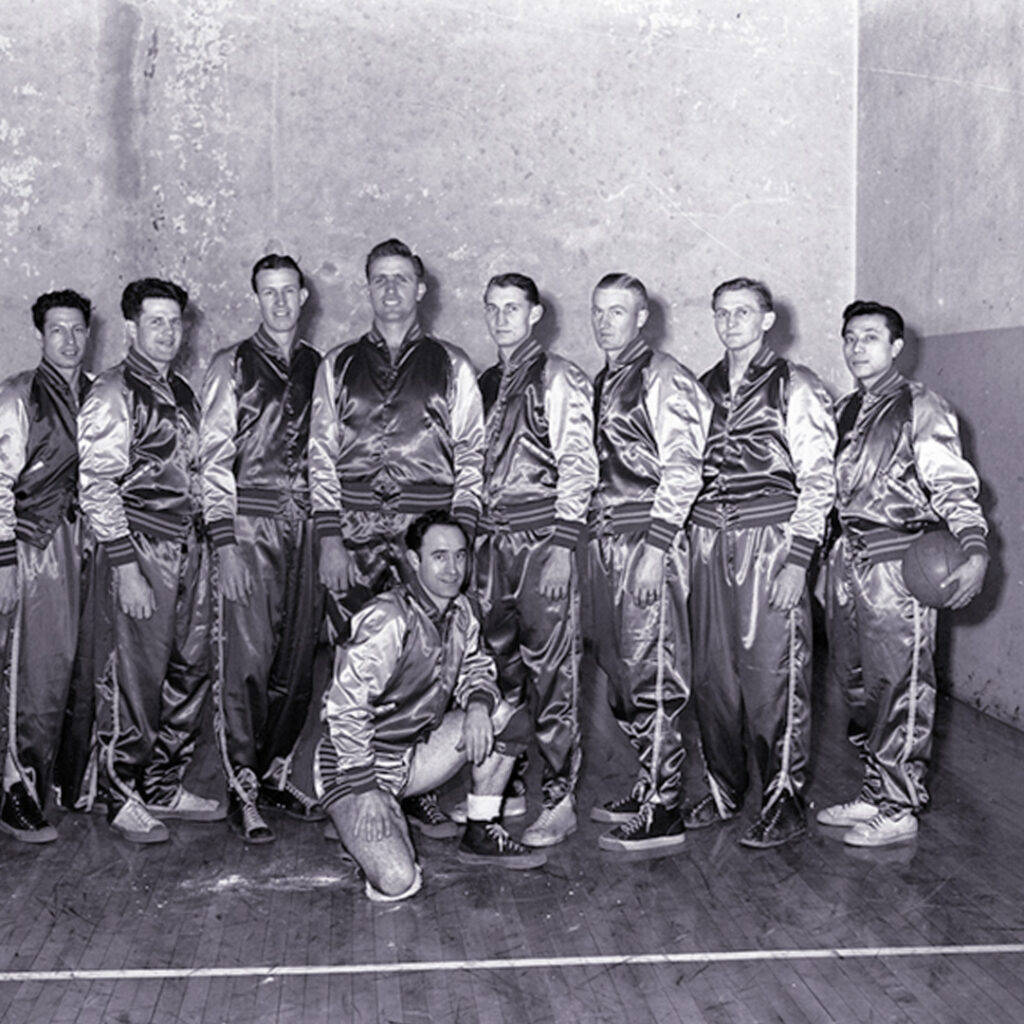
Wat Misaka (far right), already the only non-white player on the Weber College basketball team in the mid-1940s.
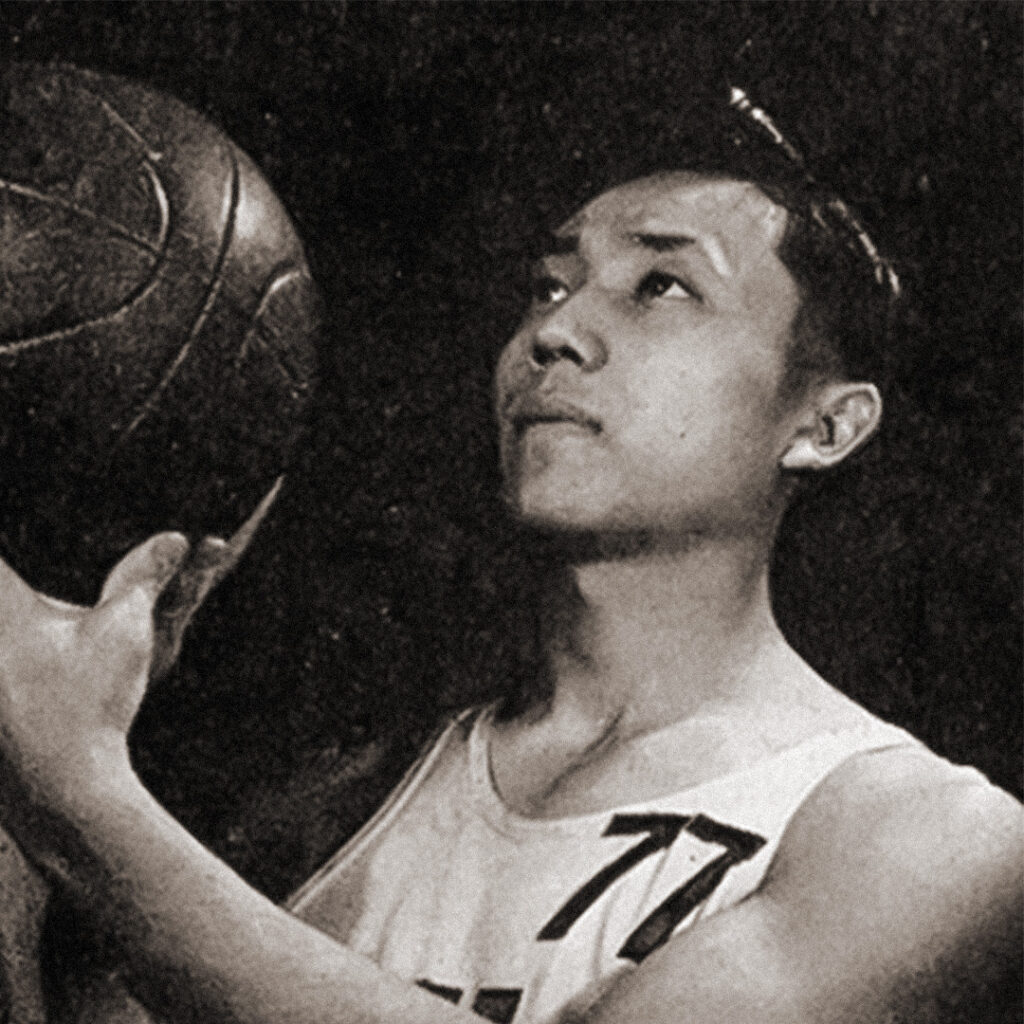
Wat Misaka at Weber College, No. 77. The team won back-to-back championships with Misaka as its standout guard.
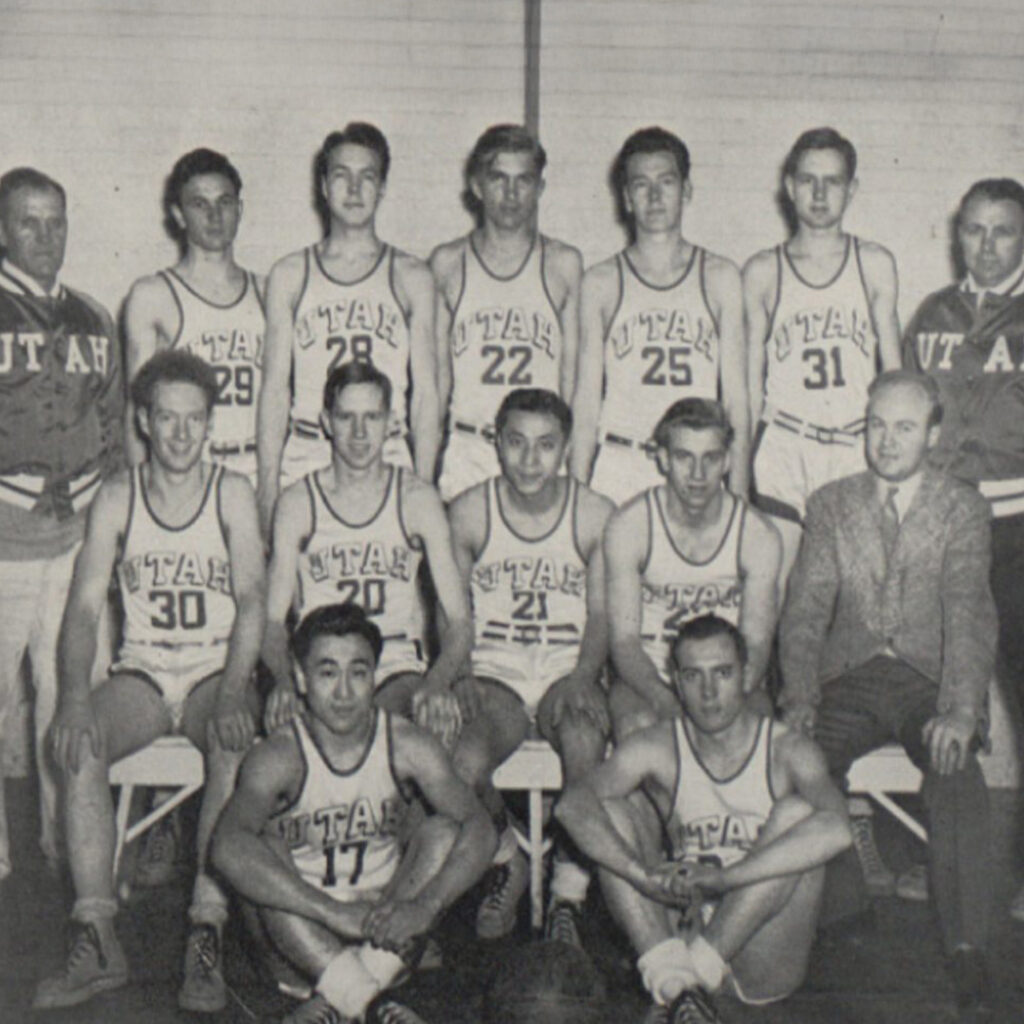
Utah Utes, 1944. Wat Misaka in the middle, already competing at the highest level of college basketball.
Excluded from the Exclusion Zone
Utah fell outside the exclusion zone, allowing him to continue his education at a time when thousands of other Nisei were imprisoned behind barbed wire.
At Weber College, Misaka quickly became a standout, leading the team to championships and earning Most Valuable Player honors in the 1942 junior college postseason tournament. In 1943, he was named the school’s athlete of the year.
He later transferred to the University of Utah. During those seasons, Misaka was often booed whenever he stepped on the floor. The message was not subtle: no matter how well he played, to many fans he looked like the enemy.
Still, Misaka helped lead the Utes to the 1944 NCAA championship. It was a triumph built on defense, speed, and discipline, during the height of wartime suspicion.
Draft Before the Draft
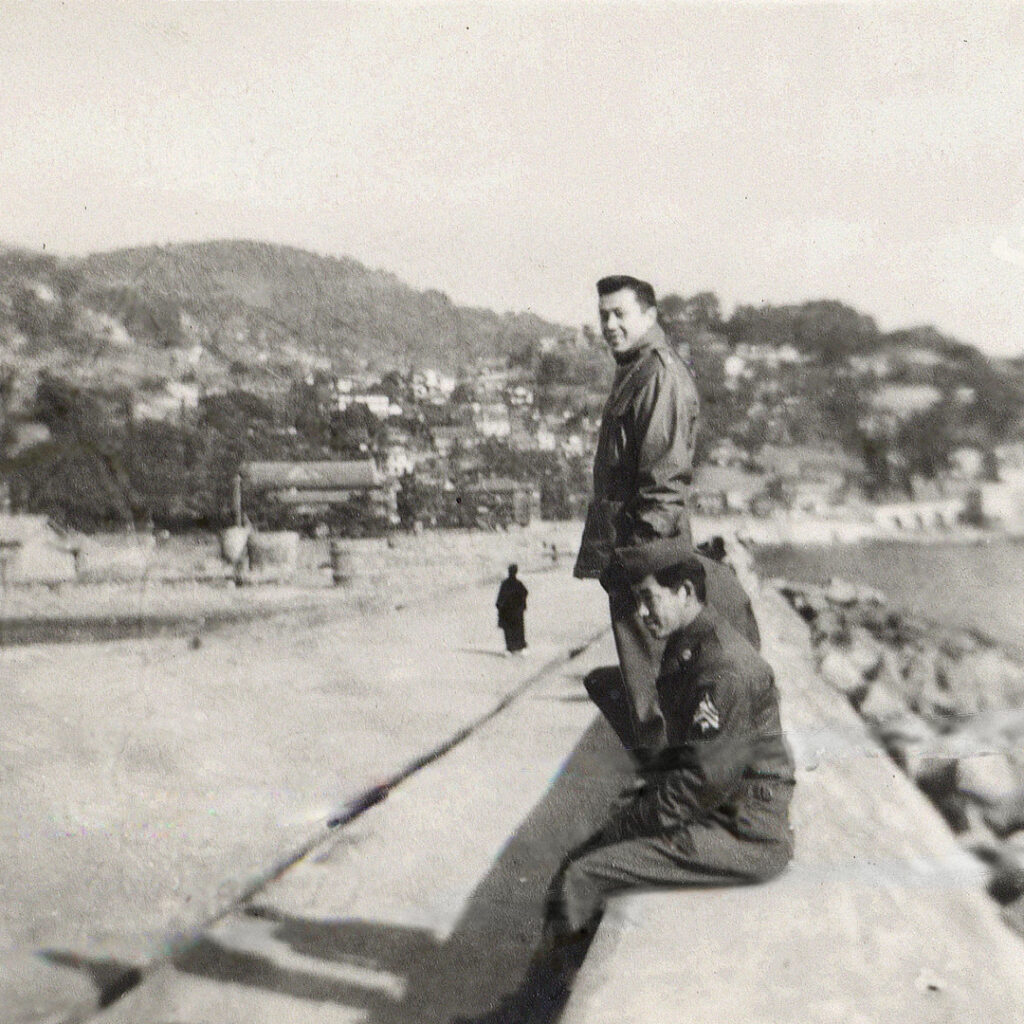
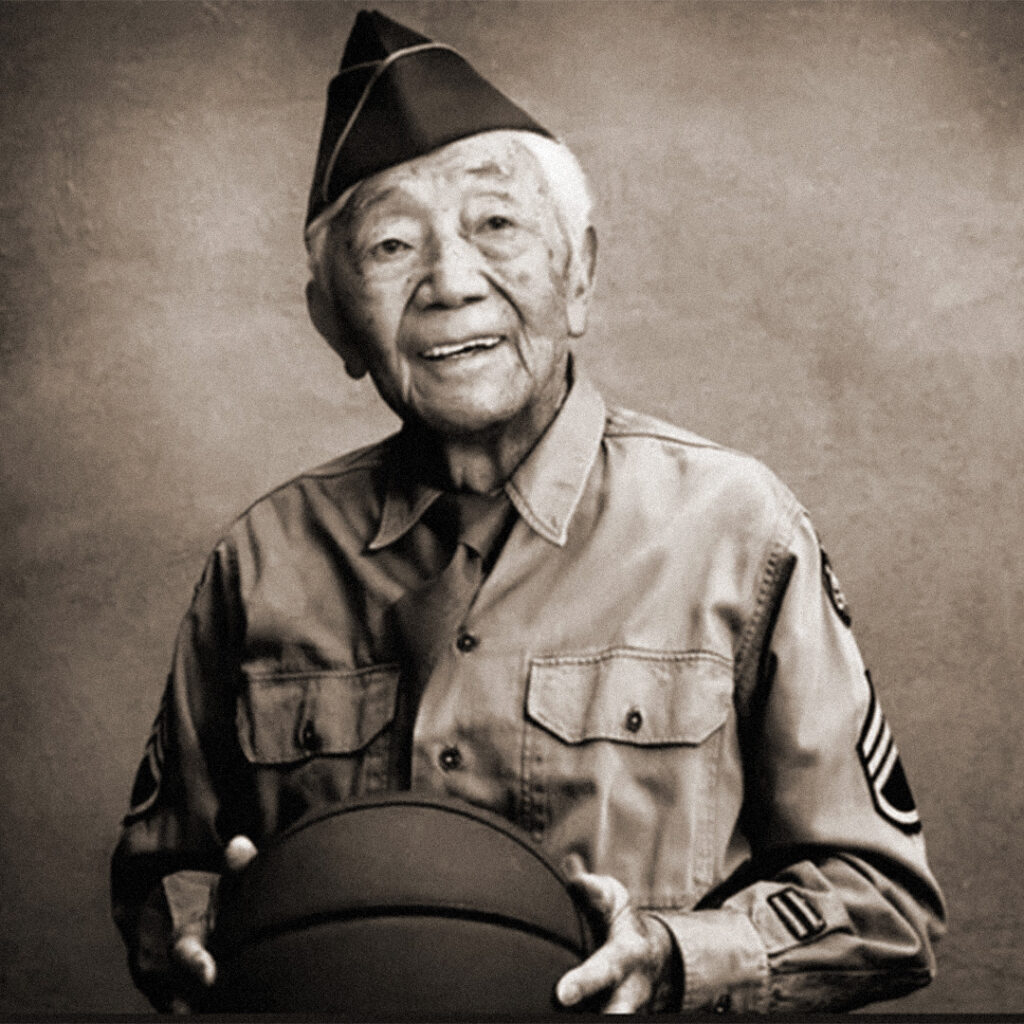
Before he finished school, Misaka was drafted into the U.S. Army and rose to the rank of staff sergeant. He served for two years in the Military Intelligence Service (MIS), including work as a translator during the postwar occupation of Japan.
When he returned to the University of Utah, Misaka discovered that his service did not earn him the same consideration as his white teammates. While others were guaranteed spots upon their return, he was required to try out again. But he still made the team.
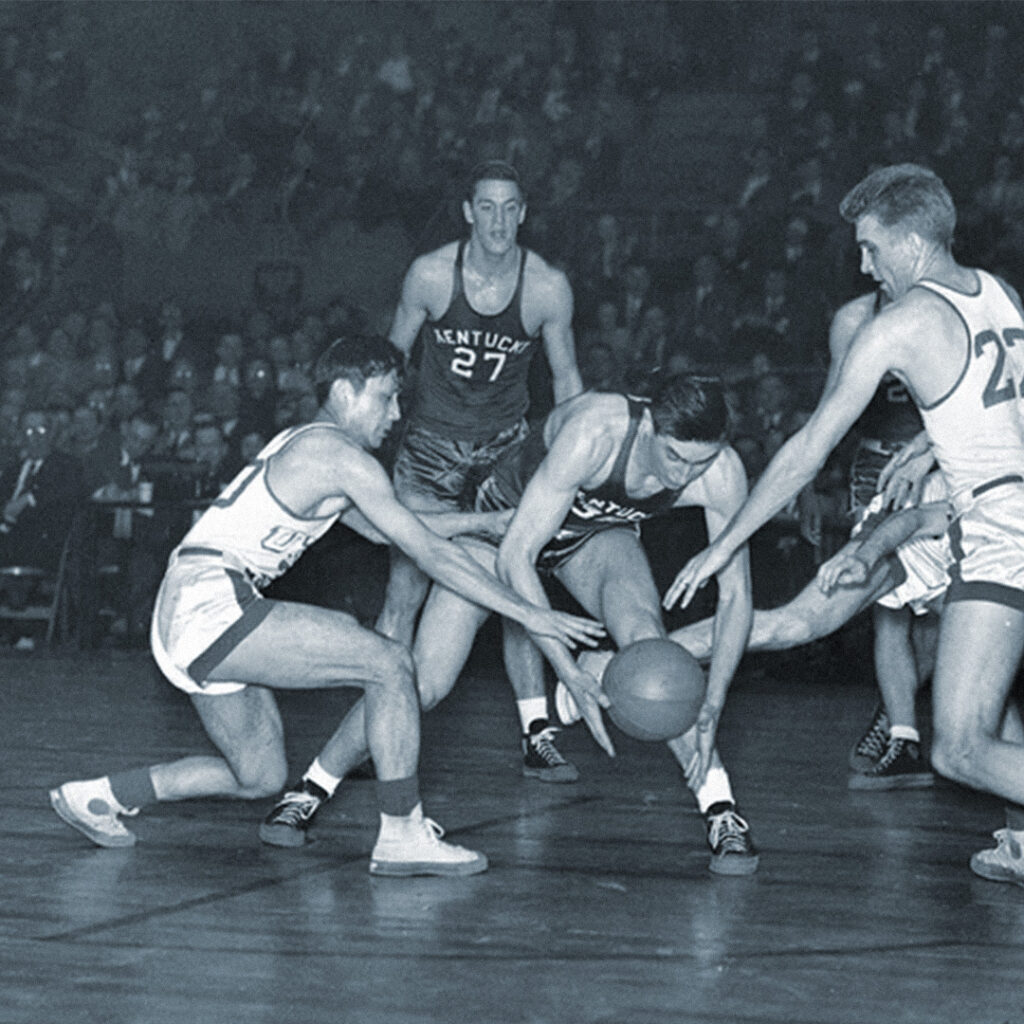
In 1947, Utah captured the National Invitation Tournament title again. Misaka’s defense was again decisive, famously holding Kentucky’s All-American guard Ralph Beard to a single point.
By then, the atmosphere had shifted. The war was over. The fever of anti-Japanese sentiment had begun to dissipate. The heroism of Japanese American soldiers in the 100th Infantry Battalion and 442nd Regimental Combat Team was becoming harder to ignore.
Wat Misaka in Hiroshima, 1946. A Japanese American soldier standing in a city destroyed by the war, where he was stationed as a member of the MIS.
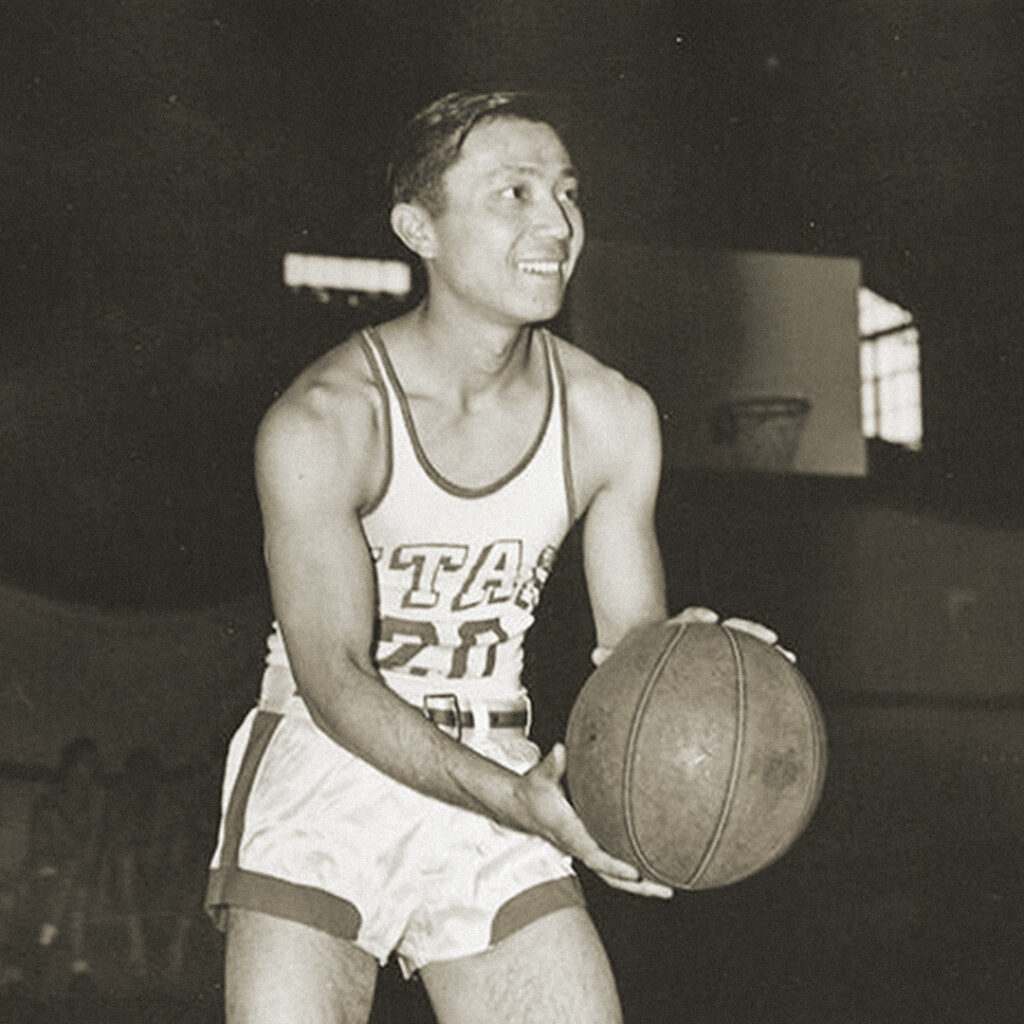
Wat Misaka with the Utah Utes during their 1944 Cinderella championship run.
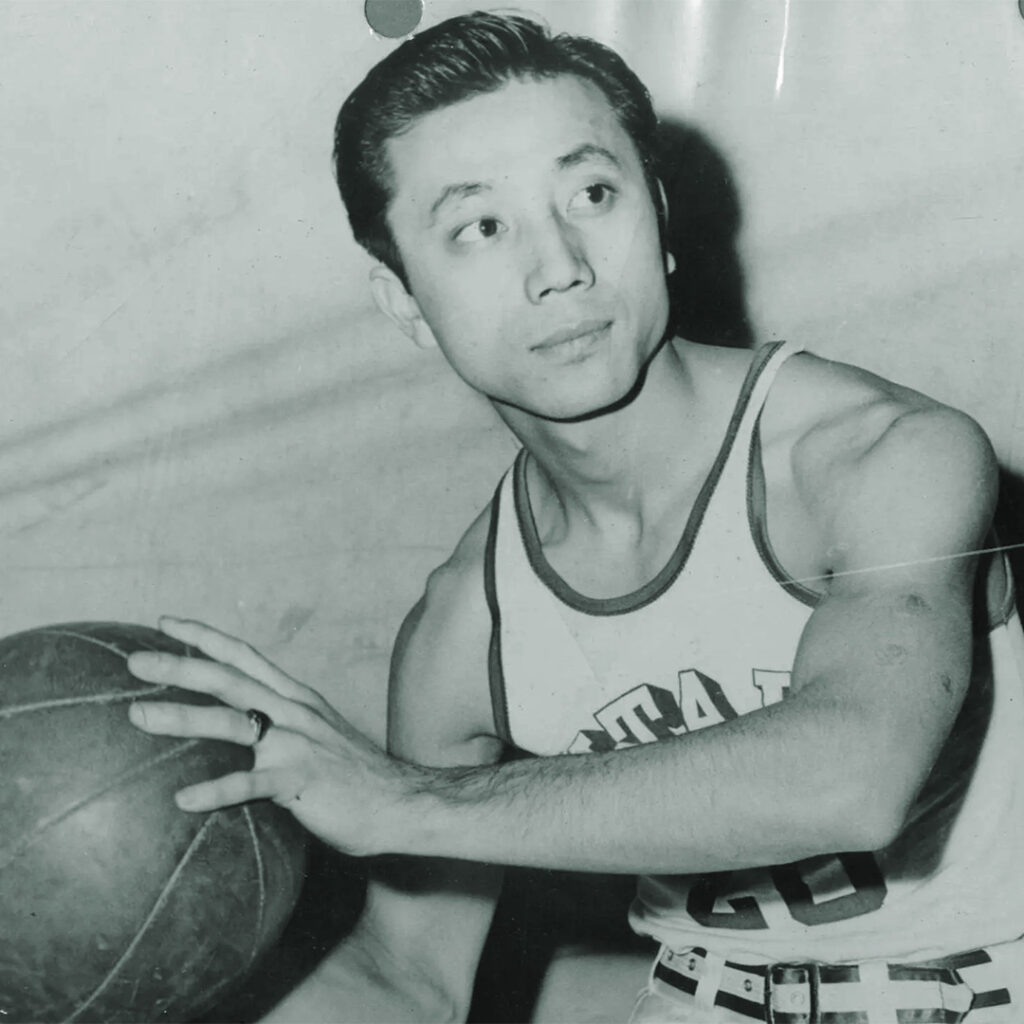
Wat Misaka with the New York Knickerbockers, 1947, shortly after breaking the NBA’s color barrier.
Wat Misaka scrambling for a loose ball at Madison Square Garden, 1947.
Breaking a Barrier Nobody Celebrated
Later that year, Misaka was selected by the New York Knicks in the 1947 Basketball Association of America (BAA) Draft. He became the first non-white player to appear in the league that would later become the NBA, the same year Jackie Robinson broke Major League Baseball’s color line.
The difference was visibility. There were no press conferences. No commemorations. No historical framing. Misaka later recalled, “It wasn’t a big thing. Nobody cared.”
He played in three games, scored seven points, and was released mid-season. His professional career ended just as quietly as it began. He earned a degree in engineering and spent his career as an electrical engineer in Utah.
Meanwhile, the first African American players would not enter the NBA until 1950.
What Wat Did
Misaka rarely spoke of his own significance. Decades later, when Jeremy Lin rose to prominence with the Knicks, Misaka attended a game quietly as a fan. He dismissed comparisons, insisting Lin’s success mattered far more.
Wat Misaka did not change the NBA overnight. He did not spark a movement. What he did was show that the barrier could be crossed, even when history chose not to remember it.
He won a national championship at a time of intense anti-Japanese sentiment. He served a country that doubted him. He broke a professional color line years before most Americans realized it existed. Recognition came slowly.
Misaka was inducted into the Utah Sports Hall of Fame in 1999. In 2022, the University of Utah honored his number 20 jersey, acknowledging both his championship contributions and the discrimination he endured.
Wat Misaka was inducted into the Utah Sport Hall of Fame in 1999, and his #20 was retired by University of Utah in 2022.
Wat Misaka, photographed by Shane Sato for “The Go For Broke Spirit,” an incredible series documenting Nisei WWII veterans. He was a legend way ahead of his time.

inspiring. lots of information about something I did not know. made me wonder why i didnt know.