December 28, 1945: The War Brides Act was signed into law, allowing foreign-born spouses of American servicemen to immigrate to the United States after World War II. Most Asians were excluded.
During World War II, millions of American servicemen were stationed overseas for years at a time. Many fell in love. Many married. When the war ended, they expected to bring their wives home.
The War Brides Act of 1945 was meant to make that possible. It allowed foreign-born spouses and children of U.S. servicemen to enter the country outside the restrictive national-origins quotas that had governed immigration for decades.
But as was typical of the era, the law was written for some Americans more than others.
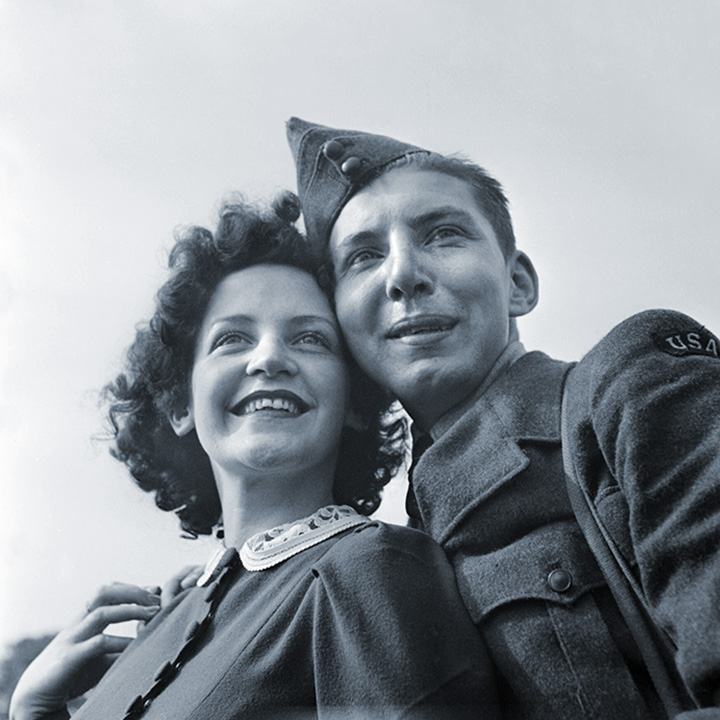
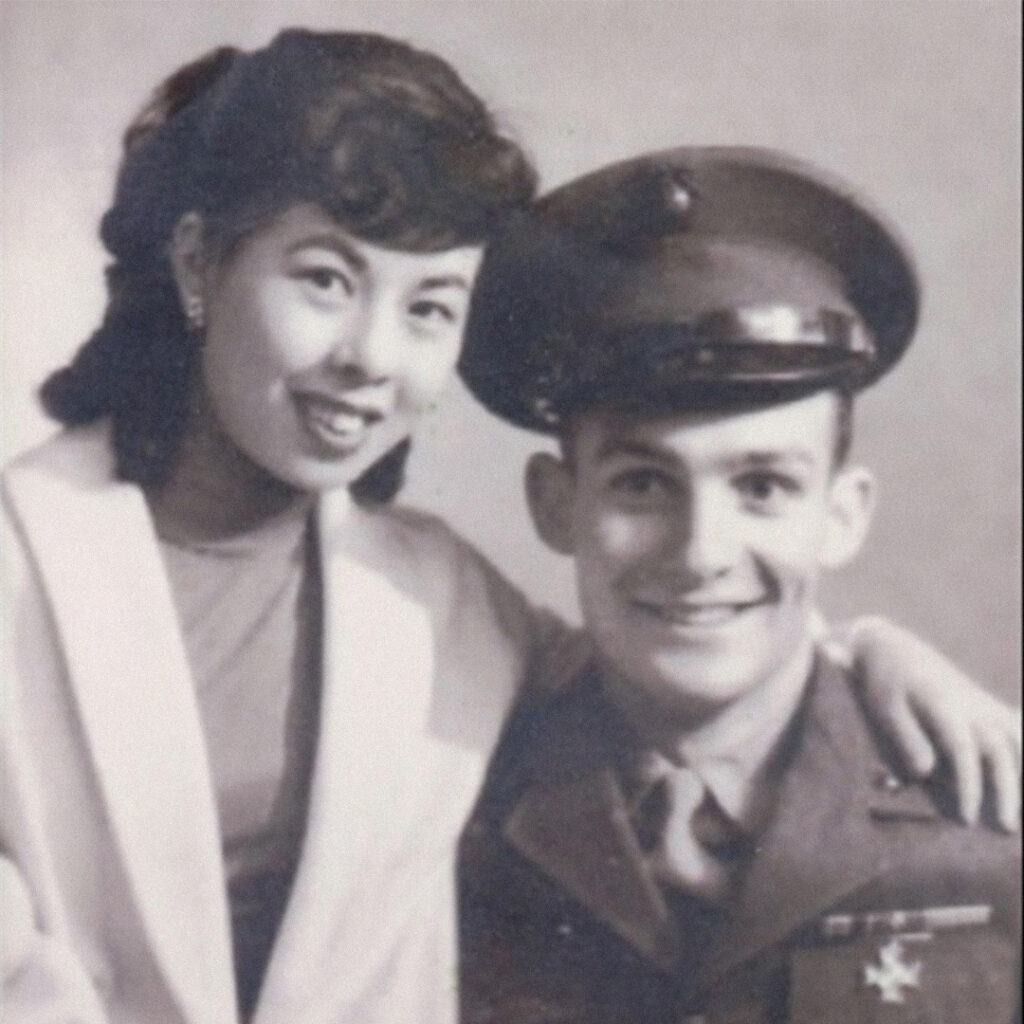
The War Brides Act of 1945 was created with couples like this in mind: an American soldier and a British woman, whose marriage posed no racial or legal barrier to immigration.
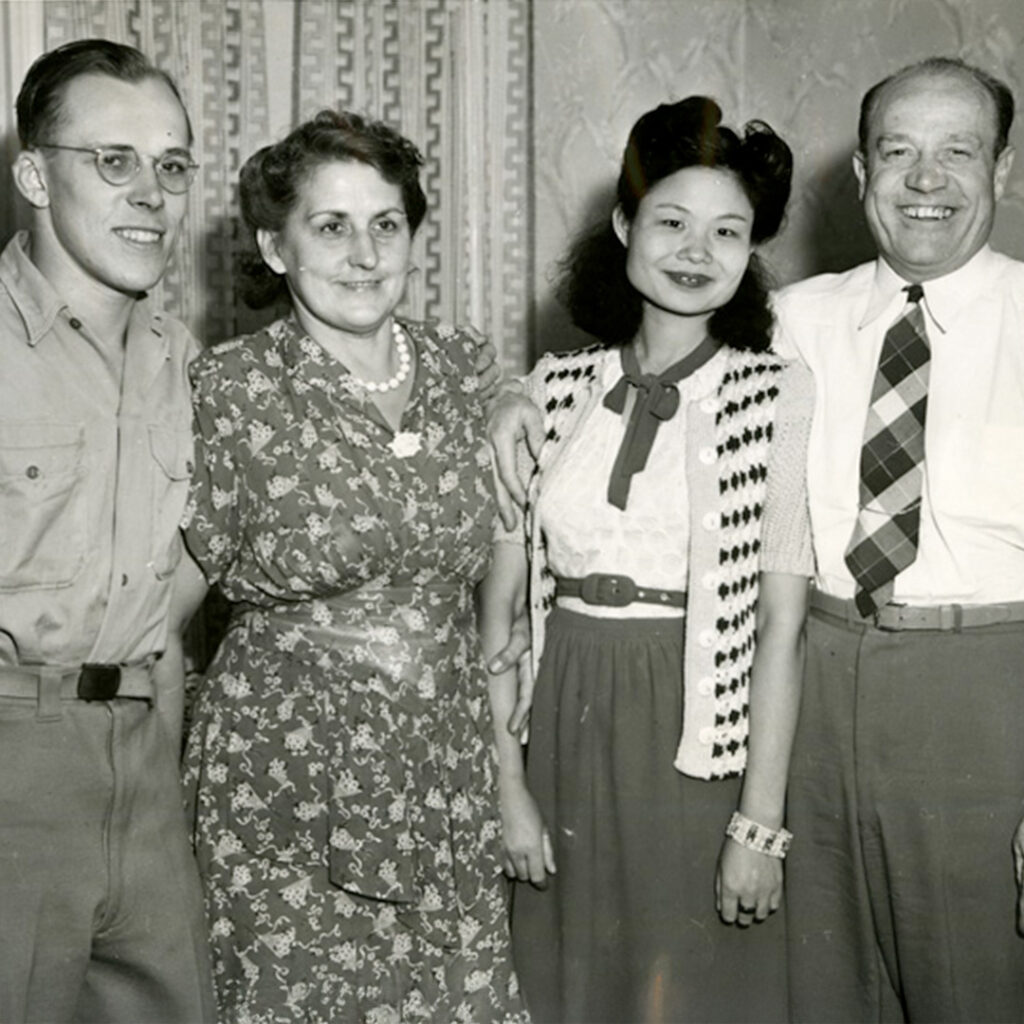
Earlier reforms and narrow legal pathways allowed some Chinese spouses of American servicemen to enter the United States when most other Asian war brides could not.
Not All Wives Were Equal
Although the Act was race-neutral in language, it was not race-neutral in effect.
Existing immigration laws, including Asian exclusion statutes and long-standing bans on Asian naturalization, meant that most Asian spouses were still barred from entry. Japanese, Korean, Filipino, Vietnamese, and South Asian wives were largely excluded, regardless of marriage certificates, military service records, or years of separation.
Chinese American spouses were the rare exception, largely because Chinese war brides more often fell within narrow legal allowances created by earlier wartime reforms.
For everyone else, the message was unmistakable: love alone was not enough.
War Brides of Japan
Following Japan’s surrender, the Allied occupation transformed the country. The U.S. military became the largest employer, while bombing raids had destroyed infrastructure and left food, housing, and transportation in crisis.
But perhaps more devastating still was the loss of more than two million Japanese men.
Many Japanese women found work on American military bases. For some, it was the first time they earned wages outside the home. As primary breadwinners, many experienced a sense of independence that would have been unimaginable just years earlier.
Relationships formed. Marriages followed.
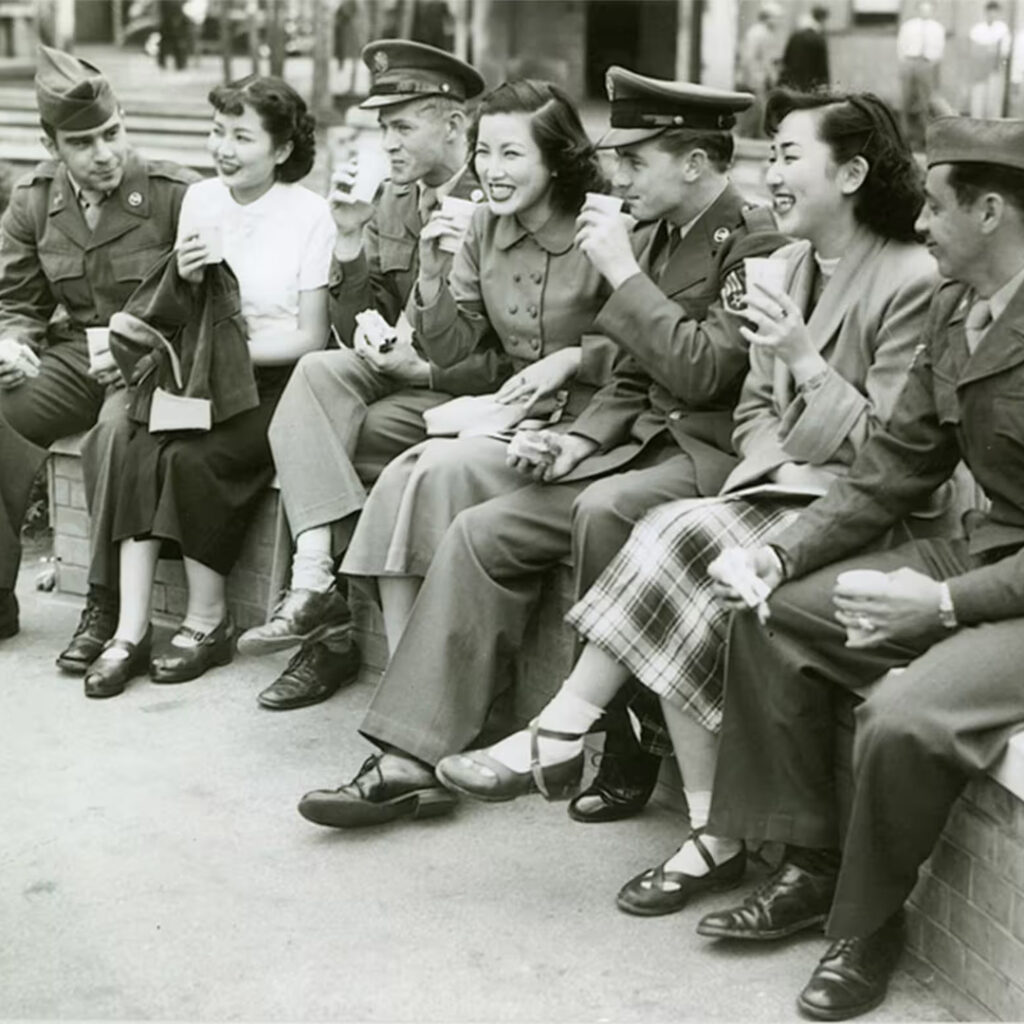
U.S. airmen and Japanese women during the occupation of Japan. For many, these relationships emerged amid devastation, and a country still reeling from war.
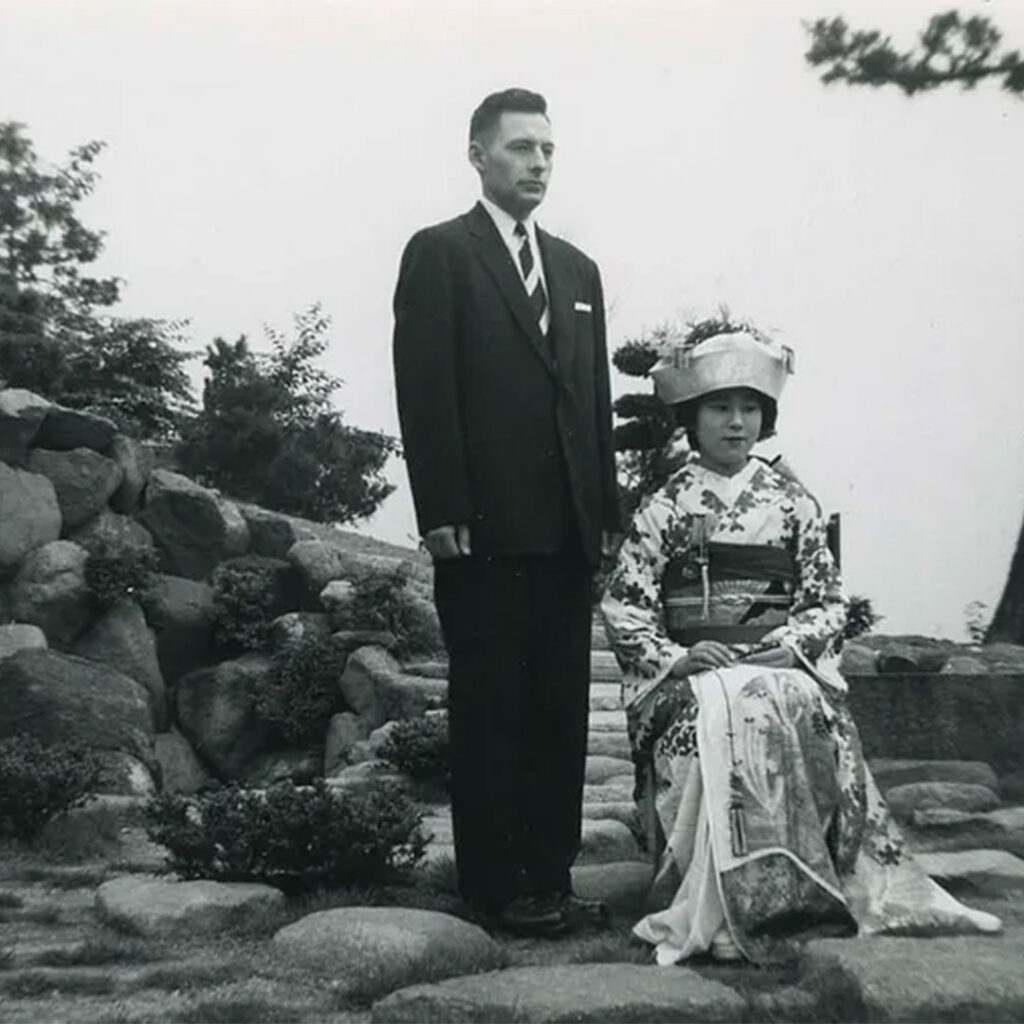
A Japanese war bride and her American husband, photographed after World War II. One of thousands of marriages formed during the U.S. occupation of Japan.
Hiroko Yamamoto and Don Roberts on their wedding day, August 17, 1954, in Kobe. Just years earlier, Japanese wives were barred from immigrating to America.
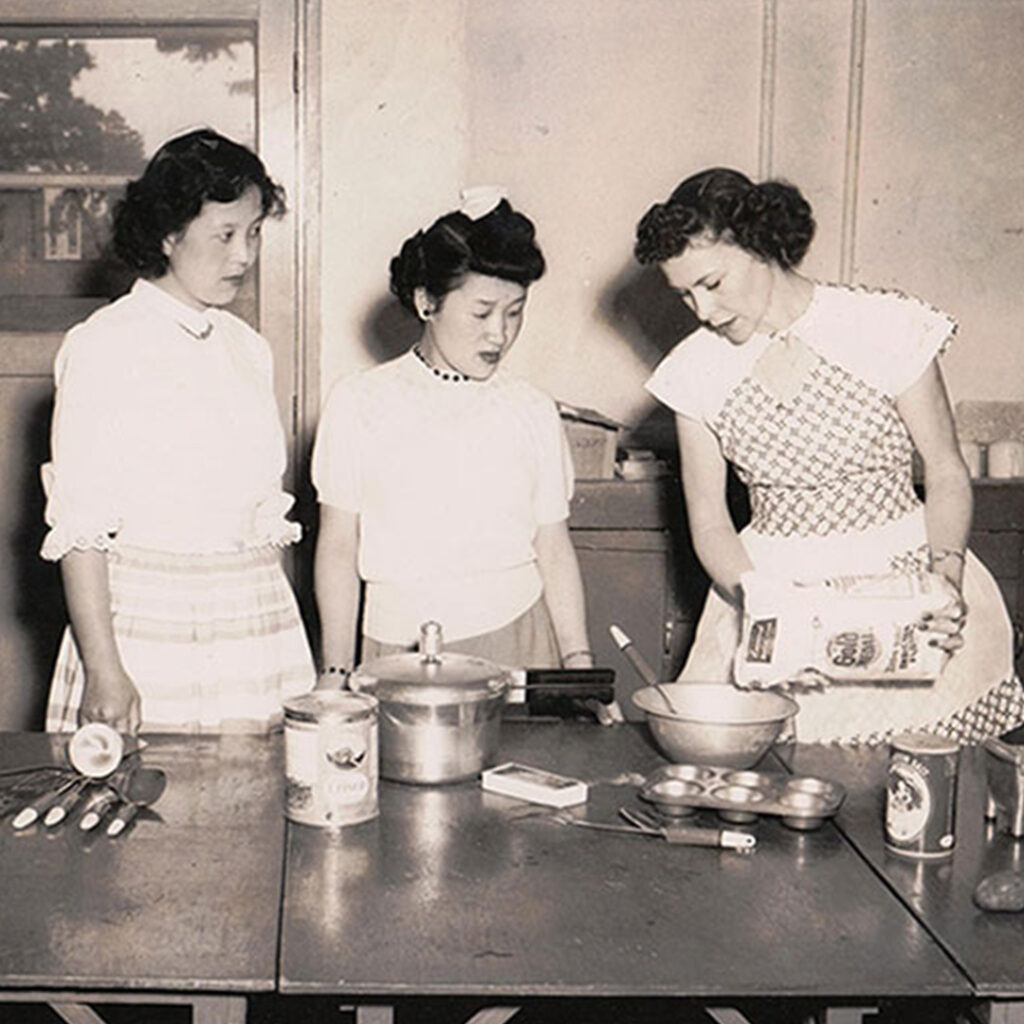
Many Japanese war brides attended classes on language, customs, and domestic life in preparation for migration. Tokyo, 1952.
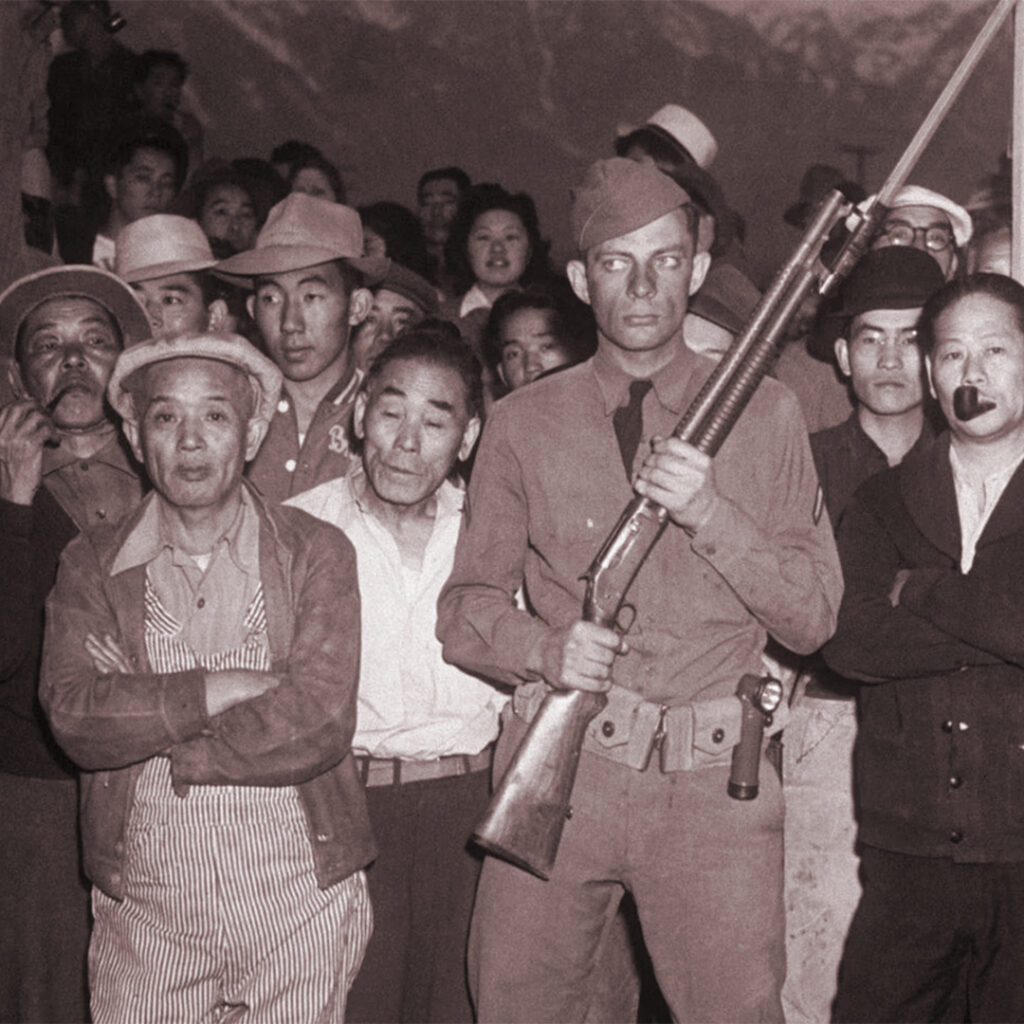
Most Japanese “war brides” were unaware that Japanese Americans had been imprisoned behind barbed wire. Even today, it remains little known in Japan.
Love and Hate
By marrying men from a nation that had devastated their homeland, Japanese war brides demonstrated that love could transcend war and hatred. They also became impossible to ignore.
Japanese war brides grew so numerous that their presence forced the U.S. government to confront the contradictions in its immigration laws. Over time, amendments and related reforms expanded entry for Asian spouses, contributing to broader changes that would eventually allow millions of Asians to immigrate to the United States.
In that way, they helped force America to reconcile law with reality. What they could not escape was discrimination.
Most arrived in the United States with little understanding of Jim Crow, anti-miscegenation laws, or the depth of American xenophobia. Many were unaware that Japanese Americans had only recently been released from incarceration camps under Executive Order 9066.
Disowned by Old Family, Rejected by New Family
In some ways, war brides helped preserved Japanese culture at a time when Japanese Americans had been pressured to erase it. They cooked familiar foods, spoke their language, and raised children between worlds.
Until the Supreme Court’s decision in Loving v. Virginia in 1967, interracial marriage remained illegal in sixteen states. In that climate, Japanese war brides were vulnerable. They were verbally harassed, blamed for the war, and treated as perpetual outsiders despite their marriages. They were even considered disloyal by some Japanese Americans for marrying Americans that were not Japanese.
Some were disowned by their families in Japan for marrying foreigners. Others were rejected by American in-laws for being foreign at all.
Love crossed oceans. But it did not erase prejudice.
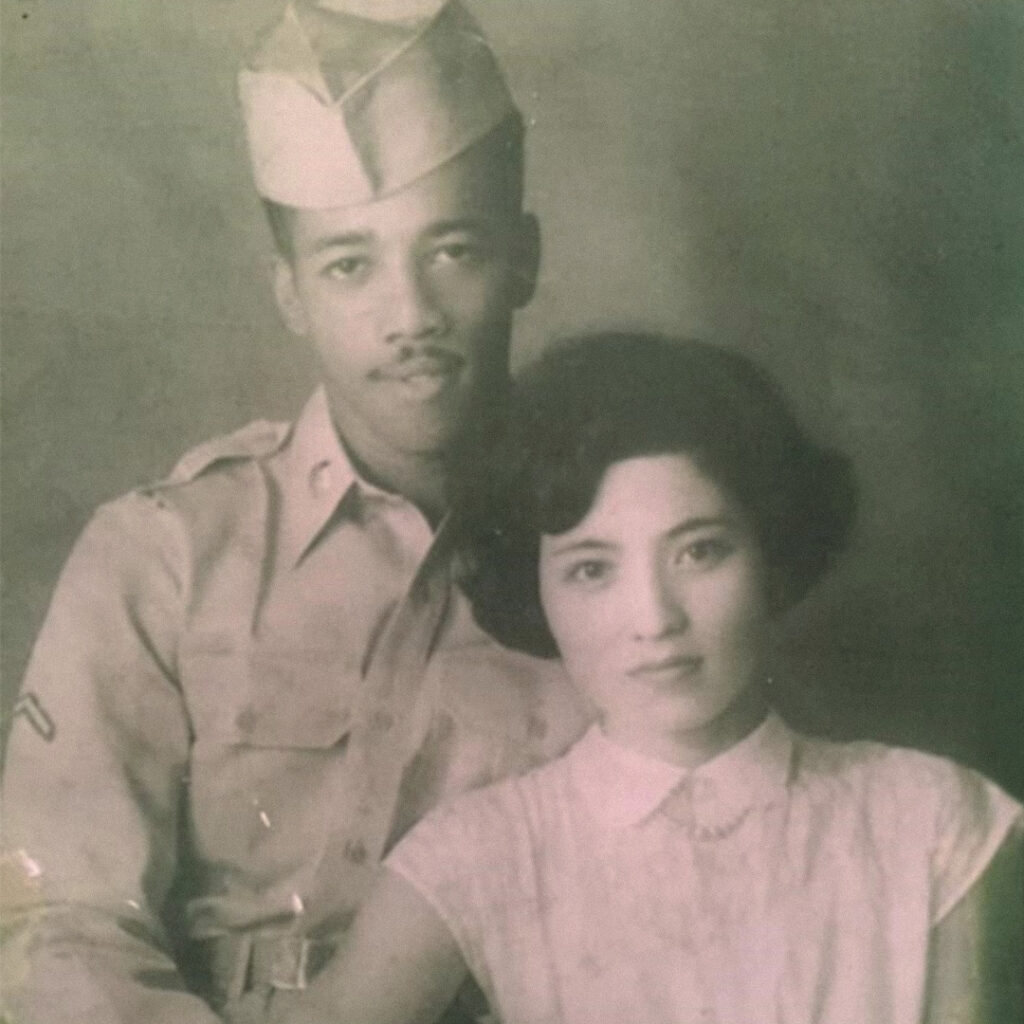
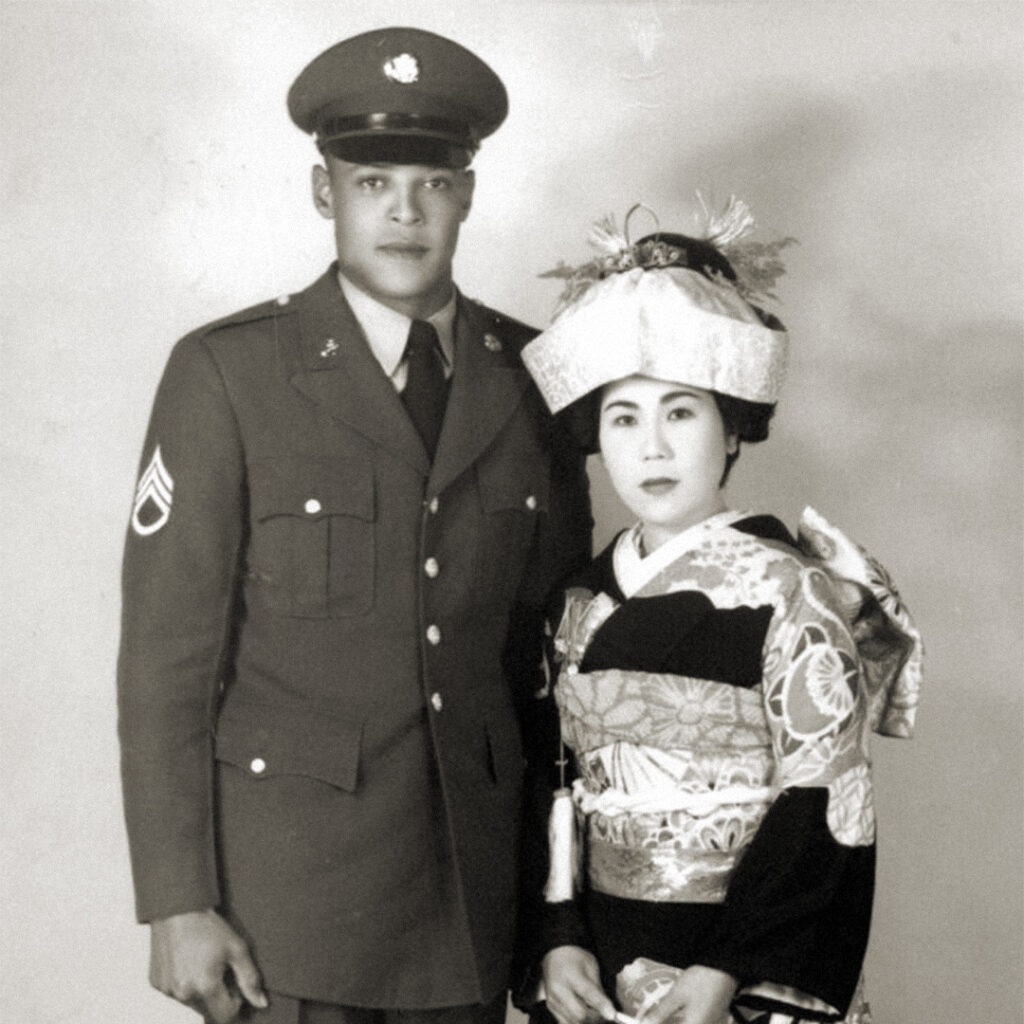
A Japanese war bride and a Black American serviceman. In 1955, segregation denied them hotels and restaurants across the U.S., forcing them to sleep and eat in their car.
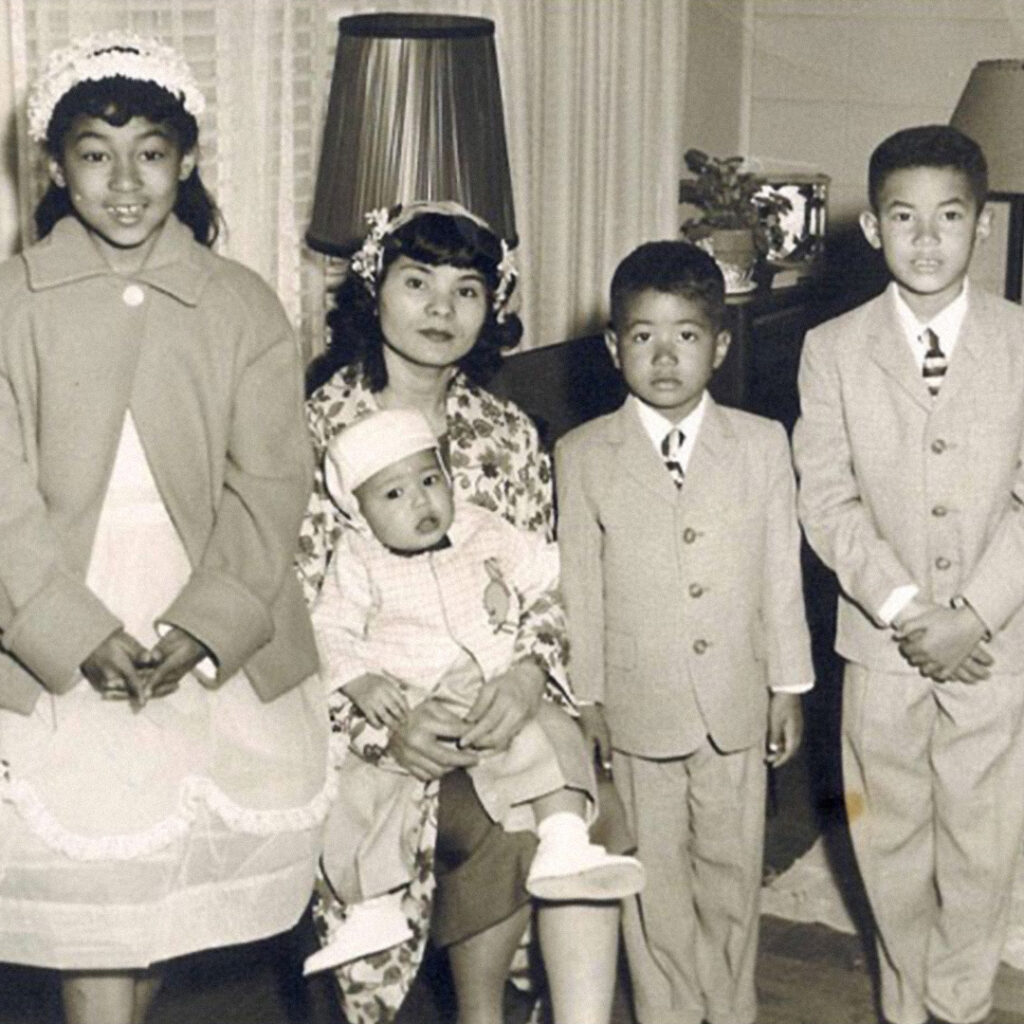
Children of mixed-race marriages faced discrimination too. Born into families shaped by war and migration, many were treated as outsiders in the only country they knew as home.
They married across race, nation, and war. What awaited them in America was far more complicated. Oren Blackmon Jr. and Ayako Okada Blackmon, 1957.