December 25, 1942–1944: Japanese Americans celebrated Christmas inside incarceration camps across the country, preserving tradition and community under confinement.
By the winter of 1942, more than 120,000 Japanese Americans were imprisoned in government camps scattered across some of the most remote regions of the United States. Barbed wire surrounded their lives. Armed guards watched from towers. Families lived in hastily built barracks with little insulation against the cold.
And still, Christmas came.
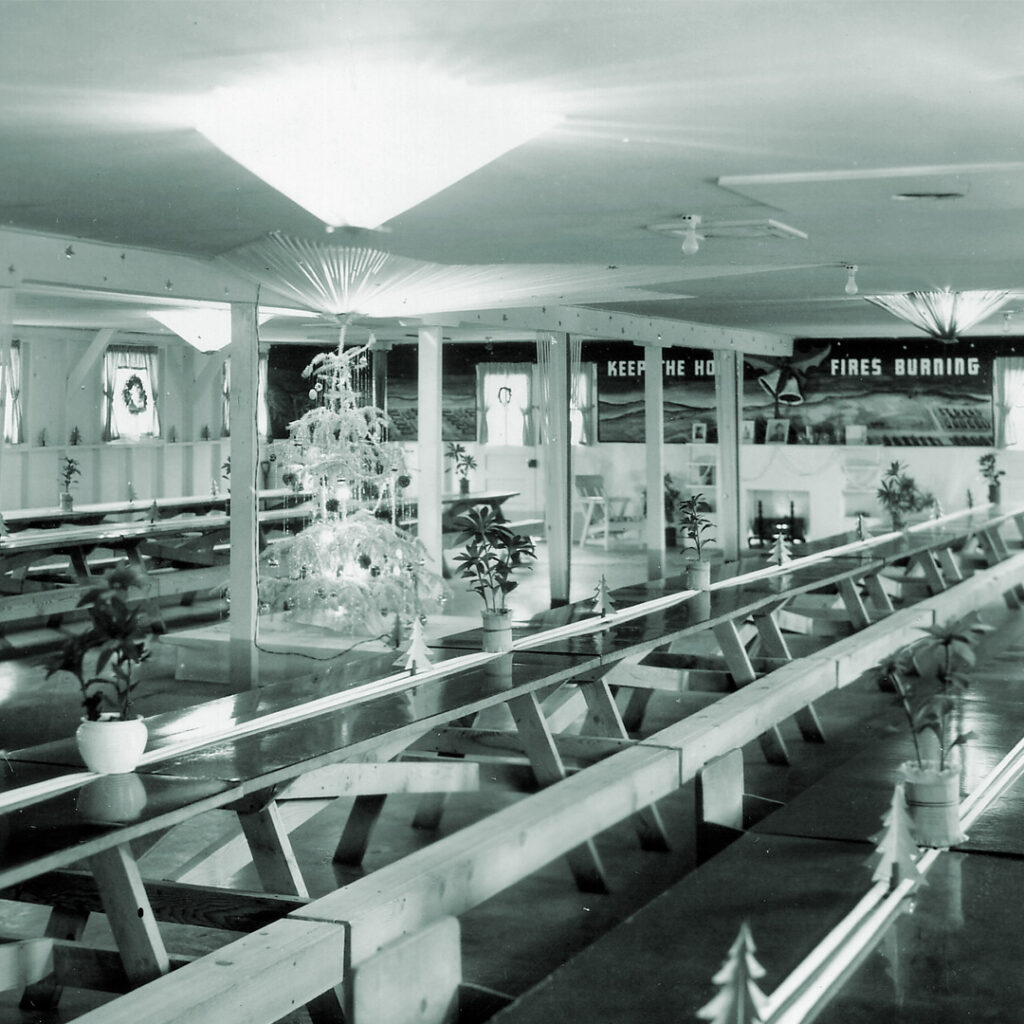
They tried to make the best of their suboptimal situation. In many camps, mess halls became canvases of creativity, ornamented with handmade decorations crafted from scrap.
Despite everything, people came together to lift each other’s spirits.
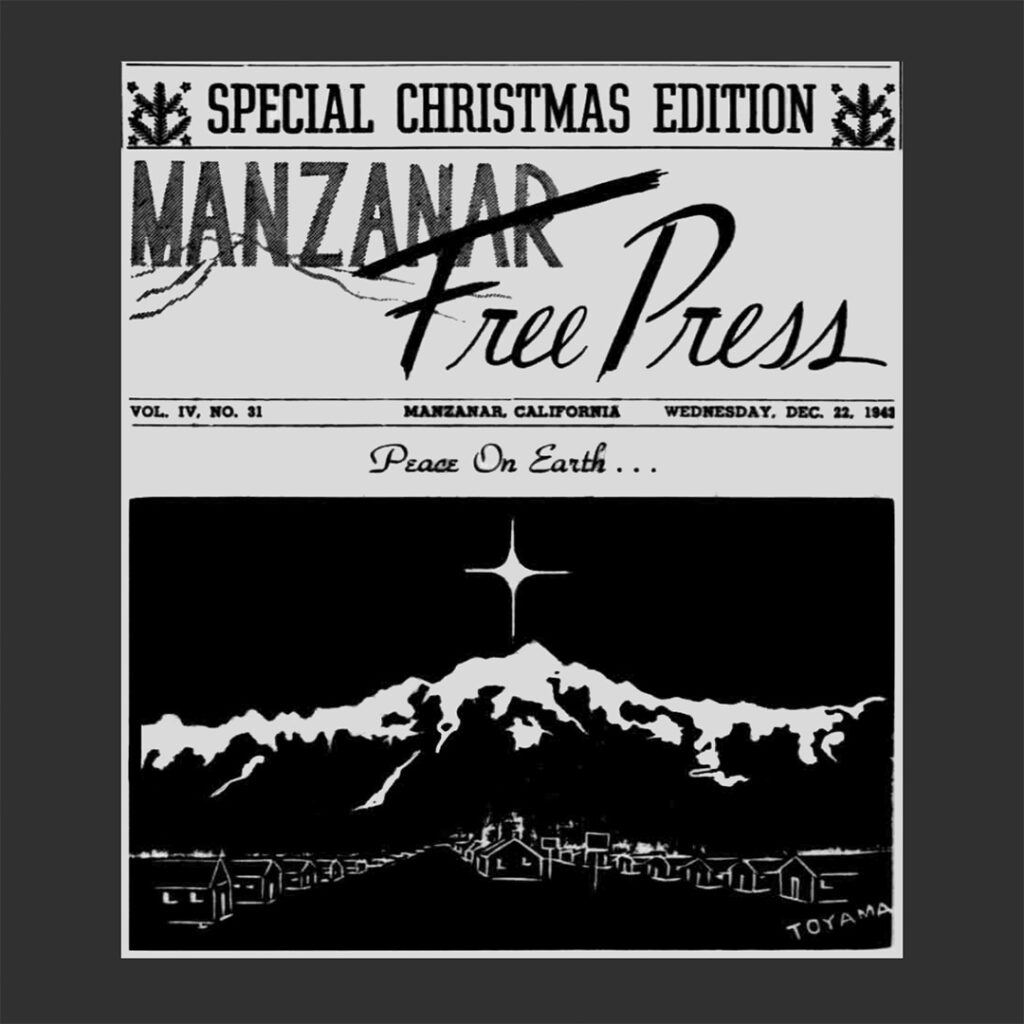
The Manzanar Free Press published this Special Christmas Edition in 1942, just months after Japanese Americans were forcibly removed from their homes and incarcerated.
Block 36’s dining hall won 5th place in Minidoka’s 1943 Christmas decoration contest. Mess halls became surprisingly elegant.
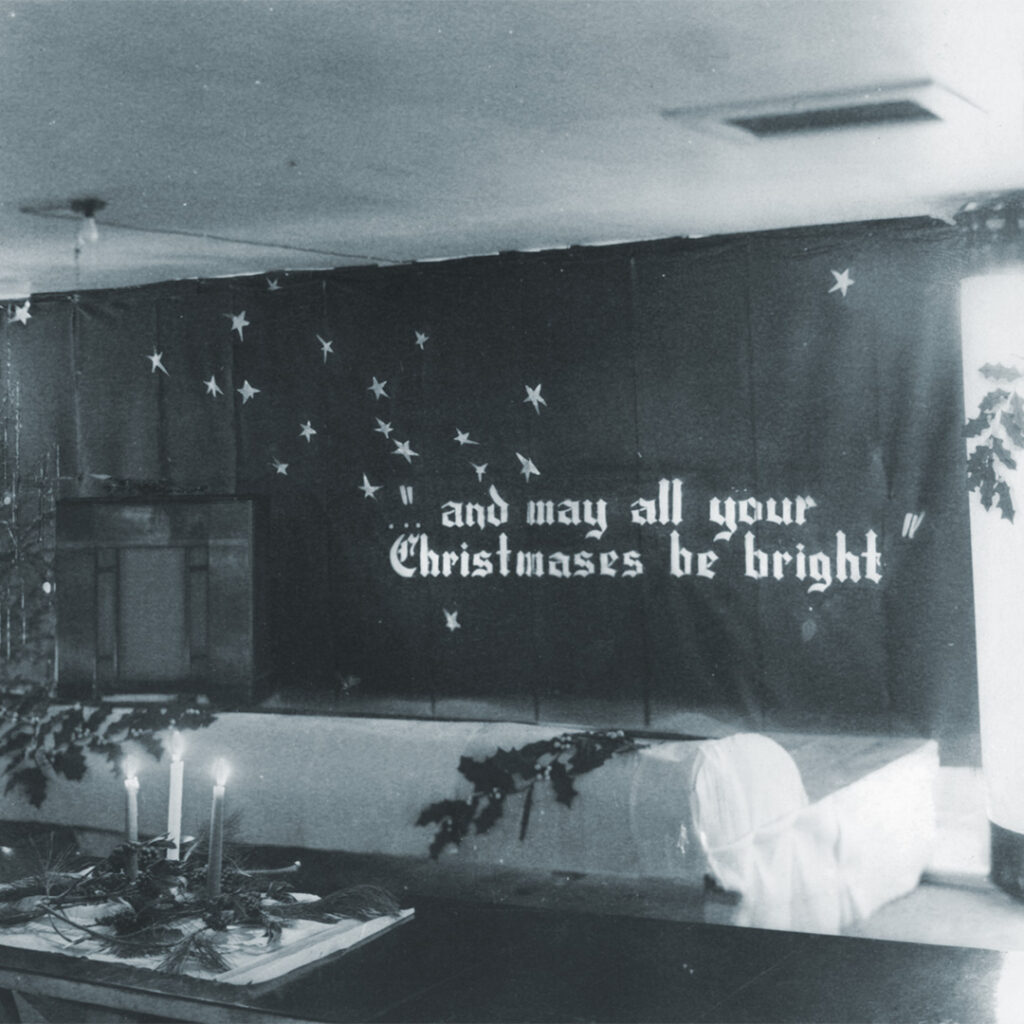
Block 28’s Christmas display at Minidoka took 1st place in 1944. Against the backdrop of incarceration, incarcerees transformed scrap materials into holiday art.
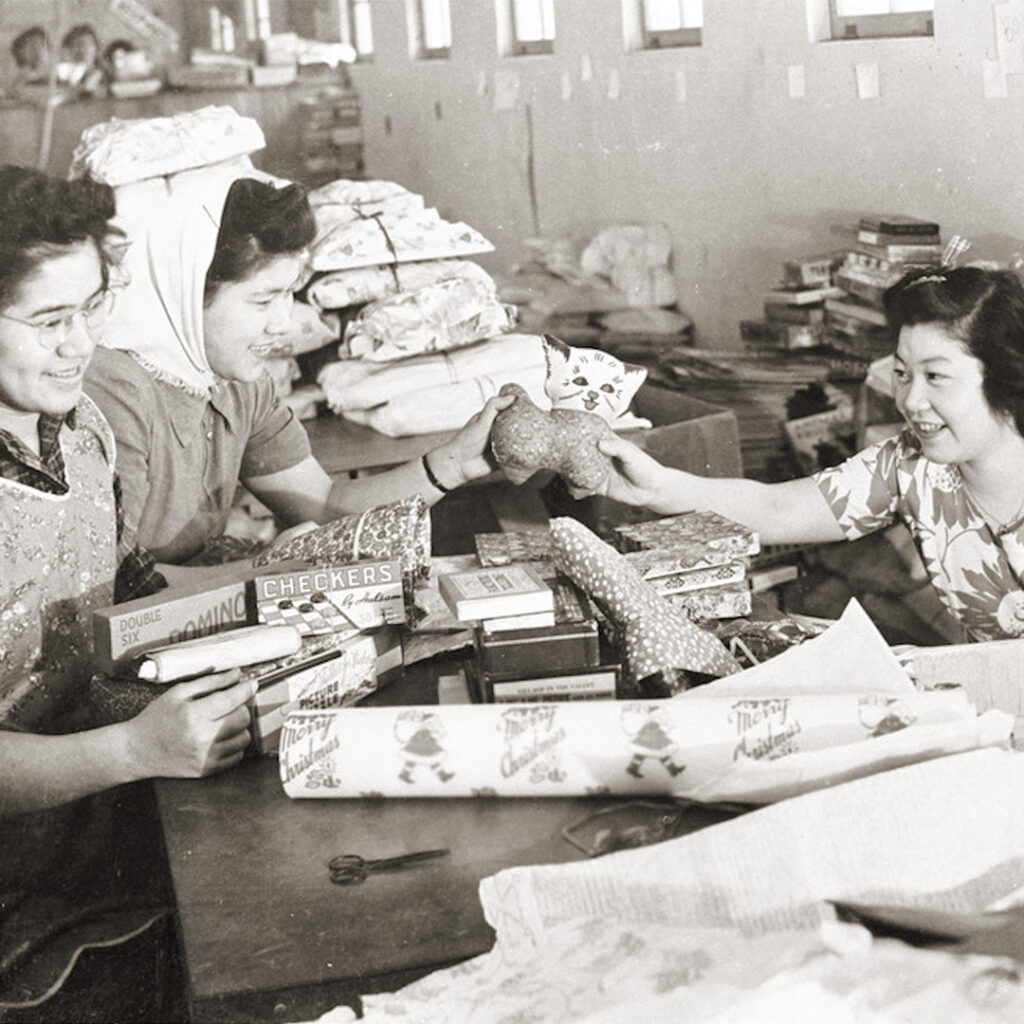
Women wrapping donated Christmas gifts inside camp, Minidoka, 1943. Donations from churches and camp staff were carefully wrapped by hand.
Decoration Competitions at Minidoka
At Minidoka, each block participated in camp-wide fundraising efforts to buy candy, decorations, and Christmas trees. Scrap materials became ornaments. Dining halls were transformed into elaborate displays of resourcefulness and skill.
Popular motifs included “Santa Remembers Minidoka,” but many themes reflected what was missing: family members serving in the U.S. military, former homes, and freedom itself.
Churches and camp employees sent donations, prompting the Minidoka Irrigator to reassure readers that “Christmas this year will not be a disappointment for Hunt’s youngsters.”
Asian Santas at Heart Mountain
At Heart Mountain, Christmas trees were placed in mess halls, schools, administration buildings, and the USO. Children made popcorn strings and paper ornaments. Gifts arrived from across the country.
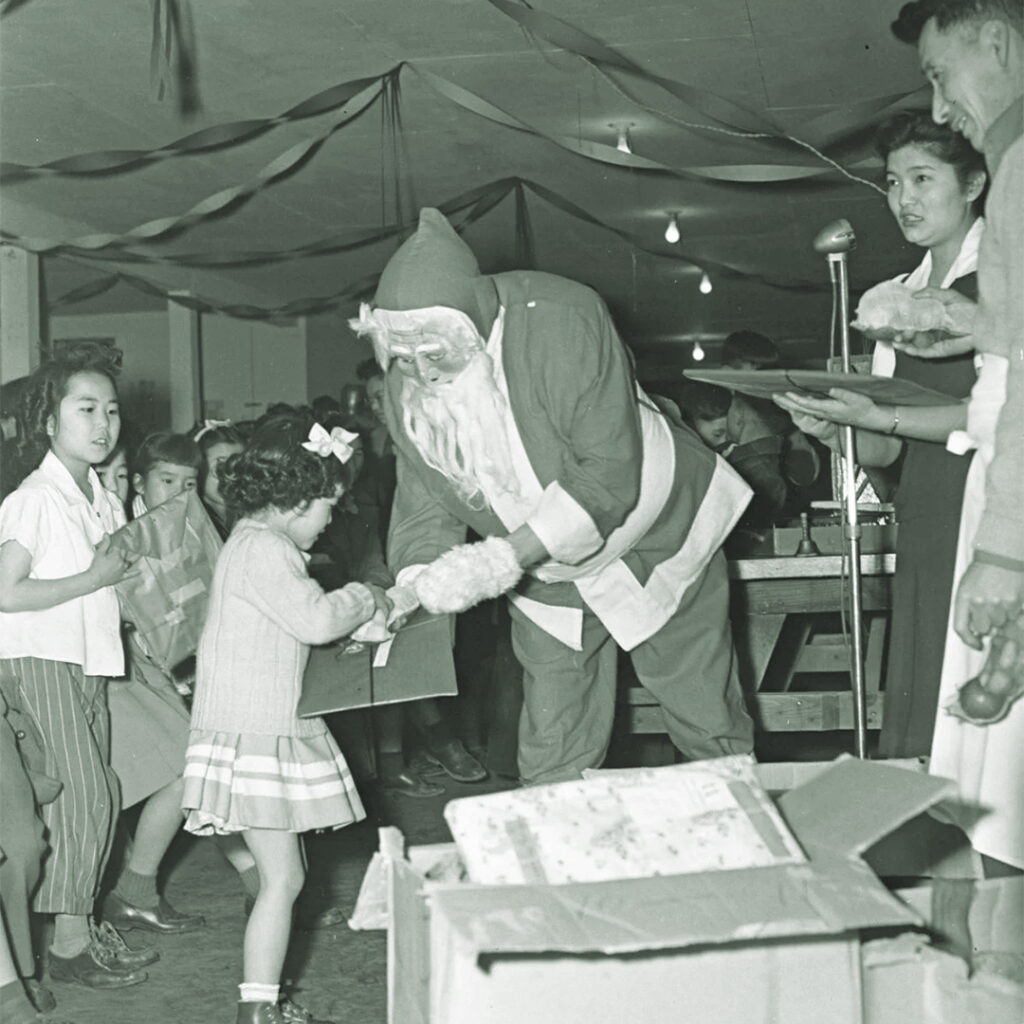
For many, the highlight was Santa. In 1943, more than 4,000 children under the age of 18 attended block parties and received presents. The Santas — often Japanese American themselves — donned red suits and brought joy to children who had lost so much.
White administrators often framed these celebrations as proof of “assimilation,” ignoring the reality that Japanese Americans had long celebrated American holidays. Many would’ve liked to include their own traditions, like making mochi — but those were frequently prohibited as “enemy” culture.
Despite incarceration, families tried to keep the magic of Christmas alive. In 1943, nearly 4,000 children under 18 received presents, many delivered by Asian Santas.
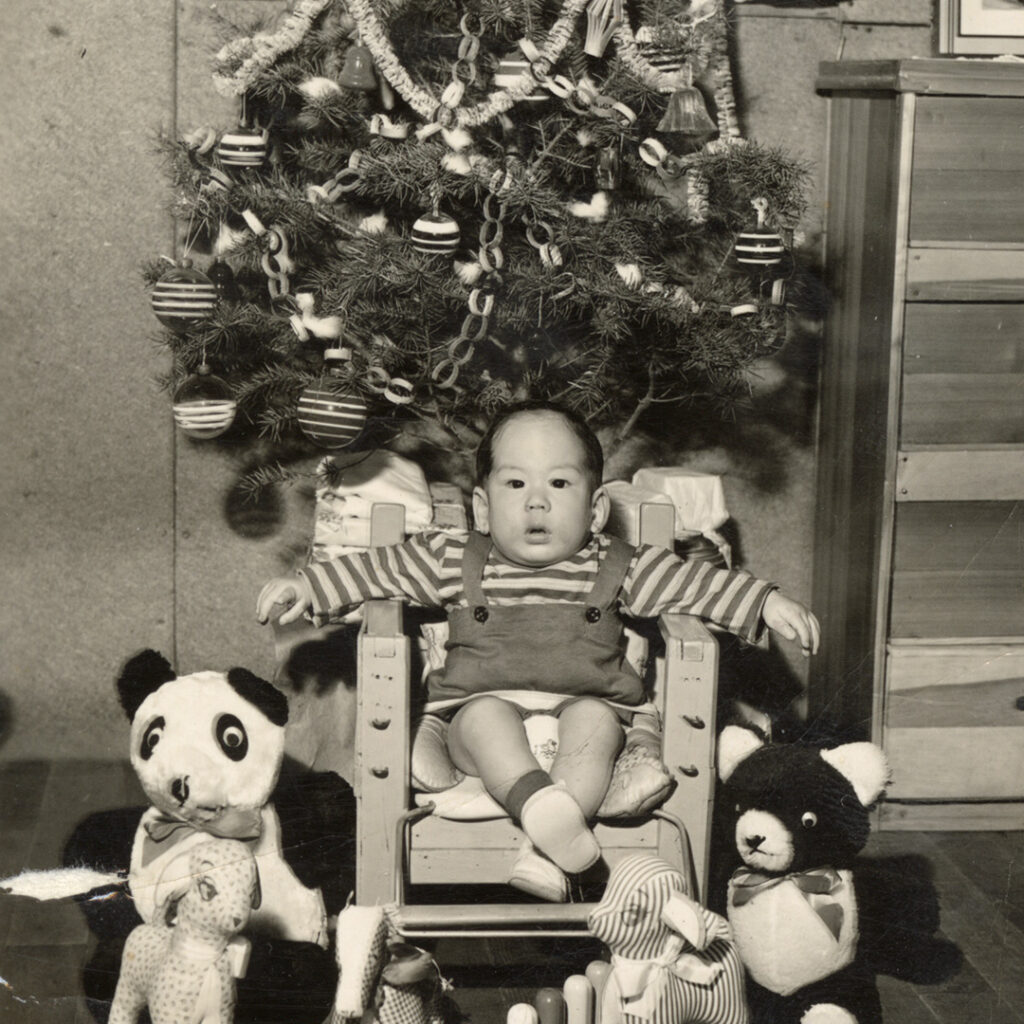
The tree, ornaments, and toys reflect the American traditions Japanese Americans had already embraced, long before the war. Heart Mountain, 1944.
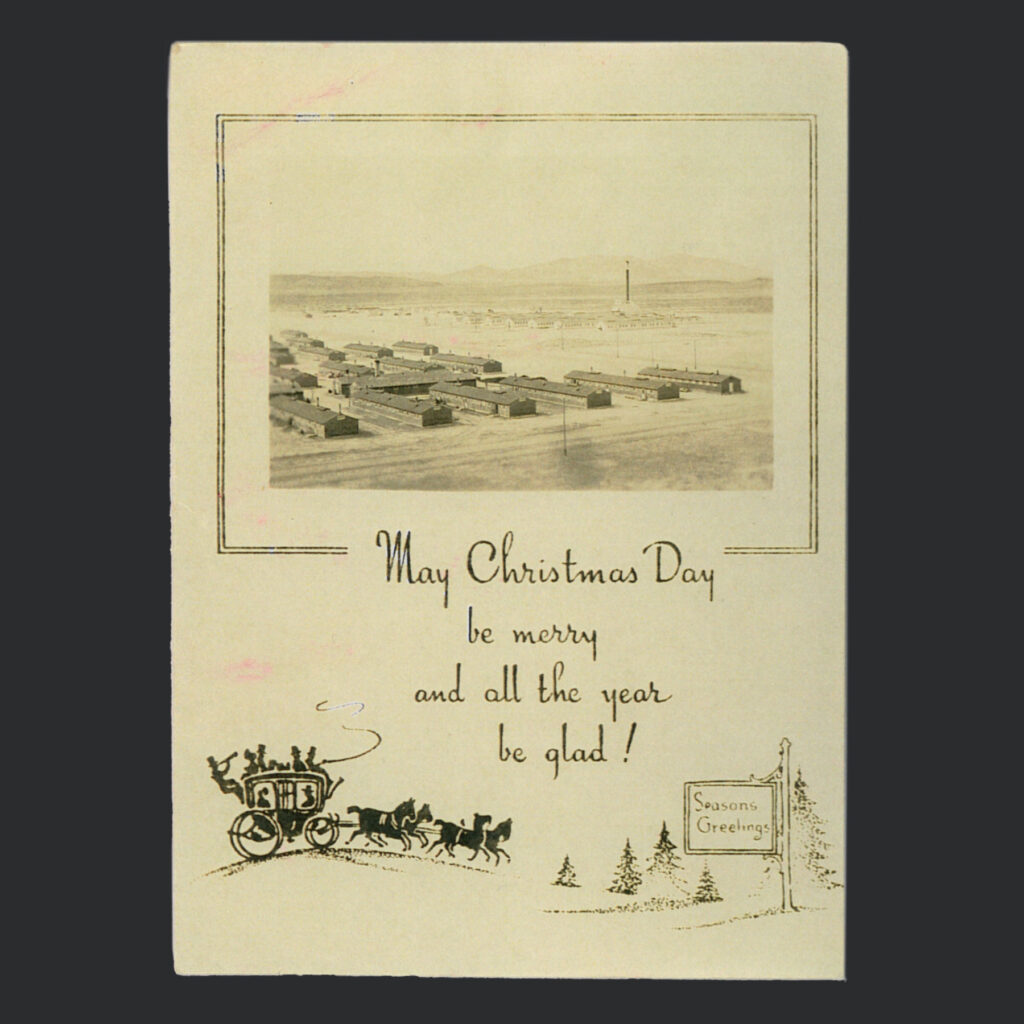
A Christmas card from Topaz concentration camp. Not the most festive image. But it still carried hope: a wish for joy in a year that offered very little of it.
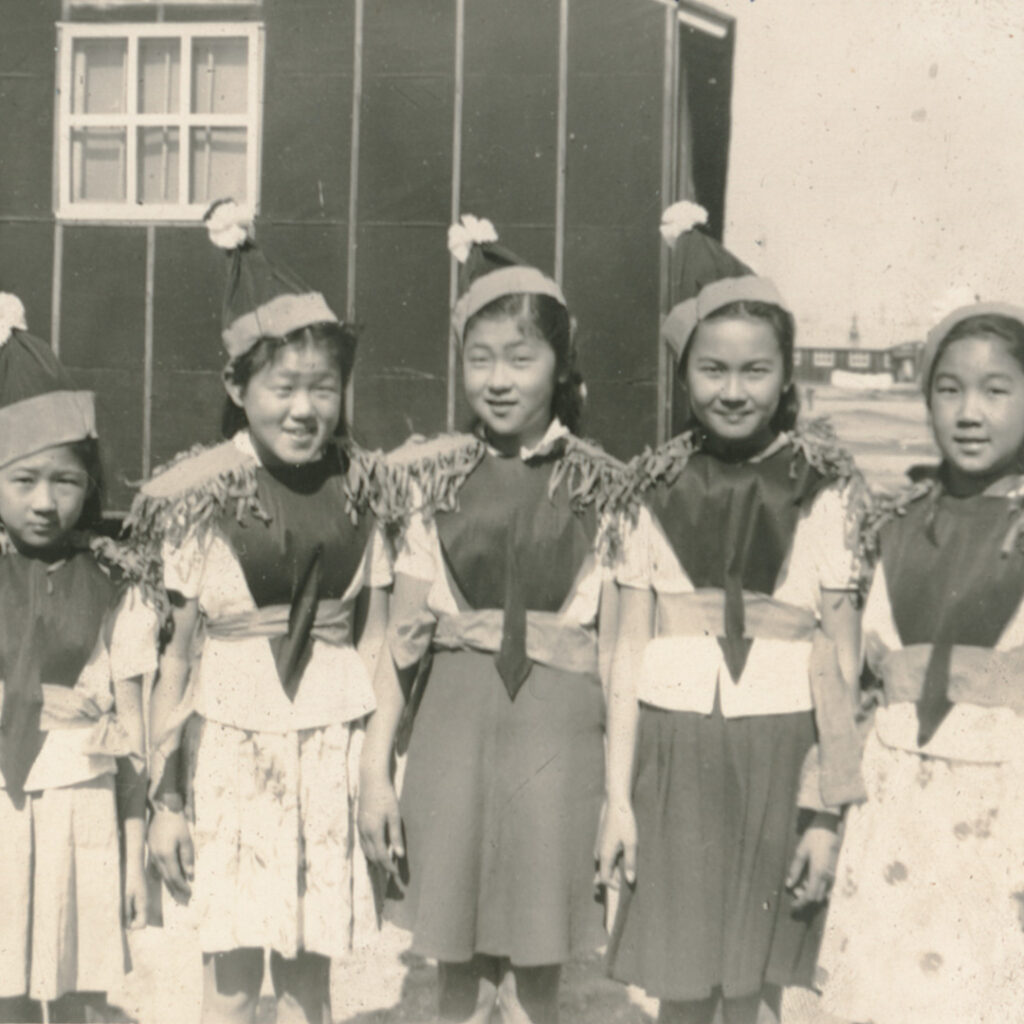
These girls dressed up for Christmas knowing it might be their last behind barbed wire. That year, news spread that the camps would soon close. Jerome, 1944.
Less Celebration, More Strain
As the war dragged on, the spirit of the holidays faded. The government shifted focus toward forced resettlement and military enlistment. More Japanese American men were drafted, even as their families remained incarcerated.
The mood evolved. Christmas didn’t disappear, but it grew quieter.
By 1944, the holiday carried different weight. That December, news spread through the camps: the Army’s ban on returning to the West Coast had been lifted.