They thought they wouldn’t find the right man to lead the Nisei soldiers. They didn’t know Jack.
January 25, 1944: Major John Alexander “Jack” Johnson Jr., beloved white executive officer of the 100th Infantry Battalion, was killed in action at the Battle of Monte Cassino.
Before there was a 100th Infantry Battalion, there was the “Hawaiian Provisional Battalion,” a hastily assembled unit made up almost entirely of Japanese Americans from Hawaii. The Army didn’t know what to make of them, or who could lead them.
But they didn’t know Jack.
Johnson was born in Los Angeles but raised in Honolulu. With red hair, freckles, and what Hawaiians jokingly called a “Portugee” accent, he stood out, and yet, somehow fit in everywhere.
Prewar Hawaii was rigidly segregated by race and class. But Jack moved fluidly through all of it.
He could speak standard English with Army officers, then turn around and joke with the boys in Pidgin — Hawaii’s local creole that blended Japanese, Filipino, Portuguese, Chinese, Hawaiian, and English vocabulary with Japanese-style grammar.
Courtesy of 100th Clubhouse
Hawaiʻi Provisional Battalion, 1942. Japanese American soldiers reorganized, disarmed, and reassigned after Pearl Harbor — not for lack of loyalty, but because of ancestry.
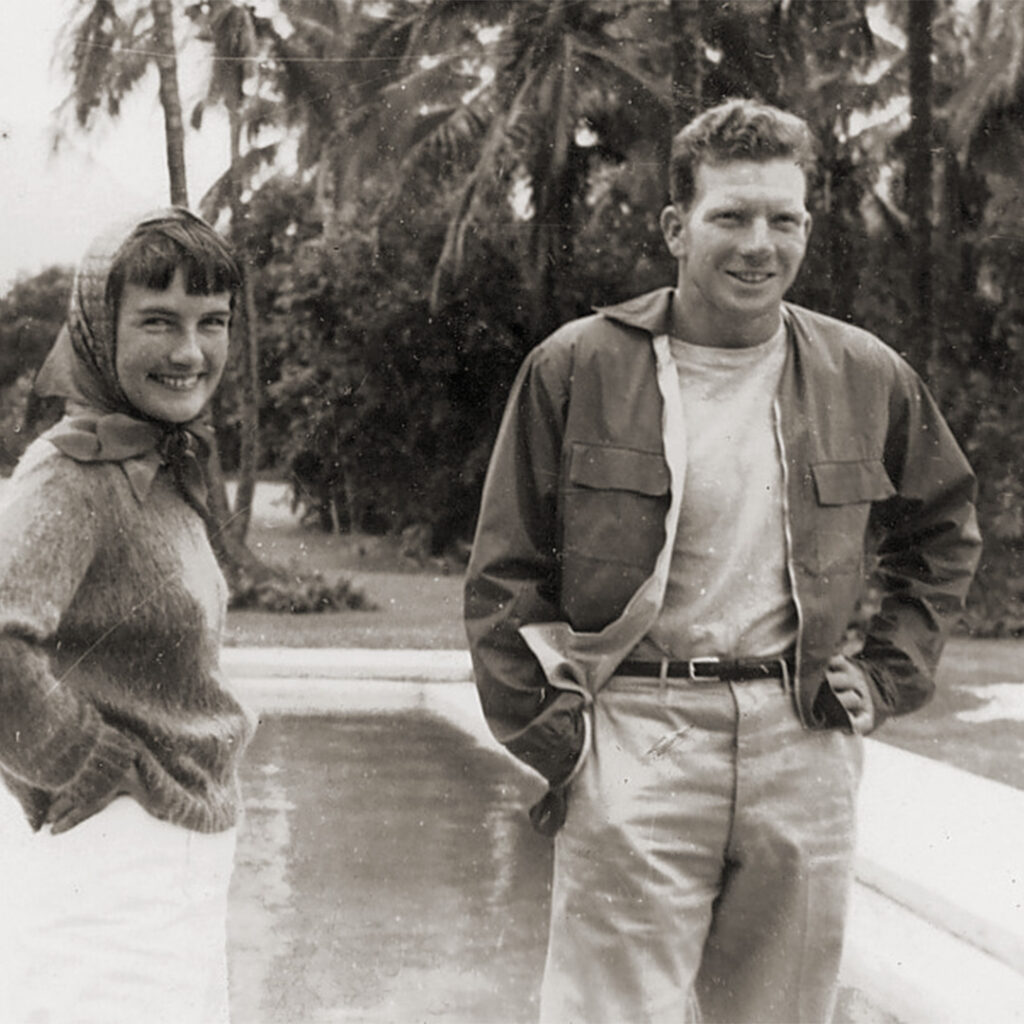
Ccourtesy of Betsy Knudsen
Jack with his wife Betsy, whom he met while working as a plantation supervisor. Kailua, April 1941.
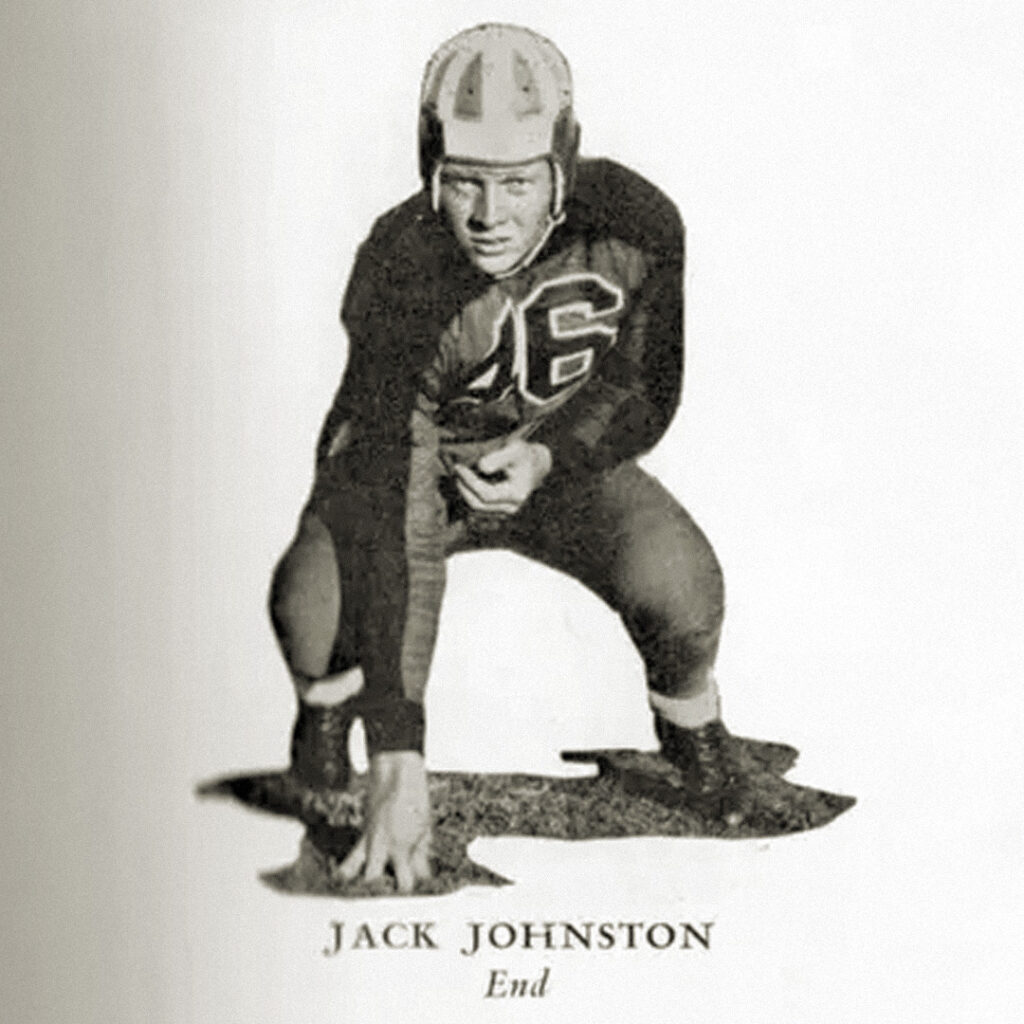
Jack Johnson became a legend after leading one of the greatest upsets in Hawai‘i football history.
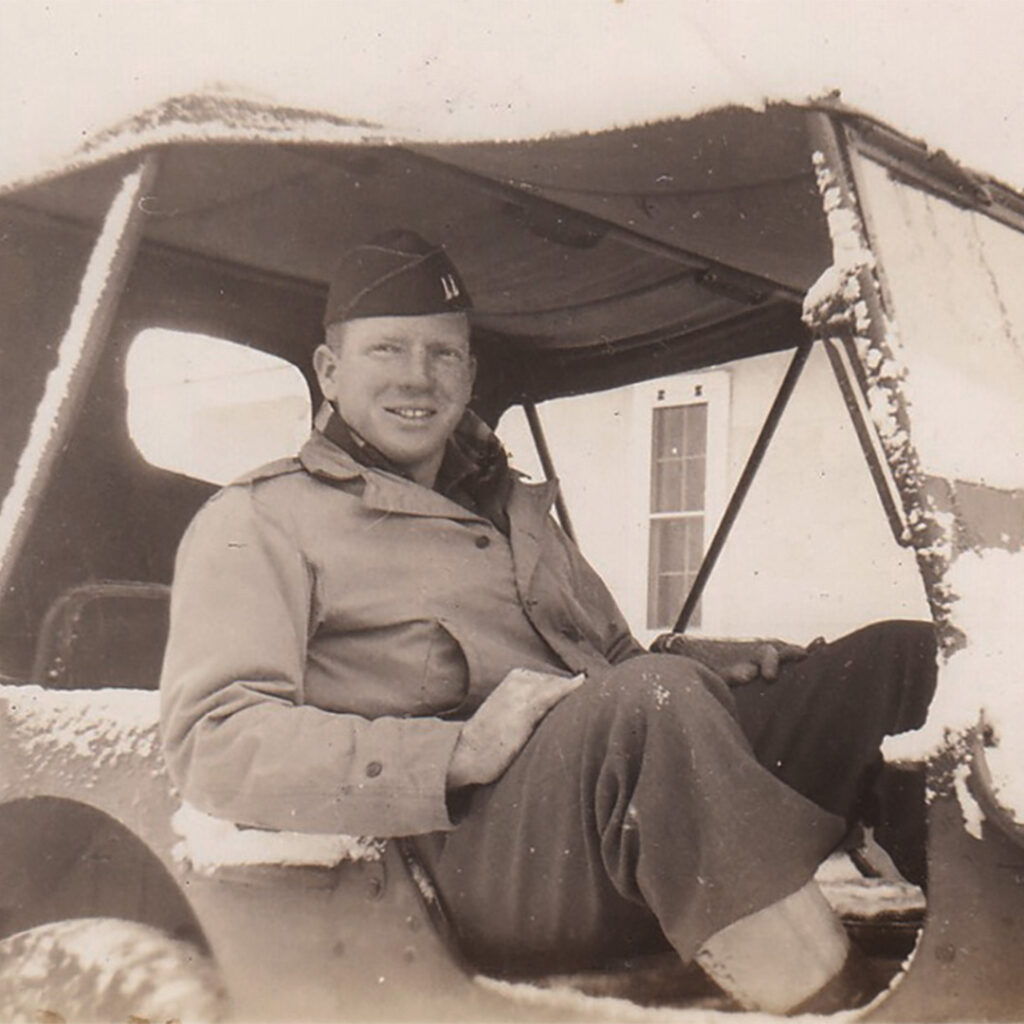
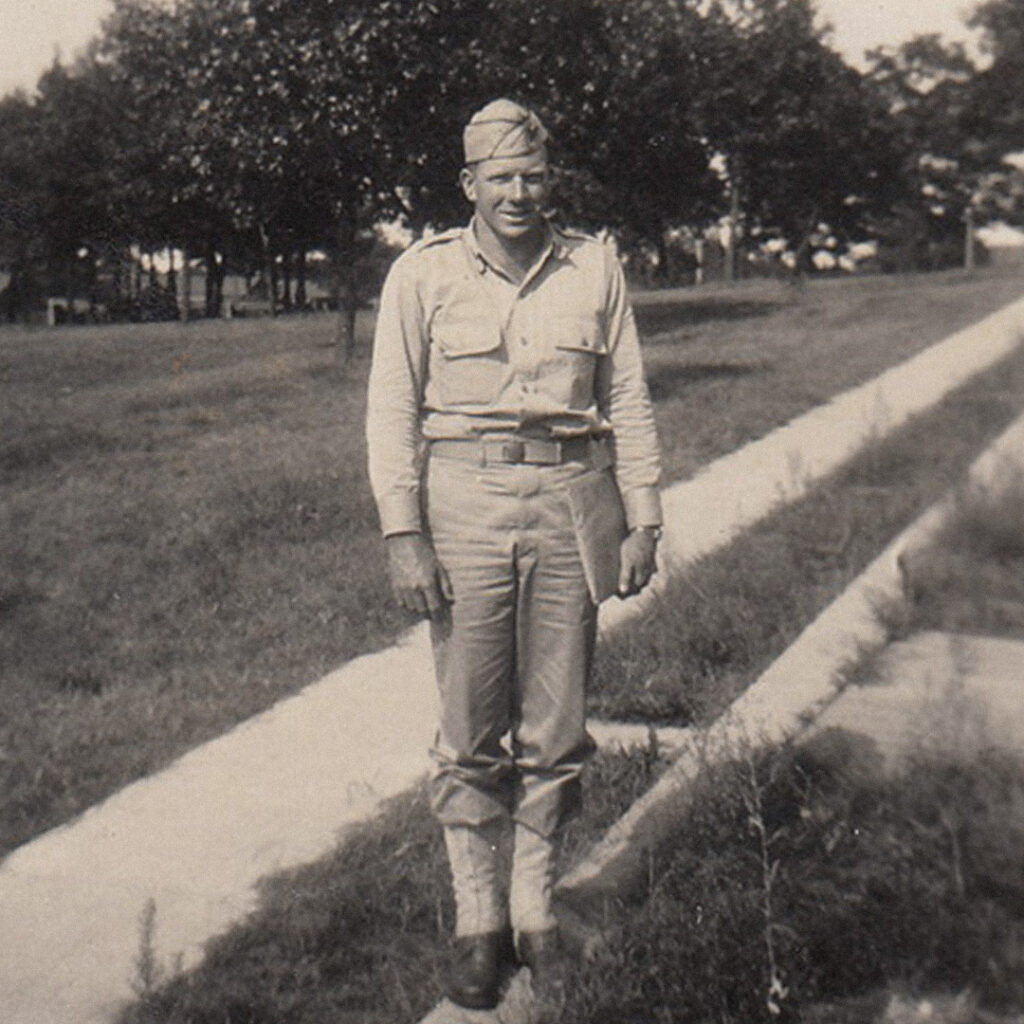
Courtesy of David Fukuda
Jack Johnson at Camp McCoy, November 1942 — preparing to lead men who were still not trusted by their country.
From Football Hero to a Supervisor
Jack Johnson didn’t need to be in the war.
In the 1930s, he was a football star, best remembered for leading the University of Hawai‘i to a stunning upset over the University of California in the 1934 New Year’s Day Classic. His booming punts pinned Cal deep in their own territory, and one of his defensive deflections denied a sure touchdown. UH coach Otto Klum would later call the win the highlight of his career.
After graduation, Johnson became a supervisor at a sugar plantation — a job in an essential wartime industry that could have earned him a deferment. But he didn’t ask for an exemption. When his draft number came up, he went. That decision earned him respect. And eventually, love. Jack was the kind of leader everyone got along with, and everyone admired.
The Trainer. The Leader.
Commanding officer Lt. Col. Farrant Turner selected Jack Johnson to be the unit training officer of the 100th Infantry Battalion (Separate) when it was established on June 12, 1942.
Johnson led not just through command, but by example.
The 100th Infantry Battalion landed in Algeria in September 1943 and fought its way through Italy, landing at Salerno on September 22. The fighting there was brutal. Of the 1,300 men who made the landing, only 521 were still standing by January. The 100th earned its nickname there: “The Purple Heart Battalion.”
Johnson himself was wounded in the leg by shrapnel on November 5, 1943. He was advised to stay in the hospital. But by Christmas, he was back — newly promoted to major and named executive officer of the battalion.
Bayonet training at Camp McCoy, Wisconsin. For the Nisei soldiers of the 100th Infantry Battalion, this wasn’t just about combat — it was about proving they belonged.
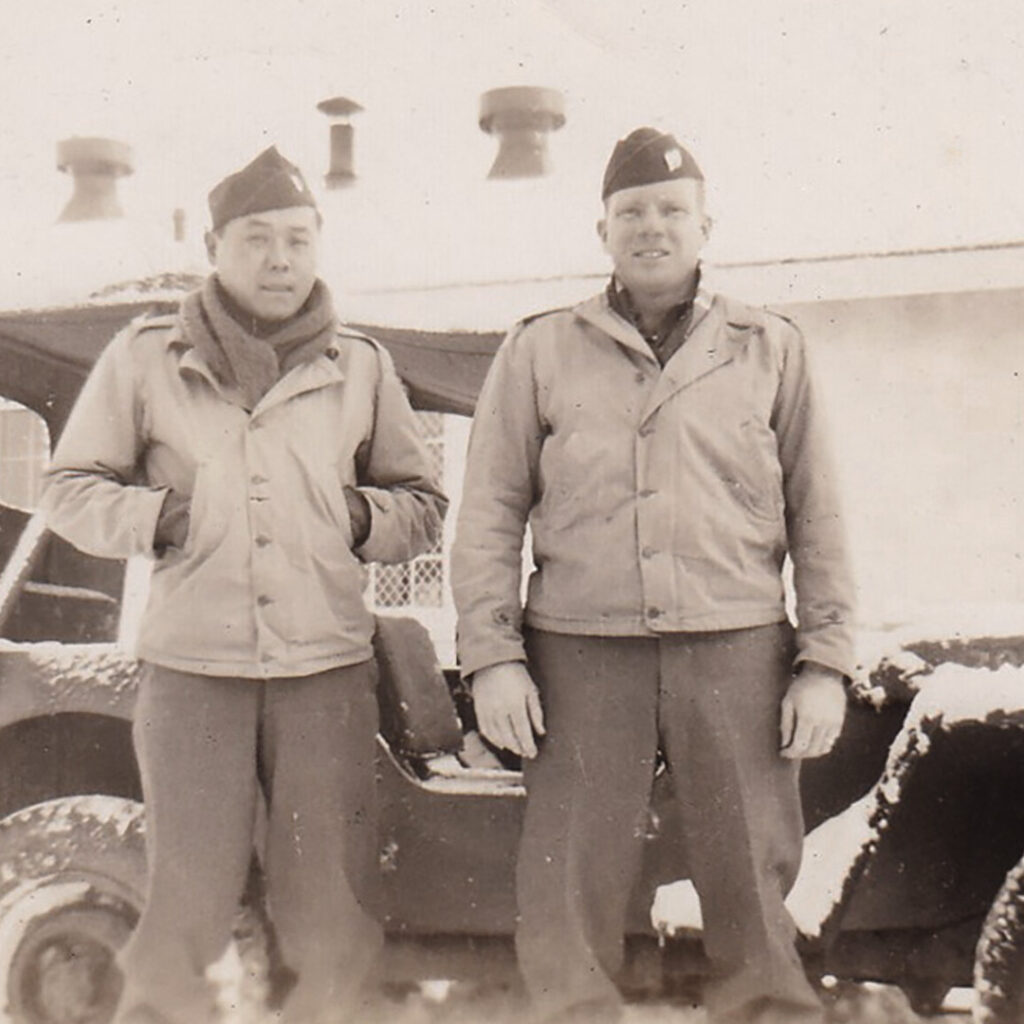
Courtesy of David Fukuda
Mits Fukuda and Jack Johnson at Camp McCoy, November 1942 — training together before the 100th was tested in combat.
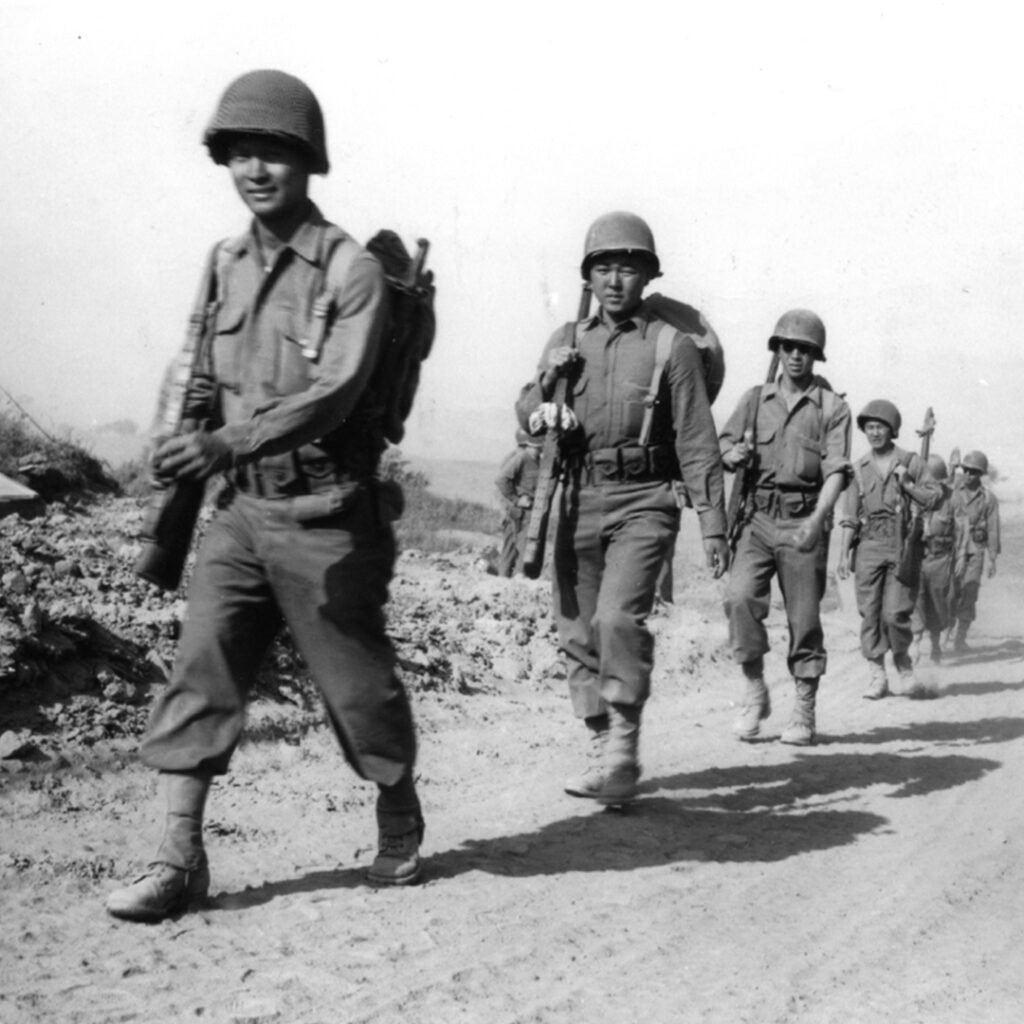
100th Infantry Battalion marching in Italy, 1944. By the time the battle ended, losses were so severe the unit would be known by another name: the Purple Heart Battalion.
Courtesy 100th Infantry Battalion Veterans Education Center
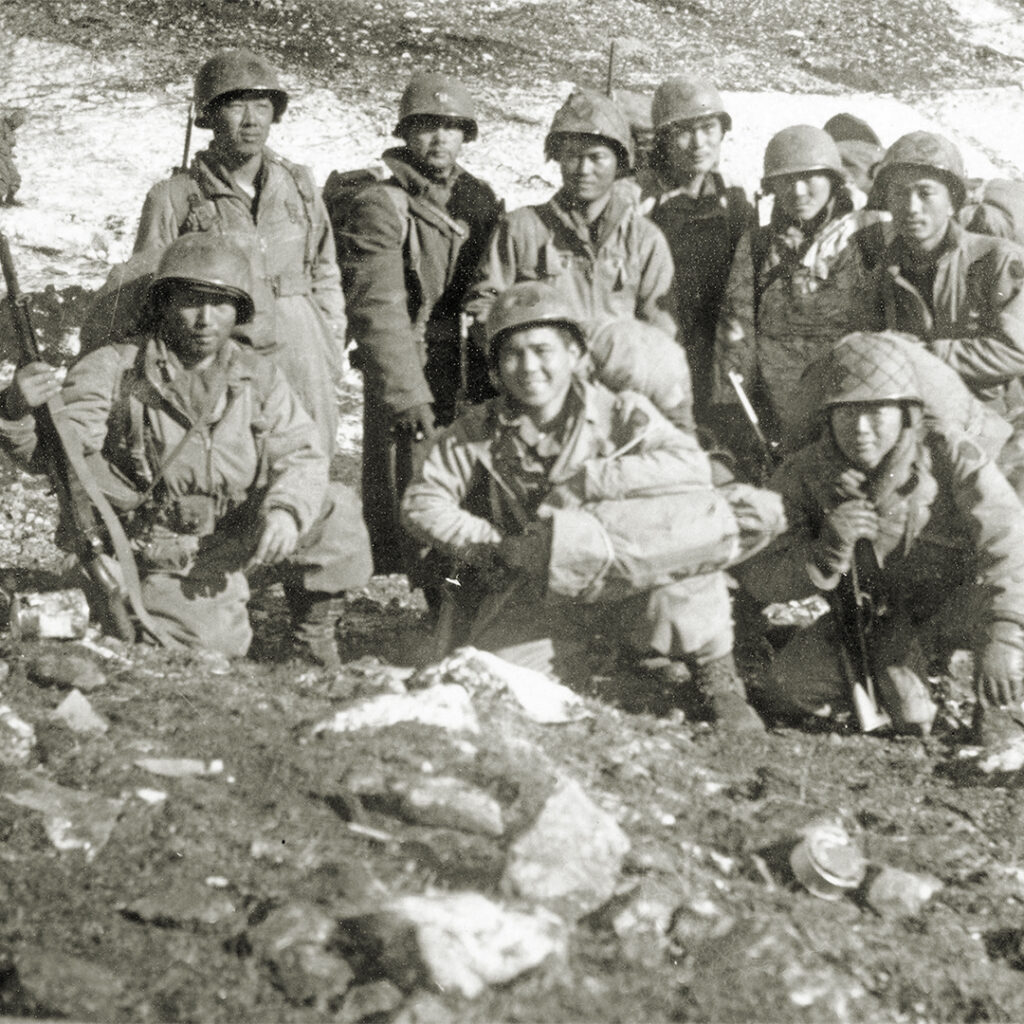
100th Infantry Battalion, near Cassino, Italy, January 1944. What awaited them at Monte Cassino would become some of the bloodiest fighting of the Italian Campaign.
For months, Allied forces failed to break through. When the 100th Infantry Battalion was sent here, Monte Cassino was one of the deadliest battles of World War II.
Battle of Monte Cassino
On January 25, 1944, Major Johnson was leading a dangerous advance in the mountains near Monte Cassino when a mine exploded. He was severely wounded, but not killed outright.
He lay there for five hours.
The officer beside him, Major George Dewey, was rescued first. When medics returned for Johnson, he was barely breathing. He died in the arms of his close friend, Chaplain Israel Yost.
No one knows exactly what happened. The medics who evacuated Dewey were later killed in action. But veterans of the 100th believed it was just like Jack to insist they take someone else first.
He Was One of Them
The men of the 100th were devastated. They hadn’t just lost their commanding officer — they’d lost someone they saw as one of their own. A fellow local boy.
Jack Johnson’s memory lived on. Punahou students sold war bonds to name a bomber “Red Jack” in his honor. University of Hawai‘i named Johnson Hall after him. Vehicles still pass through Johnson Gate at Fort Shafter. Scholarships bear his name.
And in 1994, fifty years after his death, a group of veterans made the long journey to Nettuno American Military Cemetery. Staff Sergeant Mike Tokunaga recalled: “We then went to the Nettuno American Military Cemetery where 80 members of our tour had an emotional ceremony at the grave of Major Jack Johnson. After decorating his grave with a lot of flowers, Mrs. Ikuma, who was 84 years old, led the group in the Lord’s Prayer and ‘Aloha ʻOe.’ There was not a dry eye in the group.”
Aloha Jack. And Mahalo.
Courtesy of David Fukuda
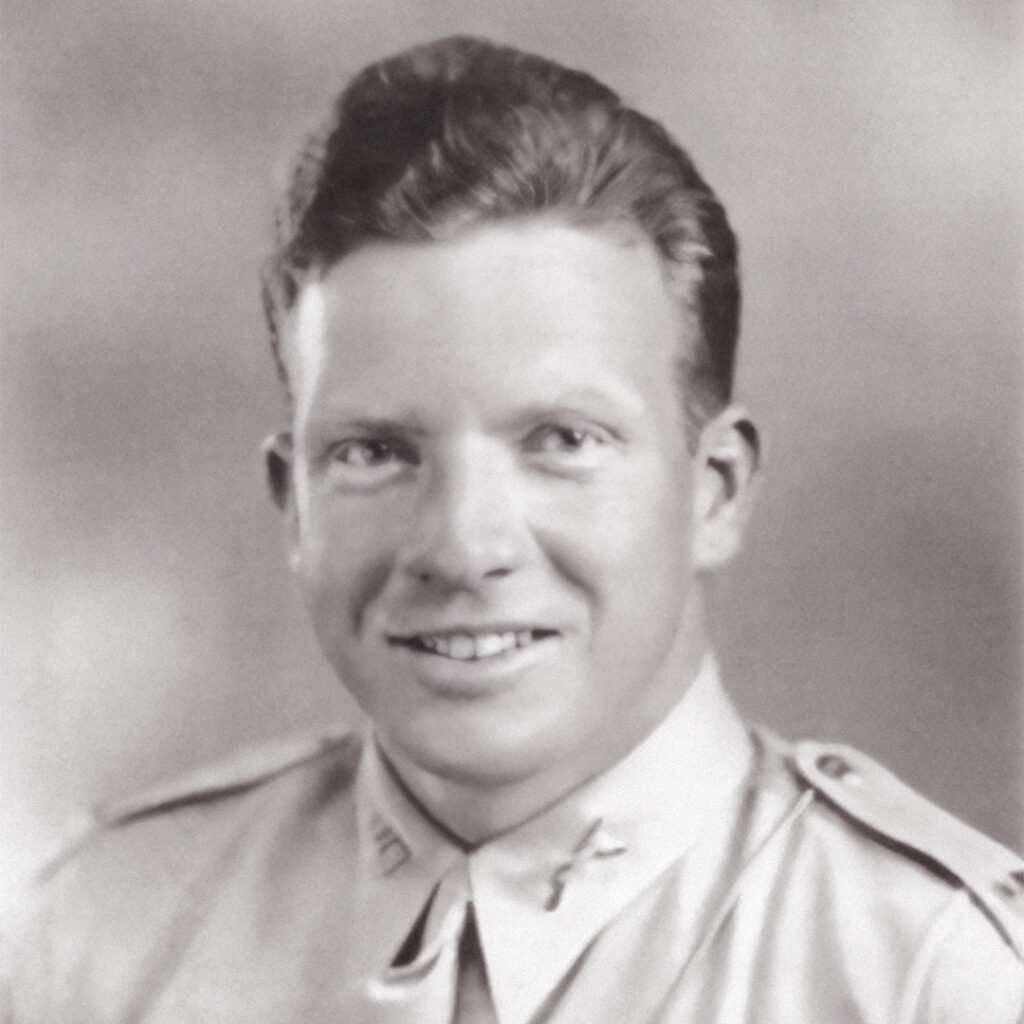
A photo of Jack Johnson with a caption, “This guy is my captain,” handwritten by Mits Fukuda, one of the men who served under Jack Johnson.
Major John “Jack” Johnson. He earned the trust of the 100th Infantry Battalion, and led them until the end.