Nobody could hide anything from her. Not even the U.S. government.
August 5, 1924: Aiko Herzig-Yoshinaga was born in Sacramento, California.
She wasn’t trained as a historian. She didn’t have a law degree or any political influence. What she had was a former incarceree’s memory, a lifetime spent as a clerical worker learning exactly how paperwork gets filed, mislabeled, and buried, and a refusal to accept the government’s version of events. Those qualities would make her one of the most important, least famous figures in the entire redress movement.
In 1978, Aiko and her husband, Jack Herzig, started combing through National Archives documents related to Japanese American incarceration on their own, with no funding and no official role. Two years later, she joined the National Council for Japanese American Redress, contributing her research to their reparations lawsuit. In 1981, the newly formed Commission on Wartime Relocation and Internment of Civilians (CWRIC) hired her as its lead researcher.
By the time it became her job, she’d already been doing it for three years.
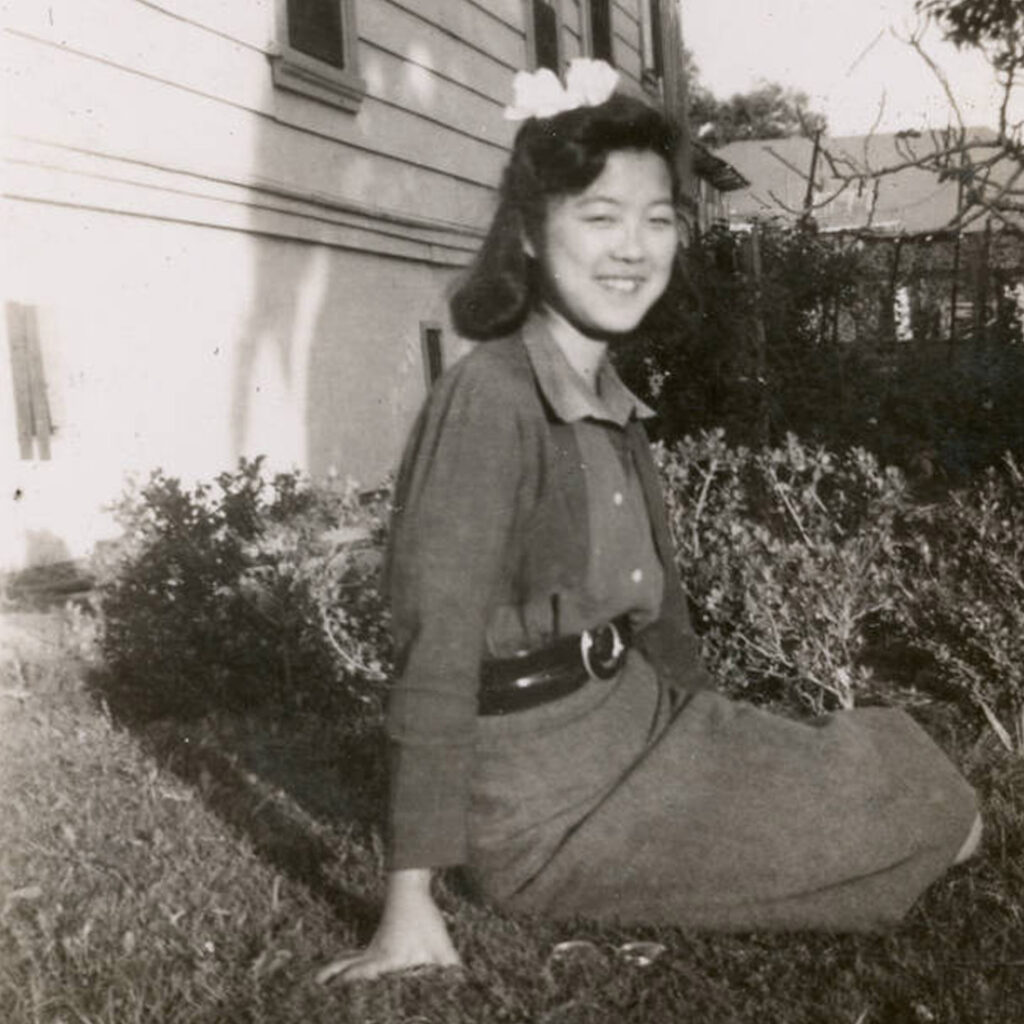
Aiko Herzig-Yoshinaga sitting on the grass, 1937, credit John Yoshinaga and California State University Japanese American Digitization Project
Aiko Herzig-Yoshinaga wasn’t a lawyer. She was a former incarceree, a mother, and an office clerk — who would go on to change history.
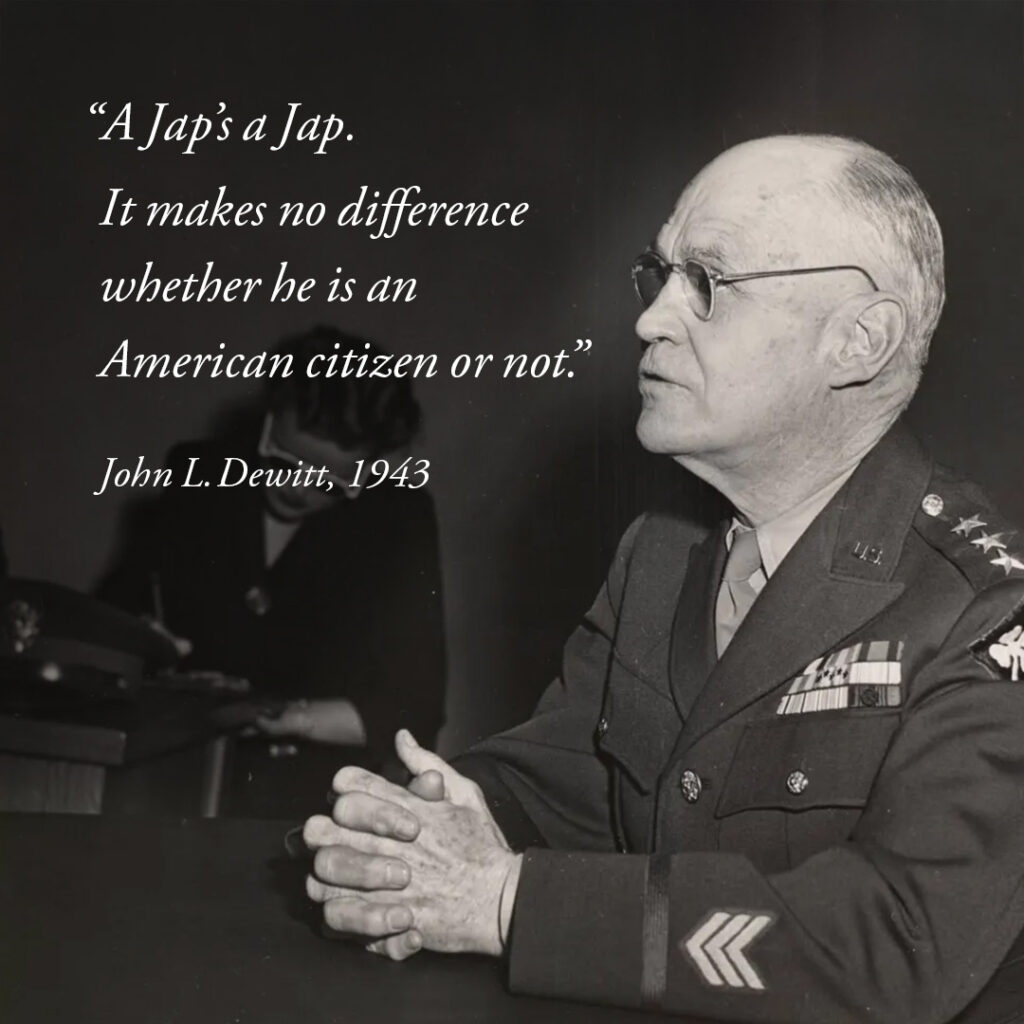
This wasn’t a private remark. General DeWitt was regularly making these statements publicly, justifying the incarceration of 120,000 Japanese Americans.
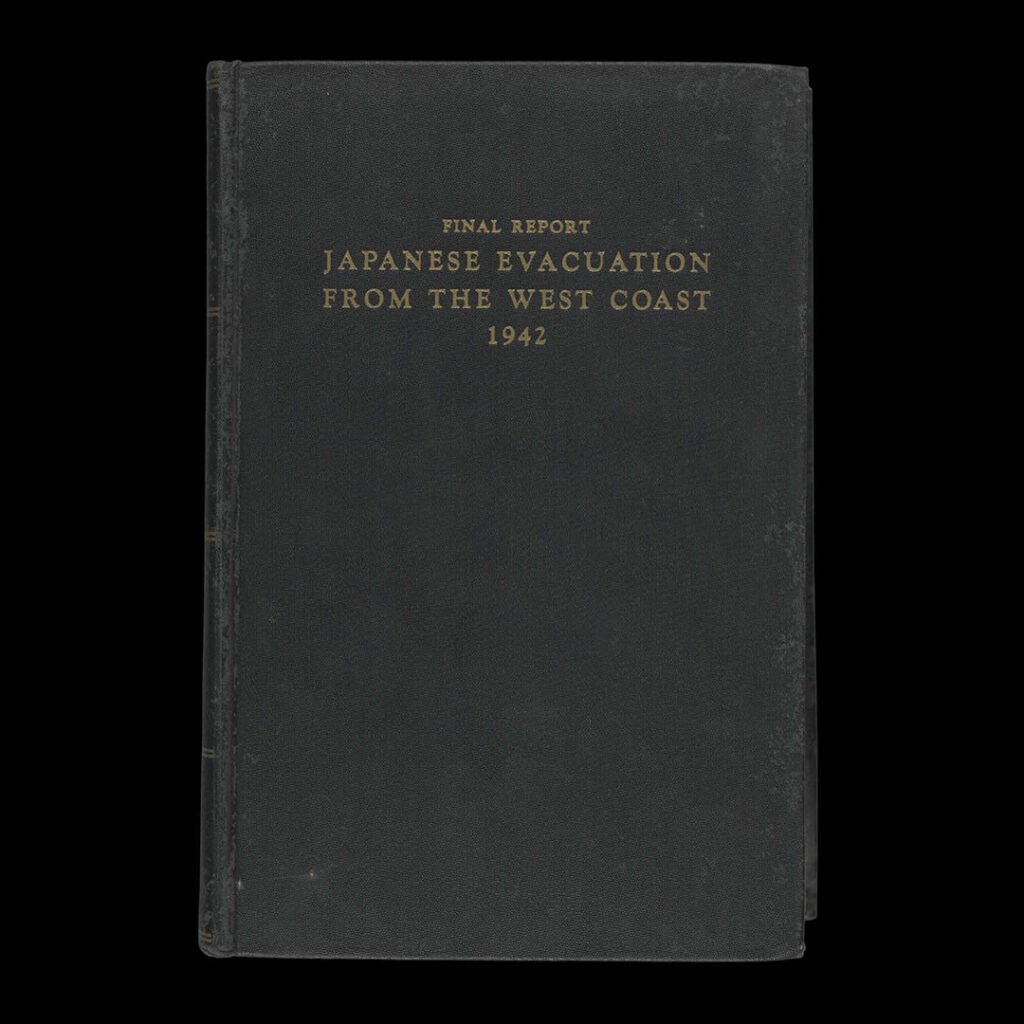
Gen. DeWitt had ten copies of Final Report printed in April 1943 without authorization from the War Department. It was filled with sweeping, racist claims.
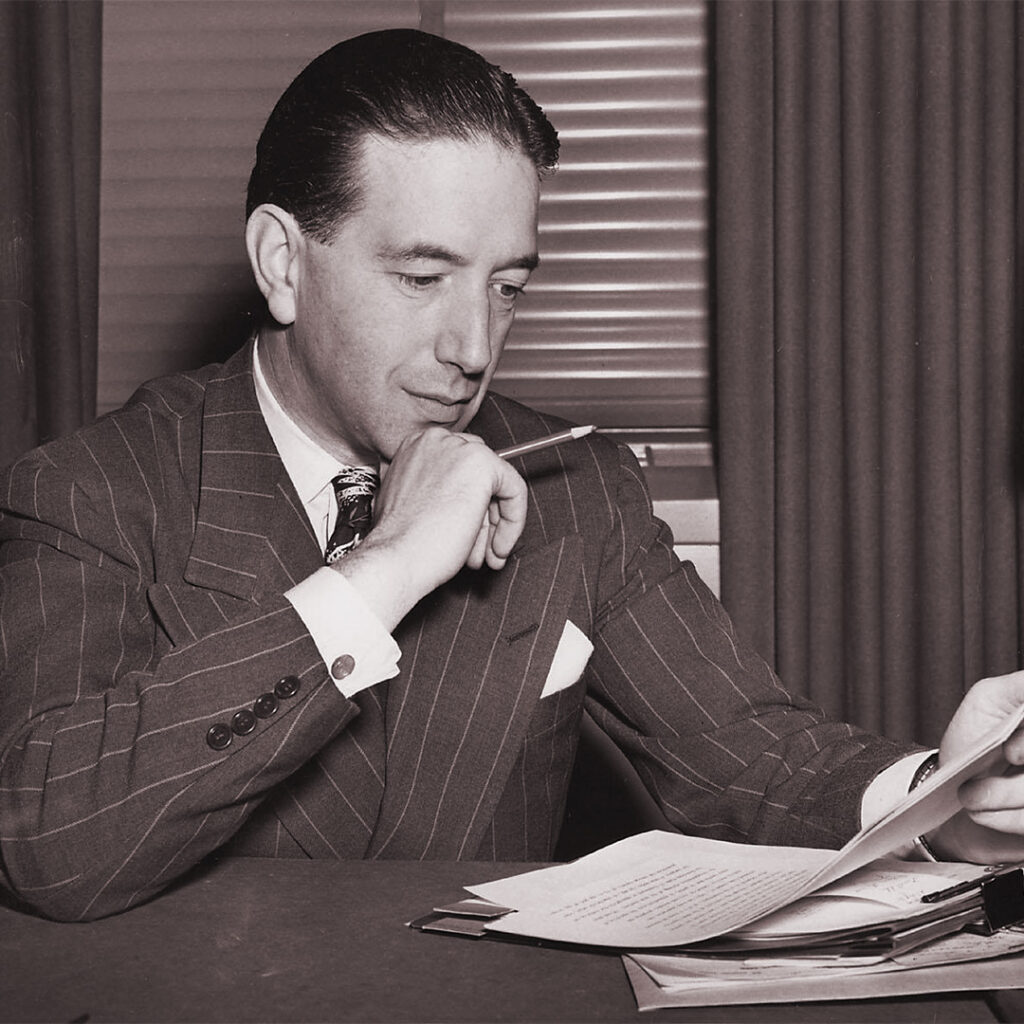
Karl Bendetsen tried to rewrite two histories: the story of the incarceration and the story of his own ancestry. Neither survived the historical record.
The Report That Wasn’t Supposed to Survive
In 1943, General John DeWitt’s staff printed and bound ten copies of an official report justifying the incarceration, titled Final Report: Japanese Evacuation from the West Coast. Its original language was blunt. It claimed that separating loyal Japanese Americans from potential spies was simply impossible, and leaned on race rather than evidence to make its case.
John McCloy, the Assistant Secretary of War, objected, not to the incarceration itself, but to the paper trail it was leaving behind. He ordered his aide Karl Bendetsen to rewrite it, softening the original justification before it ever reached the public. The revised version, issued under DeWitt’s name, dropped the original’s language and claimed military necessity instead. Then the Army moved to destroy every remaining copy of the first version. Cover letters were reissued as though the original had never existed.
Drafts, proofs, and notes were burned. They missed one copy.
What the Document Actually Proved
Aiko found the last copy of DeWitt’s Final Report, sitting in the National Archives, decades later.
The surviving draft became known as the “smoking gun” of the redress movement, because it did something no argument or testimony alone could: it caught the government admitting, in its own internal language, that incarceration was never about military necessity, and then rewriting that admission before anyone outside the War Department could see it.
That single surviving report became key evidence in Personal Justice Denied, the CWRIC’s 1983 final report, which laid the groundwork for the Civil Liberties Act of 1988. It also became central evidence in the coram nobis cases that reopened the wartime convictions of Fred Korematsu, Gordon Hirabayashi, and Minoru Yasui, allowing courts decades later to formally vacate what should never have been upheld in the first place.
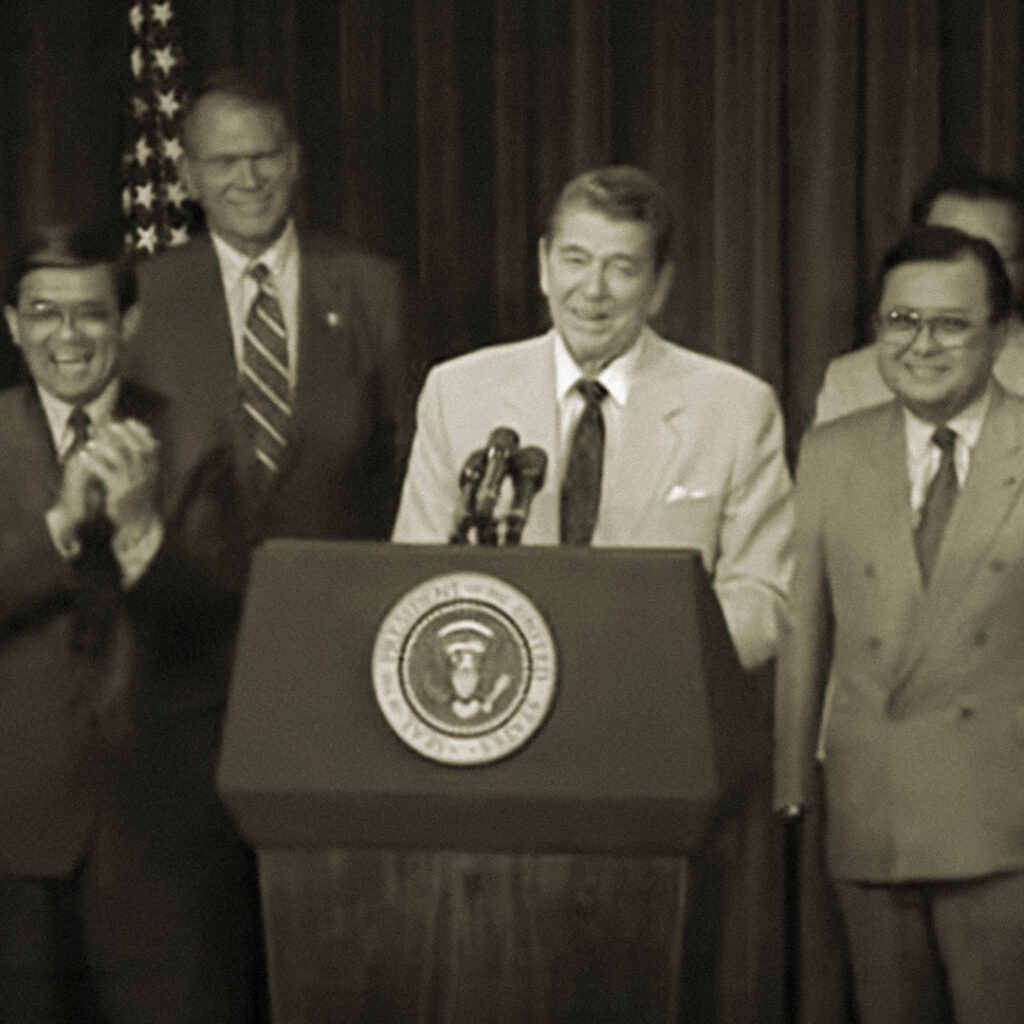
President Ronald Reagan signed the Civil Liberties Act of 1988, issuing a formal apology and reparations to Japanese Americans incarcerated during World War II.
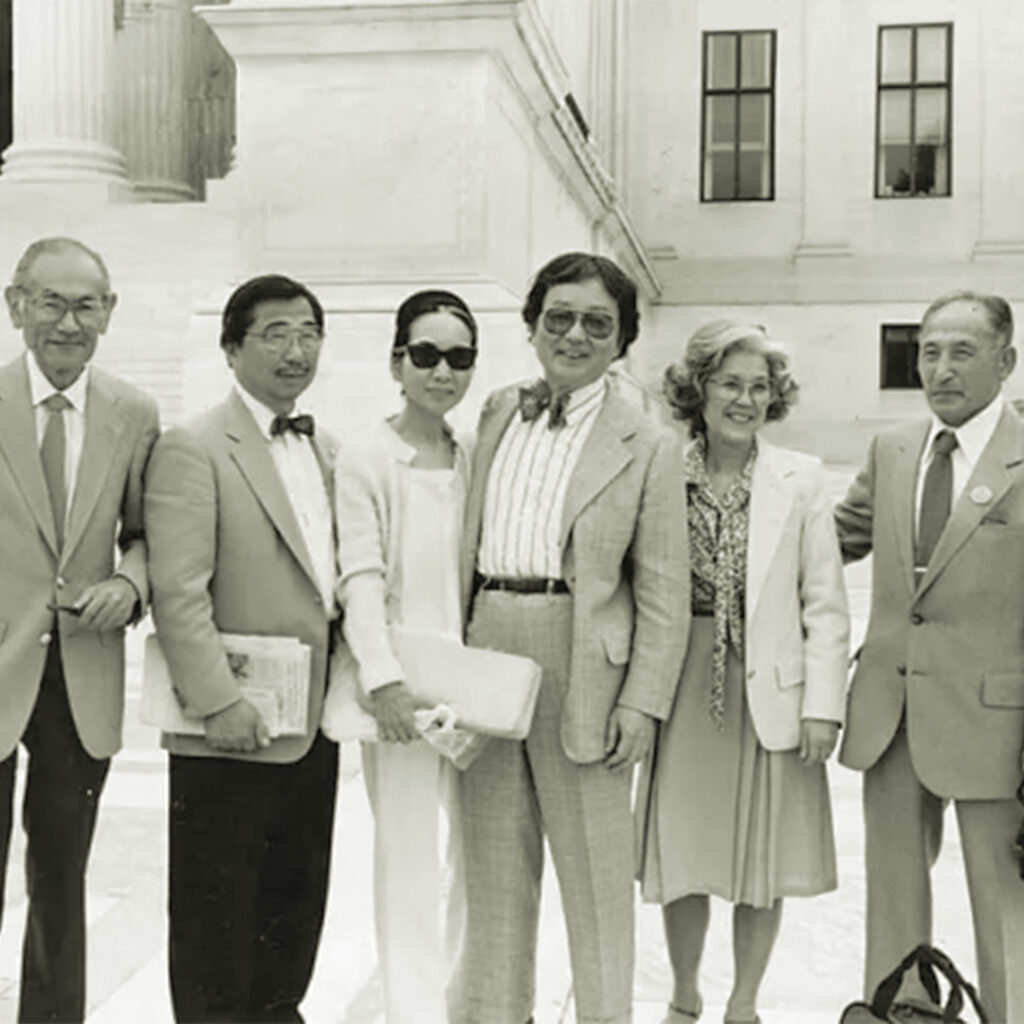
Fred Korematsu, Gordon Hirabayashi, Michi Weglyn, William Hohri, Aiko Herzig-Yoshinaga, and Harry Ueno — The dream team of the redress movement.
Aiko Herzig-Yoshinaga (right), whose tireless research uncovered government misconduct, listening during the 1981 CWRIC Hearings in Washington, D.C.
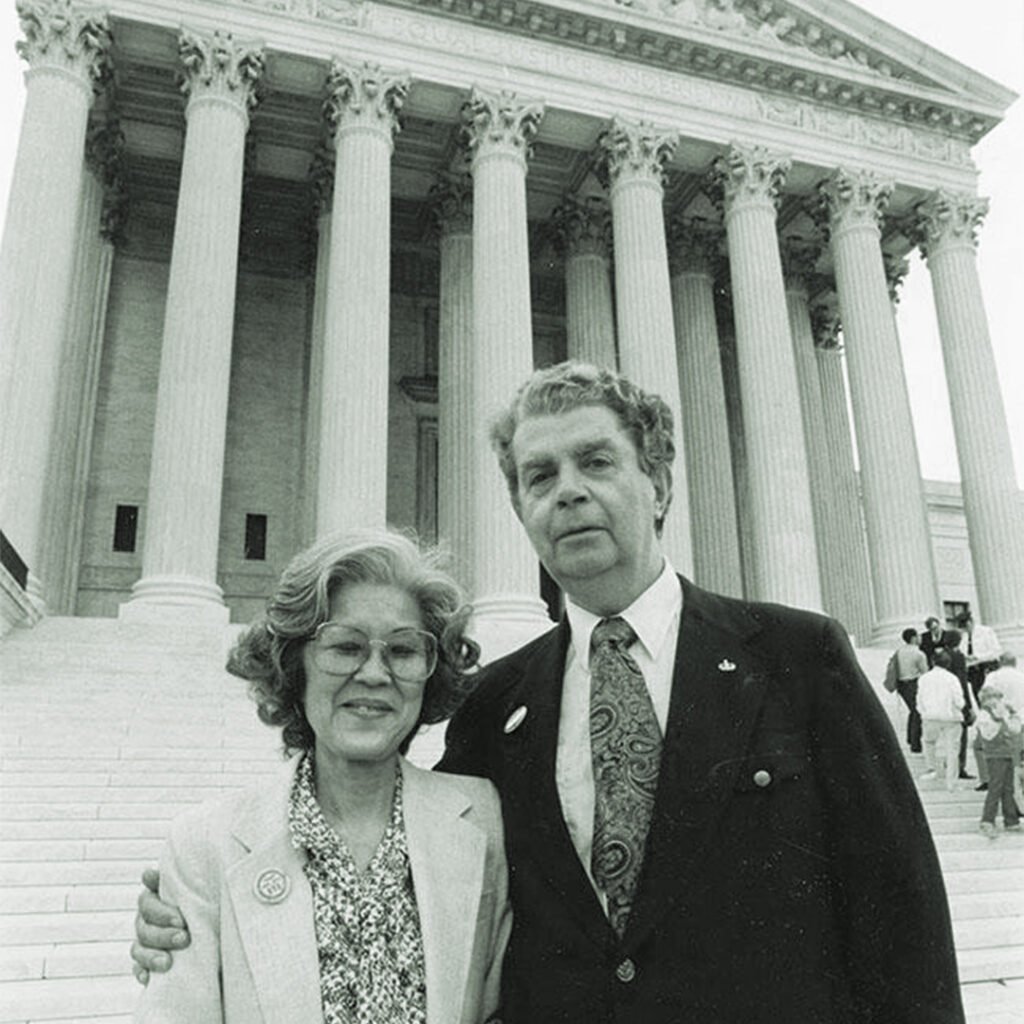
Aiko with her husband Jack Herzig in front of the Supreme Court, April 20, 1987, credit Aiko Herzig-Yoshinaga
Aiko Herzig-Yoshinaga, December 1988. Her influence will be felt — not just in Japanese American communities, but across America — for generations to come.
An Extraordinary Find
Aiko herself had been incarcerated as a teenager at Manzanar. Afterward, like many Nisei women of her generation, she spent years working as a secretary and typist, jobs that demanded obsessive precision with names, dates, and filing systems. That precision, developed in ordinary clerical jobs rather than any elite institution, is exactly what let her navigate the National Archives better than almost anyone else who ever tried.
She left behind thousands of pages of annotated government documents, painstakingly organized for anyone who wanted to follow her trail.
But what she really left behind was proof. Proof that the government knew, in writing, that it was wrong, and tried to erase the evidence anyway. Proof that one person with enough persistence could find it again.


amazing