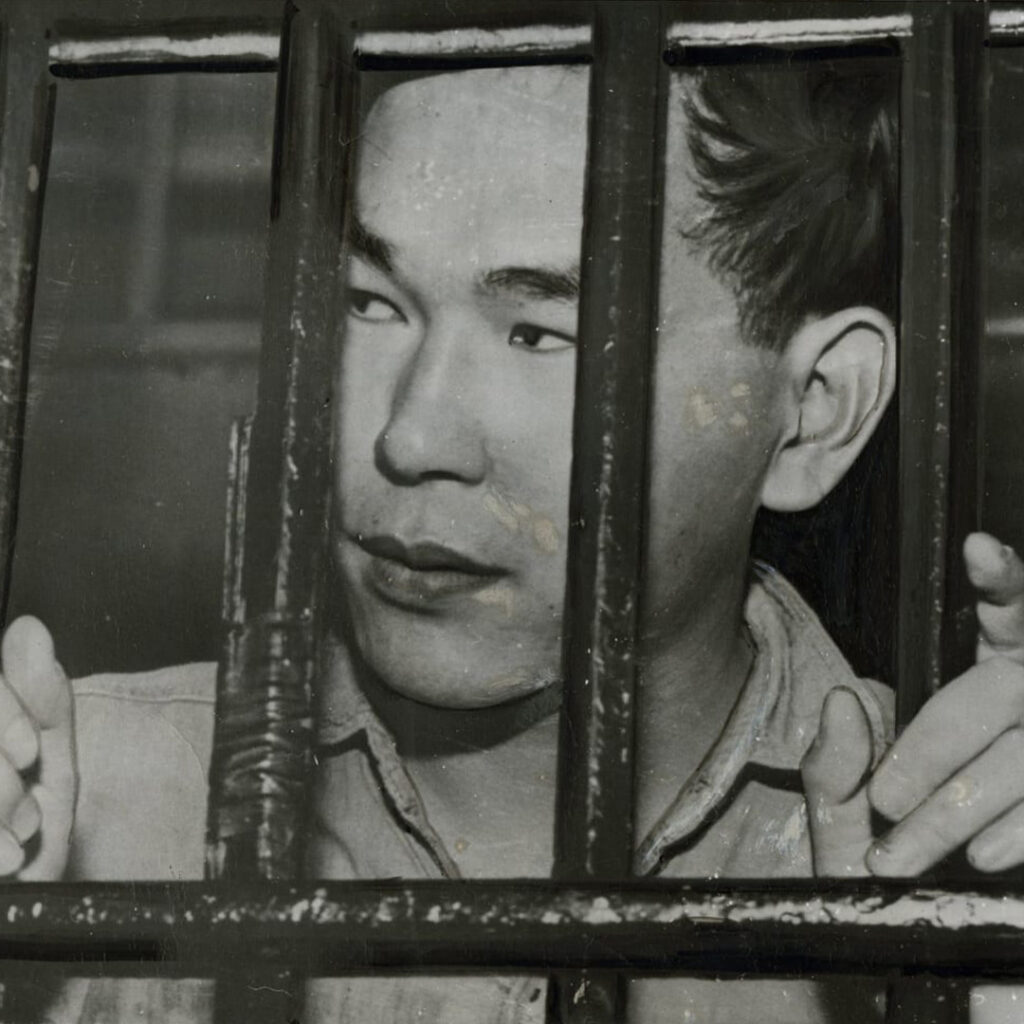
They Didn’t Shoot the Messenger. But They Did Try to Gas Him to Death.
September 2, 1948: Tomoya Kawakita was found guilty on eight of thirteen counts of treason and sentenced to death.
Tomoya Kawakita is one of the last people ever convicted of treason in the United States. But was his sentence justified?
Born in Calexico, California, in 1921, Kawakita was a U.S. citizen by birth. He did not hold Japanese citizenship.
In 1939, he left for Japan to pursue higher education. His parents encouraged the move, believing that strong bilingual skills in English and Japanese would give him a career advantage. They returned to the U.S., but Tomoya stayed behind. When war broke out, he was stranded. And as a Nisei in Japan during wartime, he became a target of suspicion.
Nearly two years after Pearl Harbor, Kawakita added himself to his family’s koseki, or household registry, to acquire Japanese citizenship. Eventually, he found work at the Oeyama Nickel Mine, operated by the Furukawa Mining Company. Fluent in both languages, Kawakita was assigned as an interpreter. But they soon started to bring in Allied POWs as forced labor.
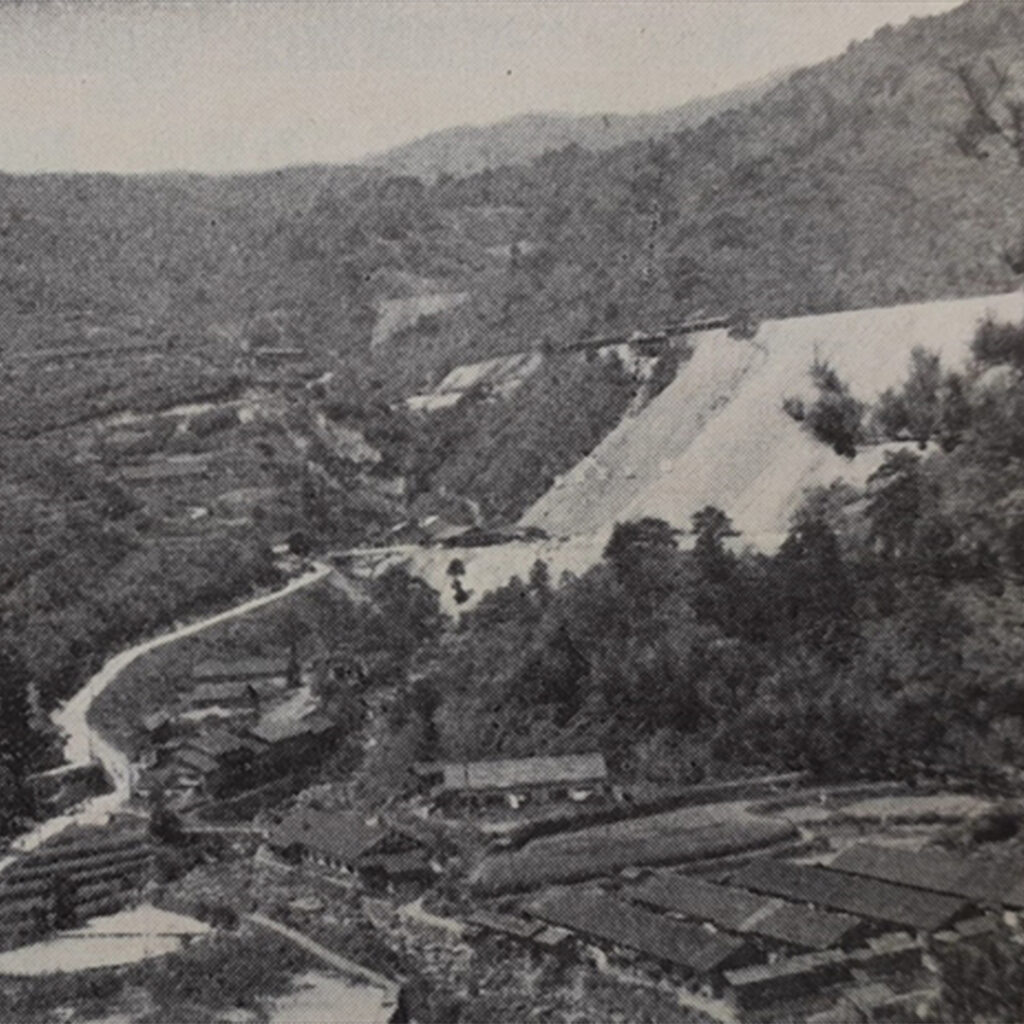
Oeyama was a major industrial operation in Japan that included nickel and steel manufacturing, as well as extensive mining infrastructure.
Tomoya Kawakita was hired as an interpreter by Oheyama Nickel Mining Industry Co. before the company began using Allied POWs for forced labor at its mine.
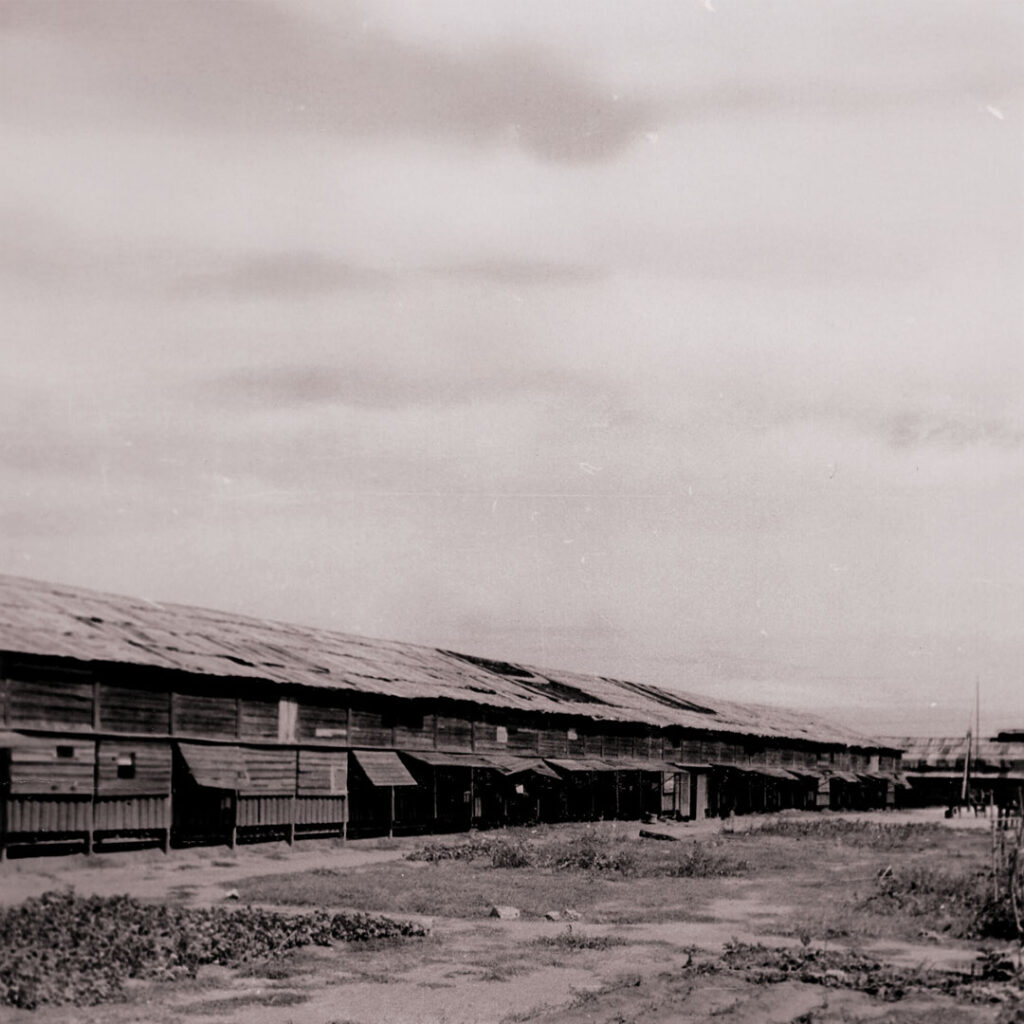
These makeshift wooden buildings offered little protection from Japan’s harsh winters or the brutal labor conditions the prisoners endured.
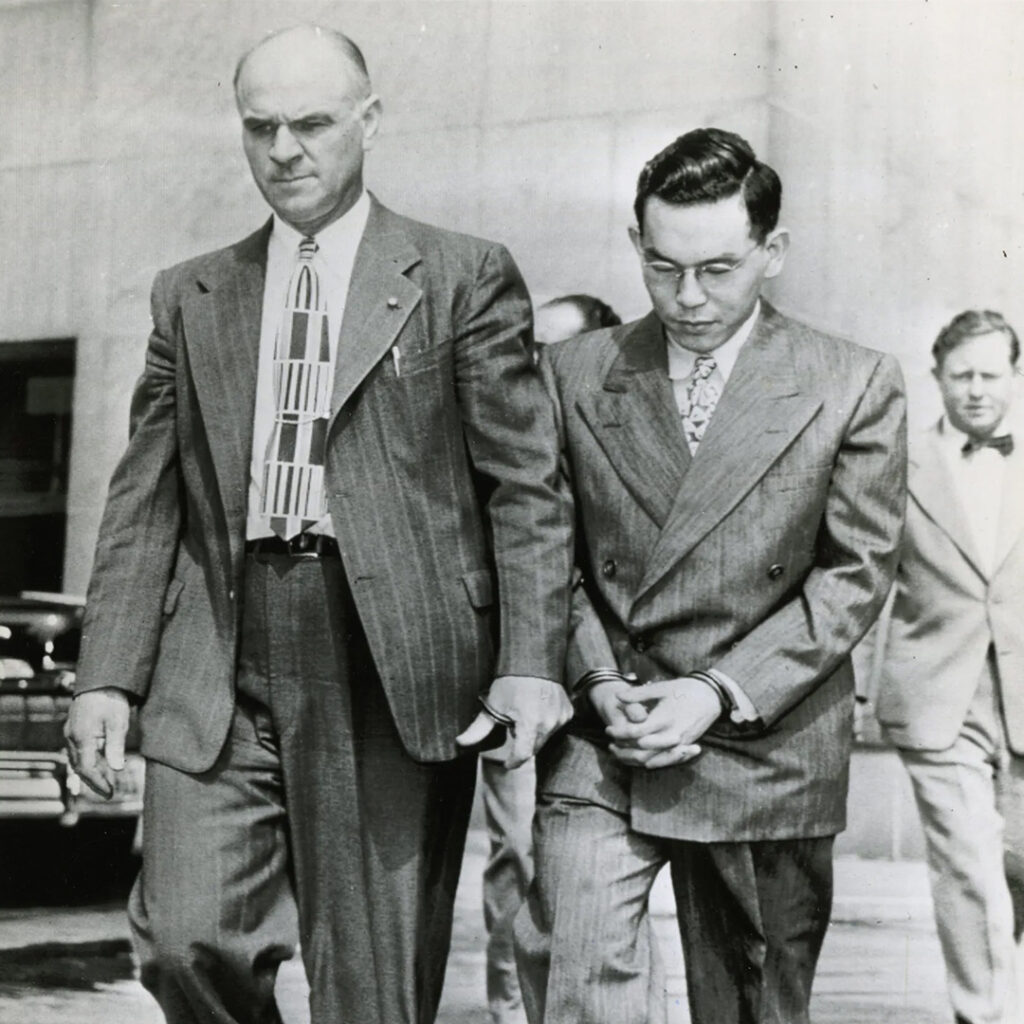
He had returned to the U.S. and was living openly under his own name when a former POW recognized him — leading to his arrest for treason.
Kawakita had returned to the U.S. under his real name, having worked as a translator for the U.S. Army in Japan after the war and was admitted back into the U.S. without any issue.
The Oeyama mine was brutal. Prisoners worked under horrific conditions. Guards beat them. Food was scarce. Medical care was nearly nonexistent.
Kawakita’s role, according to most accounts, was to translate orders from Japanese supervisors. He had no rank, no authority, and no weapon. But his presence was unforgettable — he spoke perfect English and regularly delivered painful commands.
It wasn’t until after the war that accusations emerged.
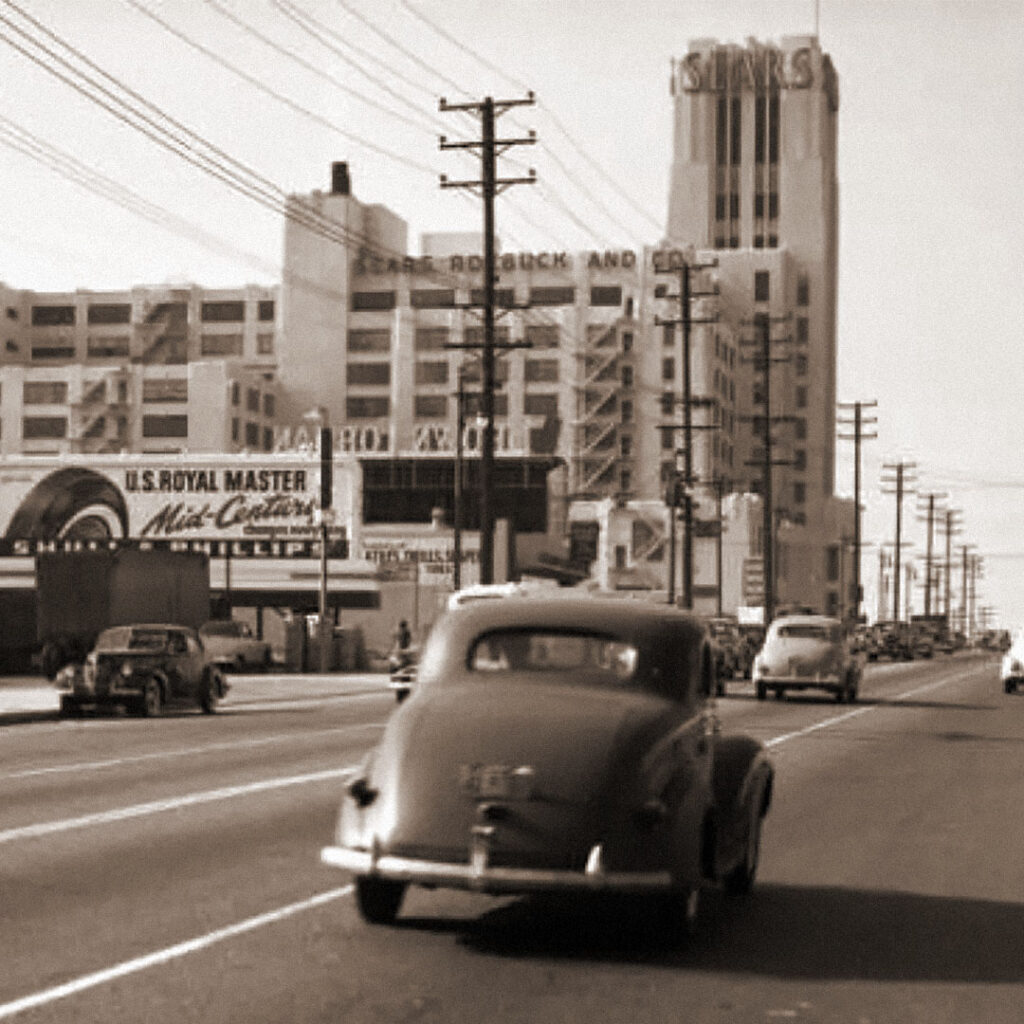
By then, Kawakita had returned to the United States to live with his parents and had enrolled at USC. In 1946, a former POW who had been imprisoned at Oeyama spotted him at a Sears Roebuck store in Los Angeles. The man took down his license plate number and reported him to the FBI. Kawakita was arrested.
As media attention escalated, other ex-POWs began coming forward. Some claimed Kawakita had spit on them or insulted them during roll calls. Others said he stood by during beatings. A few accused him of cruelty and indifference.
But none proved he had ever ordered violence or physically harmed anyone. And many of the accounts were questionable at best.
One of the most serious accusations — that Kawakita caused the death of a fellow prisoner — was later dropped after another soldier testified that a Japanese guard, not Kawakita, was responsible.
Still, the prosecution insisted that Kawakita’s tone, his presence, and his delivery of orders made him a traitor. As if, somehow, he had been the one giving the orders. But he wasn’t the officer. He wasn’t even a guard. He was a translator.
Kawakita was charged with thirteen counts of treason — each one carrying the death penalty.
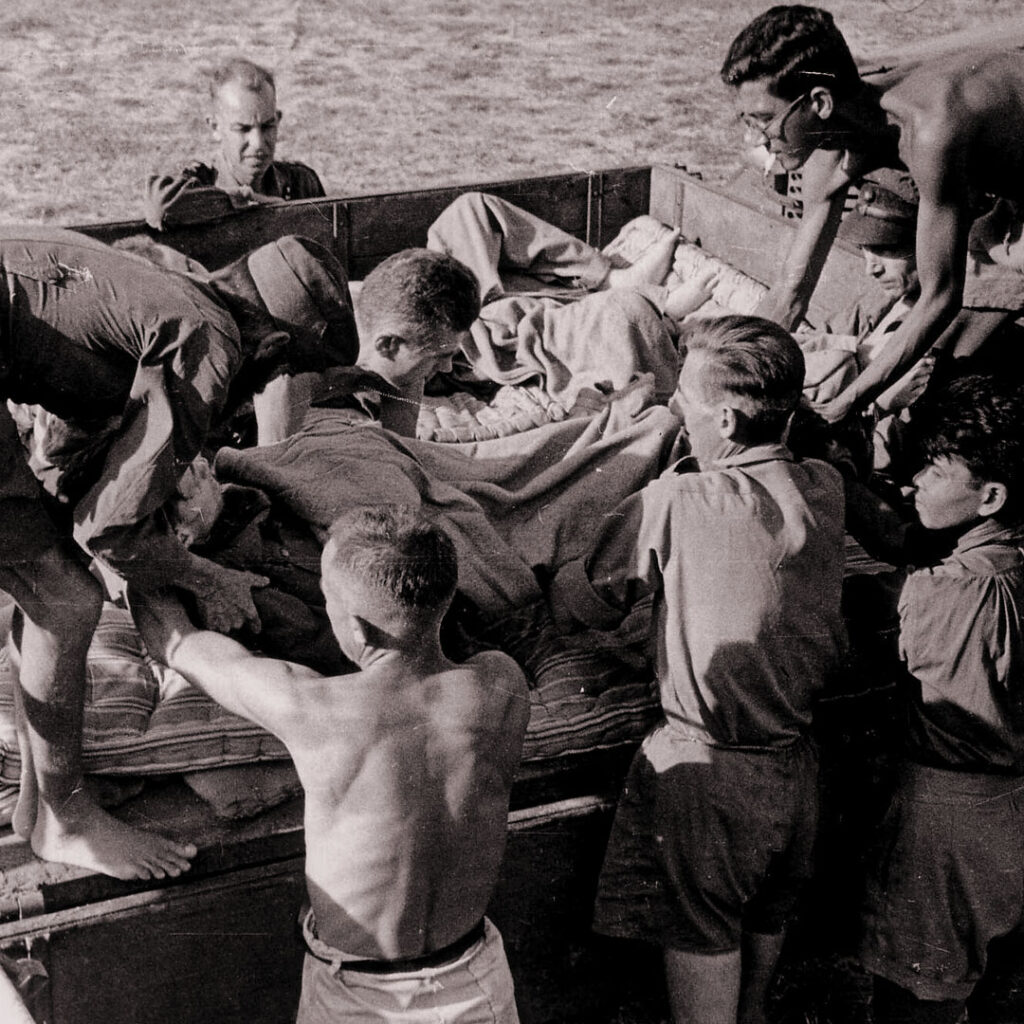
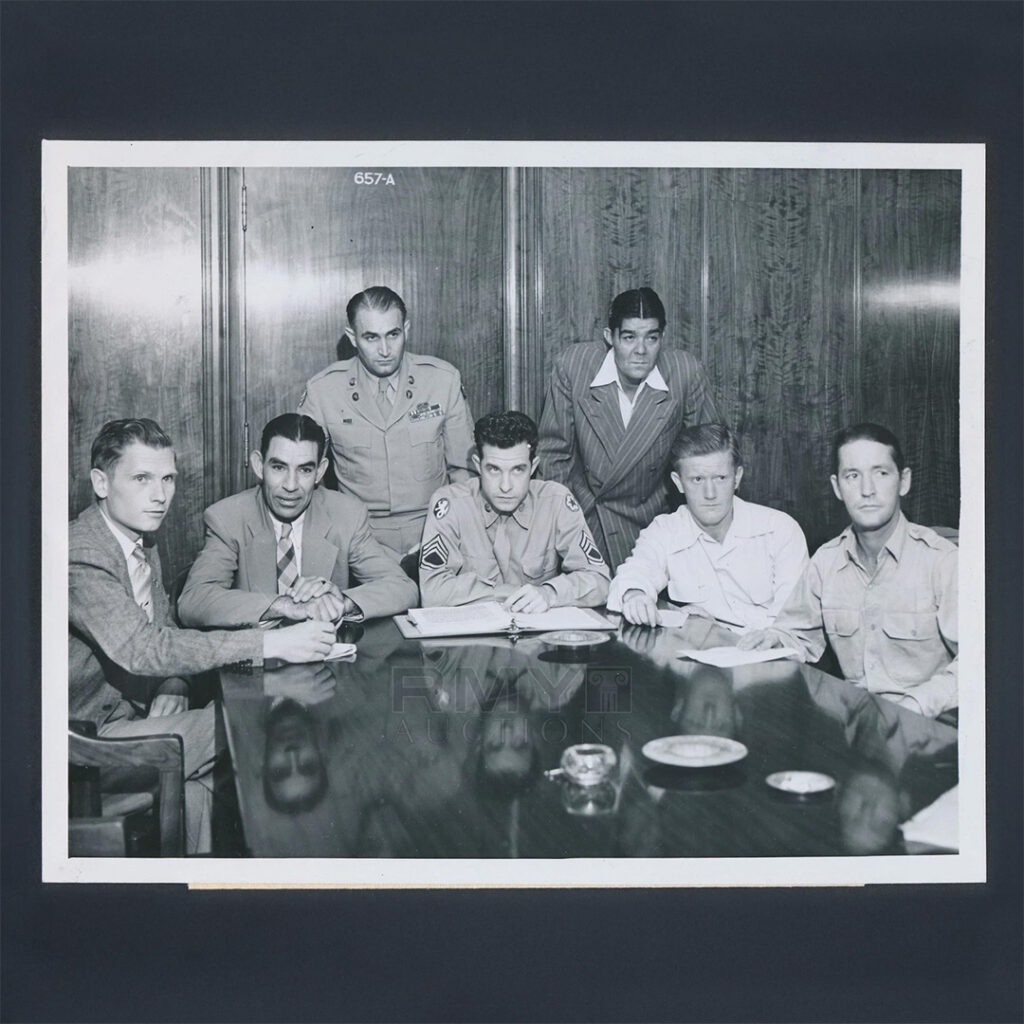
Many were held at the Oeyama mine during the war. Their accounts — often conflicting and emotionally charged — would become central to the government’s case.
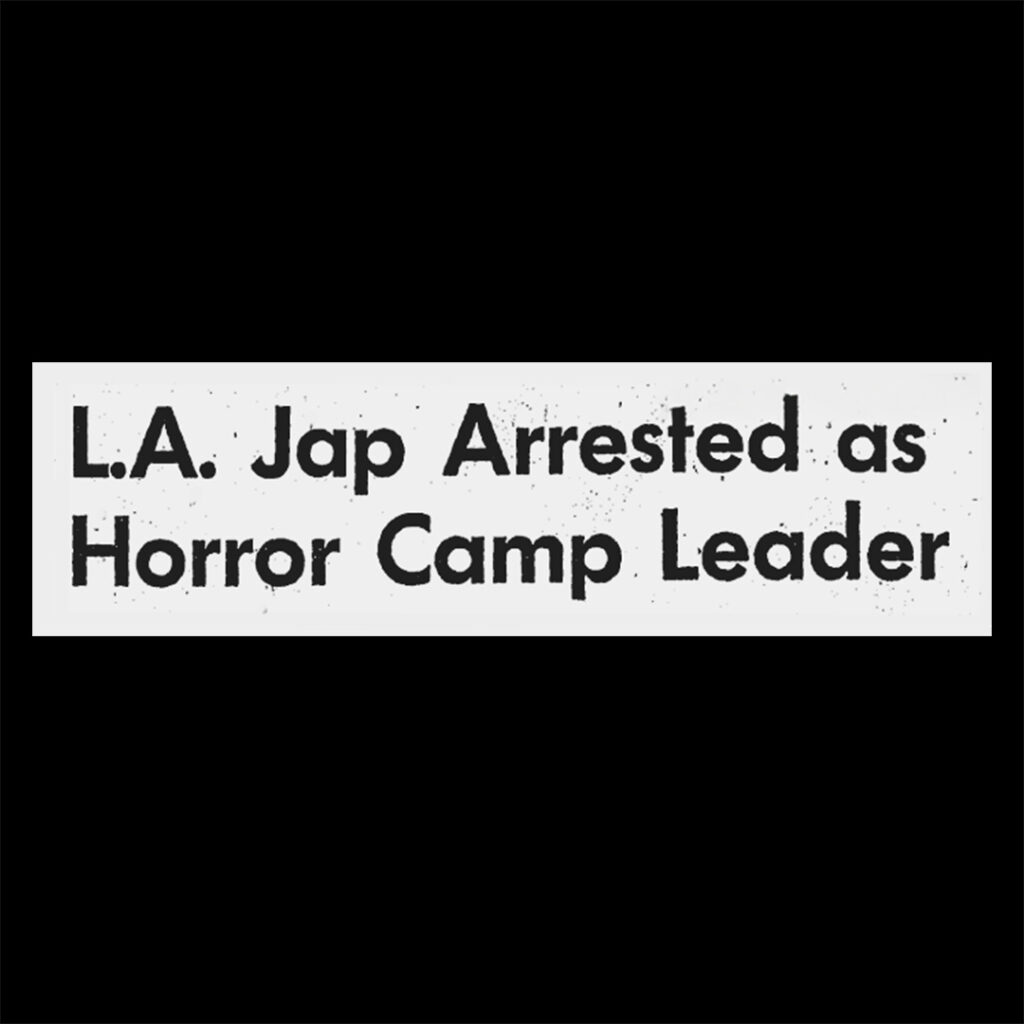
Despite no official position or rank, he was labeled the “Horror Camp Leader” — a reflection of the media’s eagerness to cast him as a villain.
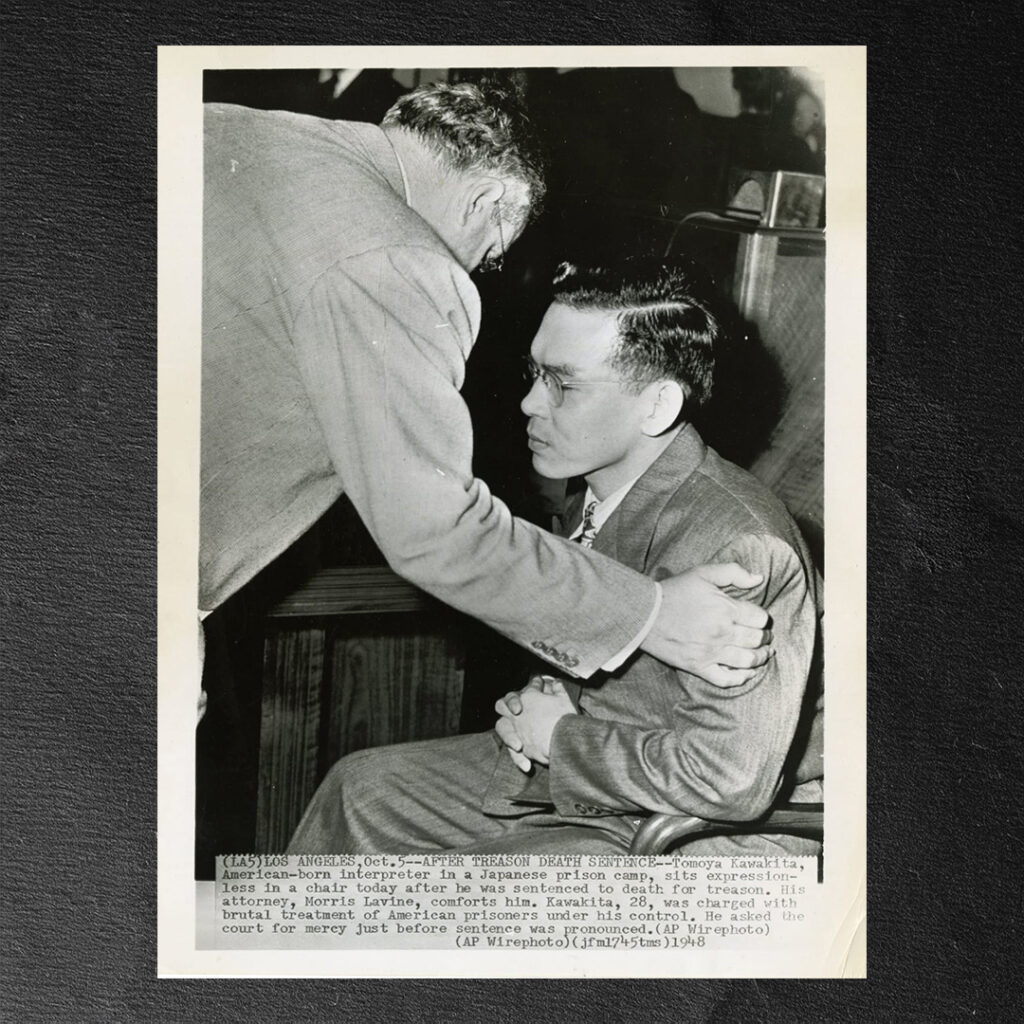
Kawakita’s attorney, Morris Lavine, tries to console him as the courtroom absorbs the weight of the judge’s decision.
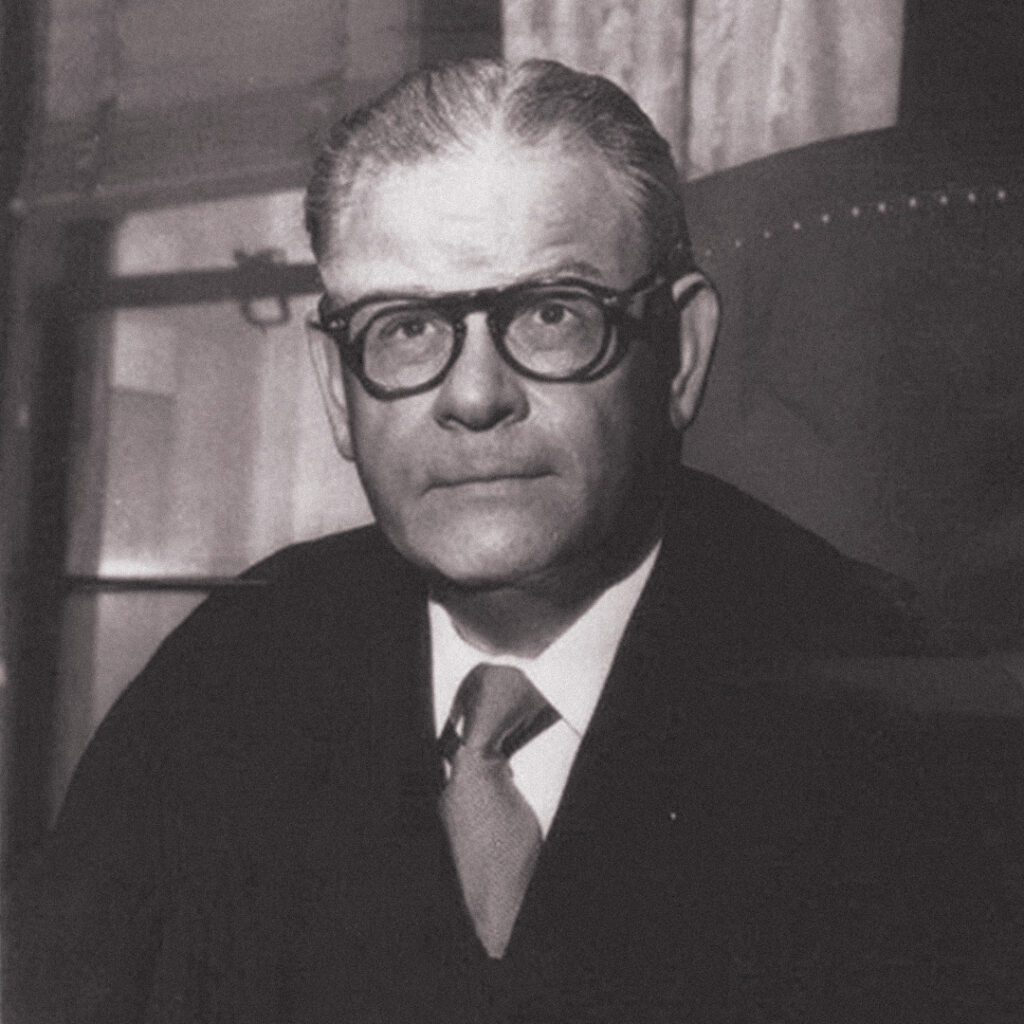
At sentencing, Judge Mathes told Kawakita that his betrayal of American prisoners was “worse than murder. But for Kawakita, refusing orders could’ve meant punishment or worse.
His trial lasted eleven weeks. The jury deliberated for eight days and was, at one point, deadlocked. Testimony conflicted. Evidence was thin. Witnesses contradicted one another. Still, after long debate, the jury returned a guilty verdict on eight counts.
While the courtroom wrestled with doubt, the media didn’t. Headlines labeled him a monster. Major newspapers never reported that Kawakita wasn’t a guard. They never mentioned that he had never struck a prisoner. They never explained that he had likely been under surveillance himself — or that he had been tasked with translating orders, not giving them.
Instead, they gave him a nickname, “The Horror Camp Leader,” and ran with it.
On September 2, 1948, Tomoya Kawakita was sentenced to death by gas chamber at San Quentin. Judge William C. Mathes told him: “Your crime is worse than murder.”
Ironically, it was Kawakita’s American citizenship that sealed his fate. Only a U.S. citizen can be tried for treason. If he had renounced that citizenship while in Japan, he likely would have avoided trial altogether. But by returning to the U.S. after the war to live with his family, he became the last person in American history to be sentenced to death for treason.
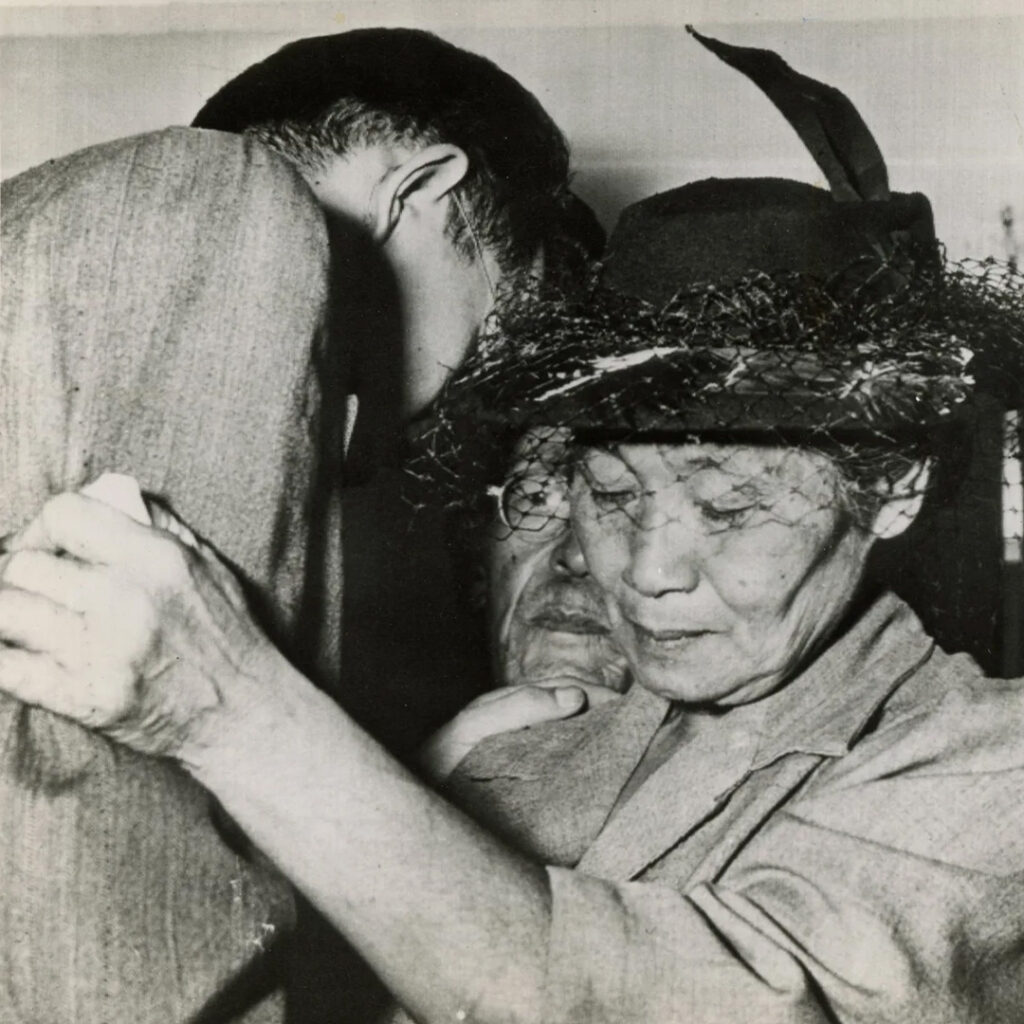
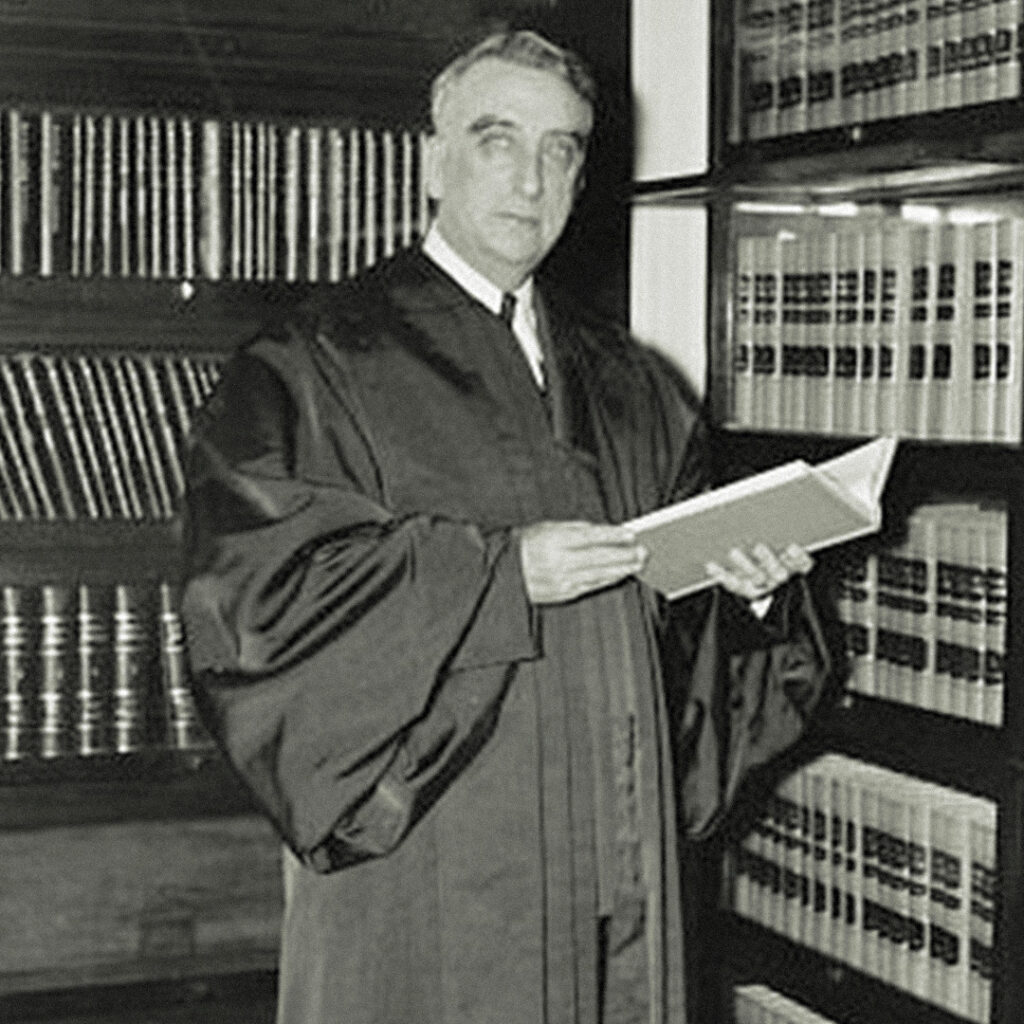
After appeals from his sisters and mother, and a dissenting opinion from Chief Justice Fred M. Vinson, President Dwight D. Eisenhower commuted Kawakita’s sentence to life imprisonment in 1953.
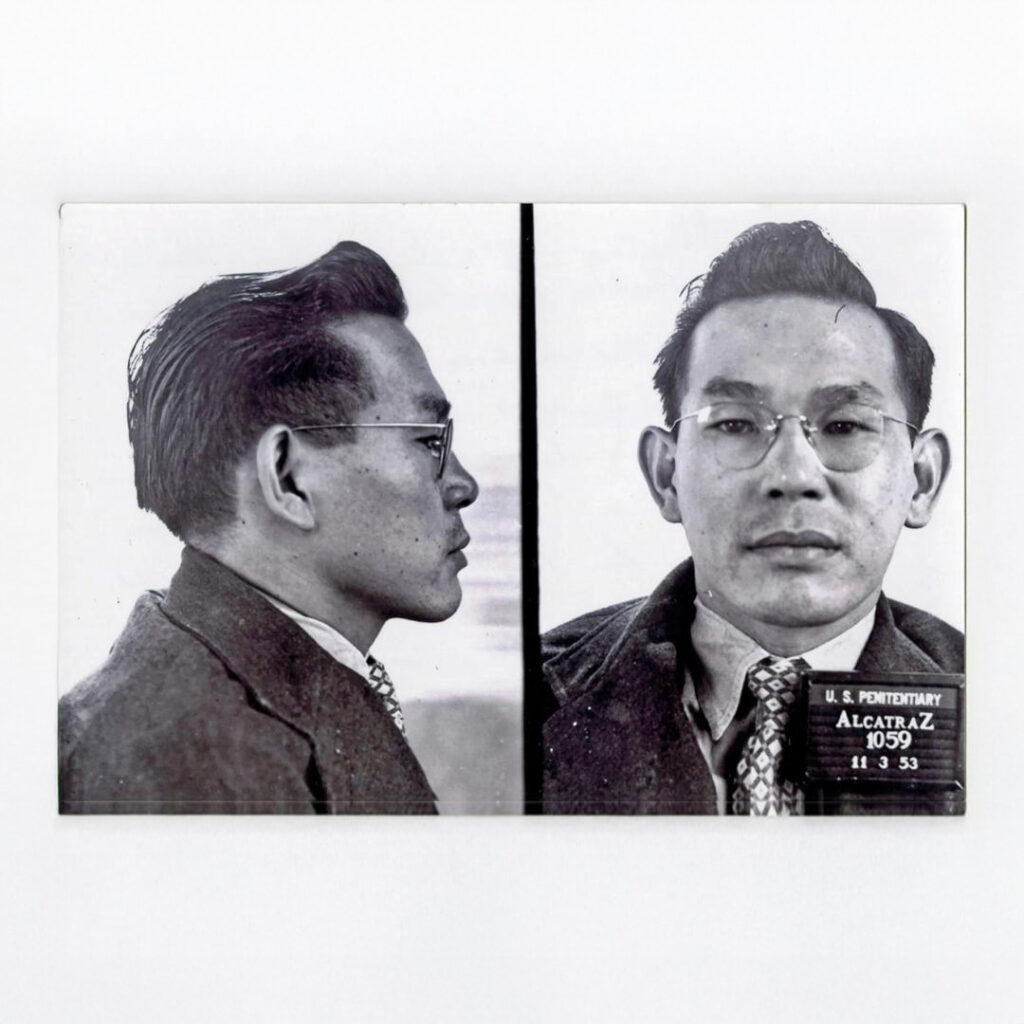
He was transferred to Alcatraz, then later to McNeil Island. Meanwhile, in Japan, the last of the convicted war criminals at Sugamo Prison — including those responsible for torture, executions, and human experimentation — were paroled by 1958. Kawakita served more time than any of them. But throughout his incarceration, he was considered a model prisoner.
In a rare emotional moment, the man often described as cold and aloof was seen in tears as his mother clutched a handkerchief and fought to hold herself together.
Vinson questioned whether his dual-national status made the treason charge more complicated than the majority allowed.
After his death sentence was commuted to life imprisonment, Kawakita was transferred to Alcatraz, where many of the country’s most notorious inmates were.
Tomoya Kawakita served over 11 years in federal prison — longer than many high-ranking war criminals from the Pacific War.
Ten years later, in one of President John F. Kennedy’s final official acts, Kawakita was released and deported to Japan, under the condition that he never return. His U.S. citizenship was revoked.
Kawakita lived the rest of his life in quiet obscurity. At one point, he asked for permission to return to the U.S. to visit his parents’ graves. But the government still denied his request.
Tomoya Kawakita remains the last person in American history sentenced to death for treason.
Was he a traitor? A survivor? Or a scapegoat in a moment of national hysteria?