They didn’t bomb Pearl Harbor. They didn’t lead the Bataan Death March. But it didn’t matter, they looked the same.
April 9, 1942: The surrender at Bataan led to a brutal death march abroad, and rising hysteria at home.
In the Philippines, U.S. and Filipino forces had been fighting desperately to hold off the Japanese Imperial Army. But on April 9, 1942, outnumbered, sick, and starving, they surrendered.
The result was one of the most brutal war crimes of the 20th century.
76,000 prisoners of war, including over 10,000 Americans, were forced to march more than 60 miles through the sweltering jungle heat, without food, water, or medical care.
Those who collapsed were beaten. Those who resisted were shot or bayoneted. Many never made it out alive. It would become known as the Bataan Death March, and by the time it ended, more than 10,000 people were dead.
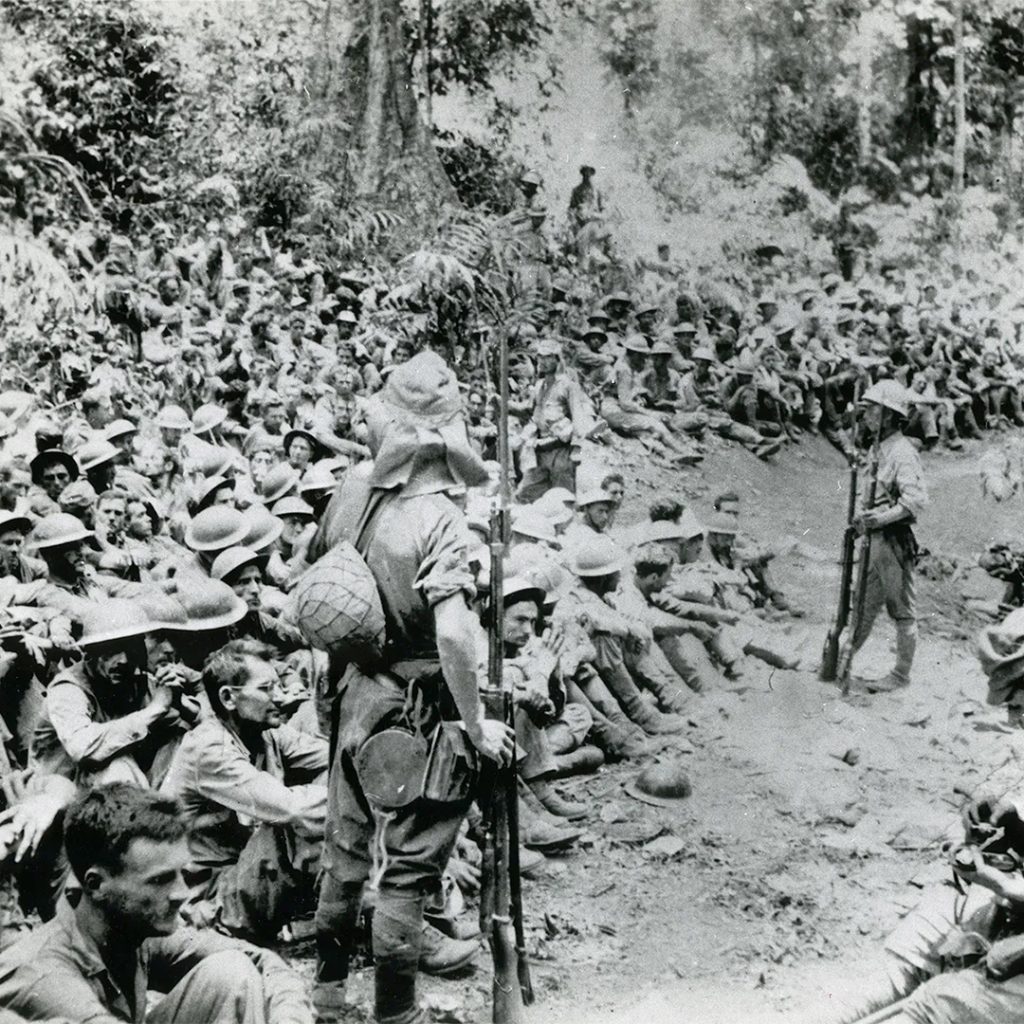
American troops surrendering to Japanese soldiers on Bataan, credit National Archives
Captured American soldiers before the beginning of the Bataan Death March
A burial detail carries the remains of POWs who succumbed after the Death March, credit Air Force photo
Newspaper stand displaying news that Bataan collapsed, credit 4th Marines Band
A propaganda poster by the U.S. Army
Dr. Seuss was vocally anti-Japanese and Japanese Americans during the war
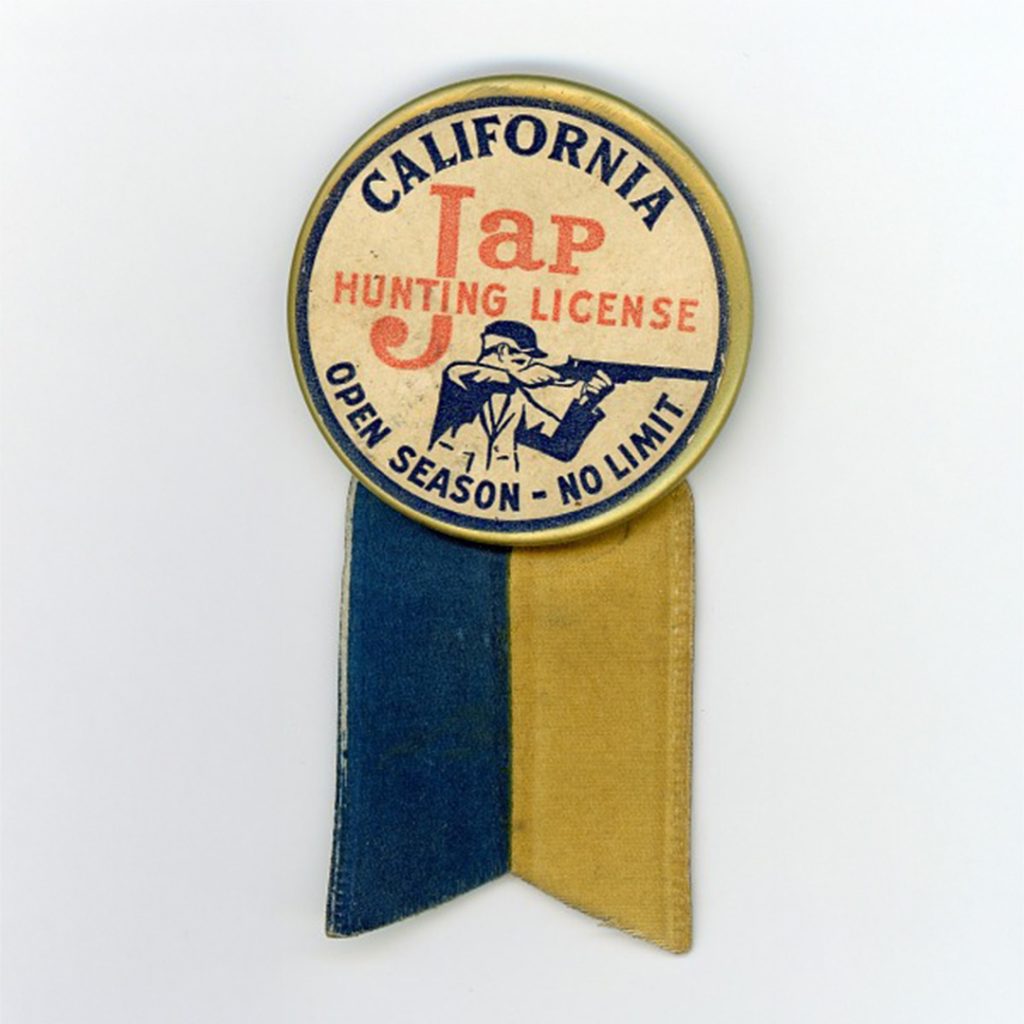
California Jap Hunting License, credit National Museum of American History
But this tragedy didn’t end in the Philippines.
News of the march trickled back to the U.S. in the months that followed. And when it did, it poured gasoline onto the firestorm of anti-Japanese rage that already existed across the country.
That rage was directed not only at Japan — but at Japanese Americans.
Back home, 120,000 people of Japanese ancestry — two-thirds of them U.S. citizens — were already being forced from their homes under Executive Order 9066.
They weren’t soldiers. They weren’t accused of any crime.
They were given up to six days’ notice. Told to pack what they could carry. Tagged and sent to live behind barbed wire in remote government camps. Just like prisoners.
There were no charges. No trials. No convictions. But the fear and fury stoked by the Bataan Death March helped turn wartime hysteria into public support for incarceration.
A barber in Seattle proudly points to his bigoted sign
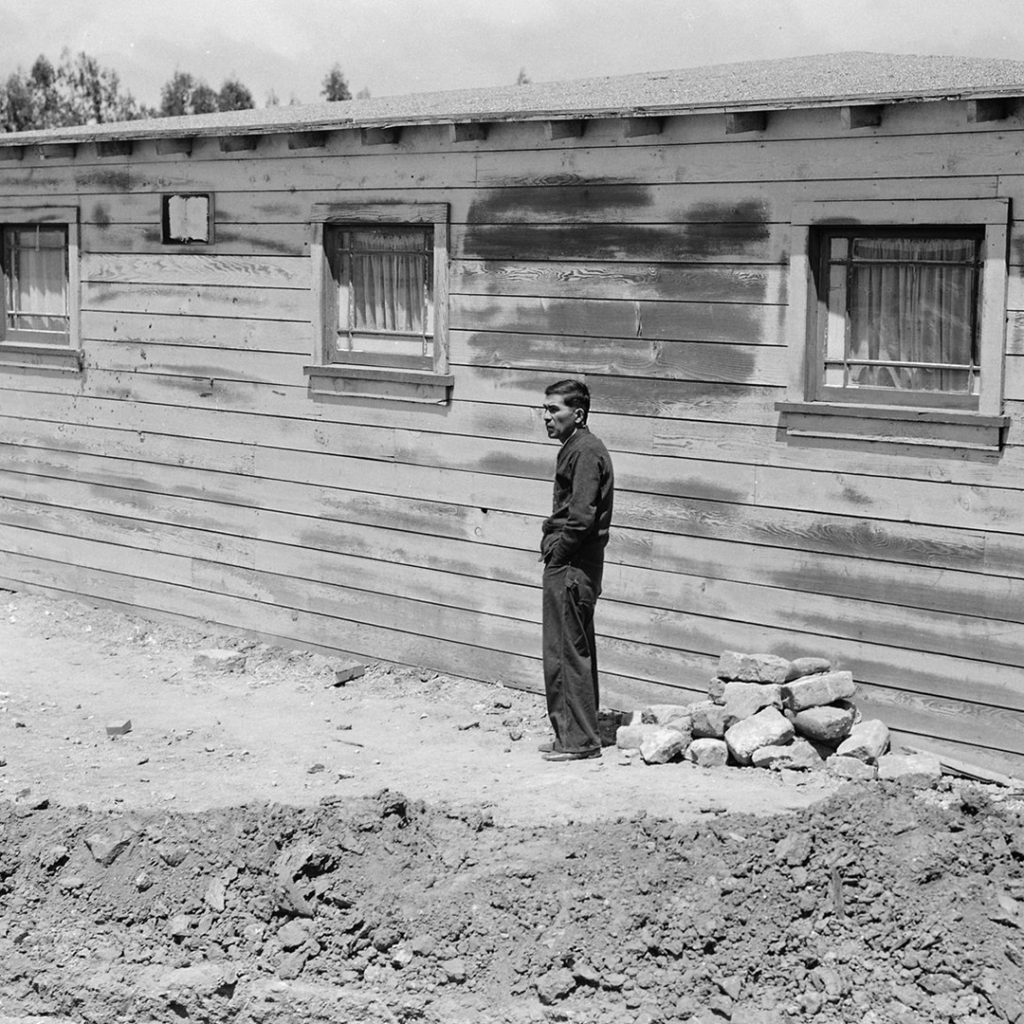
A man milling around, Tanforan Assembly Center, June 16, 1924, photo by Dorothea Lange
U.S. Army National Guard and Filipino soldiers at the outset of the Bataan Death March, April 9, 1942, credit Army photo
American POWs with their hands tied. The effects of hunger, sickness, and fatigue are evident, credit U.S. Air Force photo
We must remember the tragedy of Bataan. But we must also remember how war can distort a nation’s sense of justice.
One group was marched at gunpoint through the jungle. Another was quietly erased from neighborhoods across the West Coast.