A $1,000 prize changed his life. Which helped him change the lives of so many more.
October 8, 1916: Spark Masayuki Matsunaga was born in Kukuiula, on the Hawaiian island of Kauai.
The son of Japanese immigrants, Spark Matsunaga grew up in poverty, raised by a father who worked at a sugar plantation and a mother who had four children from a previous marriage.
He got his nickname “Sparky” at the age of 8, after an older boy teased him for finishing last in a footrace: “You’re slower than ol’ Sparky,” the boy laughed, referencing a cartoon horse from the popular comic strip Barney Google and Snuffy Smith. The name stuck. But so did Sparky’s drive to prove people wrong.
When his high school civics teacher, Robert Clopton, told him Hawaii would someday become a state and suggested he run for U.S. Senate, young Sparky listened. Clopton also encouraged him to study politics to fight against racial injustice. But college was out of reach. Matsunaga couldn’t afford the $120 annual tuition at the University of Hawaii. So he worked in a grocery store and set aside his dream.
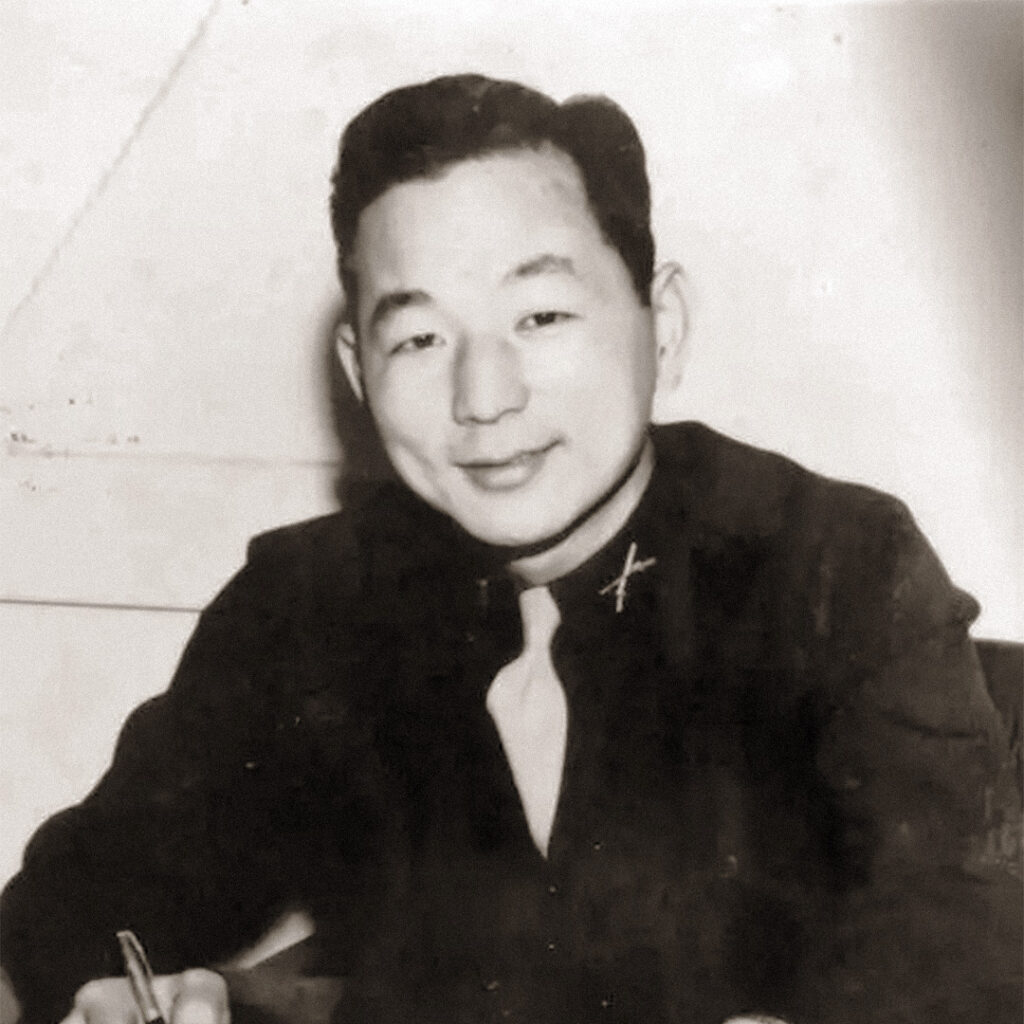
Spark Matsunaga grew up poor in Hawaii, but was ambitious. He earned a newspaper subscription prize that helped him attend college and support his family.
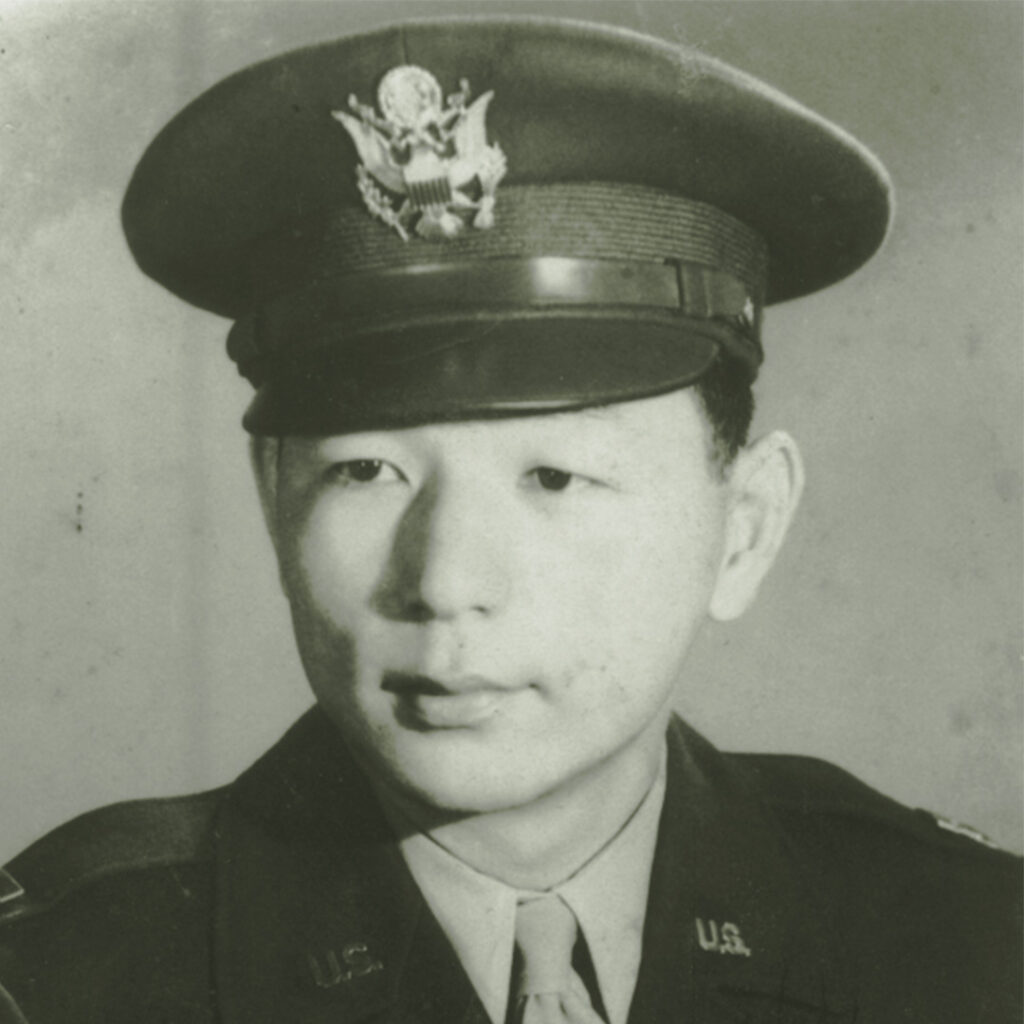
Spark Matsunaga (front center), June 1942. He volunteered and joined the ROTC (Reserve Officers’ Training Corps) even before the Pearl Harbor attack.
Spark Matsunaga in the 100th Infantry Battalion’s D Company, the first U.S. Army unit made up entirely of Nisei soldiers. He was wounded in action in Italy.
But a chance arrived when he participated in a newspaper subscription contest. The grand prize: $1,000. Sparky sold his heart out and won. With $600 of his winnings, he helped his family. With the rest, he took a boat to Honolulu and enrolled at UH. That single prize changed everything.
He enrolled in University of Hawaii in 1937, and graduated in 1941. While attending, he joined the Reserve Officers Training Corps (ROTC).
Matsunaga’s military career during World War II proved to be a defining life experience. He was already commanding a company of 117 soldiers on the island of Molokai when Japanese forces attacked Pearl Harbor on December 7, 1941.
Matsunaga then went on to serve in the famed 100th Infantry Battalion as a second lieutenant. After getting wounded by a landmine in Italy, he was assigned to Fort Snelling in Minnesota.
He then continued to serve, giving over 800 speeches in eight months on behalf of the War Relocation Authority to help resettle incarcerated Japanese Americans and share the sacrifices made by Nisei soldiers. That experience would prepare his future in politics.
After getting released from the U.S. Army as a captain at the end of the war, Matsunaga was admitted to Harvard Law School and earned his degree in 1951. He returned to Hawaii, served as a prosecutor, and was elected to the territorial House of Representatives.
After Hawaii gained statehood in 1959, he ran for lieutenant governor but lost by a narrow margin. But ever the optimist, he vowed to run again, insisting, “The test of a man is not that he shall rise but that he shall fall and rise again.”
That loss became the only election he would ever lose.
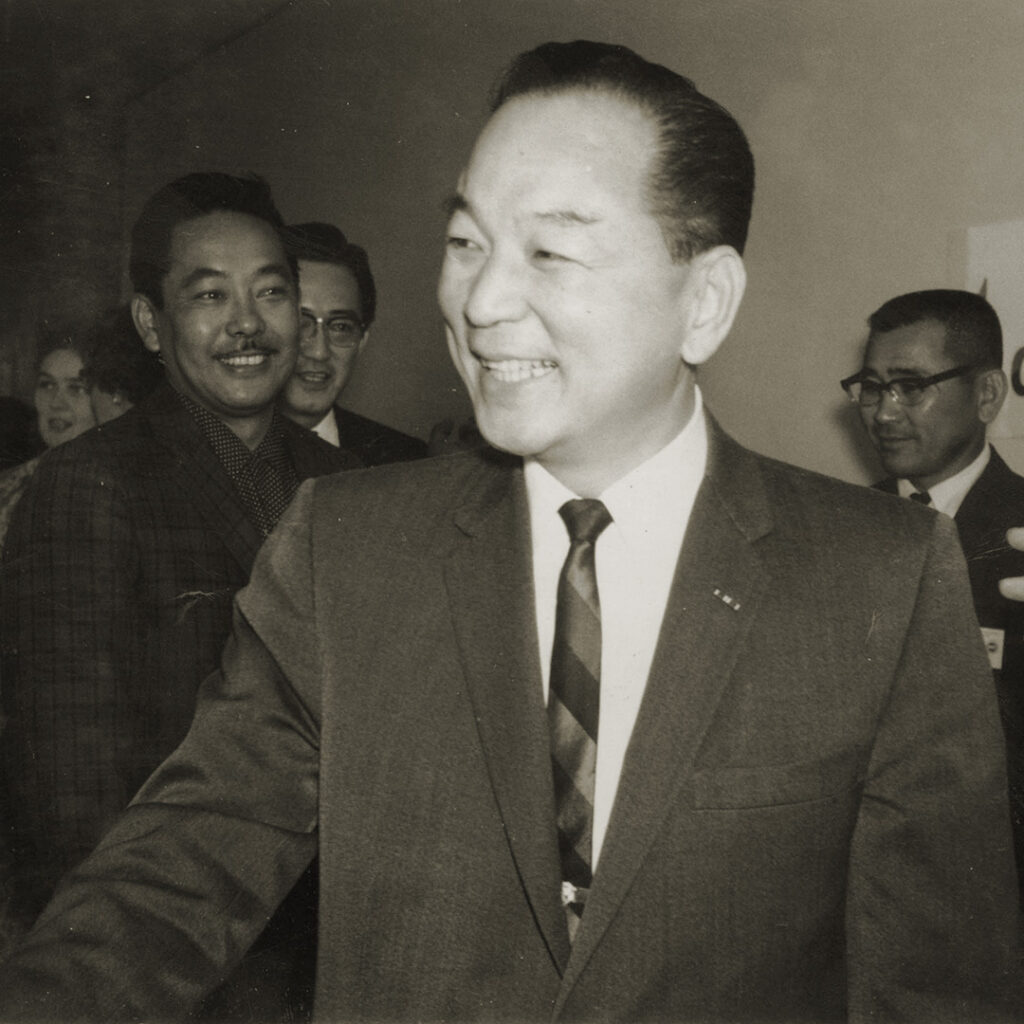
After serving in WWII and earning a law degree, he was elected to the U.S. House of Representatives in 1962, becoming one of Hawaii’s first congressional delegates.
From soldier to statesman, he carried his promise to Hawai‘i all the way to the Senate—and used it to champion redress, peace, and dignity for Japanese Americans.
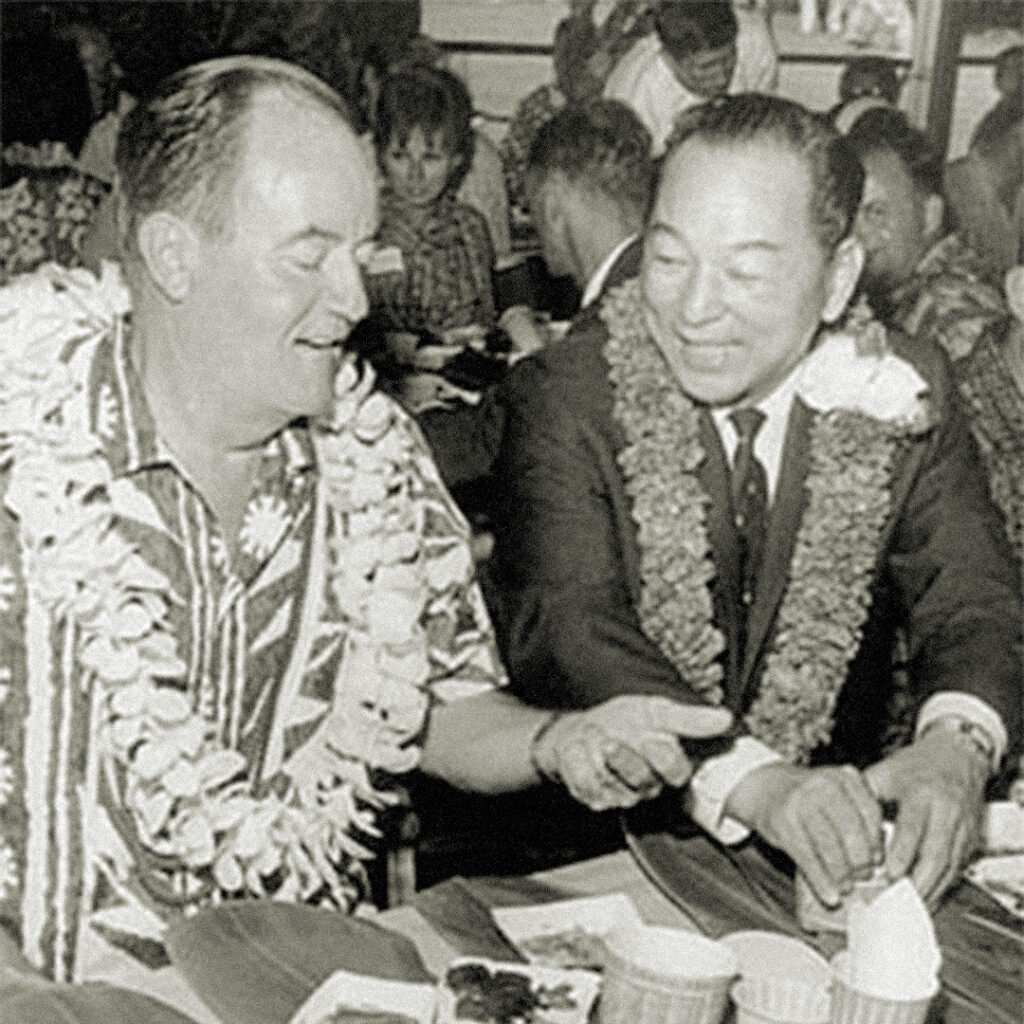
At a 1967 luau in Honolulu, Congressman Spark Matsunaga showing Vice President Hubert Humphrey how it’s done. He never forgot where he came from.
Iva Toguri looking out of her cell during a 1945 investigation, being blamed for being the propagandist who didn’t exist in reality.
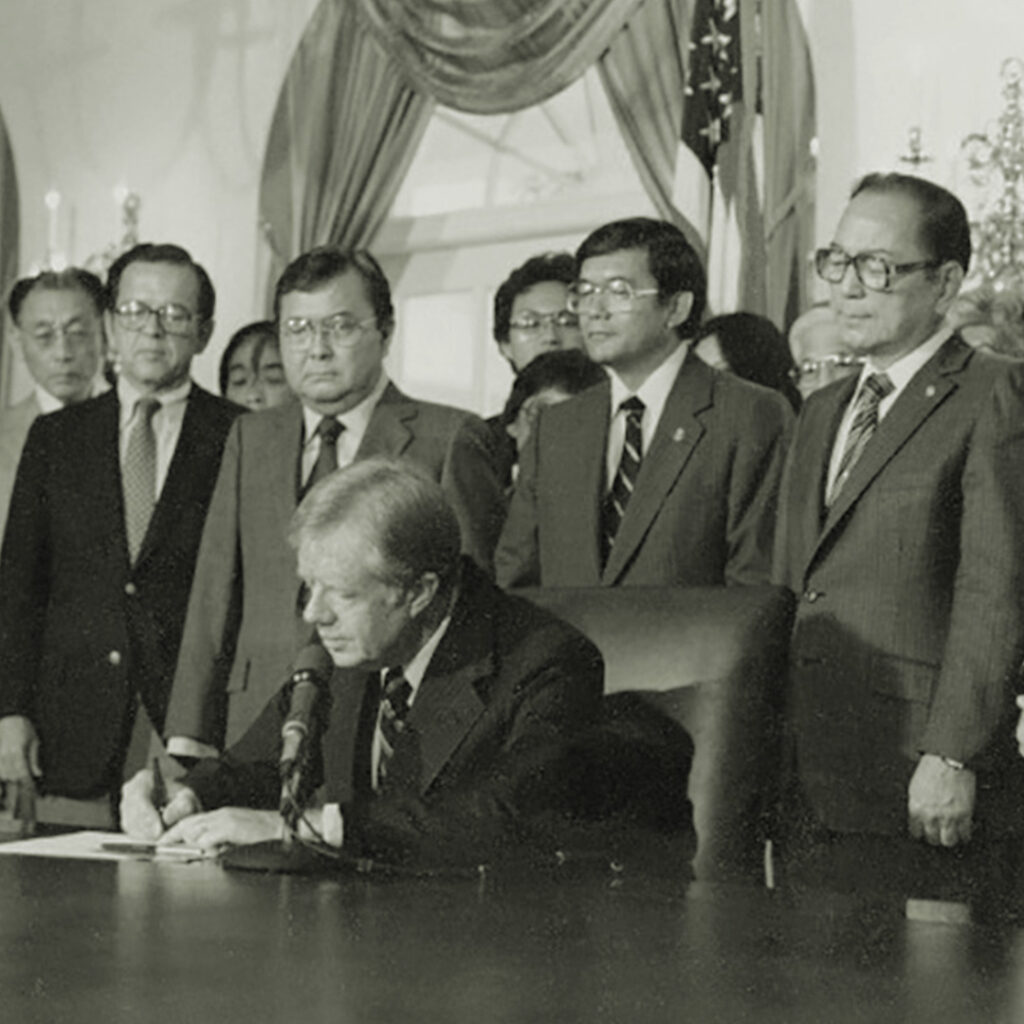
President Jimmy Carter signing the legislation establishing the Commission on Wartime Relocation and Internment of Civilians (CWRIC) on July 31, 1980
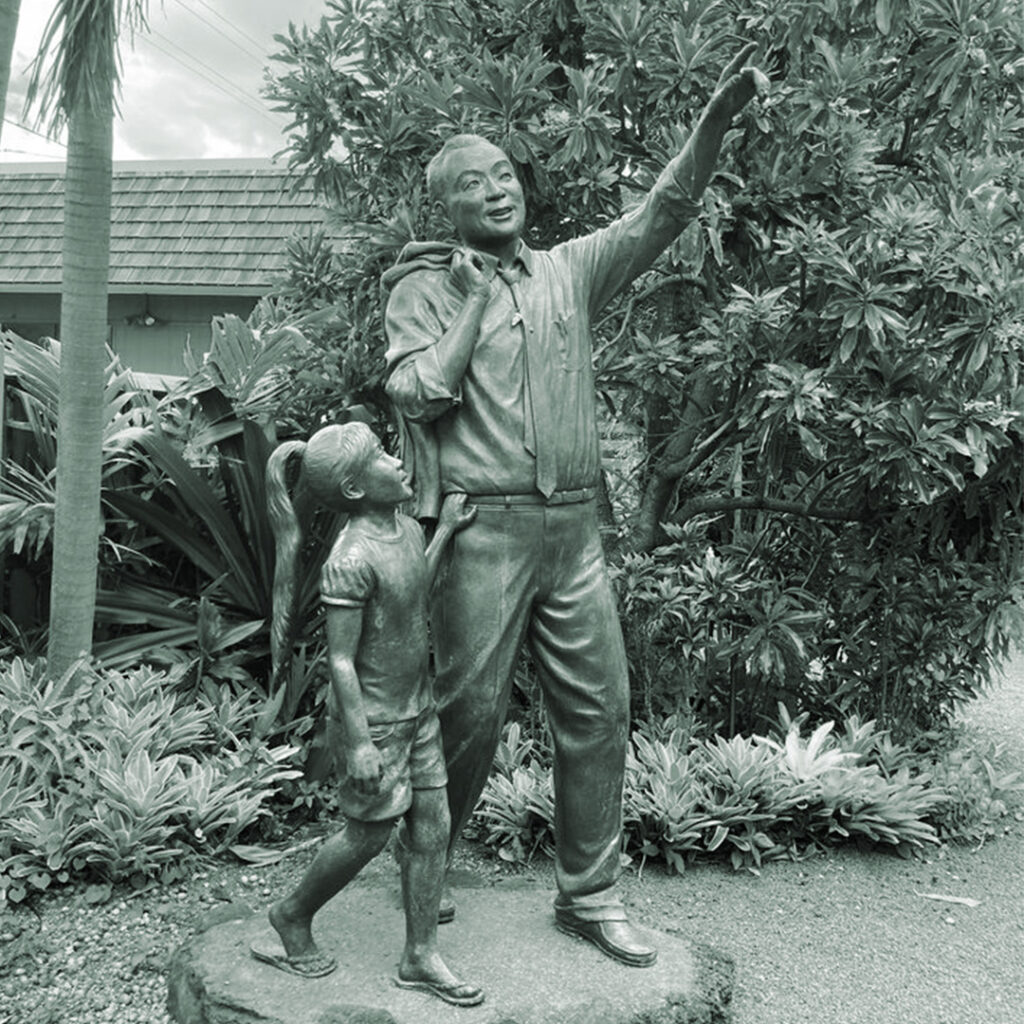
“Walking in the Garden,” a statue of Spark Matsunaga & Carly by Kim Duffett. In his hometown of Hanapepe, Kaua‘i, Spark Matsunaga reminds future generations to dream big.
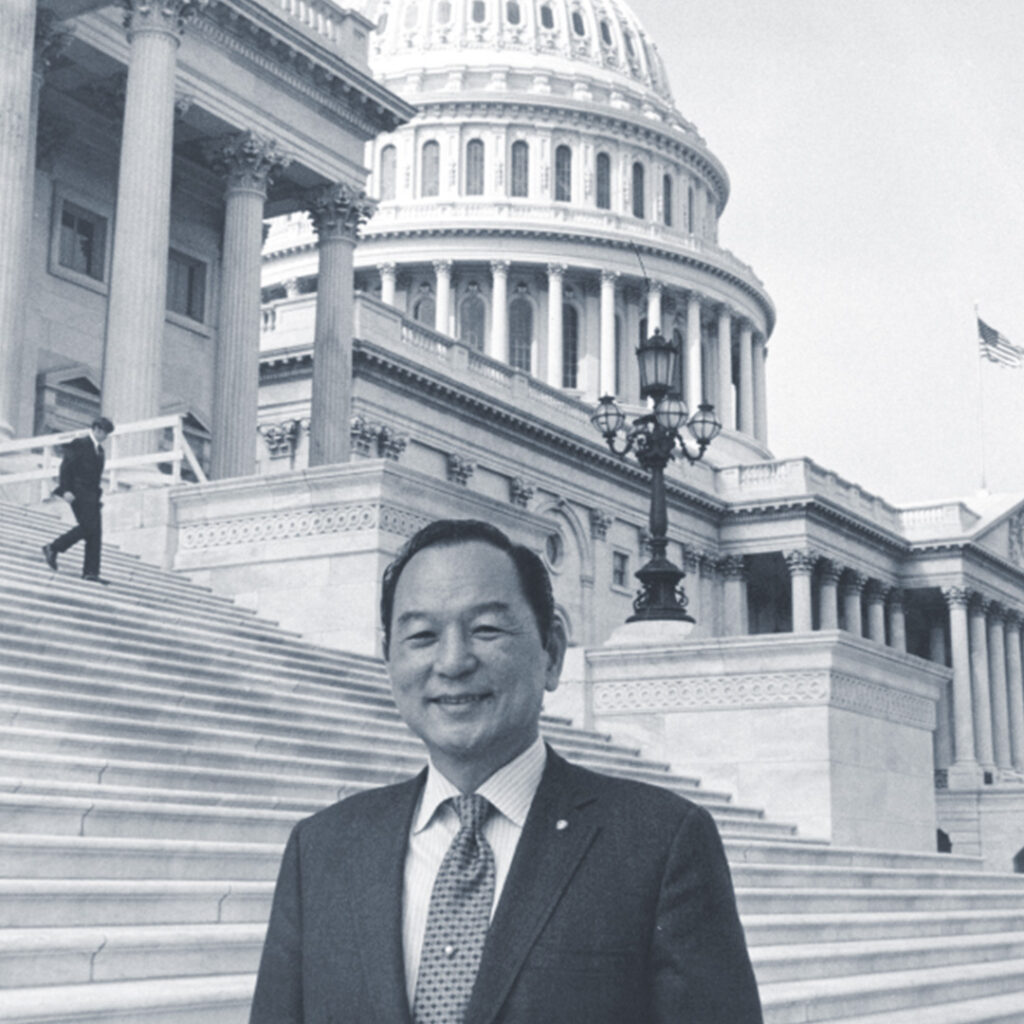
In 1962, he was elected to the U.S. House of Representatives. In 1976, he was elected to the U.S. Senate, where he served until his death in 1990. But Matsunaga never forgot his roots.
During 1976-1977, Spark Matsunaga helped secure a presidential pardon for Iva Toguri, who was unjustly convicted of treason as “Tokyo Rose” after World War II. He championed the Civil Liberties Act of 1988 to provide redress to the surviving members of more than 125,000 Japanese Americans incarcerated during WWII. He fought for the creation of the United States Institute of Peace. And for more than two decades, he pushed Congress to establish the post of U.S. Poet Laureate.
His legacy lives on in peace centers, schools, hospitals, and bonds bearing his name. But it all began with one chance, one prize, and one young man who believed in something more.
He may have been like a slow horse as a kid, but he provided a spark America much needed.