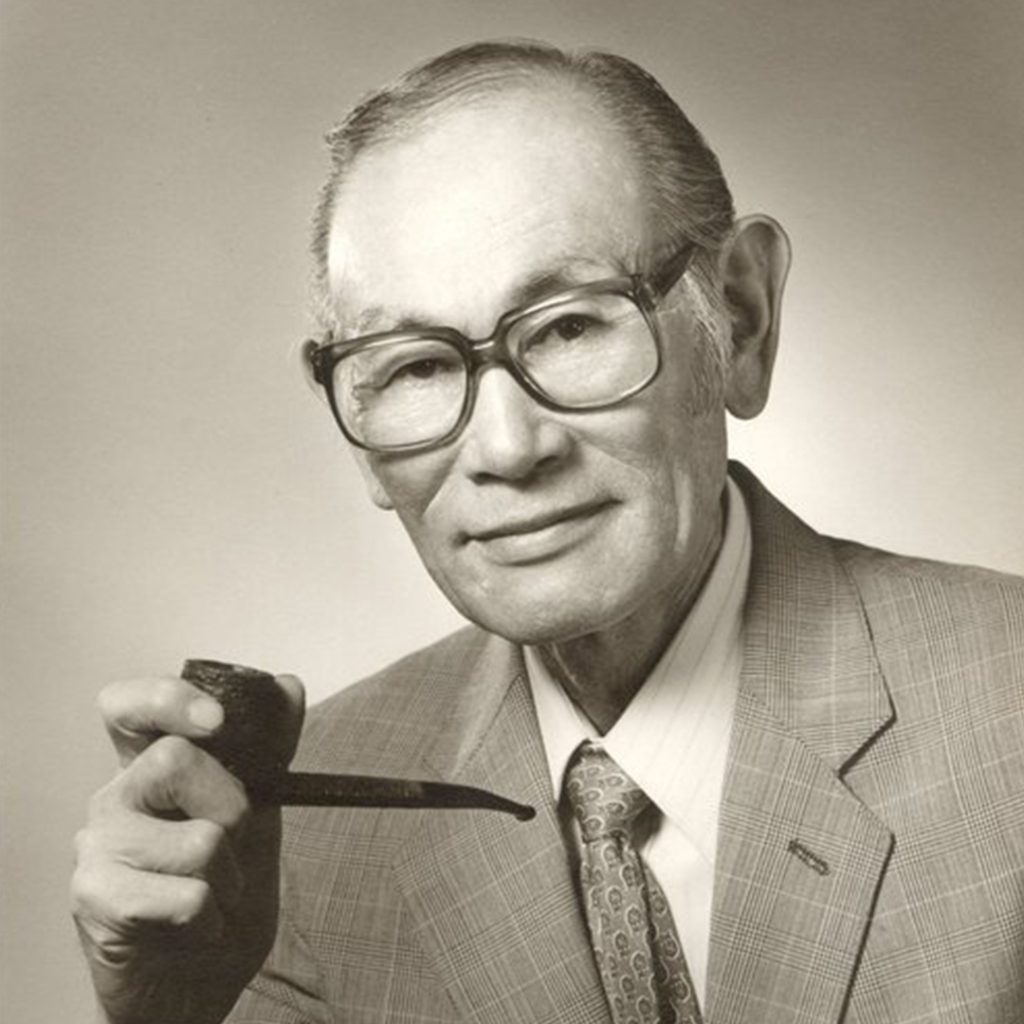
Clyde Sarah became Fred Korematsu to challenge the Supreme Court.
May 30, 1942: Fred Korematsu was arrested in San Leandro, CA on Memorial Day, on purpose.
In May 1942, as Japanese Americans across the West Coast were being rounded up and forced into incarceration camps, one young man in Oakland made a different choice.
Fred Korematsu, born in the Bay Area to Japanese immigrant parents, refused to obey Executive Order 9066. Instead of reporting for removal, he remained behind, changed his name, altered his appearance, and attempted to continue living freely in the only country he had ever known.
Under the alias Clyde Sarah, Korematsu managed to evade authorities for several weeks while living with his Italian American girlfriend and trying to build a life that the government had already decided he no longer had the right to keep.
Dorothea Lange, 1942
Following Executive Order 9066, Civilian Exclusion Order No. 5 forced Japanese Americans out of parts of the San Francisco Bay Area.
Credit National Portrait Gallery
Fred Korematsu with his parents in their nursery in Oakland, c1940. He refused to comply with unconstitutional exclusion orders during World War II.
Downtown San Leandro, California, c. 1930. A commercial streetscape showing the plaza and surrounding businesses more than a decade before the exclusion orders.
ACLU News headline, May 1943, announcing that Fred Korematsu’s constitutional challenge to Japanese American incarceration would be heard by the courts.
An Arrest by Design
Korematsu was not discovered by chance.
On Memorial Day, May 30, 1942, he approached a police officer and identified himself as Japanese American, fully aware of the consequences. His arrest was not the result of surrender or exhaustion, but a deliberate act of civil disobedience.
With the support of the ACLU, Korematsu intended to challenge the constitutionality of the mass incarceration of Japanese Americans, particularly the incarceration of American citizens without due process. His case was meant to test whether constitutional protections remained meaningful during wartime, or whether they could be suspended entirely under claims of military necessity.
That test would reach the highest court in the country.
Korematsu v. United States
In 1944, the Supreme Court ruled against Fred Korematsu.
The Court upheld the government’s authority to remove and incarcerate more than 120,000 people of Japanese ancestry, the majority of whom were U.S. citizens, based solely on race. The ruling accepted the government’s argument that military necessity justified the suspension of individual rights, even in the absence of evidence of wrongdoing.
The decision has since become one of the most widely condemned rulings in American legal history.
Yet the full significance of Korematsu v. United States cannot be understood without what happened next.
Credit National Portrait Gallery
In 1942, Fred Korematsu underwent minor cosmetic surgery to avoid incarceration. But he later revealed his identity in an act of conscience and civil disobedience.
Mitsuye Endo, a loyal U.S. citizen, fired from the state of California without a cause. Her courage helped bring the camps down.
The Stone Court decided Ex parte Endo and Korematsu v. United States on the same day in 1944. 6 justices voted to punish resistance. 3 called out civil rights violations.
The Korematsu–Endo Paradox
On the very same day the Supreme Court ruled against Korematsu, it issued a separate decision in Ex parte Endo, ruling in favor of Mitsuye Endo, a Japanese American woman whom the government had already deemed loyal. In Endo’s case, the Court concluded that the government lacked the authority to continue incarcerating loyal American citizens. The implication was clear: once loyalty was established, detention was unlawful.
Taken together, the two decisions exposed a profound contradiction.
The government could not legally incarcerate loyal citizens, yet those who resisted removal were criminalized, while those who complied were quietly released. The rulings effectively punished resistance while rewarding obedience, even though the underlying incarceration policy itself lacked constitutional justification.
The Court did not resolve this contradiction. It simply left it in place.
Overturning the Conviction
Nearly four decades later, in 1983, Korematsu’s conviction was formally overturned after evidence surfaced showing that the government had knowingly withheld and falsified intelligence reports during the original Supreme Court proceedings.
Those reports had concluded that Japanese Americans posed no military threat.
In 1998, Fred Korematsu was awarded the Presidential Medal of Freedom, the nation’s highest civilian honor, in recognition of his courage and his role in challenging one of the darkest chapters in American constitutional history. The original Supreme Court decision, however, remained standing until 2018, when it was finally denounced by the Court as “gravely wrong.”
Courtesy family of Fred T. Korematsu
Fred Korematsu speaks after his wartime conviction was overturned in 1983 — a decision made possible by the decades-long efforts.
Fred Korematsu didn’t want forgiveness. He wanted the country to admit it was wrong.
Credit National Archives and Records Administration
President Bill Clinton awards Fred Korematsu the Presidential Medal of Freedom in 1998, recognizing his lifelong stand against the unconstitutional incarceration.
Fred Korematsu refused to be silenced. When the government tried to incarcerate him during WWII, he said no — and took his fight all the way to the U.S. Supreme Court.
Why Korematsu Matters
Fred Korematsu’s case matters not because he won in his lifetime, but because he refused to accept that constitutional rights could be suspended based on race and fear.
His decision to resist forced removal exposed the legal and moral contradictions at the heart of American democracy during wartime. It also revealed a truth that remains uncomfortable: that the law does not always correct injustice on its own, and that compliance is sometimes what allows injustice to endure.
Korematsu did not disappear quietly. He forced the country to confront what it was willing to excuse in the name of security.
It took a long time, but history eventually caught up.