She was an unexpected visitor, especially because they were there because of her husband.
April 23, 1943: Eleanor Roosevelt visited the Gila River War Relocation Center with Dillon S. Myer, despite FDR’s objections.
It was an unusual visit. Not just because she was the First Lady of the United States, but because the camps existed because of her husband.
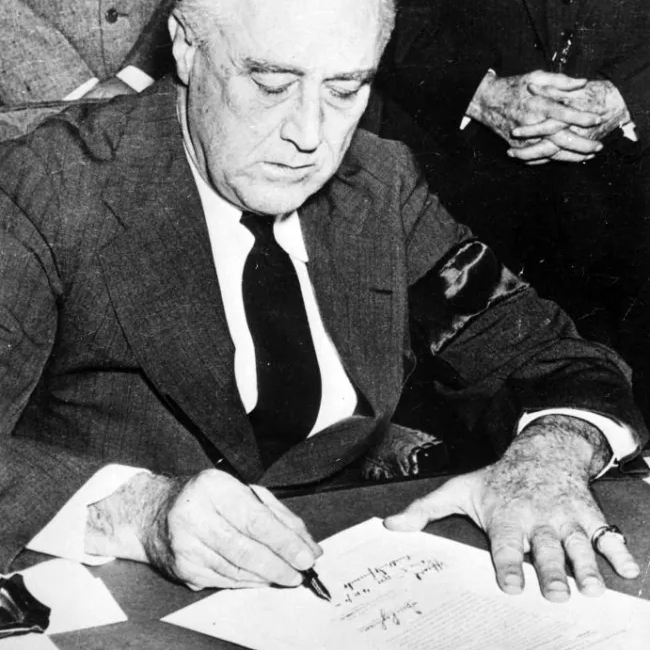
President Franklin D. Roosevelt had signed Executive Order 9066, setting in motion the forced removal and incarceration of more than 120,000 Japanese Americans, most of them U.S. citizens.
Eleanor Roosevelt opposed the mass removal before it happened. She warned her husband against it. But wartime fear, racial propaganda, and the convenient lie that “a Japanese is always a Japanese” had already taken hold.
When evidence proving Japanese American loyalty was suppressed inside the government, the momentum was hard to stop.
February 19, 1942 — Franklin Roosevelt signs Executive Order 9066, setting in motion the mass incarceration of over 120,000 Japanese Americans during WWII
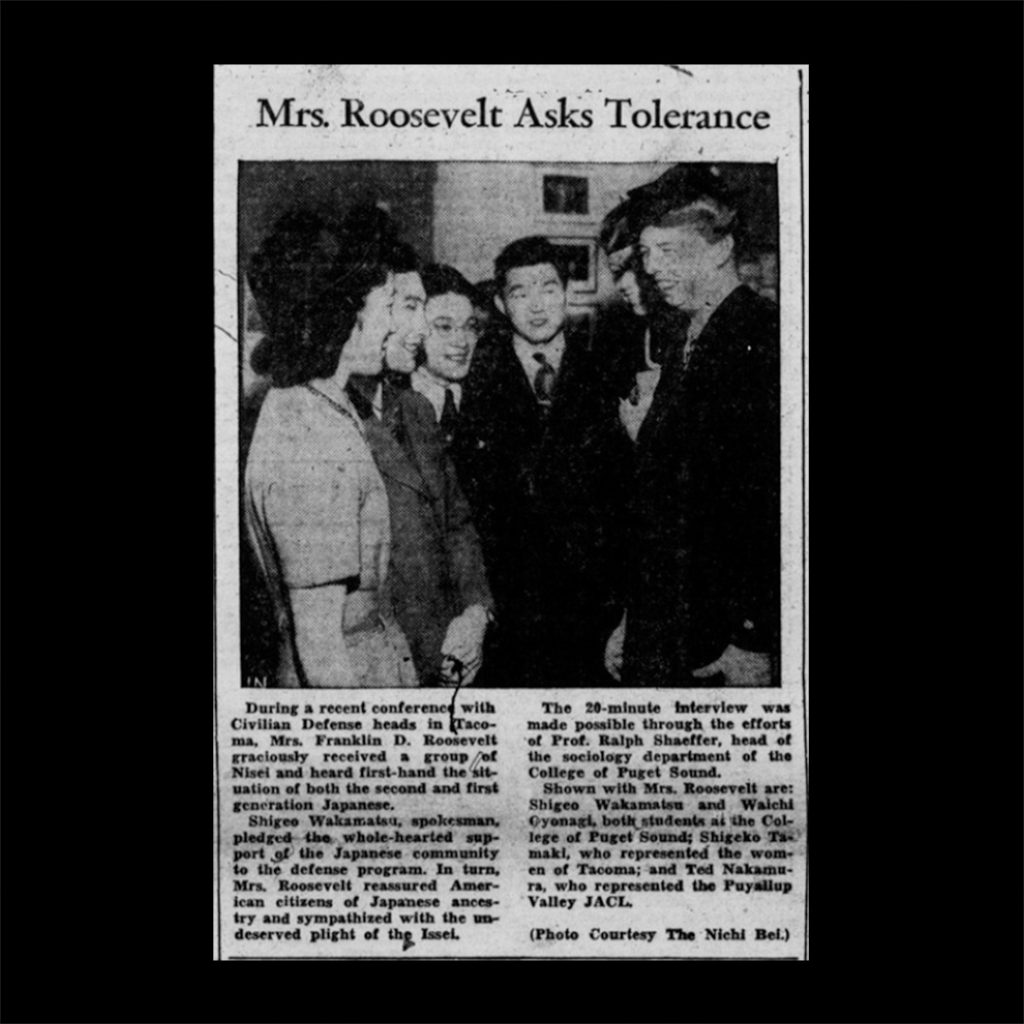
Mrs. Roosevelt was advocating for Japanese Americans even before Executive Order 9066, January 1942
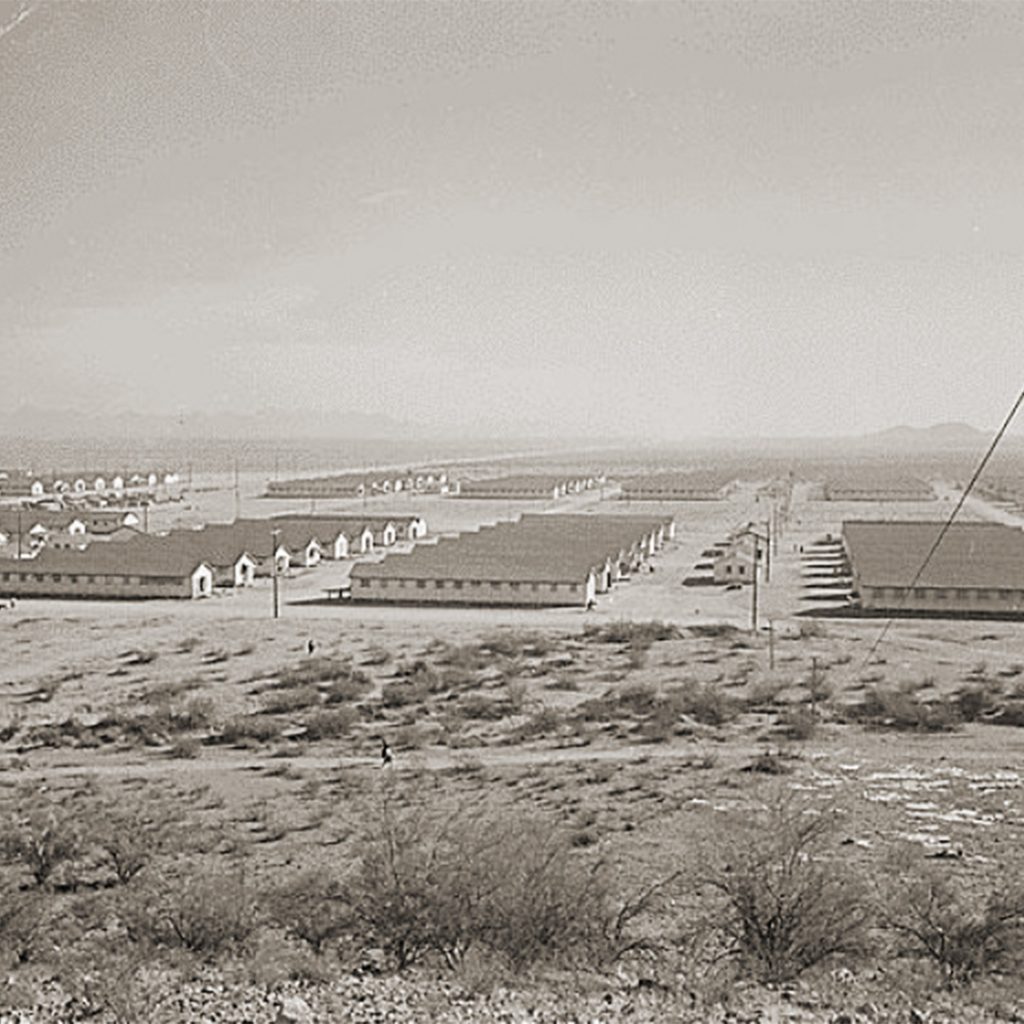
Gila River War Relocation Center during WWII. First Lady Mrs. Roosevelt after her visit was quoted saying, “I wouldn’t like to live that way.”
Eleanor Roosevelt arriving at the Gila River War Relocation Center on April 23, 1943, accompanied by Dillon S. Myer, Director of the War Relocation Authority.
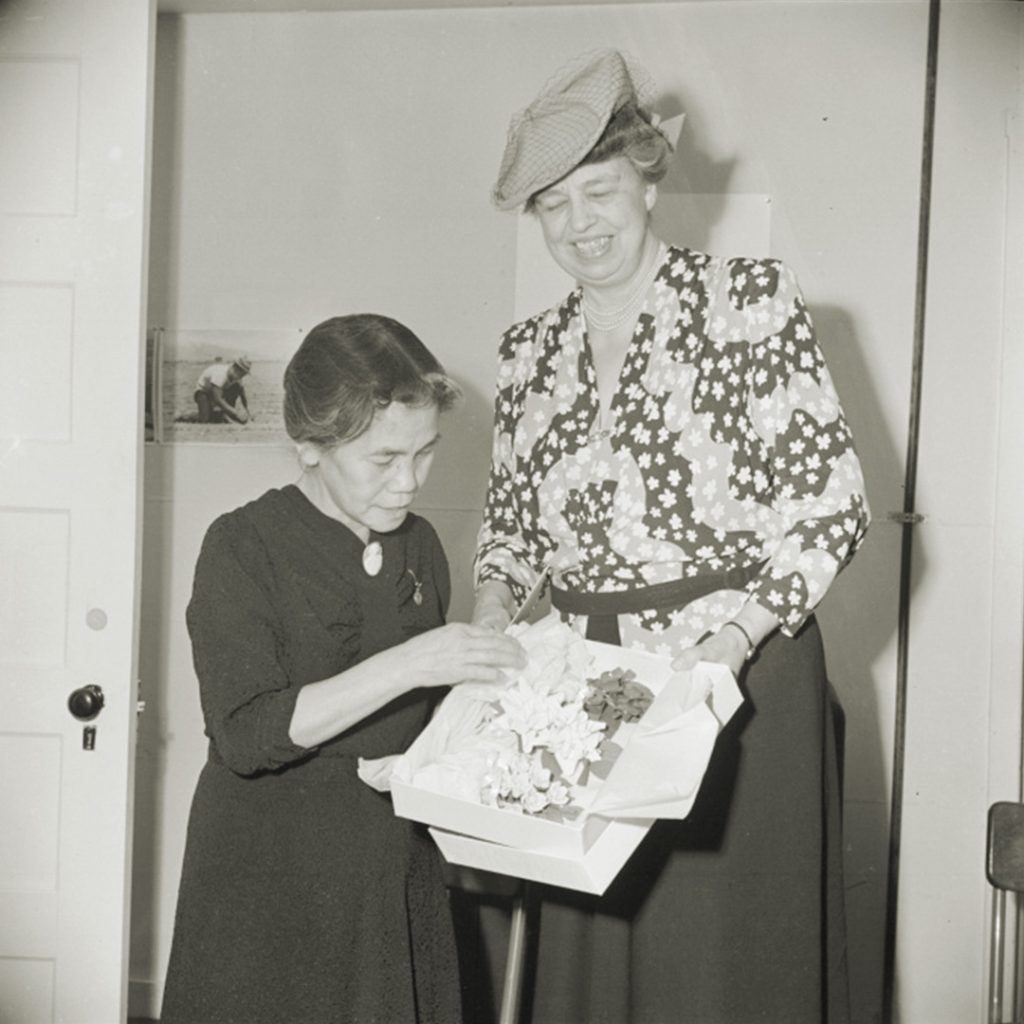
Mrs. Yamamoto presents flowers to Eleanor Roosevelt during her visit to Gila River, April 23, 1943. Even in confinement, people found ways to give.
What Fifth Column?
What may have prompted her visit was the realization that no Japanese American had ever been convicted of espionage or sabotage, despite widespread rumors of Issei and Nisei “Fifth Columnists.”
WRA Director Dillon S. Myer guided her visit. She met with incarcerees and witnessed their living conditions. What she saw confirmed her fears. It disturbed her.
Right away, in her syndicated daily newspaper column, she criticized the harsh desert climate and the ugliness of the hastily built camps, while highlighting the dignity of the inmates, who grew their own food, educated their children, and maintained order themselves.
Way Before Social Media
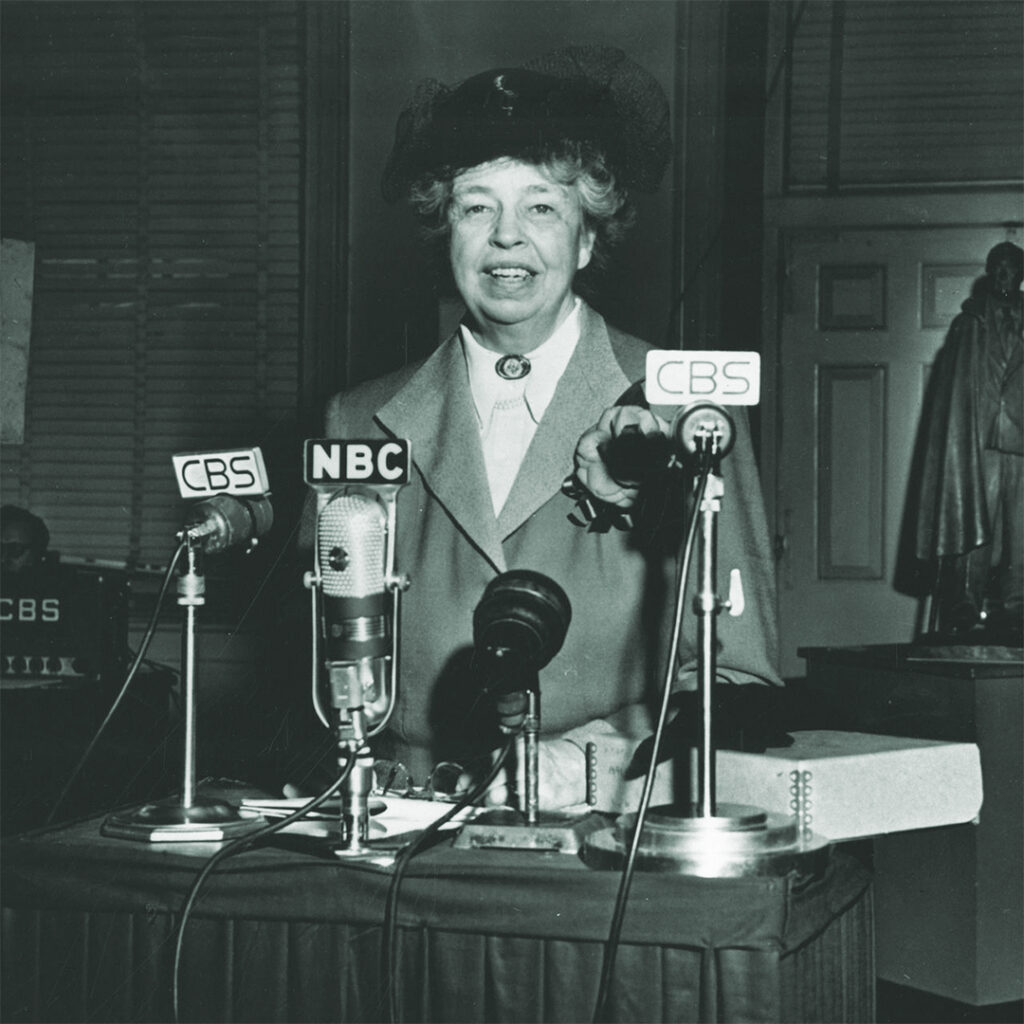
Eleanor Roosevelt used her platform to push back, including a national radio broadcast advocating for closing the camps, championing civil rights, and questioning whether fear had overridden American values.
She spoke out publicly against the policy in her press conference three days later: “We have no common race in this country, but we have an ideal to which all of us are loyal: we cannot progress if we look down upon any group of people amongst us because of race or religion.”
She continued, “Every citizen in this country has a right to our basic freedoms, to justice and to equality of opportunity. We retain the right to lead our individual lives as we please, but we can only do so if we grant to others the freedoms that we wish for ourselves.”
Courtesy of National Archives and Records Administration
Eleanor Roosevelt used her national platform to publicly challenge fear, racism, and the incarceration of Japanese Americans.
Courtesy of Air Force Historical Research Agency
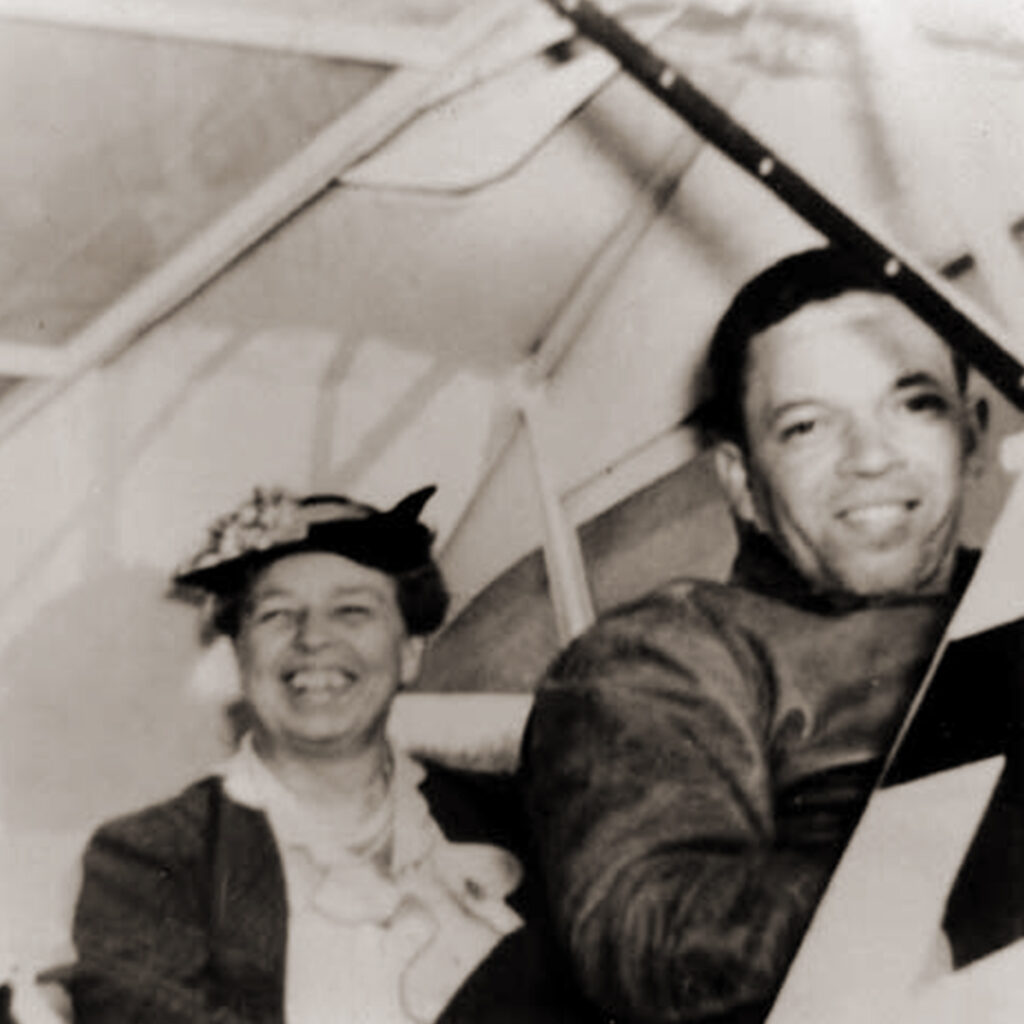
Eleanor Roosevelt flying with Tuskegee Airman C. Alfred Anderson, March 1941. Her public support helped challenge racist assumptions about Black pilots and military service.
Dillon S. Myer, who led the War Relocation Authority. He believed the camps should be closed and worked to end the incarceration program.
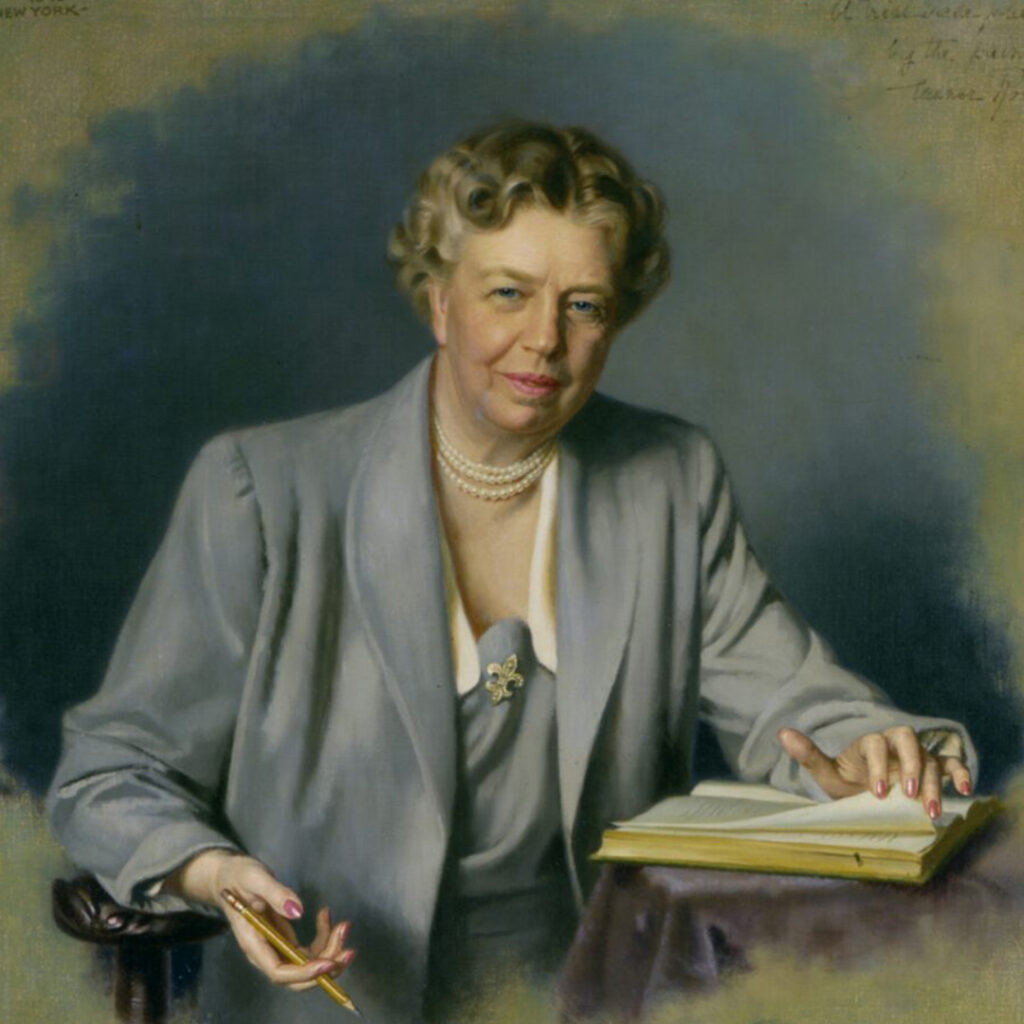
Douglas Chandor, oil on canvas, 1949
Eleanor Roosevelt wrote constantly. Through her syndicated columns and essays in newspapers and magazines, she reached millions and shaped public opinions.
Traditional American Ideals and Fairness
Following her return to Washington, Eleanor persuaded FDR to meet with Dillon Myer. The meeting helped advance Myer’s proposal to begin releasing inmates, even before the war was over.
She later called on the American public in Collier’s Magazine to live up to “traditional American ideals and fairness” as Japanese Americans began returning to communities that had pushed them out. Eleanor Roosevelt stood up, even when it meant walking into a prison camp built by her own government. Even when it meant publicly disagreeing with her husband. Even when most Americans chose silence.
She continued her commitment to racial justice throughout her life.
She Redefined What First Lady Meant
Through her travels, public engagement, and advocacy, Eleanor Roosevelt redefined what it meant to be First Lady.
She openly clashed with her husband on issues including expanded roles for women in the workplace, the civil rights of African Americans and Asian Americans, and the treatment of World War II refugees.
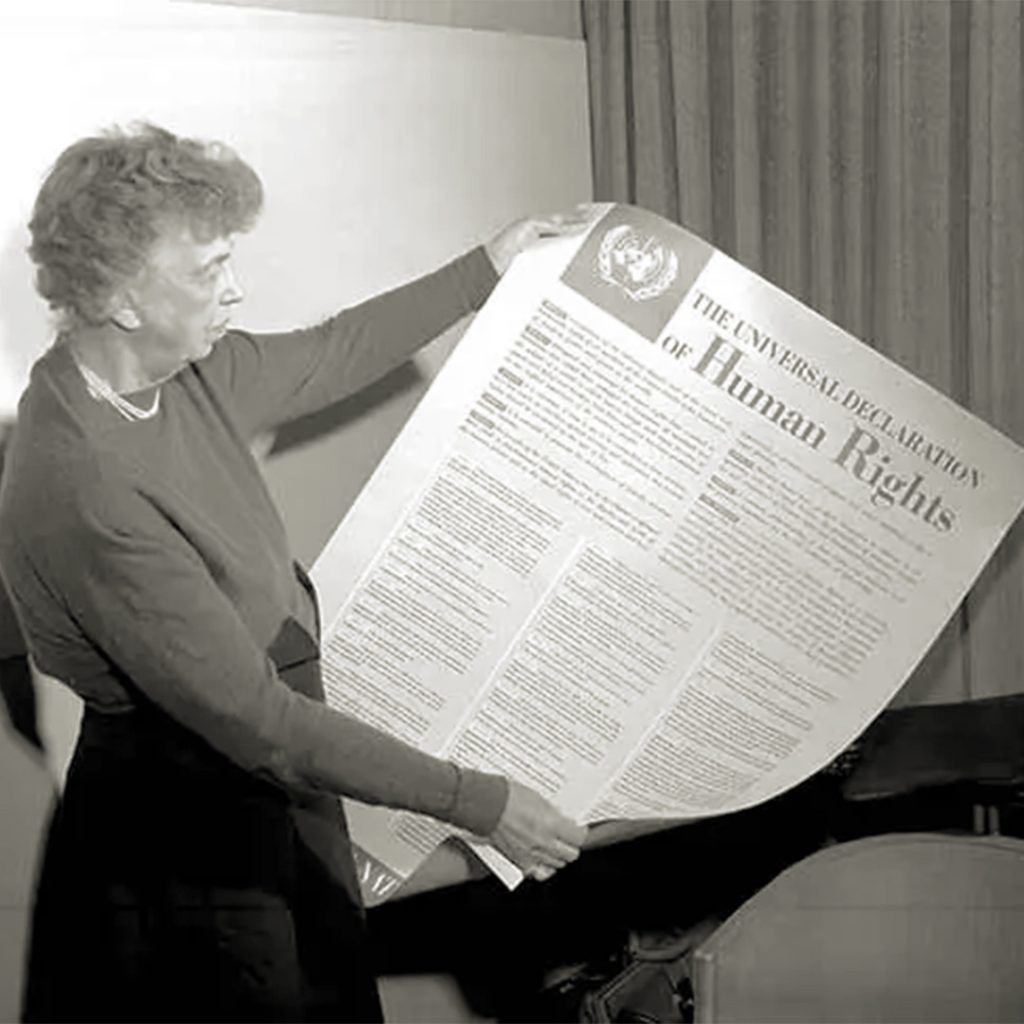
After Franklin Roosevelt’s death in 1945, she pressed the United States to join the United Nations and became its first delegate to the Commission on Human Rights. She served as its first chair and oversaw the drafting of the Universal Declaration of Human Rights.
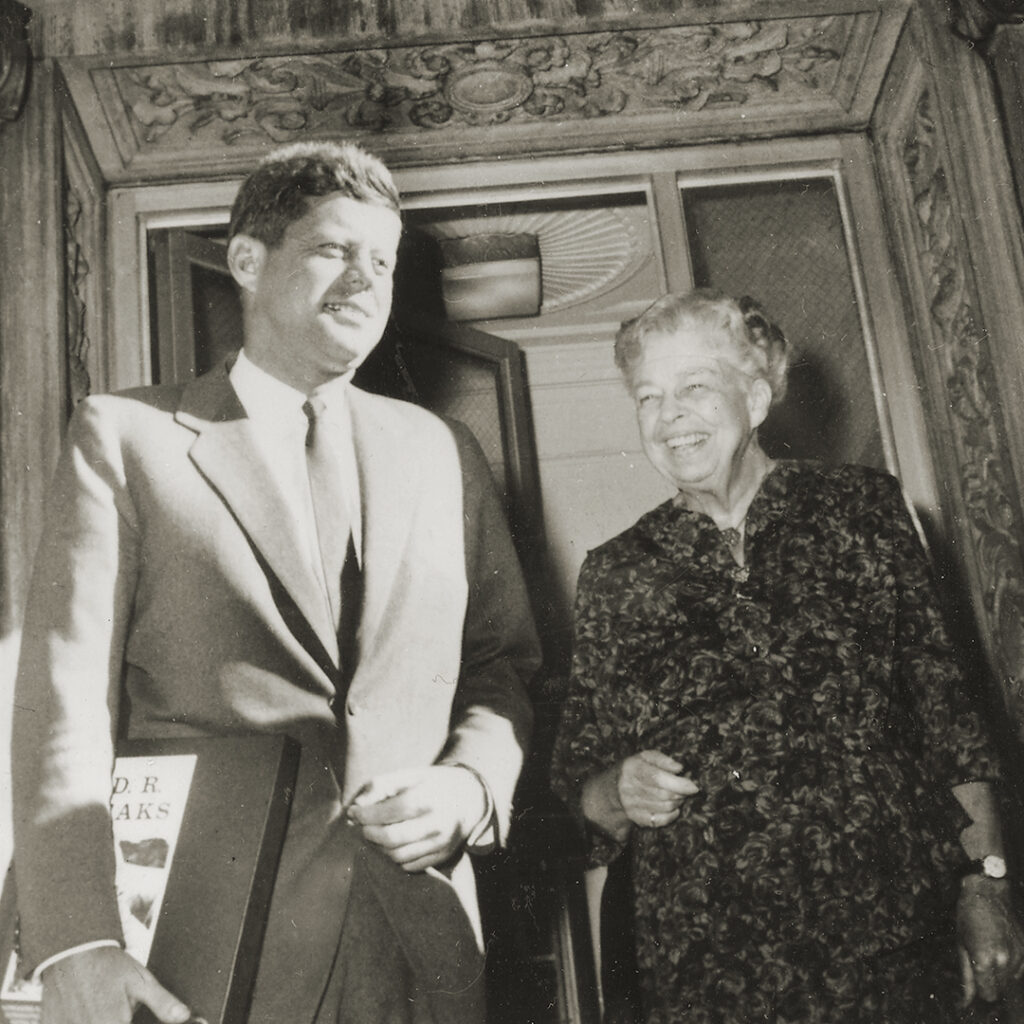
Later, she chaired President John F. Kennedy’s Commission on the Status of Women. By the time of her death, Eleanor Roosevelt was widely regarded as one of the most esteemed women in the world.
And she still is.
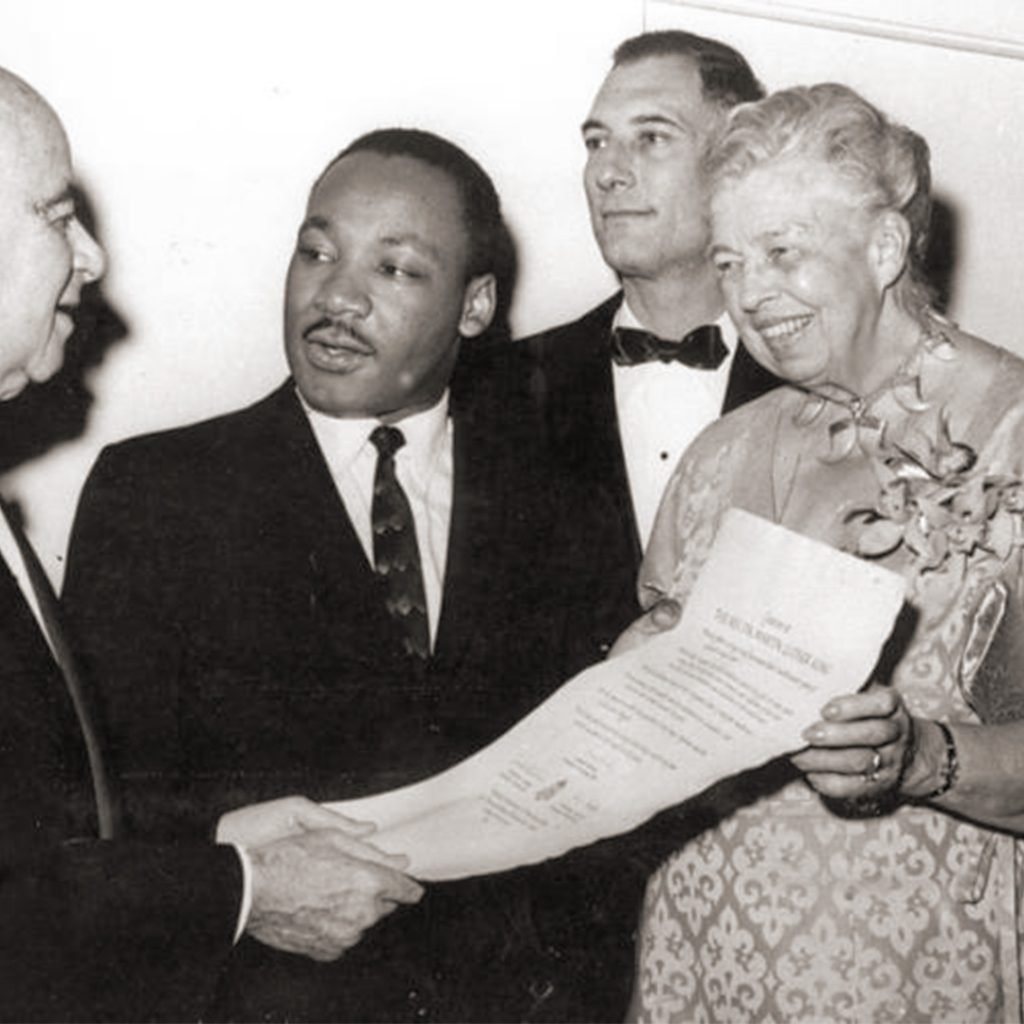
Mrs. Roosevelt was also an early member of the NAACP. Dr. Martin Luther King Jr. later reflected, “Her life was one of the bright interludes in the troubled history of mankind.”
Eleanor Roosevelt presenting the Universal Declaration of Human Rights. After WWII, she chaired the UN Commission on Human Rights.
Courtesy of National Archives and Records Administration
Eleanor Roosevelt with John F. Kennedy. After the White House, she later served as chair of Kennedy’s Presidential Commission on the Status of Women.