Some just couldn’t keep quiet while they were being unjustly incarcerated.
January 11, 1943: The War Relocation Authority opened the Moab Isolation Center in southeastern Utah. It was created to confine Japanese American men labeled “troublemakers,” accused of dissent, resistance, or refusing to comply with their incarceration by speaking out.
By 1943, more than 120,000 Japanese Americans had been forcibly removed and incarcerated without charge or trial. Most complied, not because they agreed, but because resistance often brought consequences for their families.
Moab formalized those consequences.
Following the Manzanar uprising in December 1942, the WRA repurposed the abandoned Dalton Wells Civilian Conservation Corps camp into an isolation center. The agency had already targeted Issei men it deemed “community leaders.” Moab expanded that authority to Nisei, using Manzanar as justification.
Most of the men sent there were never charged with crimes. Some had protested camp conditions. Others challenged the loyalty questionnaire. Some were simply outspoken.
Compliance was no longer sufficient. Silence was required.
Sketch by Eddy Kurushima
Military police fire into a crowd of unarmed Japanese American inmates at Manzanar, killing two and injuring at least ten more.
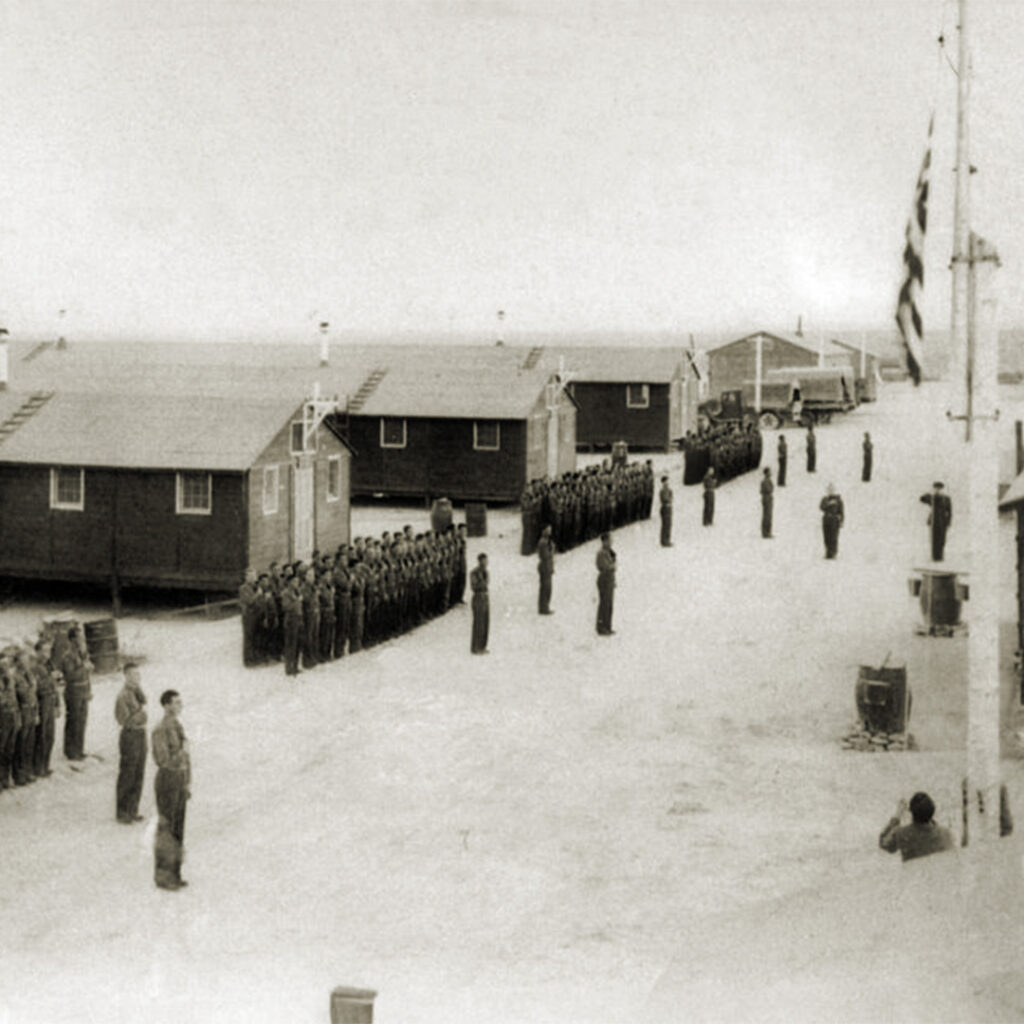
Flag ceremony at Dalton Wells CCC Camp. What began as a New Deal work camp became an isolation prison in 1943, holding Japanese American men who spoke out.
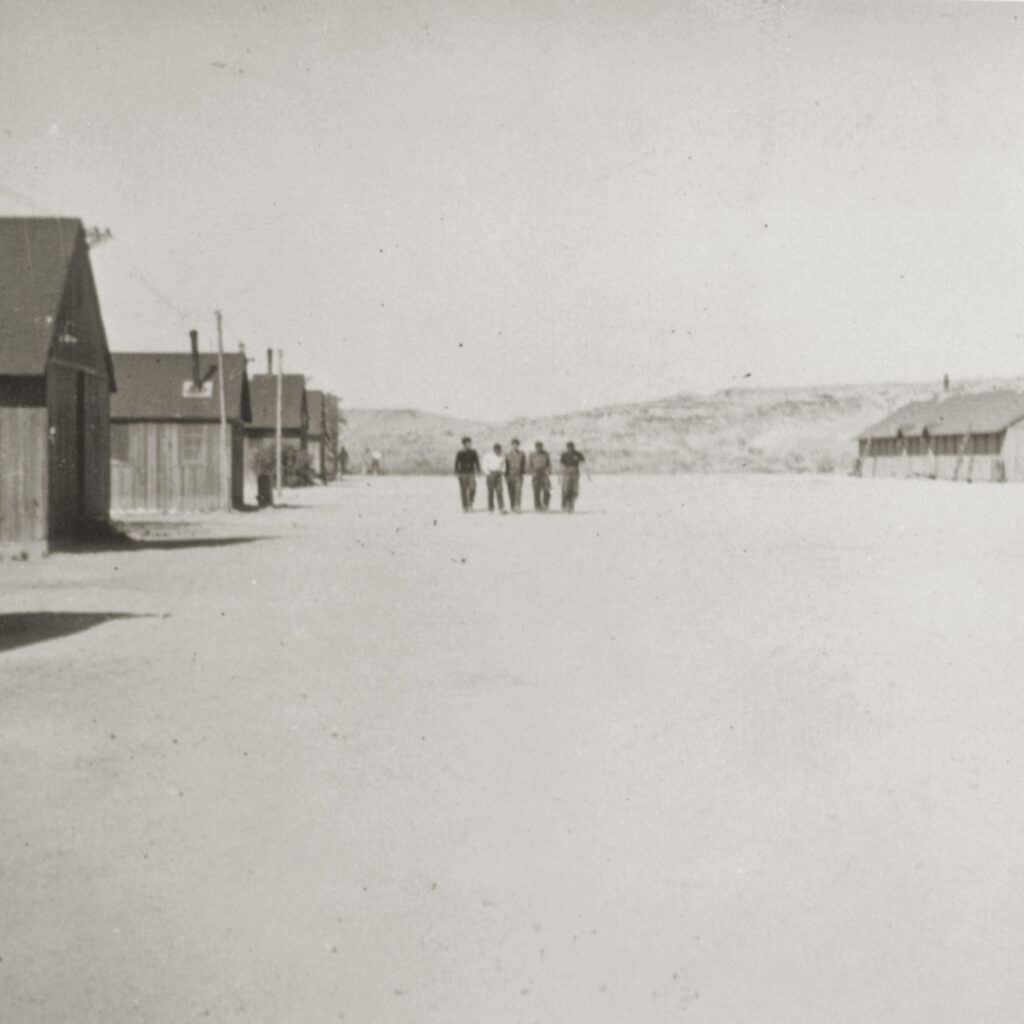
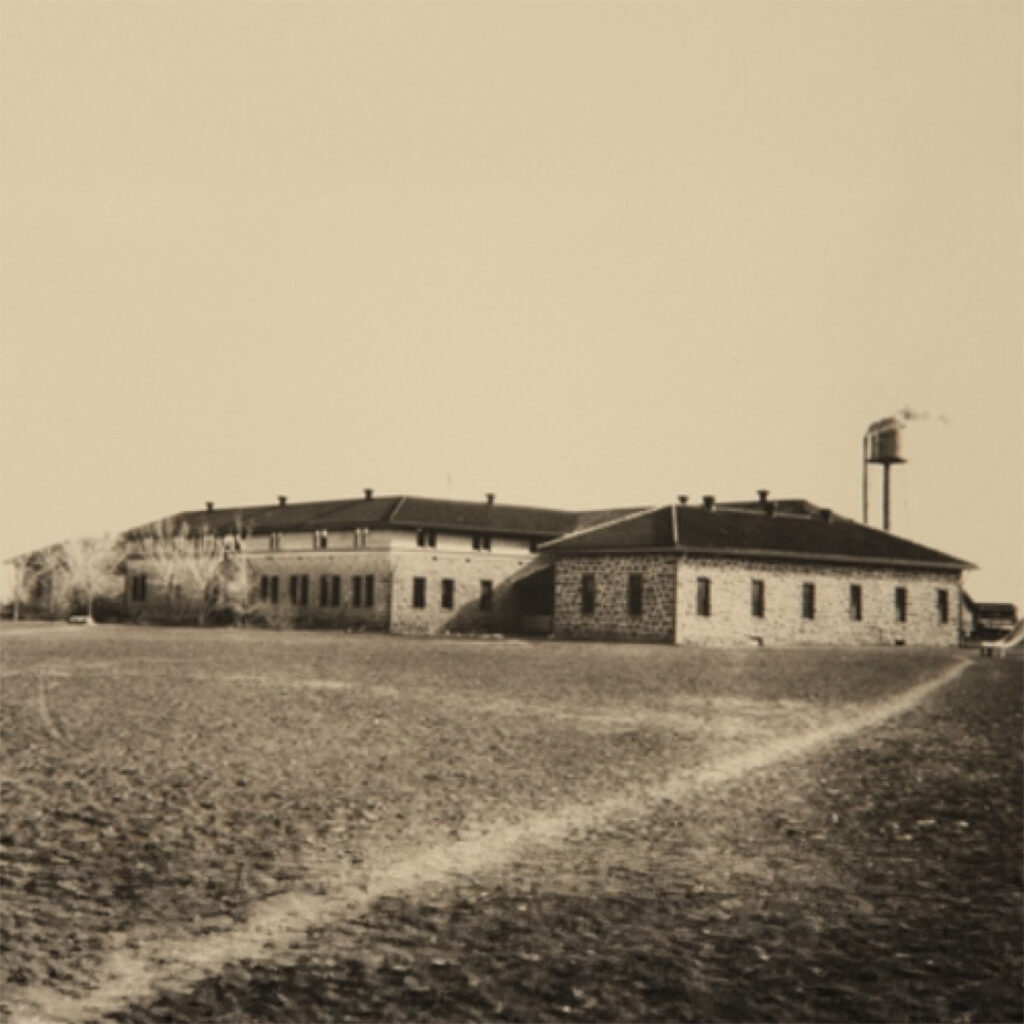
Moab Isolation Center, Utah. Located deep in the desert near Dalton Wells, the site was deliberately chosen for its isolation, far from population centers and public scrutiny.
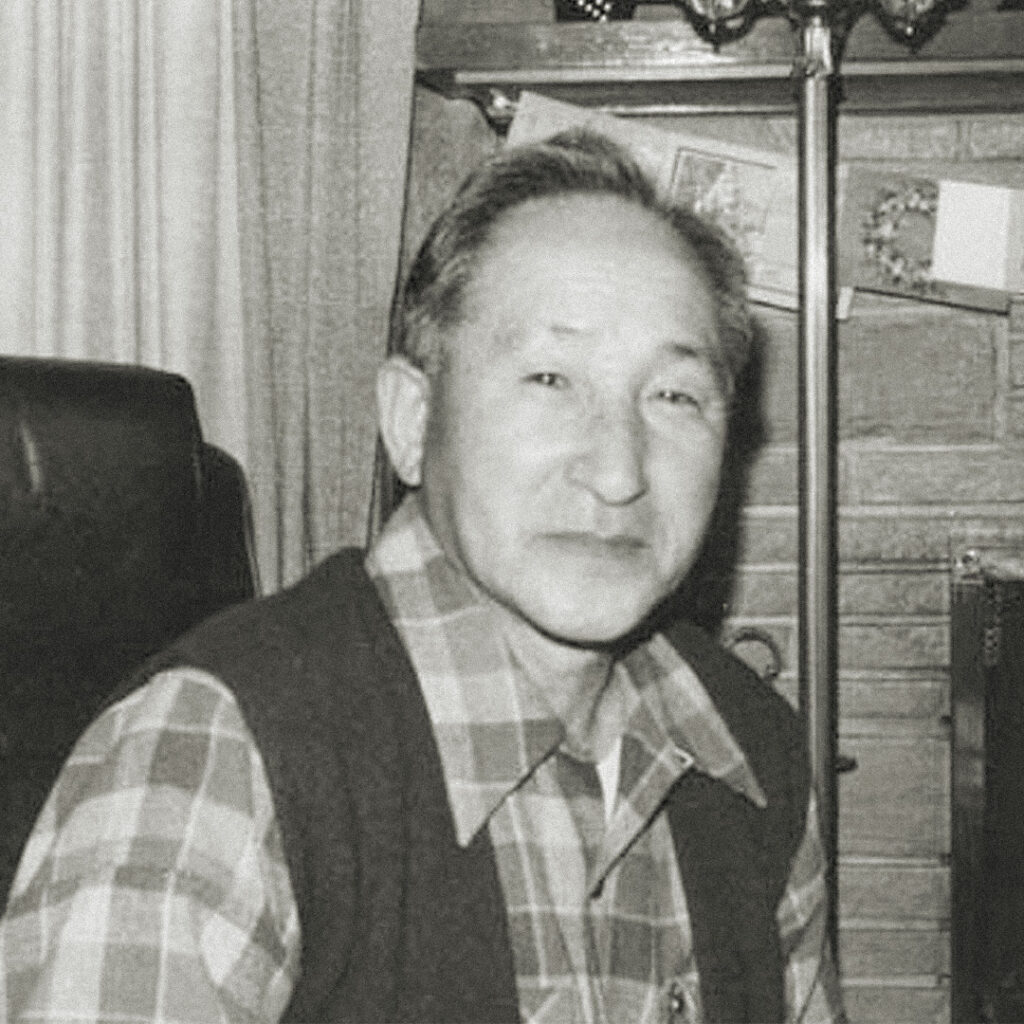
Joseph Kurihara, a World War I veteran incarcerated at Manzanar, denounced the JACL as spineless traitors for cooperating with the U.S. government.
Harry Ueno, a Kibei inmate at Manzanar, was arrested for allegedly beating JACL leader Fred Tayama — without any evidence. His arrest escalated into the Manzanar Riot.
The Far Country
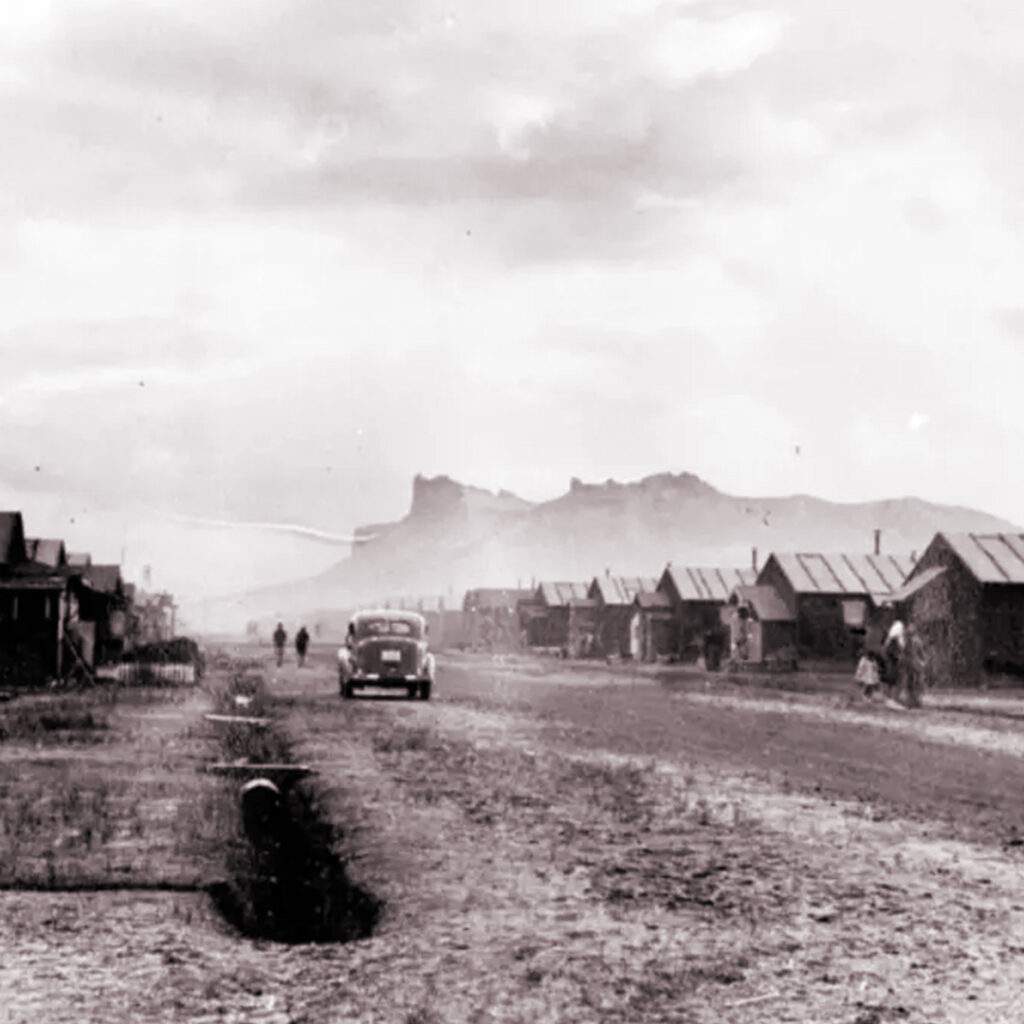
Moab was deliberately remote. The former CCC camp lay surrounded by desert and cliffs, far from population centers and difficult to access. Local history suggests the town’s name itself reflected isolation. Early postmaster William Andrew Peirce reportedly believed the biblical land of Moab and this part of Utah shared the same quality: “the far country.”
When the first prisoners arrived, there were 16 inmates — 12 Nisei (10 of them Kibei) and 4 Issei — guarded by 150 military police.
Historians Bruce D. Louthan and Lloyd M. Pierson note unconfirmed reports that fencing was erected around the camp, though one inmate later said the landscape itself served as confinement.
Joe Kurihara and Harry Ueno, both transferred from Manzanar, recalled the shock. Kurihara noted Moab was “the size of a single block at Manzanar.” Ueno described it as nothing but sagebrush in every direction — no trees, no shelter, no sense of scale.
Best and Frederick
Raymond Best served as Moab’s WRA project director (and later became director at Tule Lake). Accounts of his leadership vary. Kurihara later described Best as the most reasonable WRA director he encountered. Ueno recalled something very different, citing a threat delivered as a reminder of isolation: “Anybody could die in here, and they will never find his body.”
Much of the day-to-day authority fell to Francis Frederick, a former Alcatraz guard. Frederick was known for deliberate provocation.
In one documented incident, he imposed a cruel regulation to incite protest, arrested those who objected, presided over their hearings, sentenced them to three months’ confinement, then rescinded the rule. Those arrested were transported on the back of a flatbed truck inside a sealed box with a single air hole. During the thirteen-hour trip, several nearly suffocated.
Credit The Bancroft Library, UC Berkeley
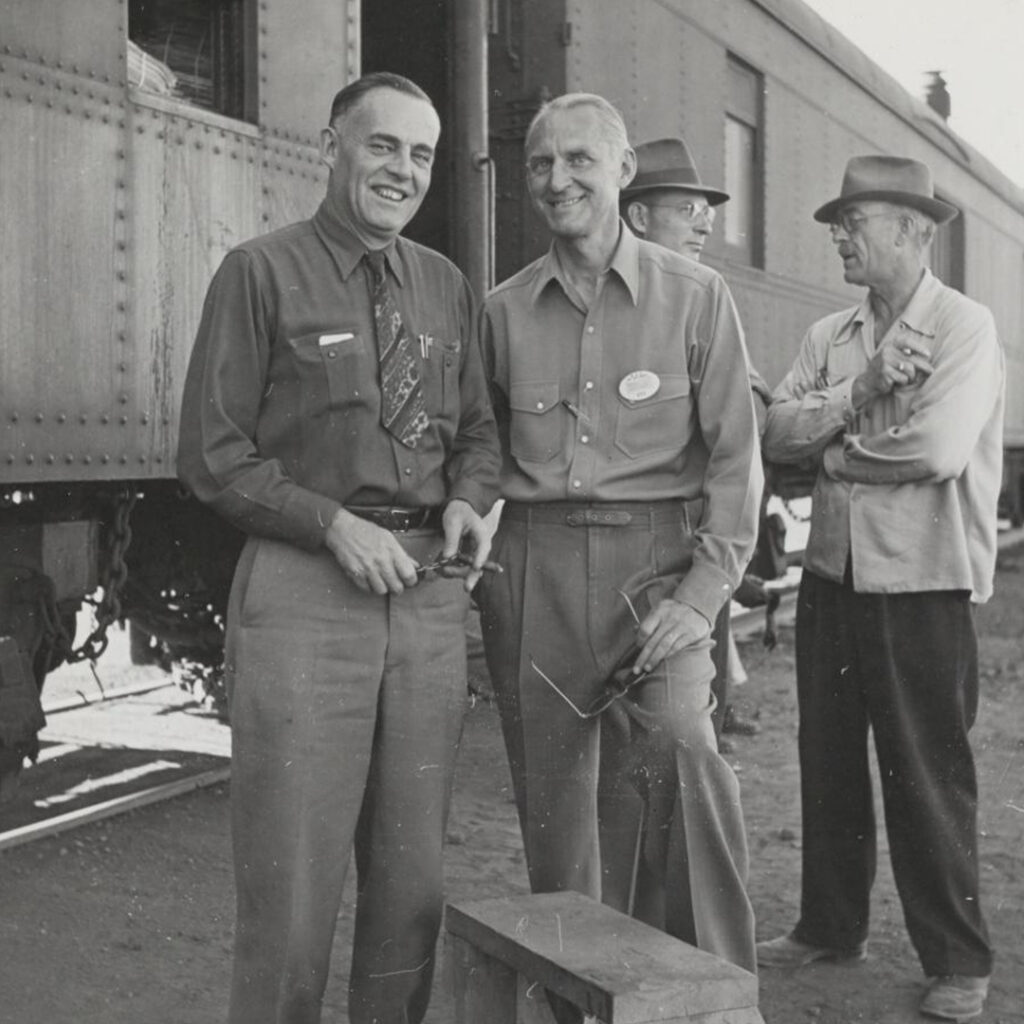
Raymond Best (left), Project Director of the Moab Isolation Center, later Director of the Tule Lake Segregation Center. September 30, 1943.
Inmates at the Moab Isolation Center, 1943. They were already imprisoned. Speaking up sent them farther away. For many, it meant being pushed further and further out.
Leupp Isolation Center, Arizona. Opened in 1943 as a larger, more permanent isolation facility, replacing the remote Moab Isolation Center.
Credit NARA via Densho
Tule Lake Segregation Center, a high-security facility where the government sent Japanese Americans who protested, resisted, or were labeled “troublemakers.”
Remembering Moab
Moab was not created to rehabilitate. It was created to silence. And for many men, it succeeded.
Moab closed in April 1943, replaced by the larger Leupp Isolation Center in Arizona. Many were transferred to Tule Lake, where conditions hardened further and citizenship itself could be stripped away. Moab existed for less than a year.
In 1994, historians Bruce Louthan and Lloyd Pierson, working with the Utah Division of State History, successfully nominated the Dalton Wells CCC Camp/Moab Isolation Center for inclusion on the National Register of Historic Places.
Although the site was added to the National Register of Historic Places in 1994, it has no official federal marker. A single historical plaque stands at the former camp site, thirteen miles north of Moab on Route 191.
My Aunt’s father spent WW2 in a Federal prison, first in North Dakota, then Santa Fe, simply because he once owned a fishing boat. He was never charged with a crime.



My Aunt’s father spent WW2 in a Federal prison, first in North Dakota, then Santa Fe, simply because he once owned a fishing boat. He was never charged with a crime.