One agency damaged the Constitution when it forced more than 120,000 people to “voluntarily” leave.
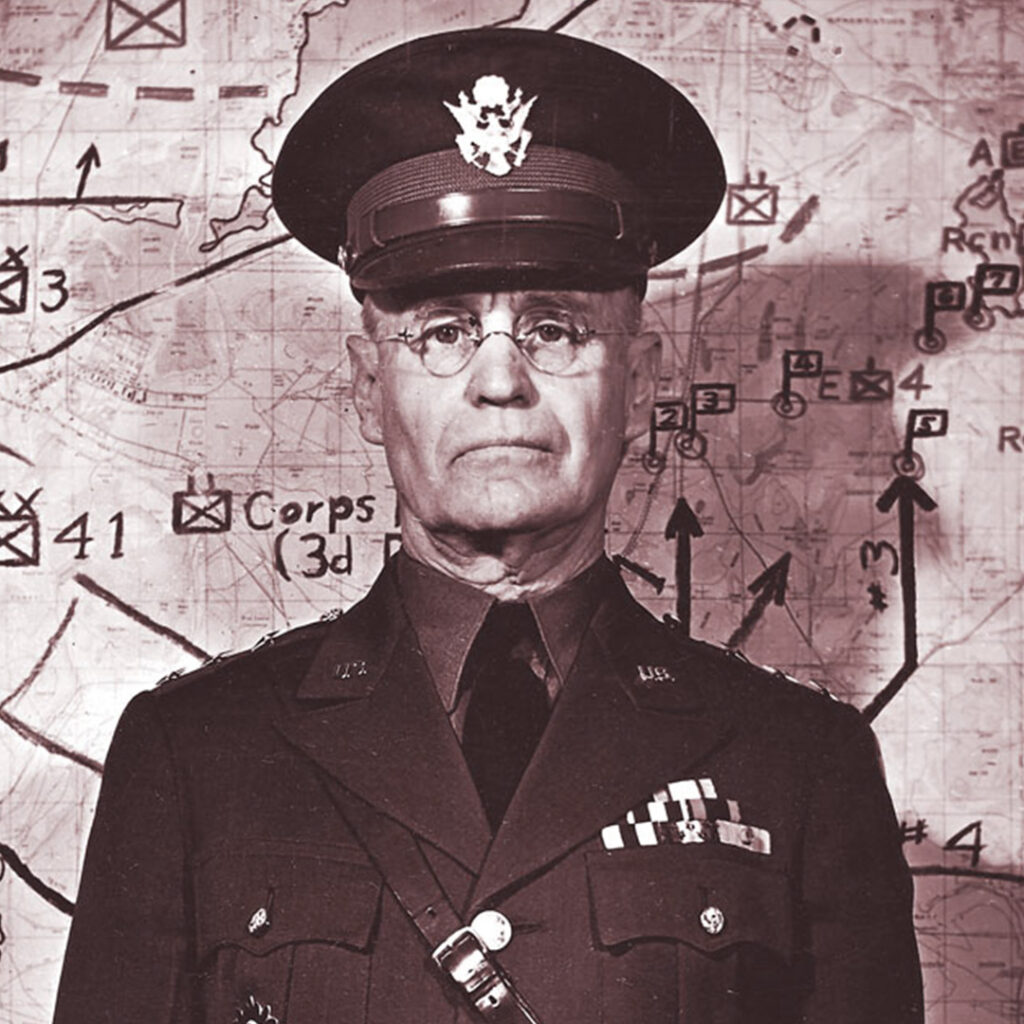
December 11, 1941: The Army coast defense on the West Coast was placed under the Western Defense Command (WDC), led by Lt. General John L. DeWitt, a driving force behind the mass removal of Japanese Americans.
When it was formed in March 1941, the Western Defense Command was not created to tear families apart or police entire communities. It was mainly a planning agency responsible for coordinating the defense of the Pacific Coast. It trained soldiers. It monitored infrastructure. It prepared for wartime emergencies.
The attack gave General DeWitt sudden influence and an opportunity. He had long believed that Japanese Americans could not be trusted. He wrote false reports, relied on racist assumptions, and pushed unproven claims that Japanese Americans were preparing to aid Japan. With his new authority, DeWitt reshaped the WDC into an institution built on fear and racial suspicion.
After Pearl Harbor, anti-Japanese groups gained enormous political power. What followed wasn’t just fear, but a coordinated push to remove an entire community.
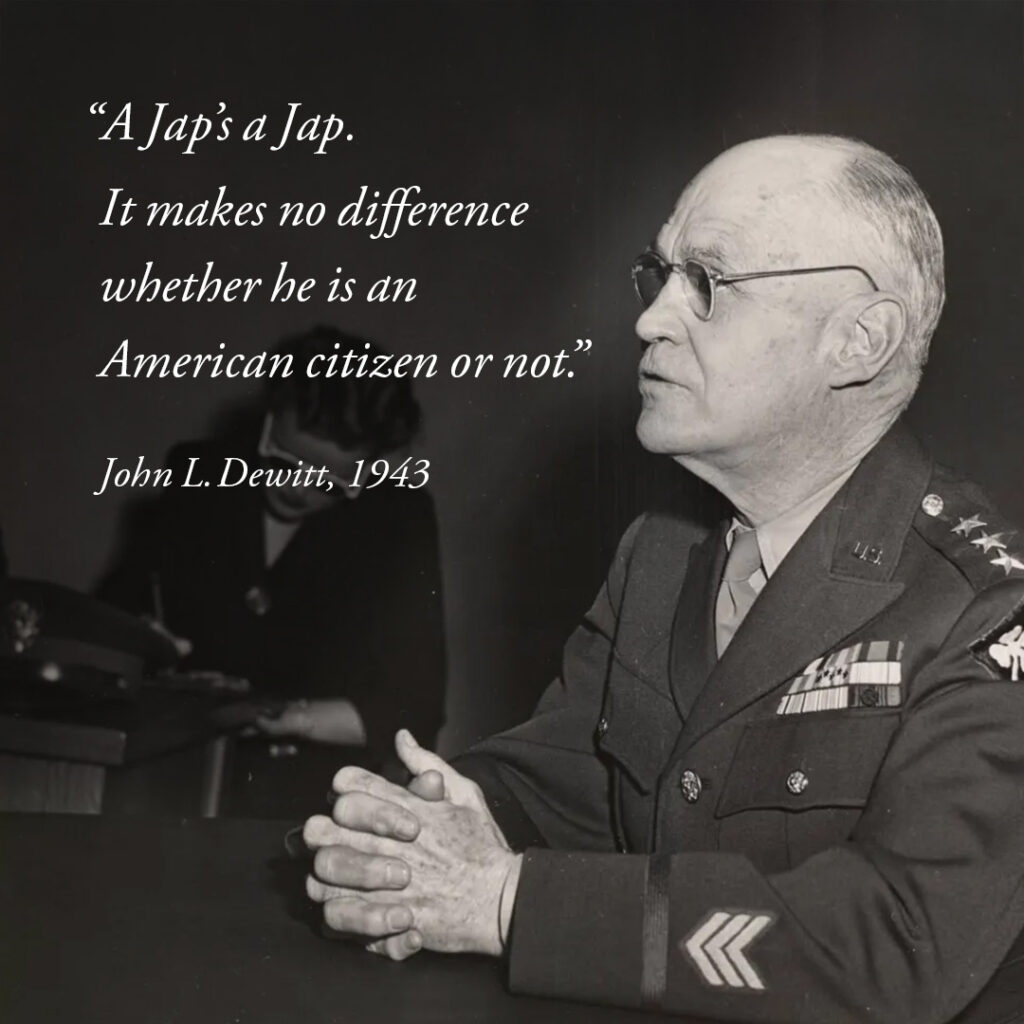
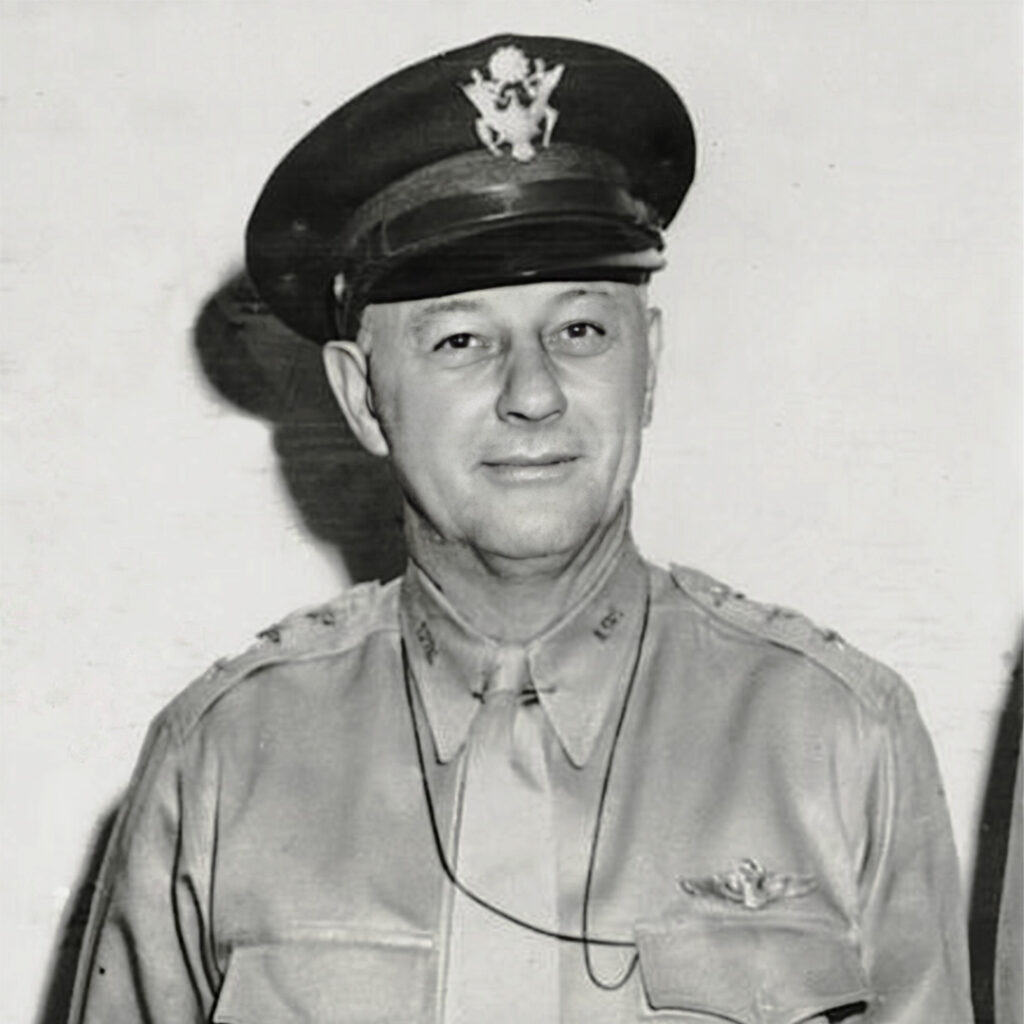
Lieutenant General John L. DeWitt: The man behind the incarceration of 120,000 Americans.
He led the campaign to remove and imprison anyone of Japanese ancestry.
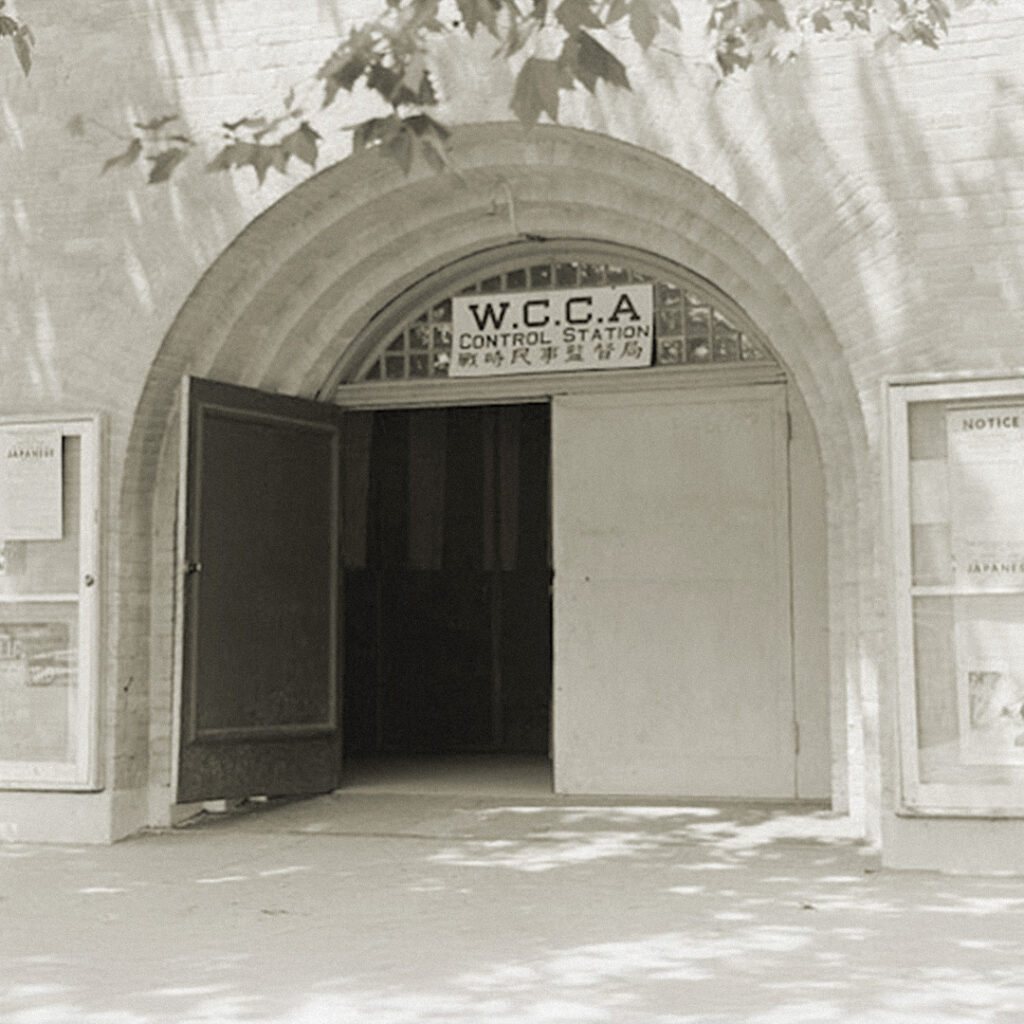
WCCA control station in Woodland Hills, 1942. Families walked through these doors to receive instructions that would erase their lives overnight.
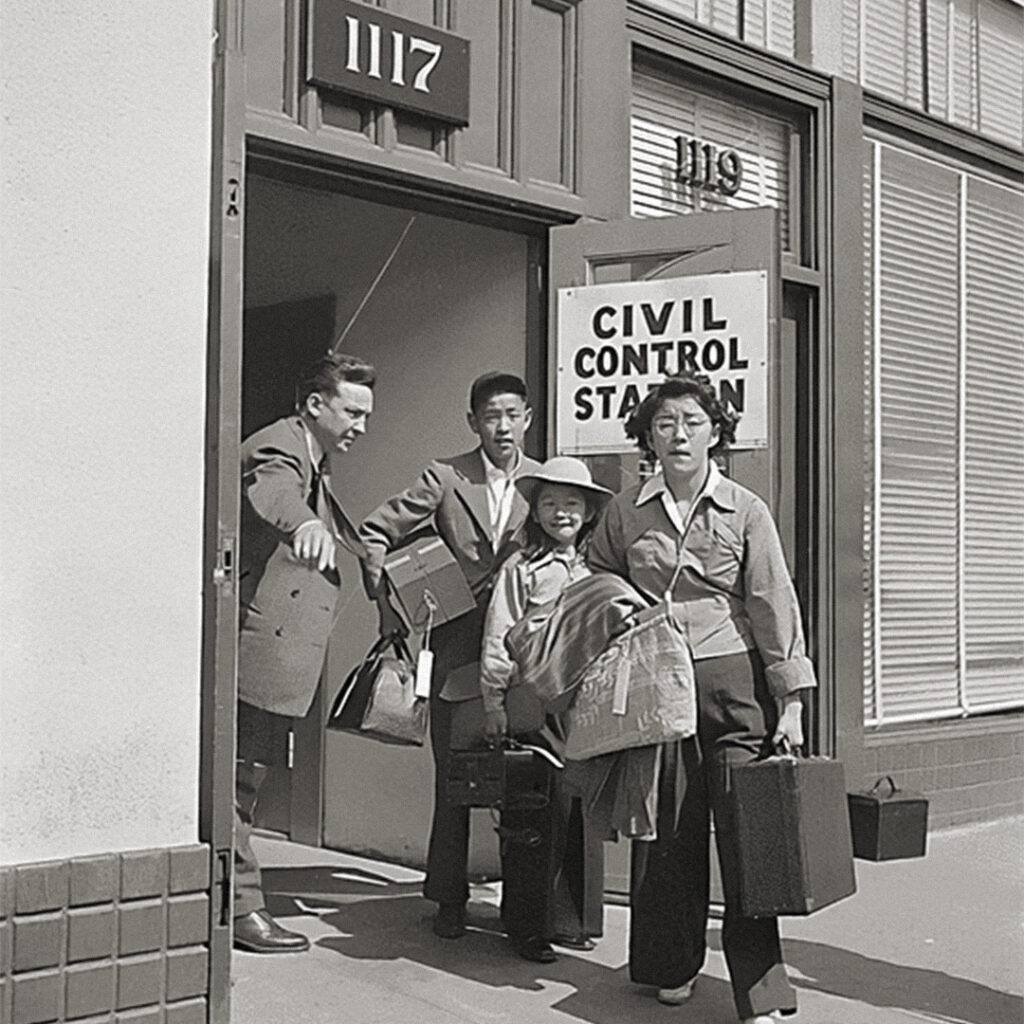
Civil Control Station in Oakland, California. Japanese American families stood in line here with their suitcases, waiting to be registered and assigned a number.
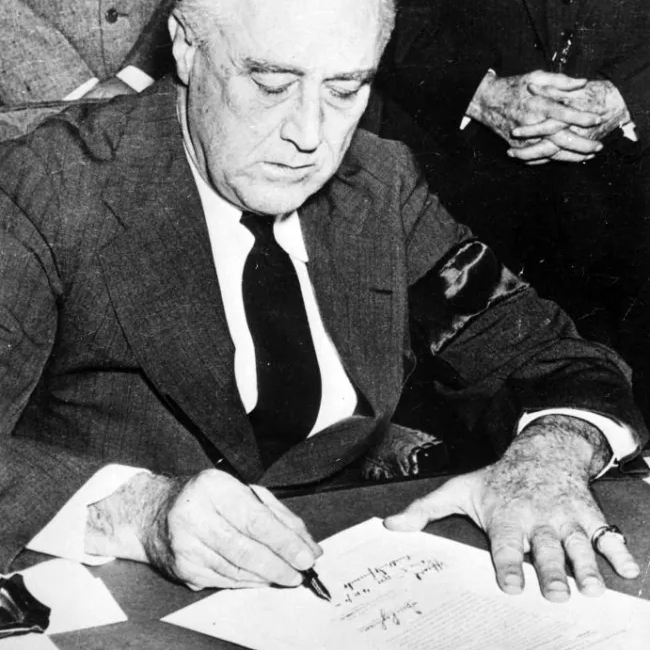
February 19, 1942 — Franklin Roosevelt signs Executive Order 9066, setting in motion the mass incarceration of over 120,000 Japanese Americans during WWII
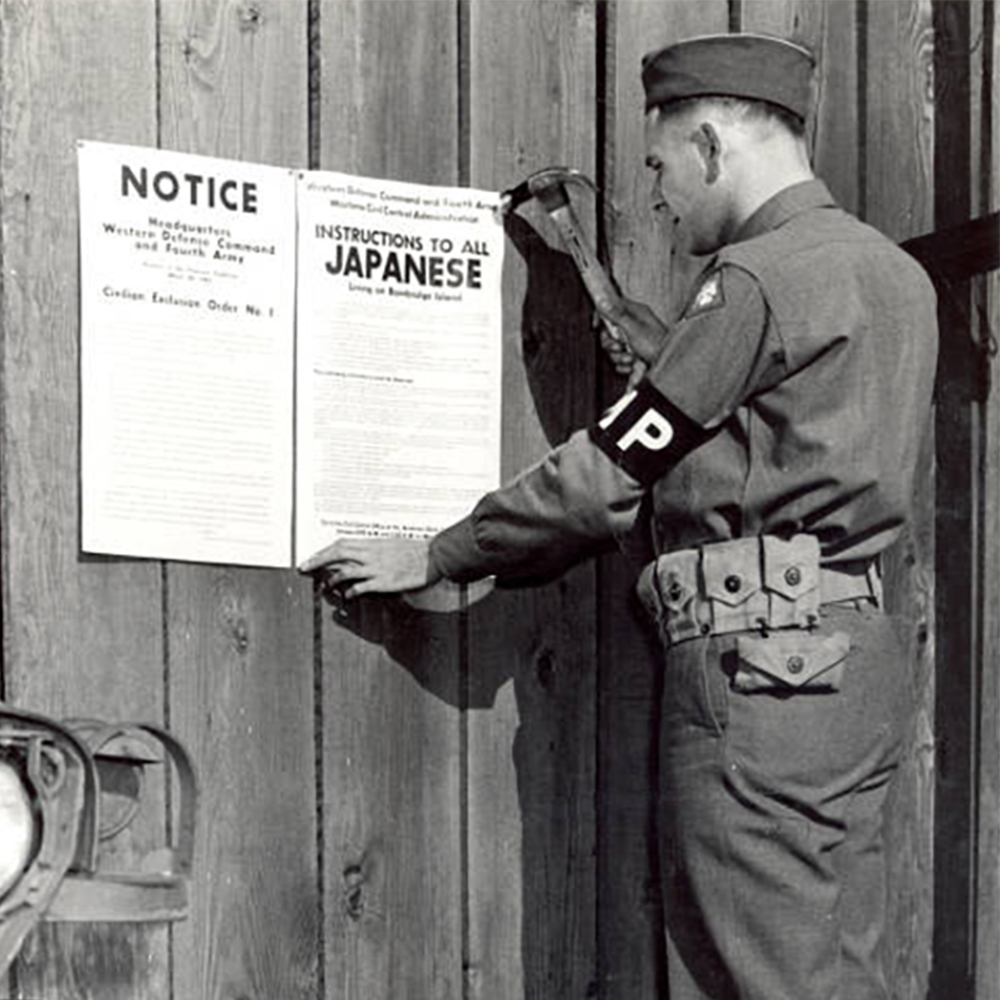
Civilian Exclusion Order No.1 being posted. Orders like this appeared on street corners to alert families had only few days to pack up and report for incarceration.
Forced to “Voluntarily” Leave
The Western Defense Command quickly began coordinating with the newly formed Wartime Civil Control Administration (WCCA). Together, they created a system that portrayed forced removal as something voluntary. It was not. Families did not willingly abandon their homes, farms, or businesses. They were pushed.
In February 1942, DeWitt wrote a memo to Secretary of War Henry L. Stimson. That memo directly influenced President Roosevelt’s decision to sign Executive Order 9066. It cleared the path for mass exclusion.
Over the following months, DeWitt released a flood of proclamations and 108 Civilian Exclusion Orders. Each one targeted specific communities and neighborhoods. Each one told Japanese Americans when they had to leave and where they would be sent. The WDC controlled every stage of the process.
Resistance to Acceptance
DeWitt did more than remove people from their homes. He also fought to keep them out of American life.
After the WRA, led by Dillon S. Myer, took over the management of the incarceration camps from the military, they quickly realized the Japanese Americans were not threats. They also noticed two things. First, motivated Japanese Americans should have the opportunity to prove their loyalty by serving in the military. Second, there was no reason to keep loyal Japanese Americans locked up.
DeWitt opposed both positions. He resisted the idea that Nisei soldiers could be trusted. He also fought efforts to release Japanese Americans from the camps once their innocence became impossible to deny. His stance was not based on evidence or loyalty.
It was based on race.
Dillon S. Myer, who led the War Relocation Authority, visiting Heart Mountain. He believed the camps should be closed and worked to end the incarceration program.
This wasn’t a private remark. General DeWitt was regularly making these statements publicly, justifying the incarceration of 120,000 Japanese Americans.
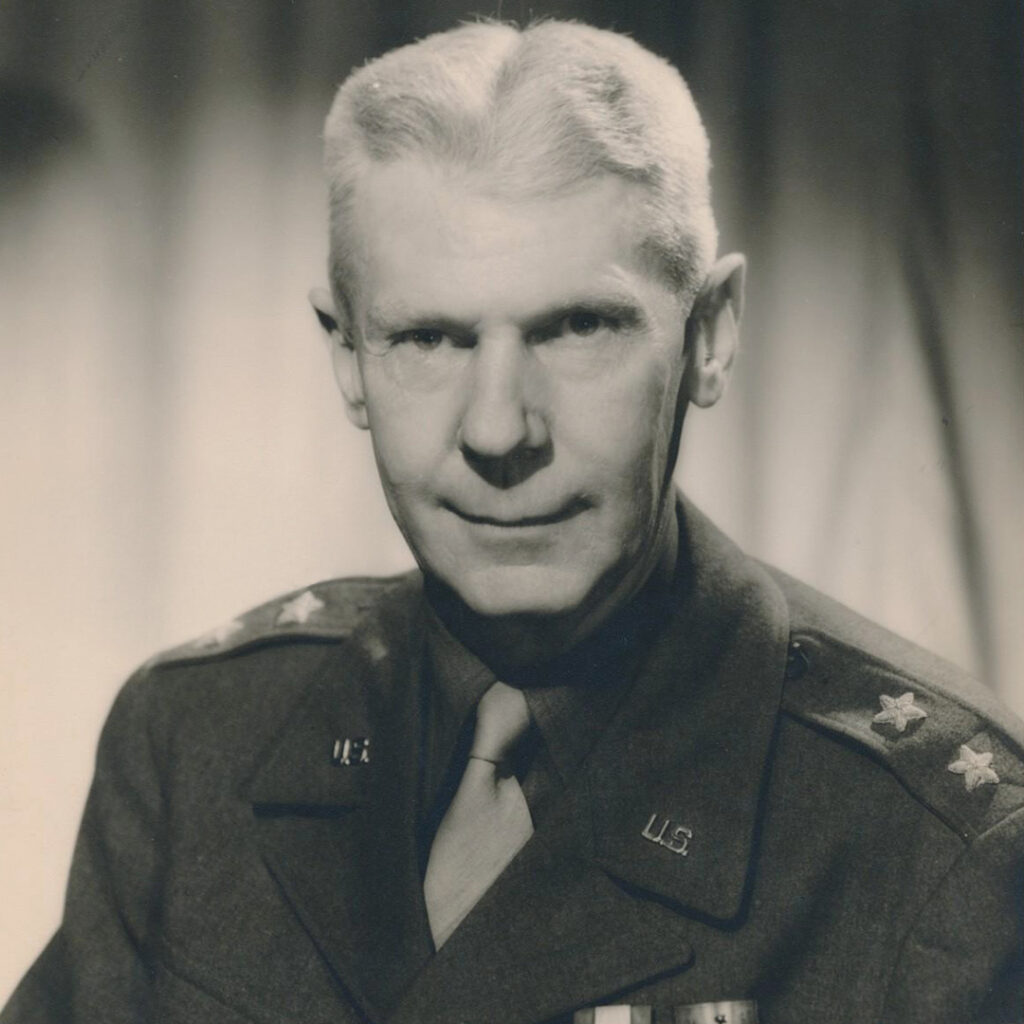
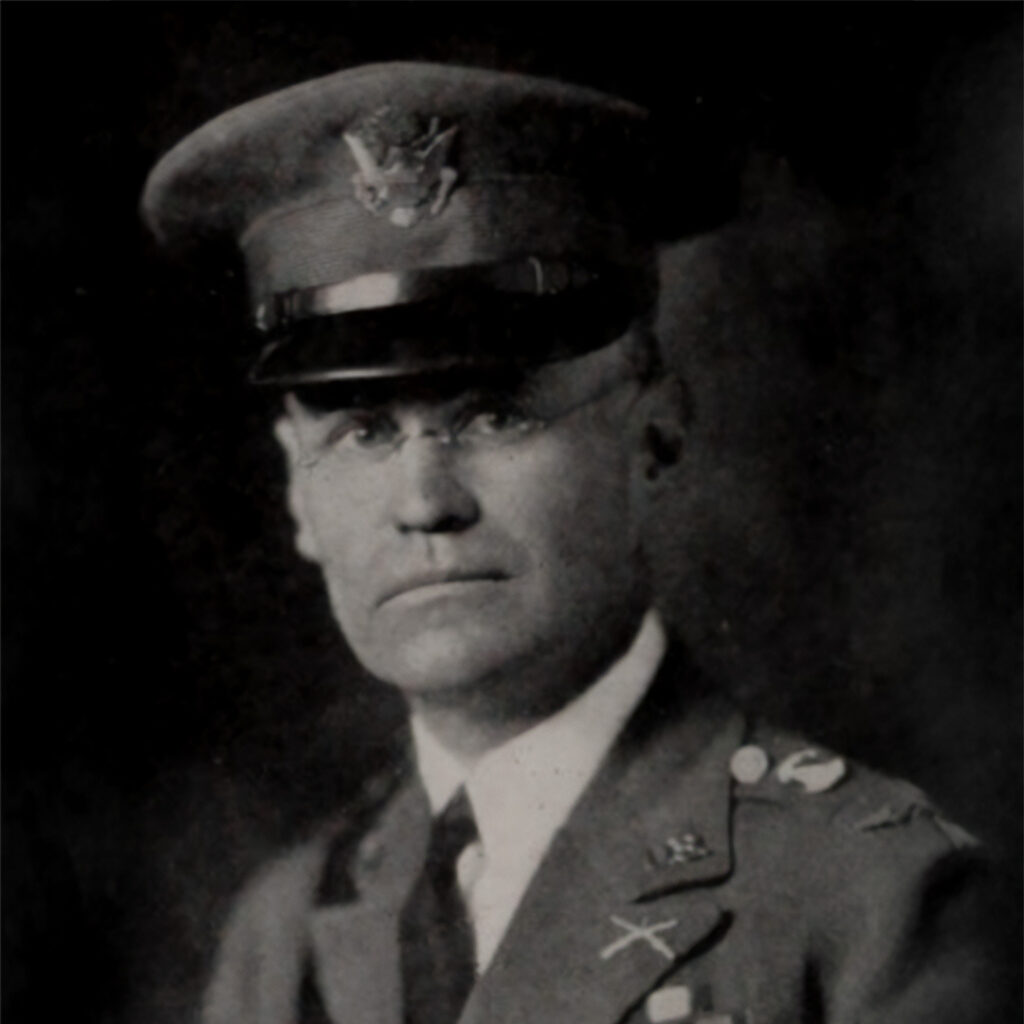
Inside the Western Defense Command, Gen. Charles H. Bonesteel Jr. was one of the voices saying the Army had no evidence to justify removing 120,000 people.
Lt. Gen. Delos Emmons refused mass incarceration in Hawaii, and brought those lessons to the Western Defense Command in 1943, where he pushed to undo an unnecessary policy.
General DeWitt was the driving force behind mass removal. But as the truth caught up — no sabotage, no fifth-column — his rhetoric became an embarrassment.
A Change in Leadership, but Not an Immediate Change in Policy
Gradually, DeWitt lost influence as evidence mounted against the WDC’s racial profiling. In September 1943, he stepped down and was replaced by General Charles Bonesteel Jr. and Lt. General Delos Emmons, who took a surface-level different approach. Emmons, in particular, was far more open to treating Japanese Americans with fairness and supported the idea of release.
But even with new leadership, change did not come quickly. Elections were approaching. Few officials wanted to appear “soft.” As a result, even though Emmons and Bonesteel agreed to begin releasing families from the camps, the process moved slowly.
The Western Defense Command’s legacy became defined not by strategy or defense, but by the harm it inflicted on more than 120,000 people whose only crime was their ancestry.
The Western Defense Command remained active until 1946.