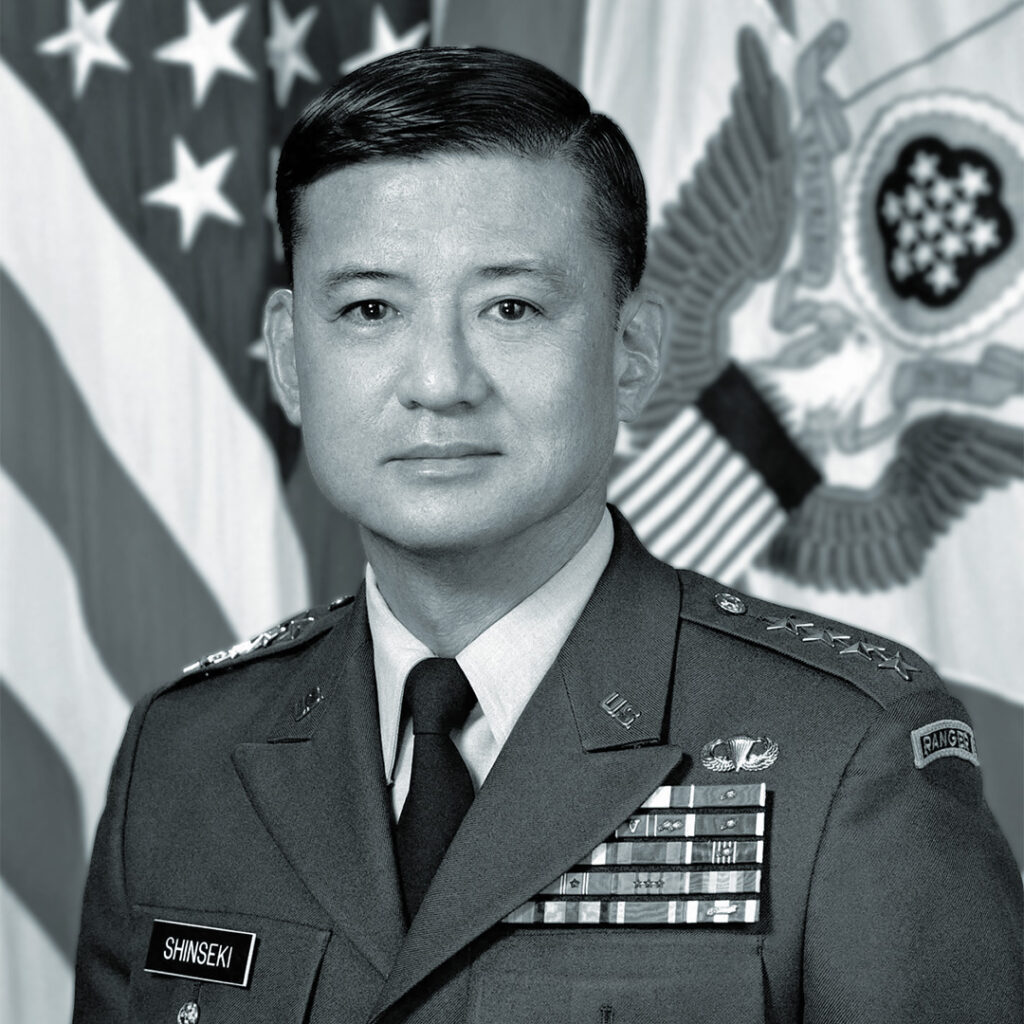
November 28, 1942: Eric Ken Shinseki was born in Līhuʻe, Kauaʻi, becoming the first Asian American four-star general in U.S. history.
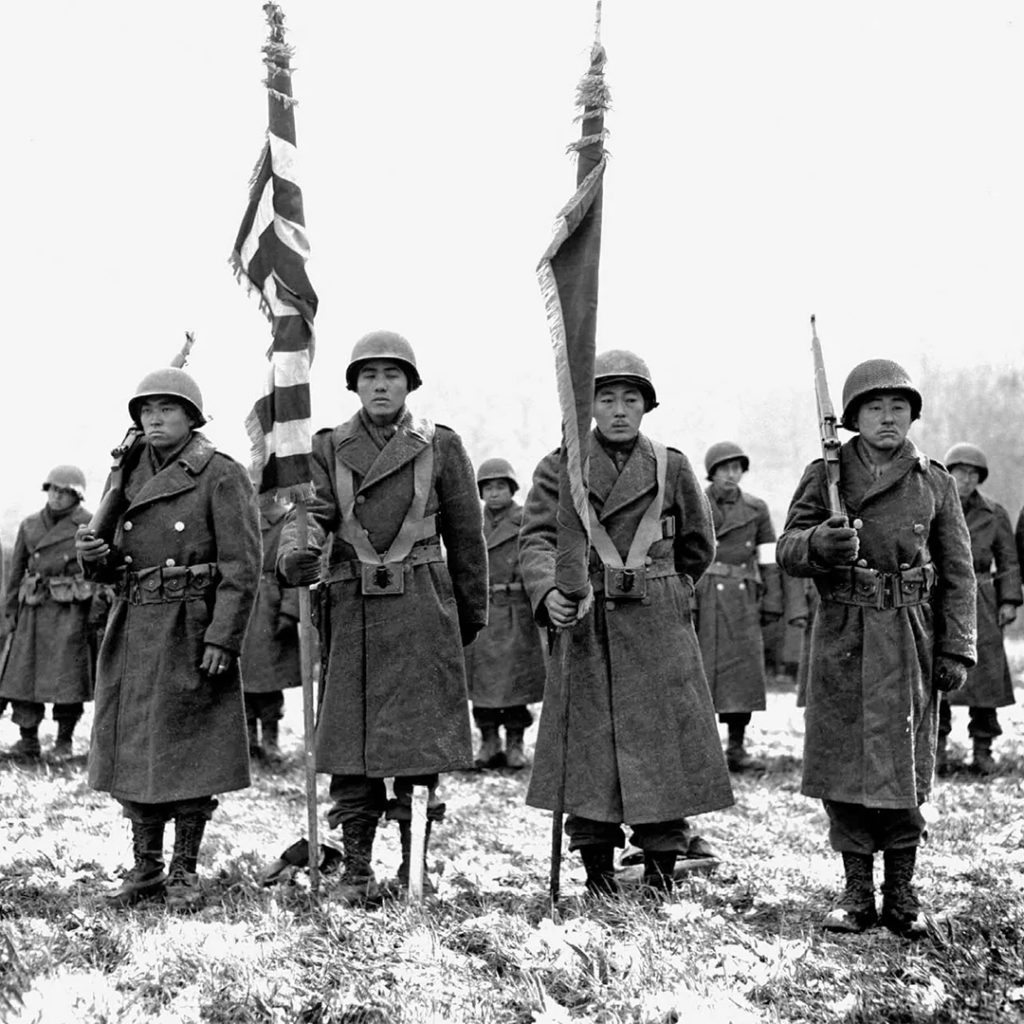
Growing up in Hawai‘i, Shinseki learned that three of his uncles had served in the segregated 442nd Regimental Combat Team and 100th Infantry Battalion, two of the most decorated units in American history. They fought for a country that doubted them, distrusted them, and locked up their families during the war.
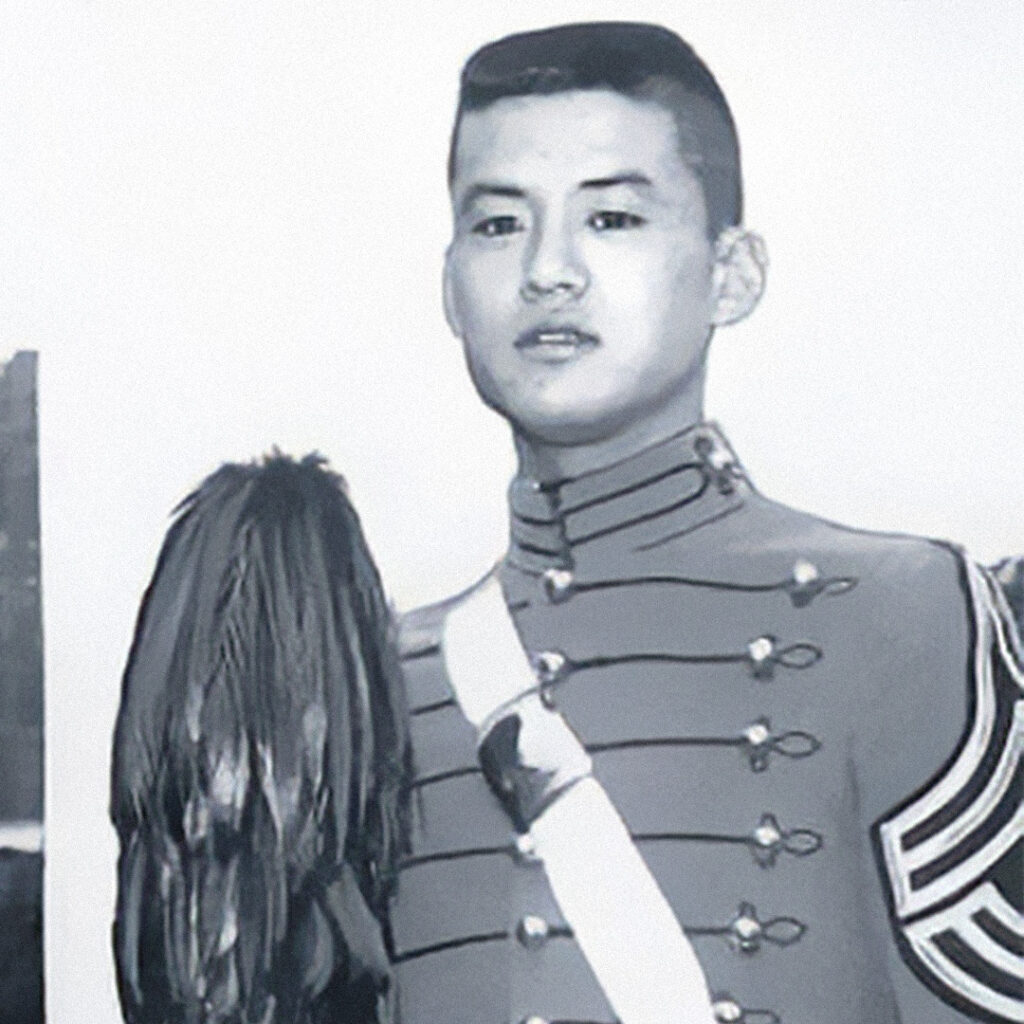
Their example shaped him. Motivated by their service, Shinseki entered the United States Military Academy at West Point and graduated in 1965. He stepped into the officer corps just as the Vietnam War was escalating.
Shinseki served two combat tours in Vietnam. First as a forward artillery observer with the 9th Infantry Division, then as commander of Troop A, 3rd Squadron, 5th Cavalry Regiment with the 25th Infantry. He earned three Bronze Stars for valor and two Purple Hearts. On one mission, while pushing through heavy brush, he stepped on a land mine. The blast tore off the front of one foot. Doctors told him his career was over. He refused to accept that.
While many of their families remained imprisoned, soldiers of the 442nd Regimental Combat Team became some of the most decorated in U.S. military history.
Eric Shinseki, West Point Class of ’65. The son of Hawai‘i and nephew of three 442nd veterans, on the brink of a military career that would break barriers.
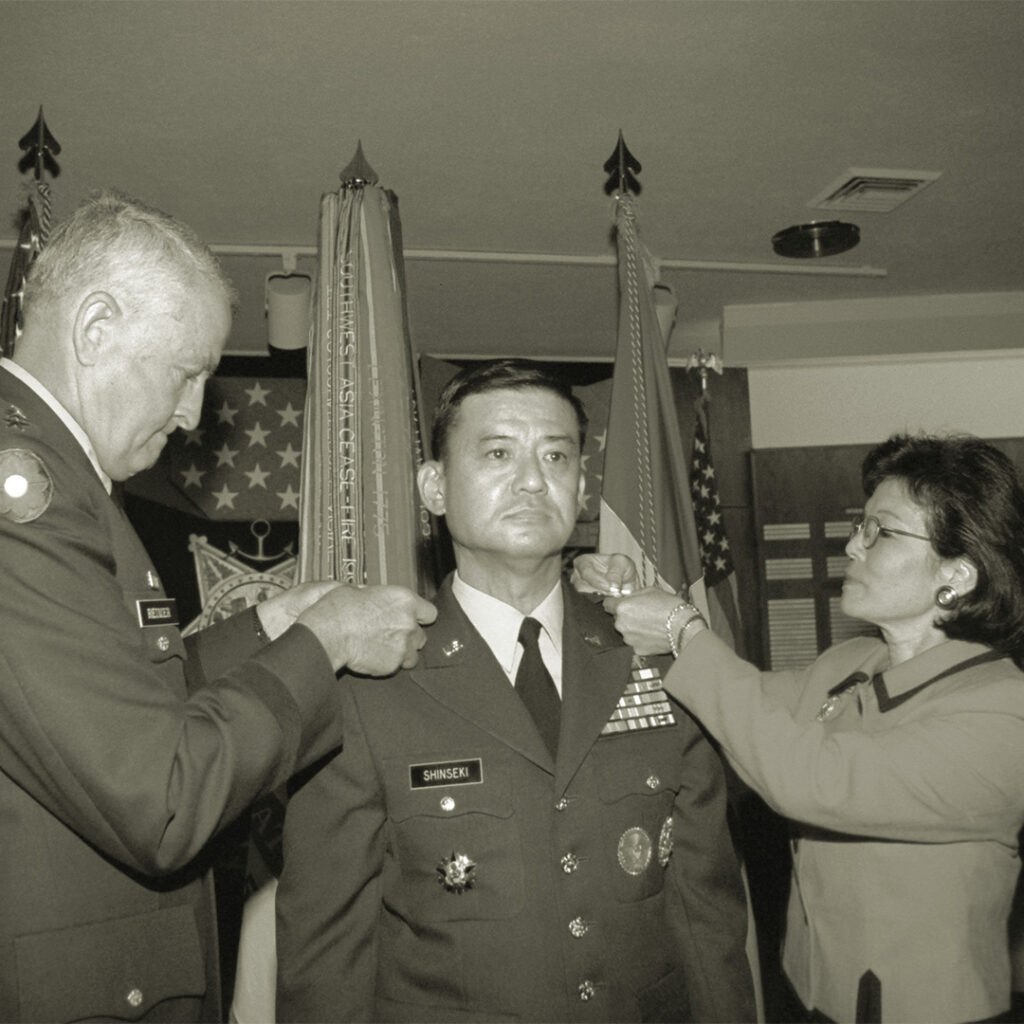
Eric Ken Shinseki became a four-star general in August 1997 — the first Asian American in U.S. history to reach the Army’s highest rank.
Breaking Barriers, One Rank at a Time
After nearly a year of recovery, Shinseki returned to active duty in 1971. He went on to serve in a wide range of command and staff roles in the United States, Europe, and the Pacific. His perseverance became a signature of his leadership.
In August 1997, he pinned on four stars — the first Asian American in U.S. history to reach that rank. Two years later, he became the 34th Chief of Staff of the U.S. Army, its top uniformed officer. As of 2004, he remained the highest-ranking Japanese American to ever serve in the Armed Forces.
Throughout his career, he held onto the lessons passed down from his uncles: lead with dignity, stand your ground, and tell the truth even when it’s uncomfortable.
Several Hundred Thousand Soldiers.
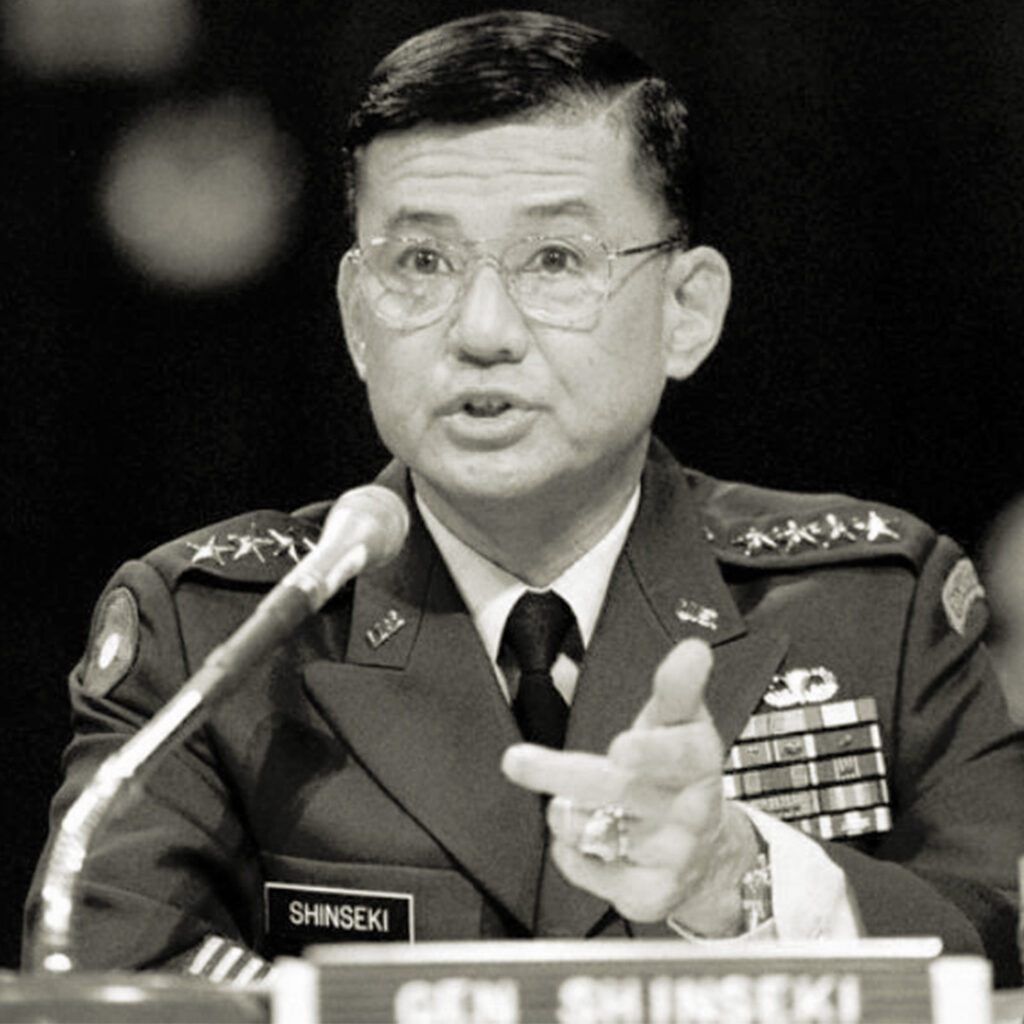
In February 2003, while preparing for the invasion of Iraq, Shinseki testified before the U.S. Senate Armed Services Committee. When asked how many troops would be needed to secure the country after Saddam Hussein’s fall, he gave a direct answer: “Something in the order of several hundred thousand soldiers.”
His assessment clashed with the optimistic troop projections from Secretary of Defense Donald Rumsfeld. Shinseki was publicly contradicted and quietly sidelined. His term as Chief of Staff effectively ended that day. He retired in June 2003.
However, just few years later, CENTCOM Commander General John Abizaid confirmed that Shinseki had been right. The U.S. never fielded the force size needed to stabilize Iraq, and the consequences shaped the region for decades.
General Eric Shinseki testifying in 2003. He told lawmakers that stabilizing Iraq would require “several hundred thousand” troops, which proved accurate.
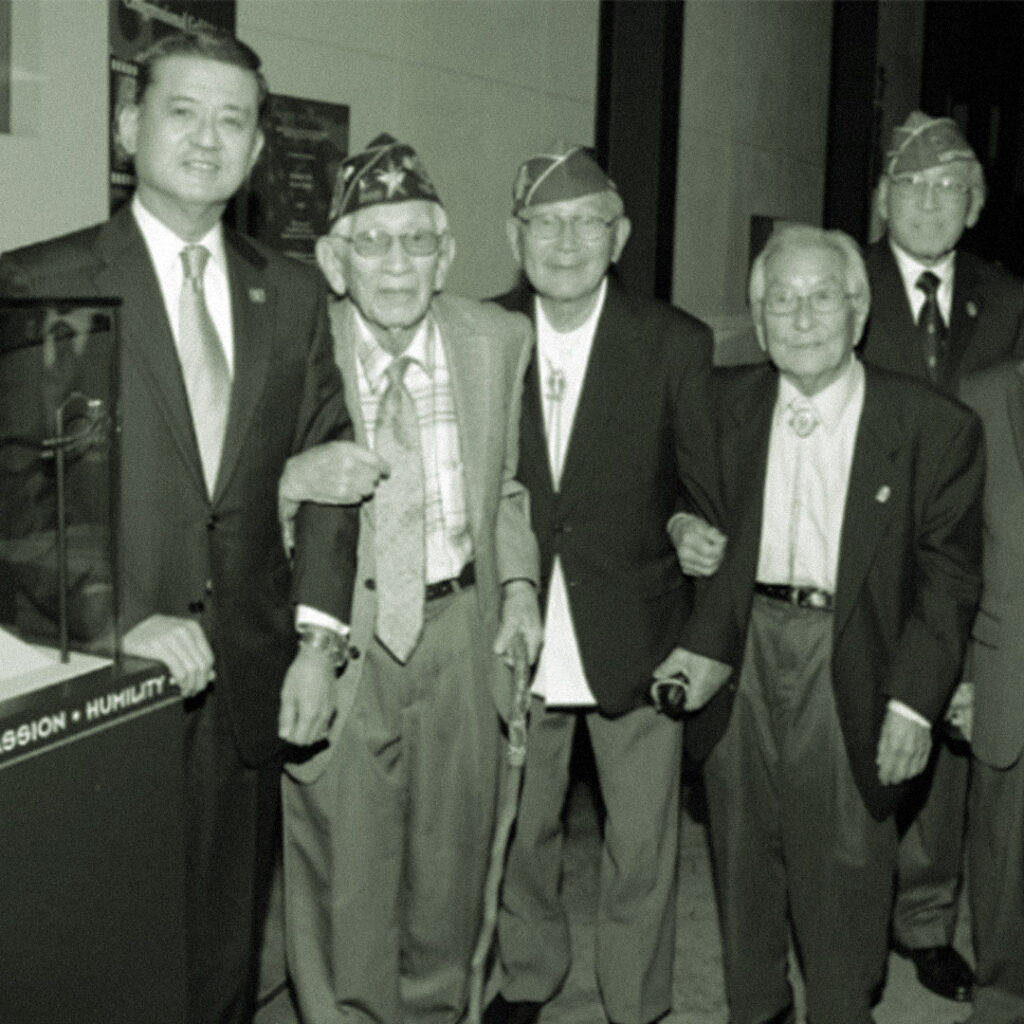
Shinseki with 100th/442nd veterans. Their legacy guided his path from Hawai‘i to West Point and eventually to four-star general.
He honored the 100th/442nd by rising to the highest rank. His integrity may have cost him his job, but not the respect of those who came before him, or those who followed.
Lifetimes of Service
In 2009, Shinseki became the first Asian American Secretary of Veterans Affairs. The appointment was deeply symbolic — a soldier who had been wounded in combat, now charged with caring for those who had served.
In 2014, he faced the most difficult challenge of his civilian career. Investigations revealed delayed care and falsified wait-time records in several VA hospitals. Shinseki fired senior officials and issued a public apology, but the political fallout was immediate. He took responsibility, and President Obama accepted his resignation.
Today, retired General Eric Shinseki serves as chairman of the Army Historical Foundation and sits on the board of First Hawaiian Bank. His life is a testament to perseverance, integrity, and the quiet influence of three Nisei uncles who fought not only the Axis powers, but the prejudice of their own nation.
Their legacy lives on through his, and those who follow.