They didn’t like Chinese. So they tried another flavor.
May 10, 1869: The first Transcontinental Railroad was completed, largely thanks to Chinese laborers, who were soon replaced with the Japanese.
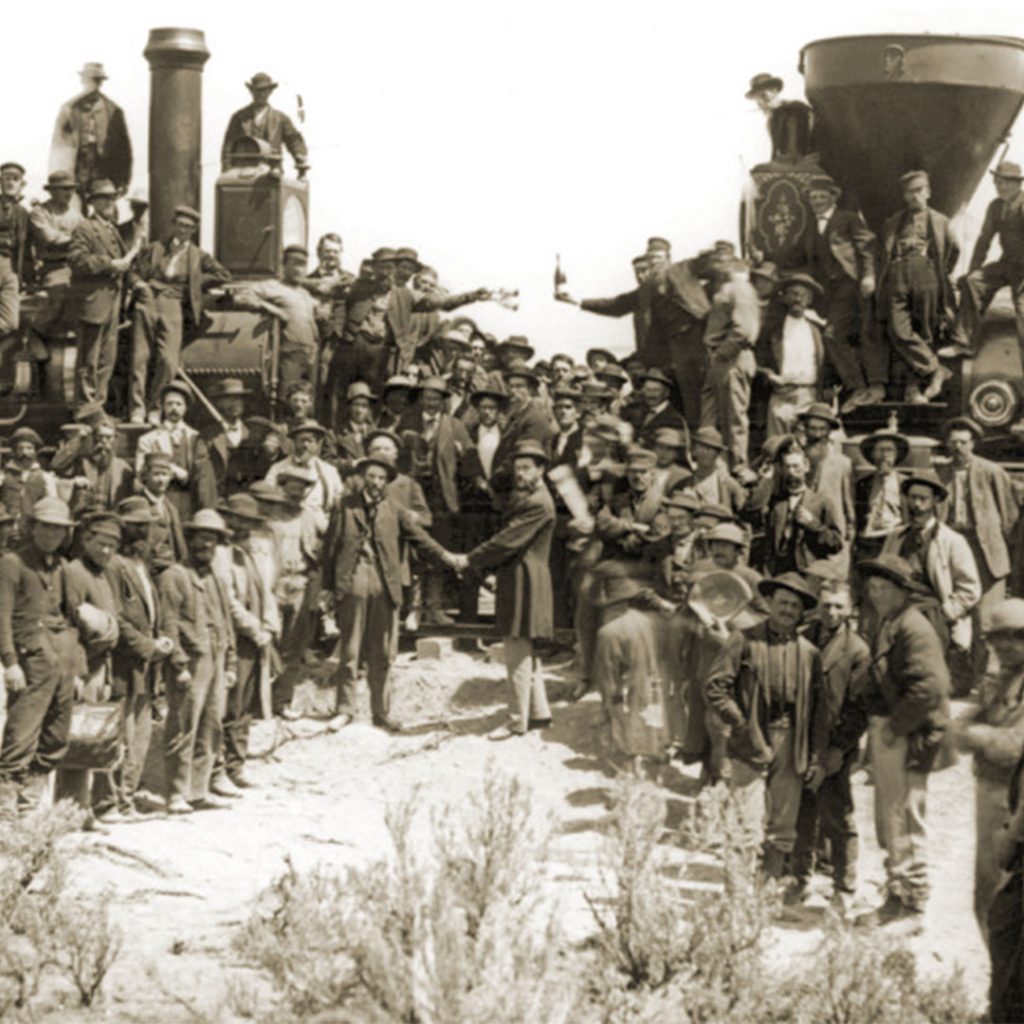
The golden spike was driven on May 10, 1869.
A historic moment. A photograph was taken. A nation celebrated. But the workers who had made it all possible — thousands of Chinese immigrants — were nowhere in that photo.
They had done the blasting. The tunneling. The lifting. The laying.
They had worked through avalanches, heatwaves, and deadly accidents to help unite the coasts.
And when it came time to commemorate the achievement, they were pushed out of the frame.
The celebratory photograph of the Transcontinental Railroad’s completion, May 10, 1869. Thousands of Chinese laborers built it. None appeared in the frame.
Chinese workers were paid less than American workers, and were provided with harsher living conditions, 1867
An anti-Chinese poster announcing the passage of the Chinese Exclusion Act, May 6, 1882, courtesy of British Columbia Archives
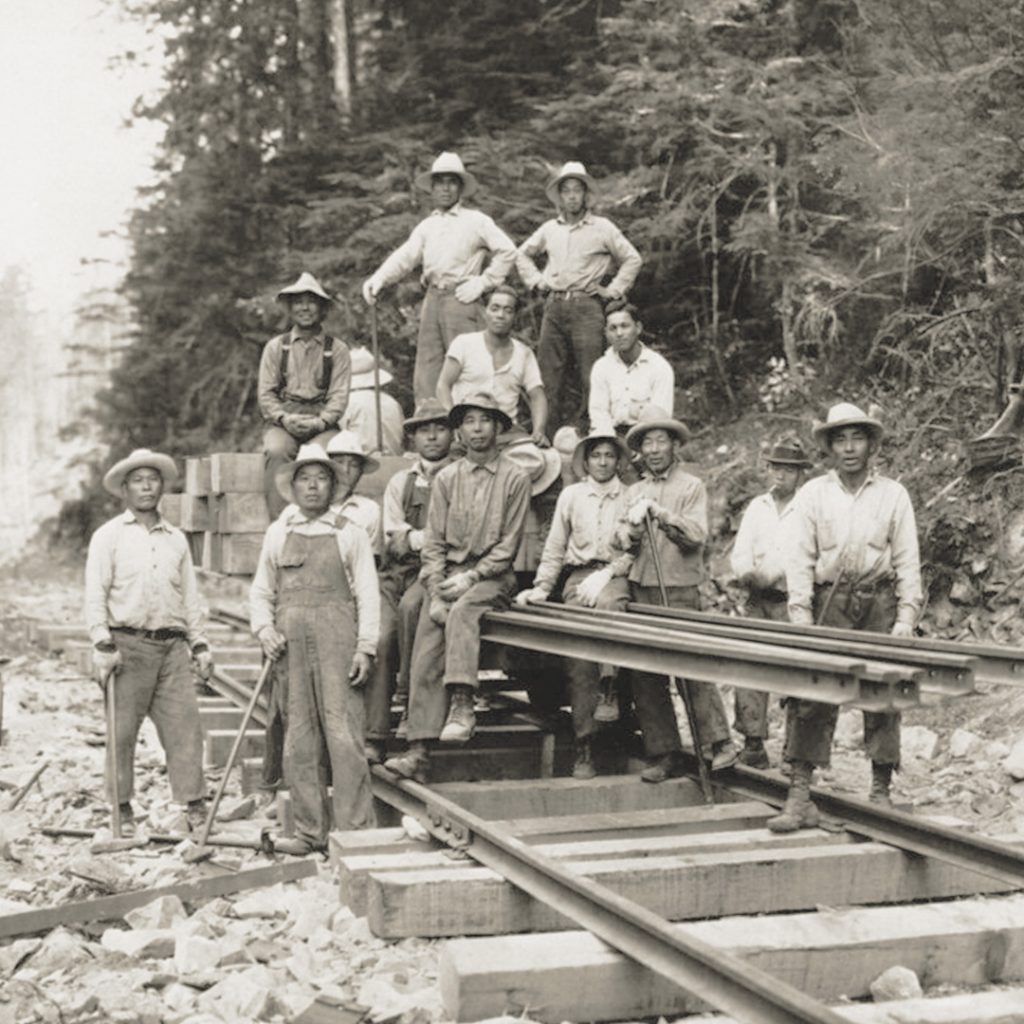
Japanese American railroad workers on the Snoqualmie Falls Lumber Company line in Washington State, credit University of Washington
Instead of being honored, they were excluded. And in 1882, they were banned, when the Chinese Exclusion Act became federal law.
But the demand for cheap railroad labor didn’t disappear.
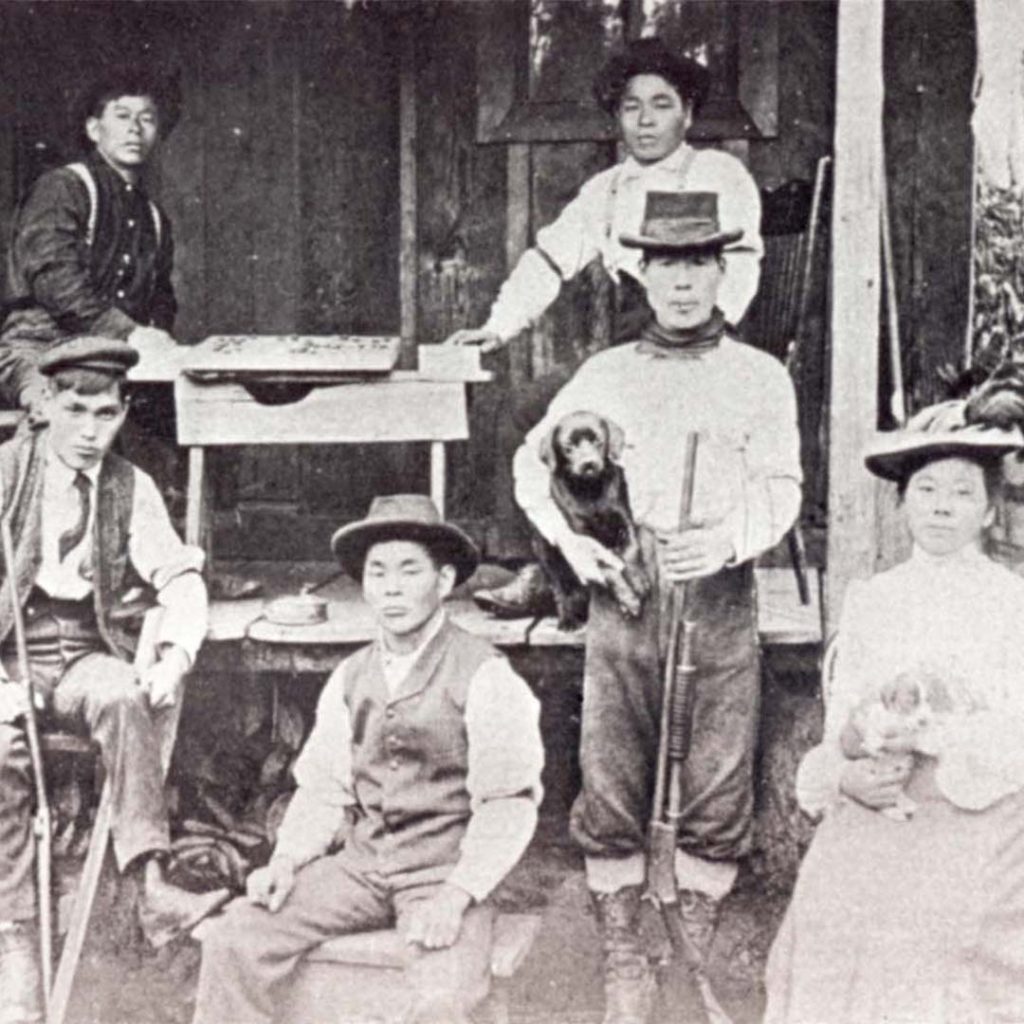
So America found another Asian group to take their place: the Japanese. By the late 1800s, Japanese immigrants were recruited to work on rail lines across the American West — Oregon, Utah, Colorado, Arizona. Many came directly from Hawaii after working on sugar plantations.
The pattern repeated: Backbreaking labor. Lower wages. Dangerous conditions. Racism on and off the tracks. They were seen as strong, silent, and “less troublesome” than the Chinese. Until they weren’t.
Many early Japanese American communities in the West were shaped by railroad labor. Towns formed around work camps. Families settled. Children were born.
Ironically, some of those same families were later forced onto trains, to be incarcerated on the very rail lines they helped build. In Wyoming, Japanese railroad workers once laid the tracks. Years later, they rode those same tracks as prisoners to Heart Mountain Relocation Center.
We sometimes hear about the Chinese railroad workers. We rarely hear about the Japanese railroad workers who followed them. Or how about the cycle of labor, resentment, and removal keeps repeating itself?
Wonder where this train is going?
Possibly a railroad camp, Oregon, 1895, credit Yoji Matsushita and JANM
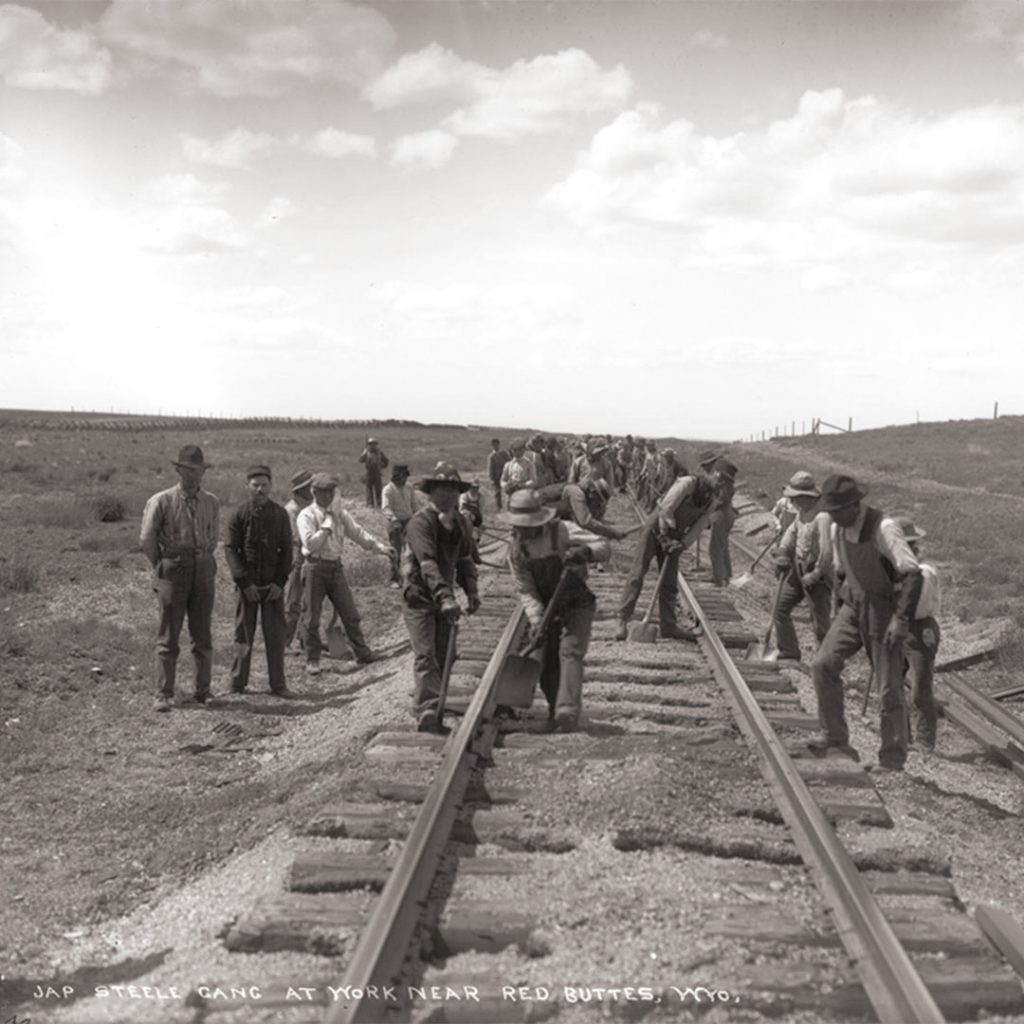
Japanese railroad workers began arriving in Wyoming at least as early as 1892, Wyoming State Archives
Arrival of the incarcerees at Heart Mountain Relocation Center, 1942
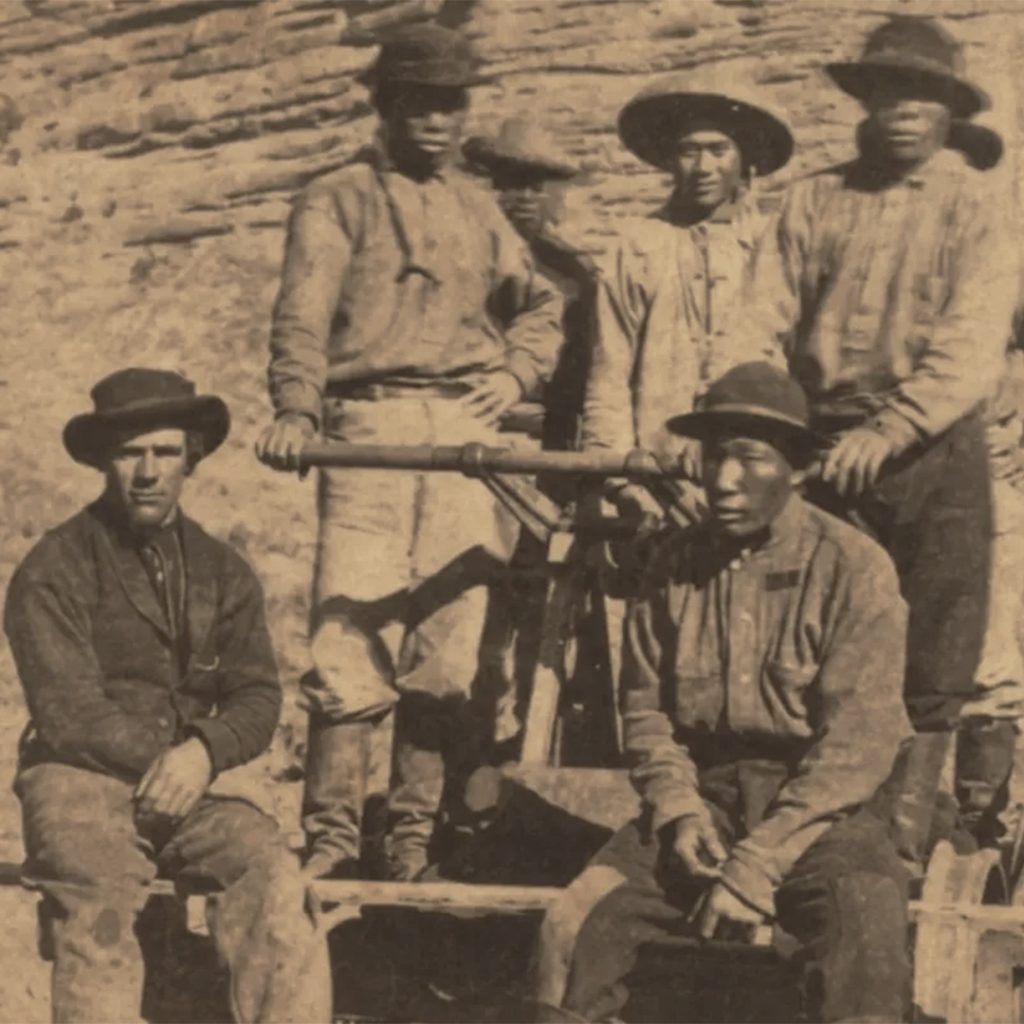
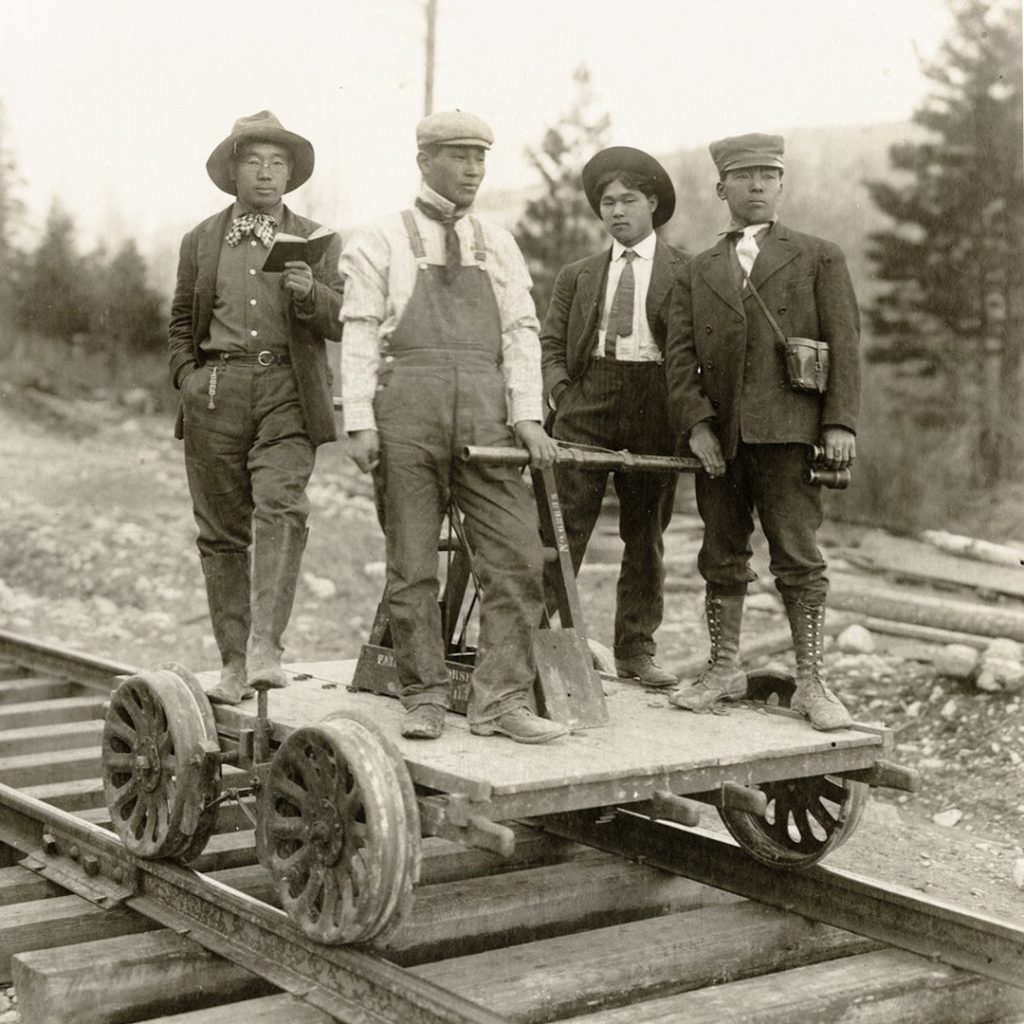
Four Japanese American men on a handcar, c1905, near Butte, Montana
my father Chujiro Aochi came to America in 1899, age 20, recruited to work on railroads. He talked about becoming a foreman because he knew how to “speak English”. He knew only two words “Yes Sir” !
He had heard the streets in California weren”paved with gold.”
He told his family in Japan he would return after he made his first Million dollars. He never returned to Japan. He lived to be 74. He wanted to die in his home – America.
My grandfather also came to America around that same time, and he also worked on the railroads. He died in 1947, after being incarcerated at Santa Anita and Heart Mountain.


my father Chujiro Aochi came to America in 1899, age 20, recruited to work on railroads. He talked about becoming a foreman because he knew how to “speak English”. He knew only two words “Yes Sir” !
He had heard the streets in California weren”paved with gold.”
He told his family in Japan he would return after he made his first Million dollars. He never returned to Japan. He lived to be 74. He wanted to die in his home – America.
My grandfather also came to America around that same time, and he also worked on the railroads. He died in 1947, after being incarcerated at Santa Anita and Heart Mountain.
Was your father also incarcerated during the war?
-Phil (Quiet Americans)