The law used to target brown people today was invented to get rid of white people.
July 6, 1798: President John Adams signed the Alien Enemies Act into law.
Long before Japanese Americans were incarcerated during WWII… Long before Muslim bans, deportation raids, or detention centers for Latino immigrants…
There was the French.
In 1798, during a time of tension with France, the U.S. government passed a series of laws known as the Alien and Sedition Acts. The most enduring of them was the Alien Enemies Act — a sweeping law that allowed the president to arrest, detain, or deport any non-citizen male from a nation the U.S. was at war with. No trial required.
John Adams, the second president of the United States.
He signed the Alien Enemies Act of 1798 into law — this law is that old.
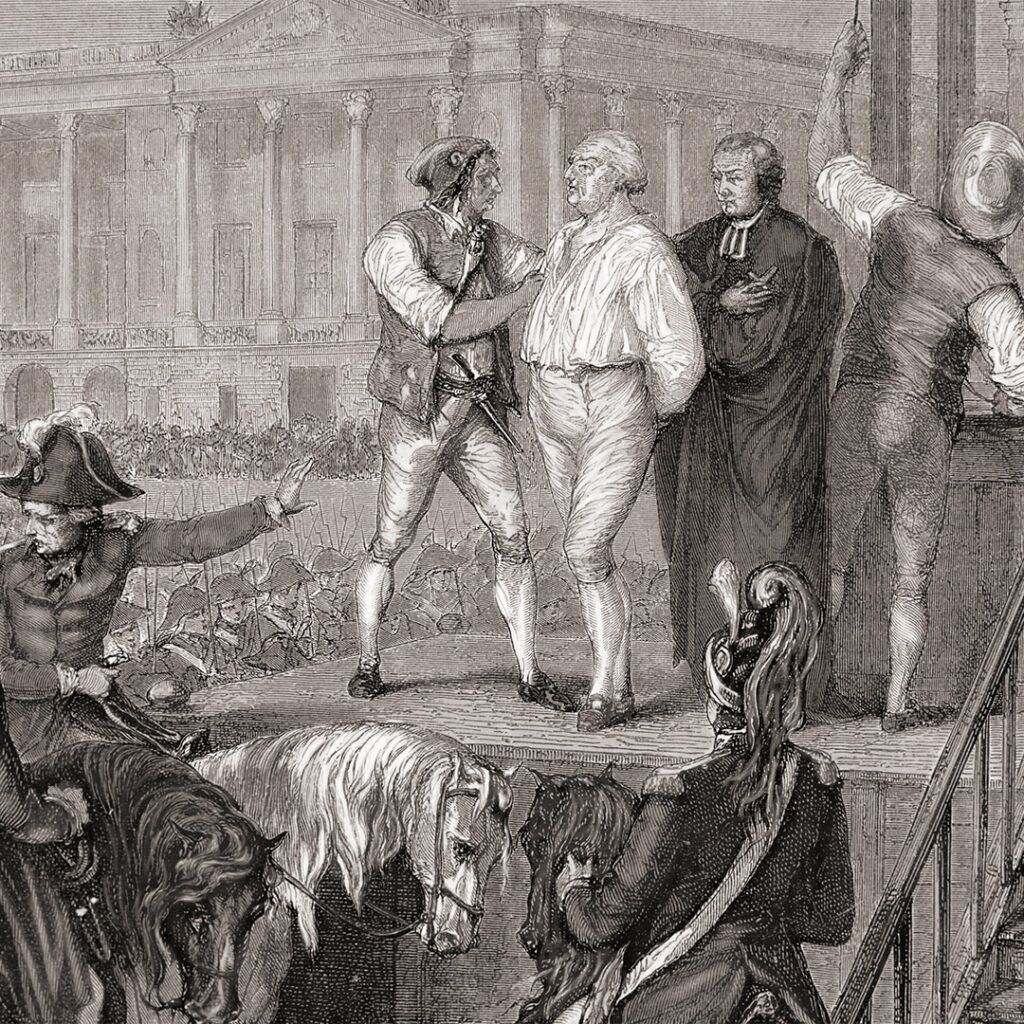
During the French Revolution, their king was executed in 1793. Fearing their own people might revolt, the American government passed the Alien Enemies Act — just in case.
German immigrants incarcerated at Fort Douglas, Utah, during World War I. Over 2,000 German-born civilians were arrested under the Alien Enemies Act.
German immigrants about to be deported in Hoboken, New Jersey in 1919. Their only crime: being from a country the U.S. was at war with.
Representatives Matthew Lyon (Republican) and Roger Griswold (Federalist) got into a full-blown fistfight over who posed the bigger threat: the French or the British.
The first group of Japanese-Americans arrive at the Manzanar War Relocation Center, one of ten major incarceration camps during WWII, 1942
The law was rooted in fear. Fear of foreign ideas. Fear of the “wrong” people having influence. Fear that loyalty to America had to be proven — or punished.
It’s the same fear that re-emerged after Pearl Harbor, when this 1798 law was dusted off and used as one of the legal justifications for incarcerating over 120,000 Japanese Americans during WWII.
Men, women, and children — citizens and non-citizens — were rounded up without charges, without trials, and imprisoned in American concentration camps.
The Alien Enemies Act has never been repealed. It still exists in U.S. law today.
And it has been cited again and again — used to target immigrants from countries deemed hostile, often brown or Muslim-majority nations.
A law first used to go after white European immigrants — the French — now serves as a weapon against immigrants of color.
It’s a law built on fear, implemented over 200 years ago. A tool that has followed America through every generation of scapegoating. And it reminds us: we didn’t learn our history, and we keep repeating it.
The Alien Enemies Act — from the French to the Japanese to Latin Americans, this 200-year-old law has been useful whenever politicians needed someone to blame.