During WWII, America’s friendly neighbor to the north, wasn’t.
January 14, 1942: Canada ordered the removal of Japanese men between the ages of 18 and 45 from a 100-mile “protected area” along the British Columbia coast.
It was only the beginning.
After Pearl Harbor and Canada’s declaration of war on Japan the following day, Japanese Canadians faced a wave of suspicion and hostility similar to what Japanese Americans experienced in the United States: public hysteria, racial profiling, confiscation of property, and forced removal to hastily built camps.
But to their credit, Canada went even further.
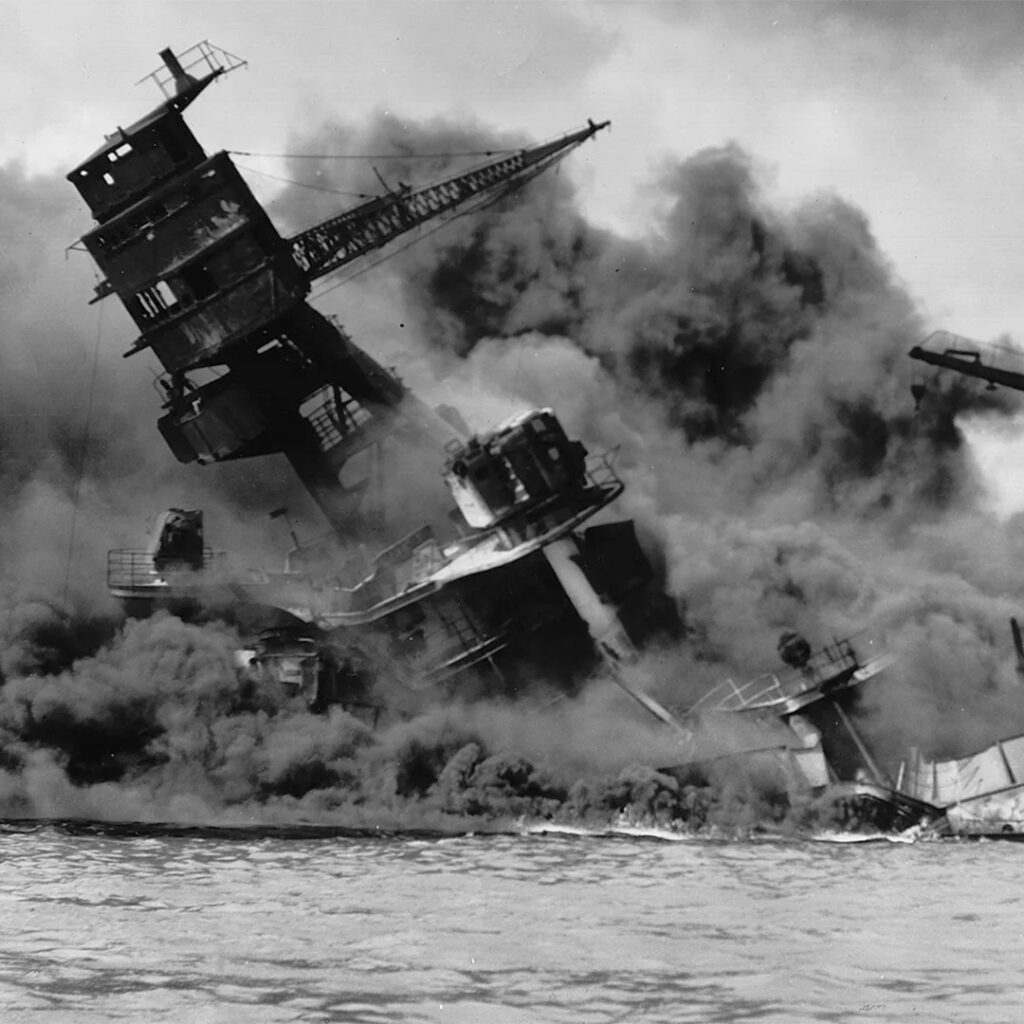
Pearl Harbor triggered many consequences. Canada declared war on Japan the next day, and began policies that led to the mass incarceration of Japanese Canadians.
Tak Toyota, National Archives of Canada
Japanese Canadians being forcibly removed from their homes, 1942. Families were separated, many of them weeks before their American counterparts.
Dormitory at Hastings Park, Vancouver, May 1942. Many Japanese Canadian men were first confined here before being sent to labor camps and interior incarceration sites.
A Japanese Canadian mother and children during forced removal in British Columbia, 1942. Many husbands had already been separated and sent away.
S-20 Japanese Language School students in West Vancouver, c1945. Few Japanese Canadians were allowed to serve Canada while their families remained displaced.
Citizens, And What Little That Meant
Nearly 80 percent of the 29,000 people of Japanese ancestry living in British Columbia were Canadian citizens, not foreign nationals. Citizenship did not protect them.
Families were systematically broken apart. Husbands were separated from wives. Fathers from their own families. In some cases, mothers from her children. Thousands were deported to Japan — including Canadian-born citizens who had never lived there.
Unlike in the United States, Japanese Canadians were not allowed to prove their loyalty through military service. With rare exceptions of roughly 200 men permitted to serve as interpreters in intelligence units, most were barred entirely. Some who volunteered were discharged, only to later discover they were still prohibited from returning home or reclaiming their rights.
Seven Years of Exile
In the United States, mass incarceration officially lasted from 1942 to 1945. In Canada, exclusion and detention stretched from 1942 to 1949 — more than double the duration.
Homes, fishing boats, businesses, and personal property were seized and sold by the government. Entire communities were erased. When the war ended, many Japanese Canadians were still forbidden from returning to the coast where they had lived for generations.
Rebuilding was not just difficult. For many, it was impossible. In total, 27,000 people were detained without charge or trial, more than 90 percent of all people of Japanese ancestry in Canada at the time.
Leonard Juda Frank, courtesy Library and Archives Canada
Japanese Canadians made up half of the fishing industry, which many saw as a threat. All, nearly 1,000 of the Japanese Canadian fishing boats were confiscated and sold.
Children eat meals without their fathers inside a former livestock building at Hastings Park, repurposed as a dining hall during incarceration.
Japanese road camp crew building the Yellowhead Highway. Men were often sent to labor camps to build roads and infrastructure, separated from their wives and families.
Courtesy Archives of Ontario
Angler Ontario POW Camp, c1942-1943. Northern winters were brutal and unforgiving. The barracks were uninsulated and never meant to protect those inside.
Glenn W. McPherson (right), oversaw the forced sale of Japanese Canadian homes, businesses, and land, despite promising the properties would be returned.
Prime Minister William Lyon Mackenzie King, 1942. Not widely viewed as racist during the war — his private diaries told a different story.
After Hiroshima, Canadian Prime Minister William Lyon Mackenzie King wrote that he was grateful the atomic bomb had not been used on “white races of Europe.”
Not everyone supported injustice. Grace MacInnis was one of the few white Canadian politicians to publicly oppose the incarceration of Japanese Canadians.
The Thinking Behind the Policy
The racial logic driving these policies was not hidden.
It was recorded.
Glenn Willoughby McPherson, a young bureaucrat who established and directed the Vancouver Office of the Custodian, once said that “the only way the Yellow Race can obtain their place in the sun is by winning the war.” He believed skin color determined loyalty. He also oversaw the forced sale of Japanese Canadian–owned properties.
The day Hiroshima was bombed on August 6, 1945, William Lyon Mackenzie King, the prime minister who approved mass incarceration, wrote in his diary that it was “fortunate” the atomic bomb had been used on Japan rather than on “the white races of Europe.” The camps, the deportations, the family separations — none of it was accidental.
Redress, A Month After America
Canada would eventually acknowledge the injustice. In September of 1988, survivors began receiving $21,000 in redress, along with a formal apology — $1,000 more than the $20,000 approved in the United States under the Civil Liberties Act a month earlier.
Citizenship was also restored to Japanese Canadians who had been stripped of it and deported.
But by then, many families had already been destroyed. Many never returned home. And many never lived to hear the apology at all.
The camps did not end when the war did.
For Japanese Canadians, the punishment lasted much longer.
A Japanese Canadian POW funeral, c1942. The red circles on POW uniforms were not symbols of Japan, but targets, meant to be used if prisoners tried to escape.
Courtesy Addie Kobayashi
Japanese Canadians board a train for deportation to Japan, 1946. Thousands were expelled from Canada after the war, many to a country they had never known.
CP Photo, Jack Long National Archives of Canada
Children attending a “loyalty” class at a Japanese Canadian incarceration camp in British Columbia, c. 1942. It didn’t change their situation one bit.
Courtesy Japanese Canadian Cultural Centre
Japanese American and Japanese Canadian leaders meeting together at the first National Japanese Canadian Citizens Association conference, September 1947.
John Flanders
Redress at last. Prime Minister Brian Mulroney and NAJC President Art Miki sign the Japanese Canadian Redress Agreement, September 1988.