It wasn’t just the men who were willing to Go for Broke.
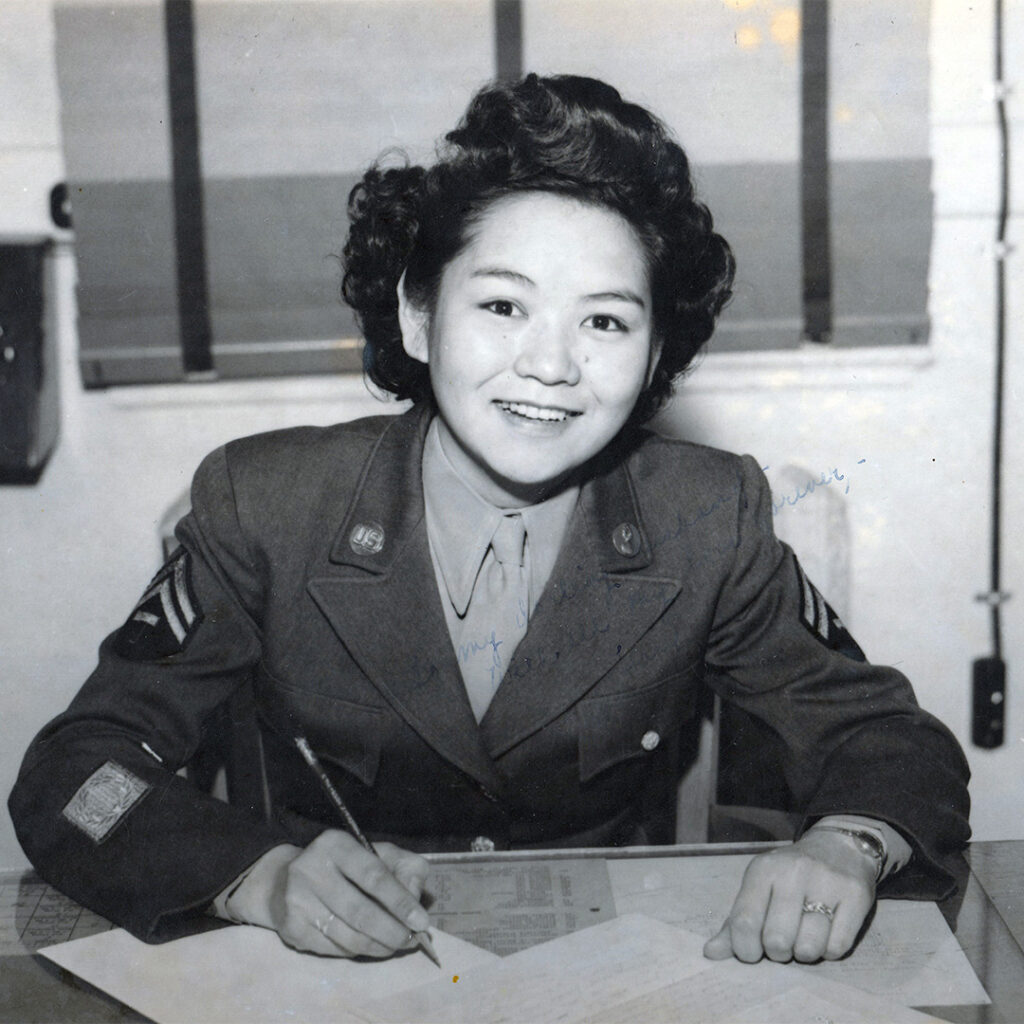
December 13, 1943: Iris Watanabe of the Amache concentration camp became the first Japanese American woman to join the Women’s Army Corps (WAC).
Long before Japanese American women had the chance to enlist, American women were fighting their own battle for participation.
In the early 1940s, feminists argued that women deserved the right to serve in uniform. Members of Congress resisted, claiming military service would “weaken” femininity or “disrupt” family life. But war shortages forced change.
On May 15, 1942, Congress created the Women’s Army Auxiliary Corps (WAAC) to fill desperately needed clerical and support roles. But by July 1, 1943, WAAC was absorbed into the Army and became the Women’s Army Corps (WAC).
But none of this applied to Japanese American women. They remained barred from service, classified as “enemy aliens” solely because of ancestry.
Women were placed in the Women’s Army “Auxiliary” Corps — separate, unequal, and undervalued. They didn’t accept it. And they forced the issue and became the WAC.
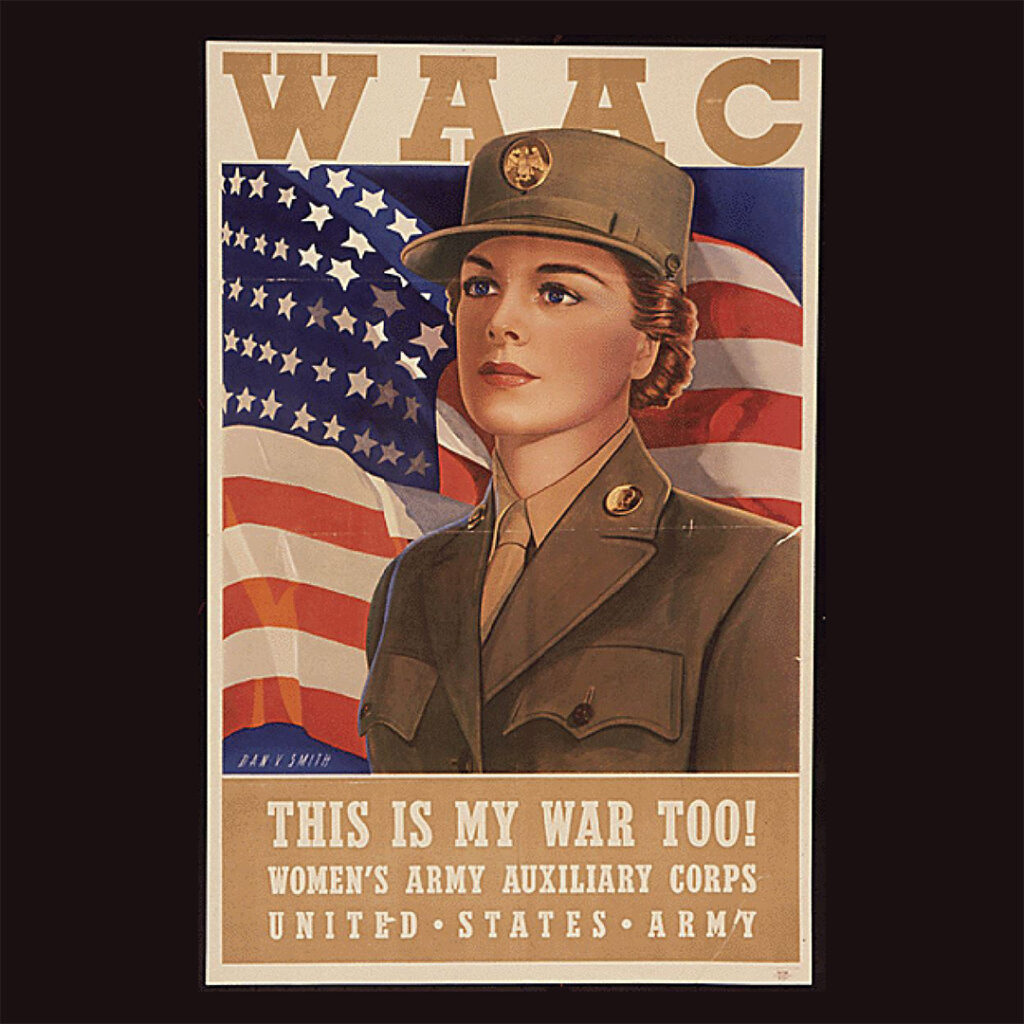
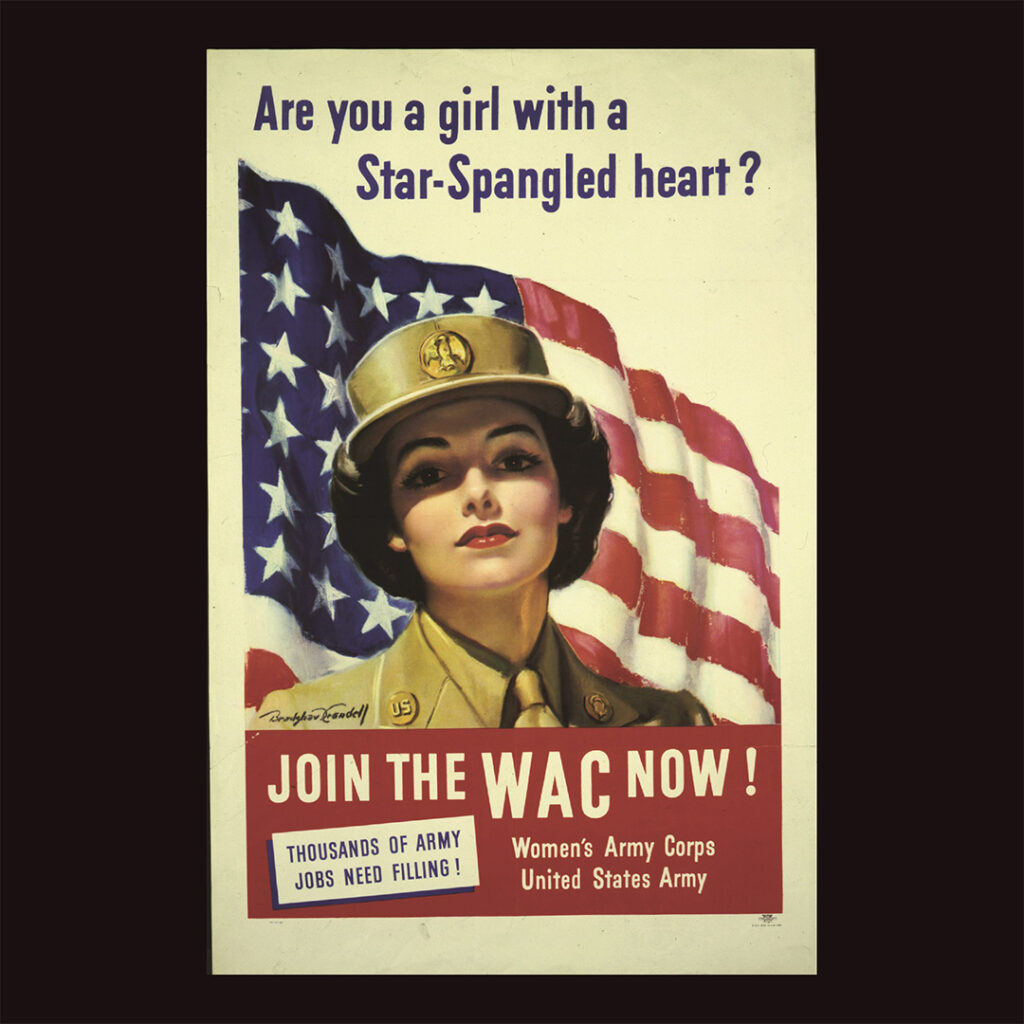
A recruitment poster for Women’s Army Auxiliary Corps. “This is my war too.” Many women couldn’t wait for permission. They forced the Army to take them seriously.
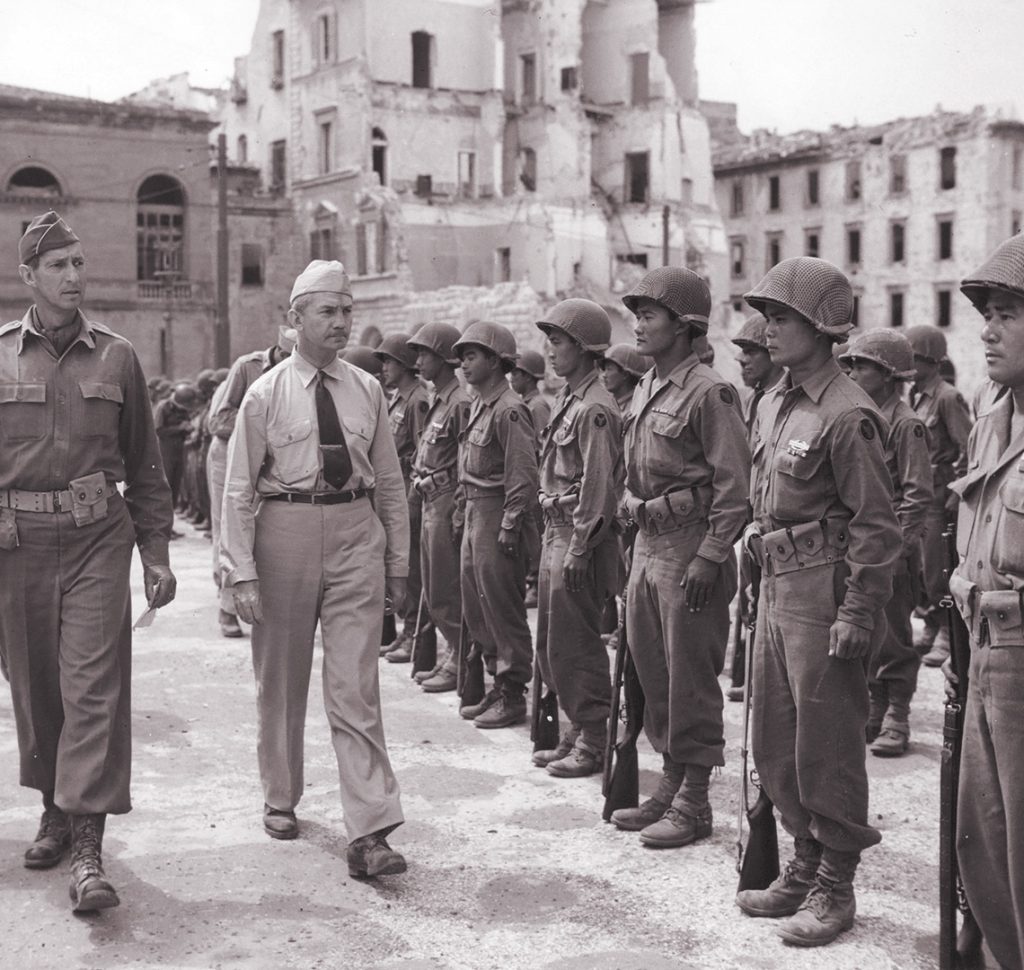
Lieutenant General Mark Clark and C.G. Fifth Army and Secretary of the Navy James Forrestal inspect troops from the 100th Infantry Battalion, Leghorn, Italy
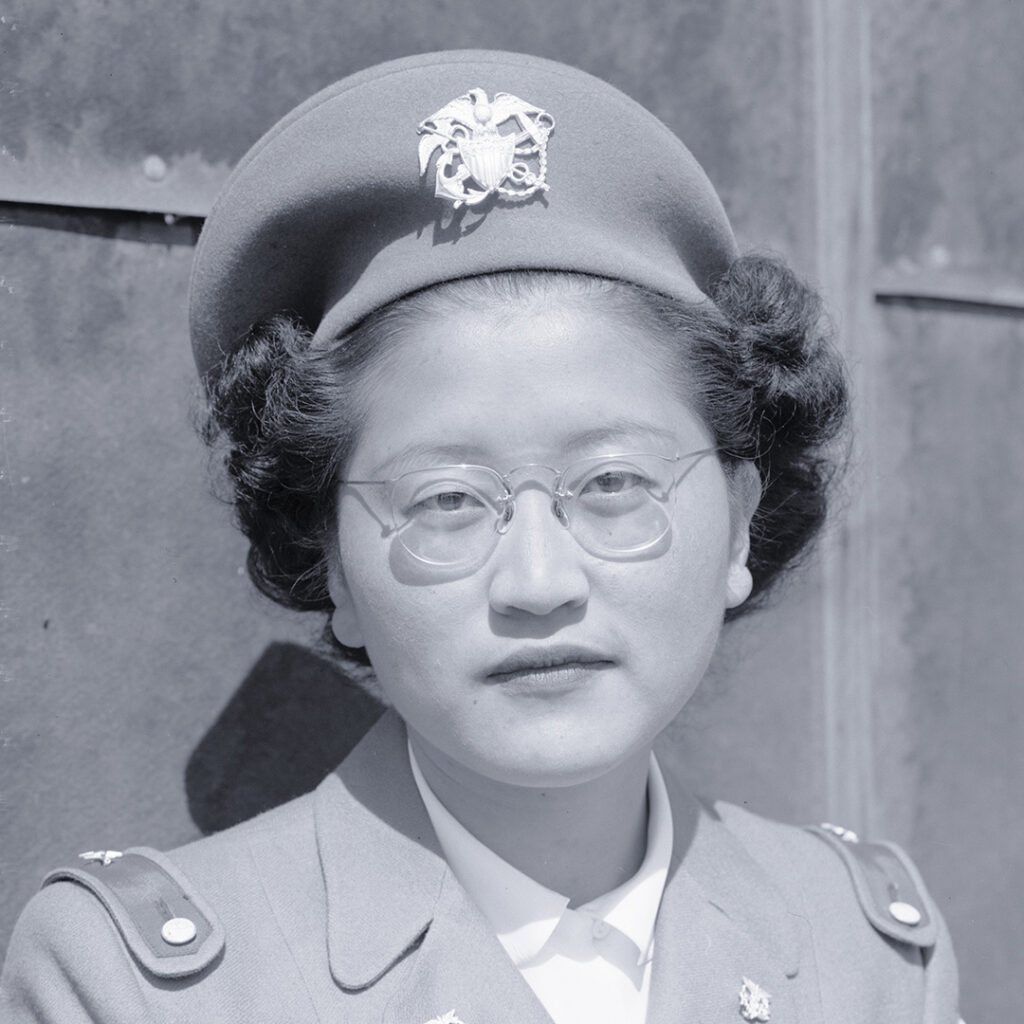
Even after Japanese American women were allowed to serve, many nursing schools still refused Asian students. Cadet Nurse Kay Fukuda photographed by Ansel Adams, 1943.
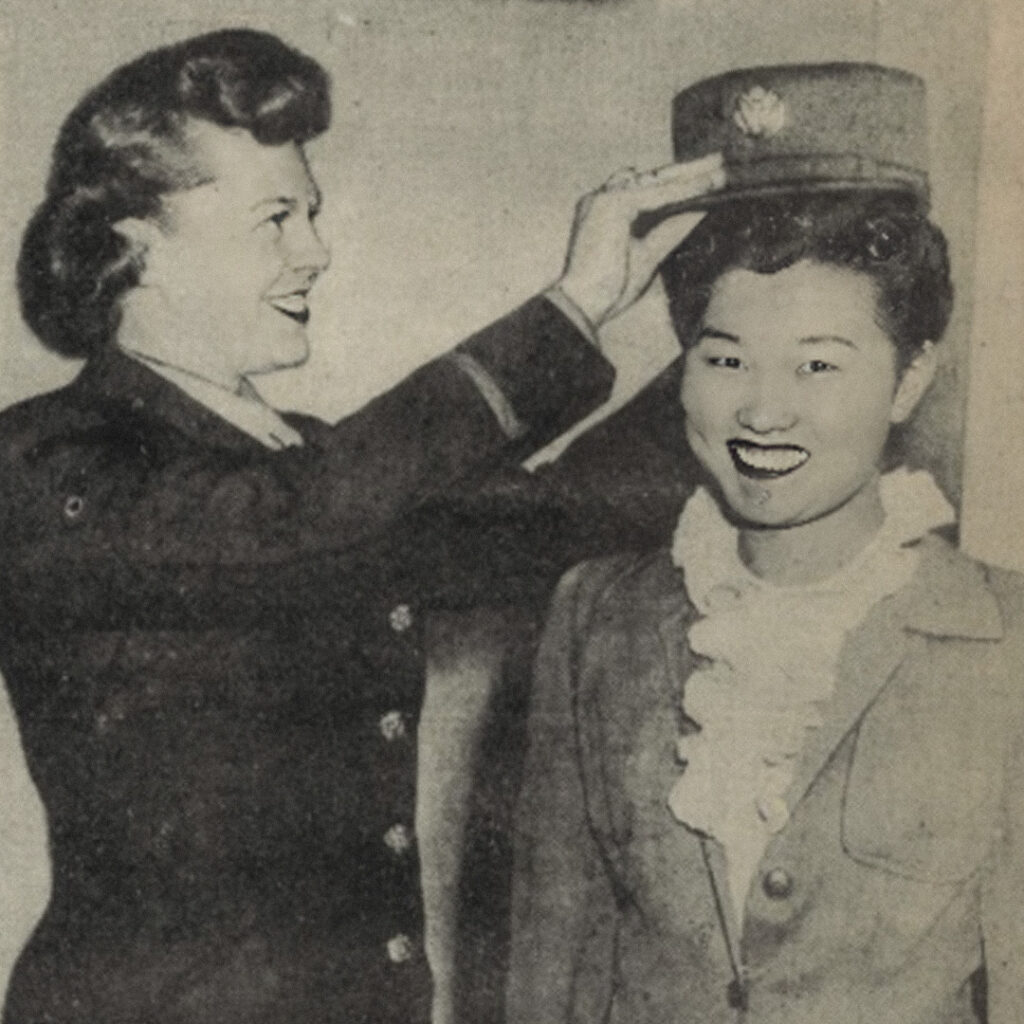
Once released from Amache where she was incarcerated as an “enemy alien,” Takako Kusunoki trained alongside white WACs and was assigned to type secret Army documents, ironically.
Translating the Success of 100th, 442nd, MIS
By 1943, the U.S. military could no longer ignore the contribution of Nisei soldiers.
Against this backdrop, the Army quietly opened two doors. Army Nurse Corps (ANC) began accepting Nisei women in February 1943, then Women’s Army Corps (WAC) in November 1943.
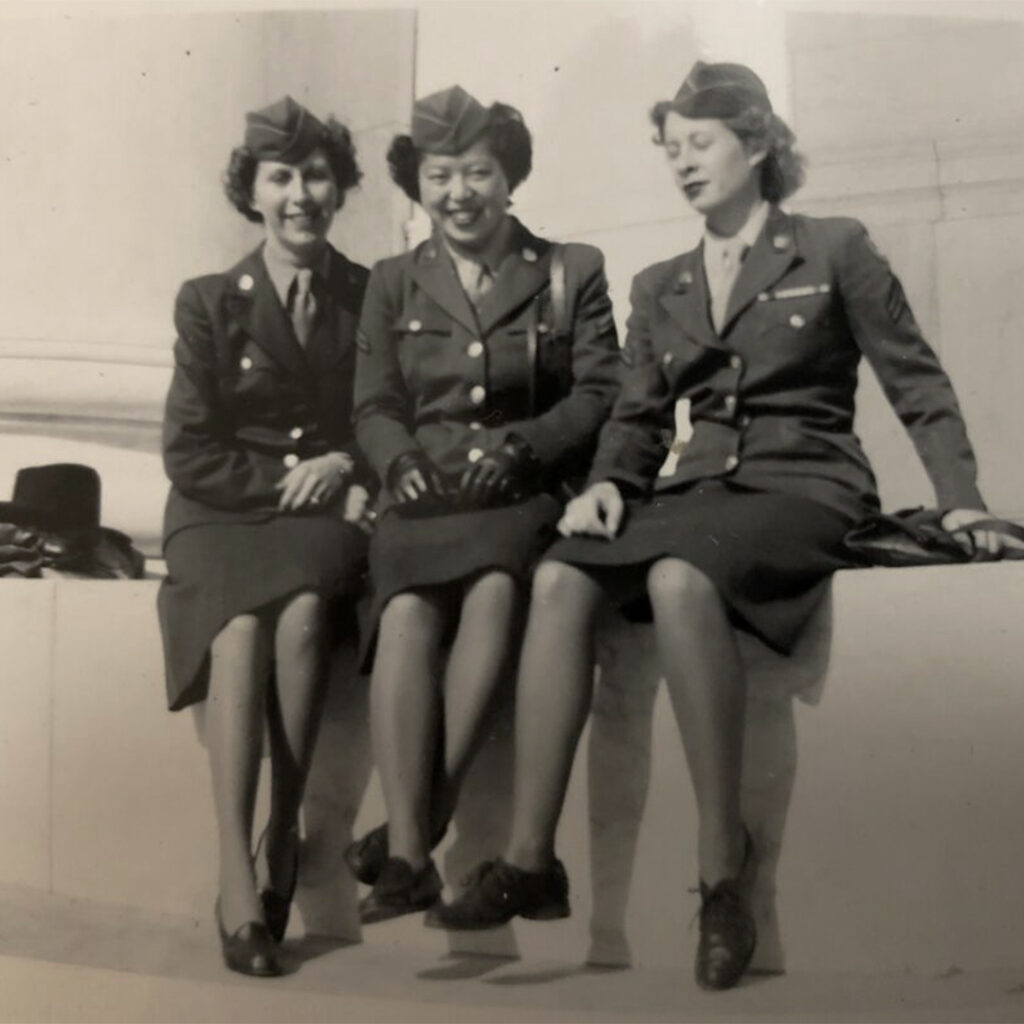
Unlike their brothers, Nisei women were not placed in segregated units. Their numbers were smaller, and their roles were specialized. They served alongside women of all backgrounds: clerks, analysts, drivers, switchboard operators, communications specialists, and linguists. Their contributions were essential.
The First Step of Japanese American Womankind
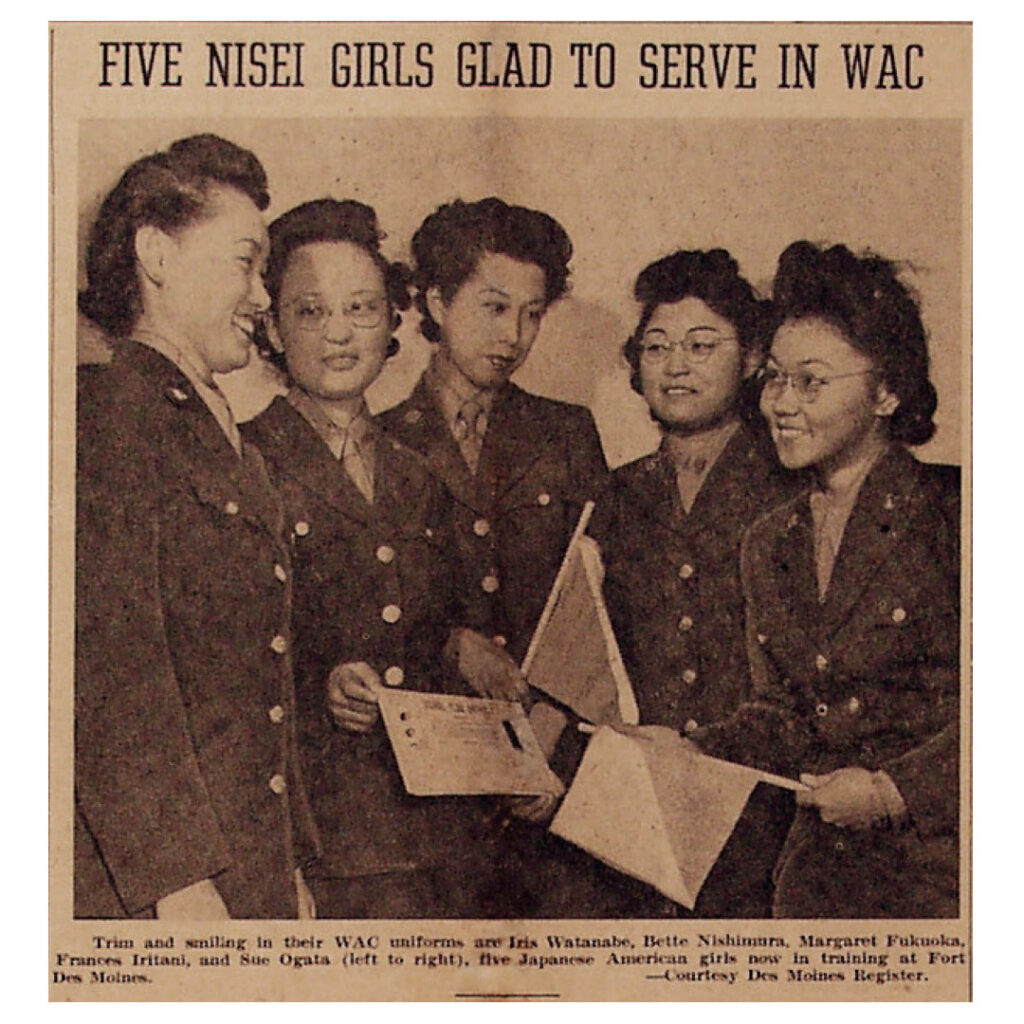
Iris Watanabe became the first Japanese American woman from a mainland incarceration camp to join the WAC. She was one of five Nisei women who began basic training at Fort Des Moines, Iowa, the same site where the first African American WACs trained.
Her words were simple and powerful: “I am going to get out there and do my darndest to show them I am a good soldier.”
She wanted to prove not only her own loyalty, but the loyalty of Japanese American women whose stories had remained in the shadows. Her enlistment helped open the path for future Nisei women, many of whom later supported the war effort at the MIS Language School, where their translation and clerical skills contributed to Allied success in the Pacific.
Recruited from Amache, Iris Watanabe became the first Japanese American woman from a mainland incarceration camp to enlist, breaking barriers for Nisei women.
Iris Watanabe, Bette Nishimura, Margaret Fukuoka, Frances Iritani, and Sue Ogata trained to serve their country, even as Japanese American incarceration continued nationwide.
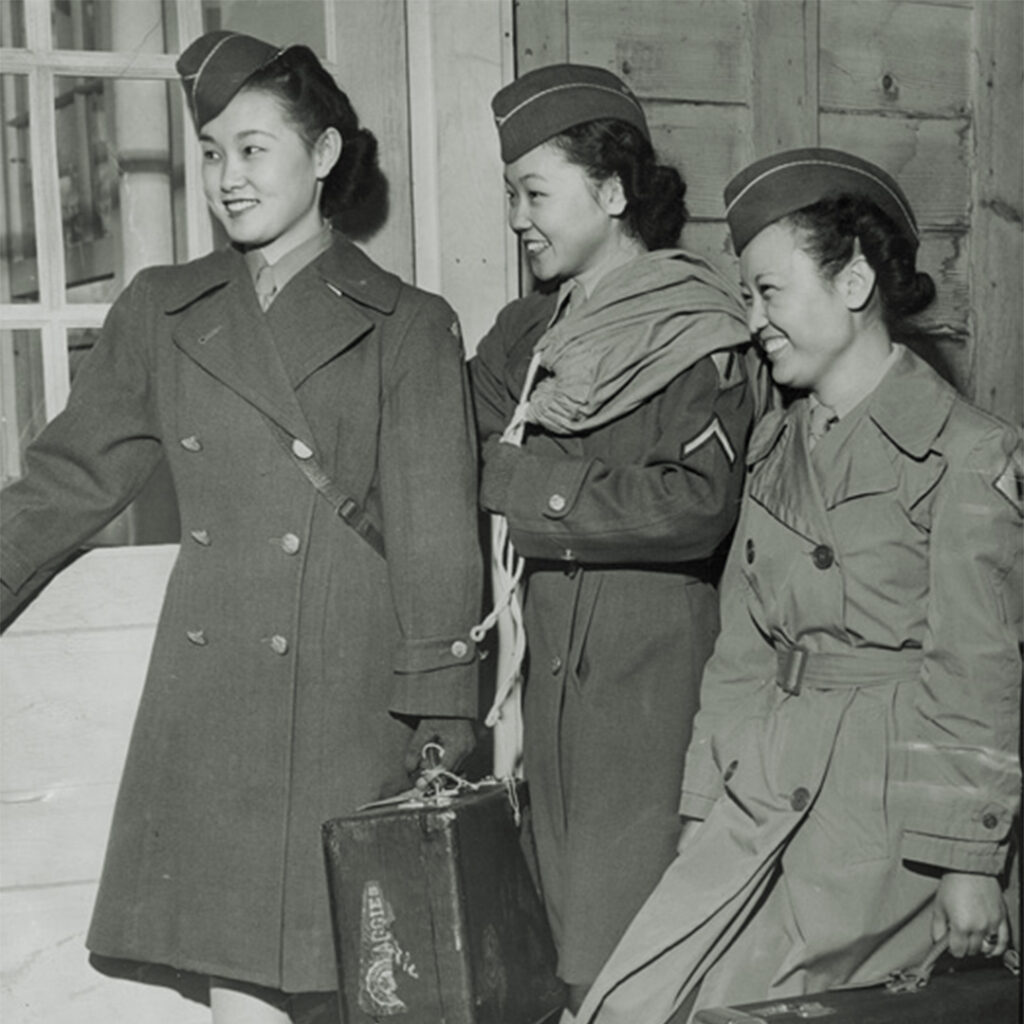
Women’s Army Corps Privates Iris Watanabe, Sue Ogata, and Bette Nishimura at the Military Intelligence Service Language School, Fort Snelling, Minnesota, 1944.
Many Nisei women did have Star-Spangled heart, even as their families lived behind barbed wire. They volunteered to serve a nation they still believed in.
While her brothers served in the 442nd Regimental Combat Team and the Military Intelligence Service, Terry Toyome Nakanishi refused to remain on the sidelines.
Many Reasons to Serve
Nisei women entered the military for a mix of motivations shaped by family, culture, and circumstance.
Some wanted to prove their loyalty. Some wanted the war to end sooner. Many had brothers already serving in Europe or in the MIS. And others simply wanted to live a life beyond barbed wire.
Grace Harada, who joined the WAC after her brother enlisted in the 442nd, described her decision clearly: “I just couldn’t stay home and do housework. I wasn’t accomplishing anything. There is a war going on and he can’t do it alone.”
Her story was not unique. Many families opposed their daughters serving. But many eventually agreed because they understood what was at stake.
A History Still Being Recovered
For decades, the stories of Nisei women in the U.S. military remained nearly invisible. Only recently have scholars and community organizations begun to uncover the depth of their service.
Their struggles were distinct. They fought for their rights not only as Japanese Americans, but also as women in a military still resistant to them. Their opportunities were fewer. But their service was just as significant, and often complicated.
They volunteered from behind barbed wire. They served a country that incarcerated them. And they expanded the idea of who could serve, and why.
Iris Watanabe and the Japanese American women of the WAC were pioneers. They redefined what was possible for Japanese American women, and for American women in uniform.
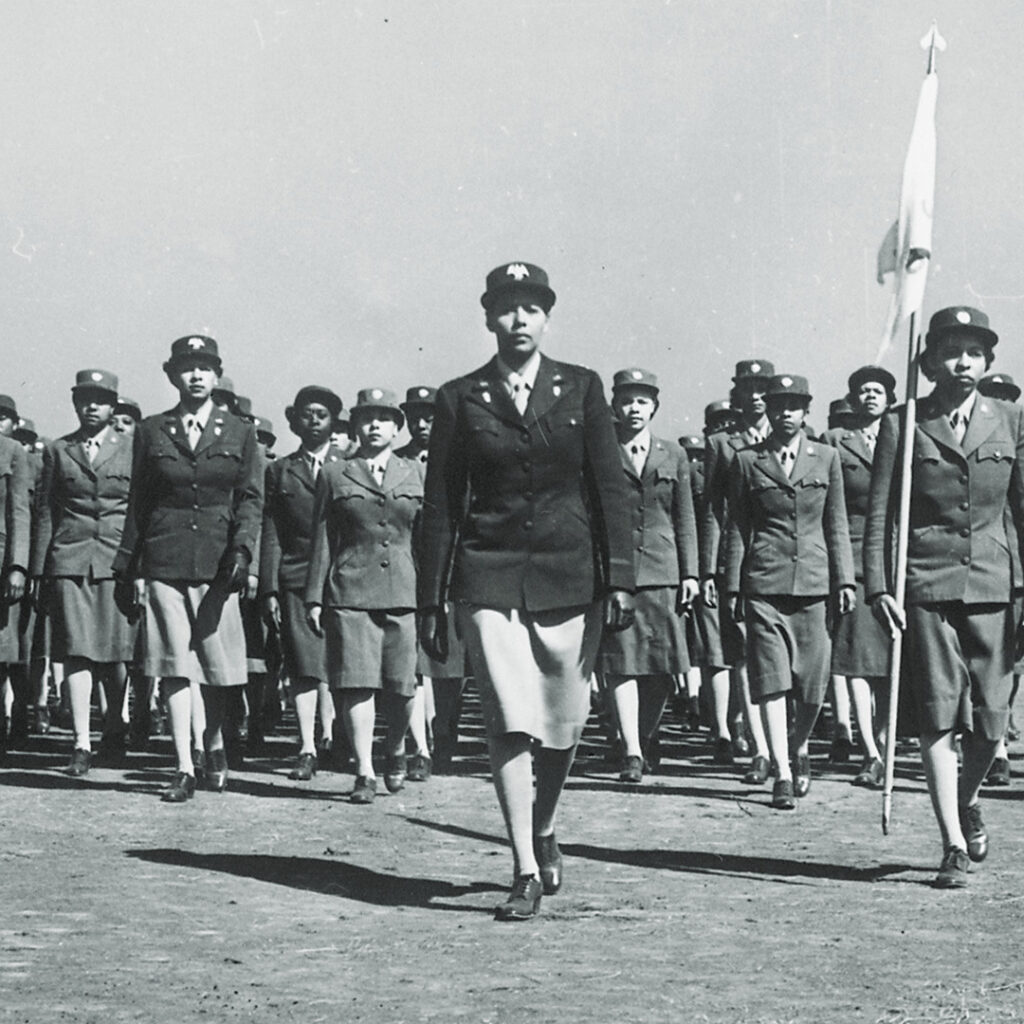
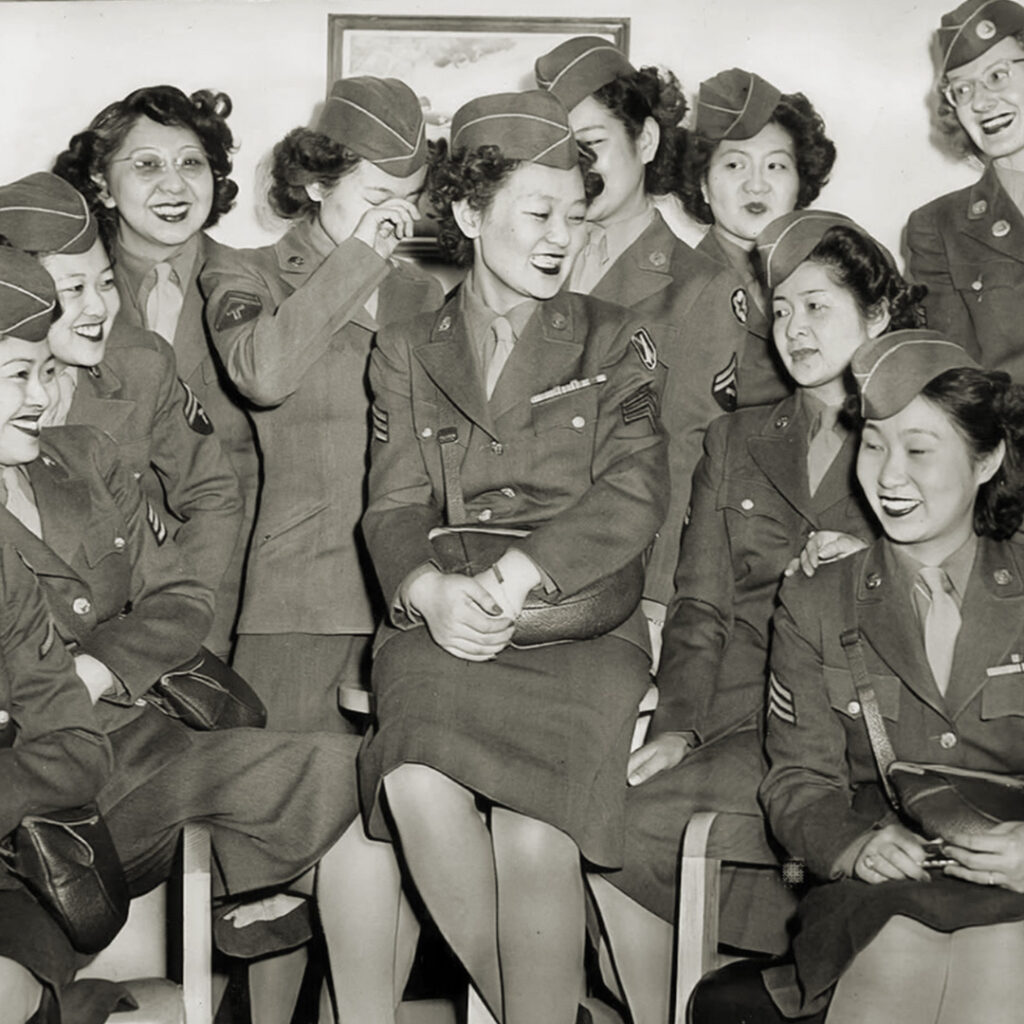
Members of Women's Army Corps at Hamilton Army Airfield, January 23, 1946. By the war’s end, Japanese American women were no longer exceptions.