In 1906, they called it “saving white children.” Nowadays, we call it racism.
October 11, 1906: San Francisco Board of Education passed a resolution to force Japanese children into a segregated “Oriental School.”
Just a few months after the devastating 1906 earthquake reduced much of San Francisco to rubble, the city’s leaders began rebuilding. Not just buildings, but racial lines were redrawn, too.
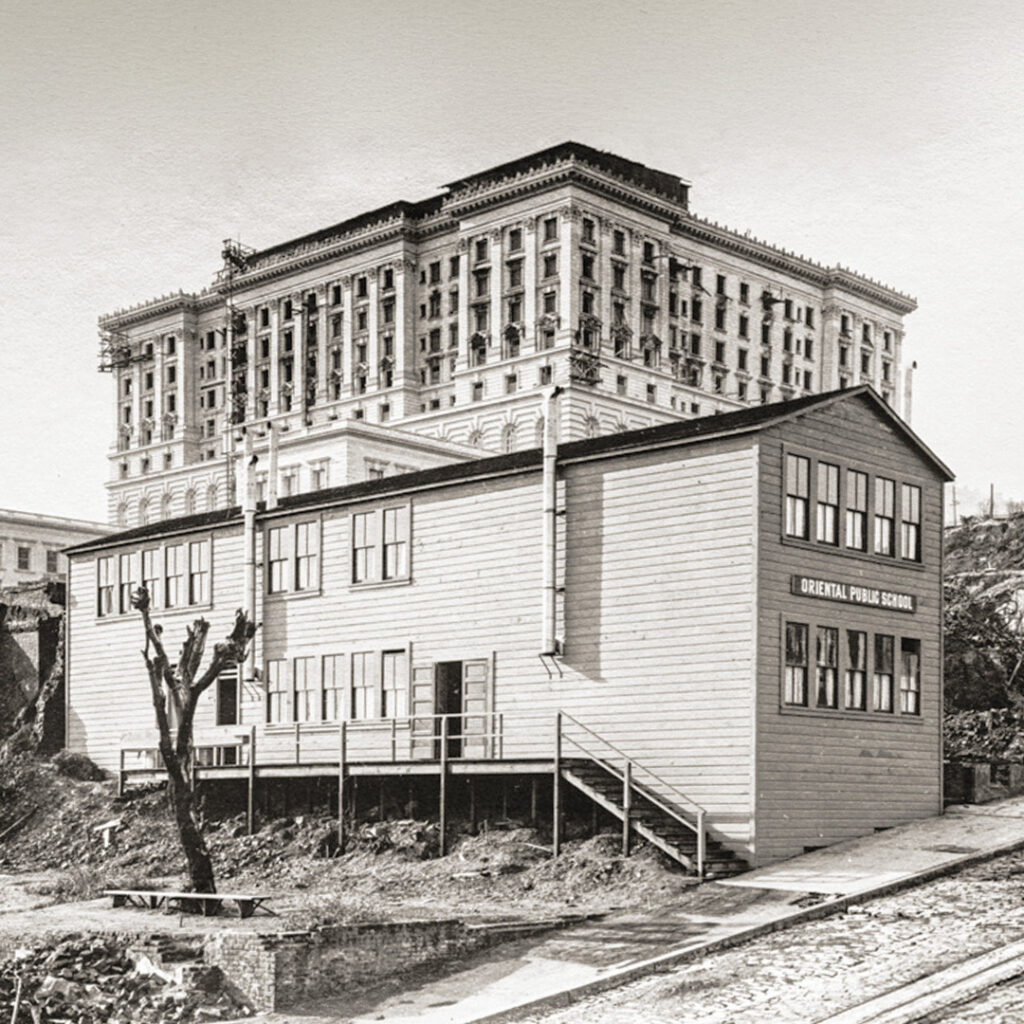
On October 11, 1906, the San Francisco Board of Education passed a resolution forcing 93 Japanese children who had been attending public schools to transfer to a segregated campus. They renamed existing segregated school called “Chinese Primary School” to “Oriental Public School,” so that they can add Japanese and Korean children to the pool of Chinese students.
The board claimed it was necessary “to save white children from being affected by association with pupils of the Mongolian race.” Chinese children were already segregated. This order was clearly aimed at the Japanese and Koreans.
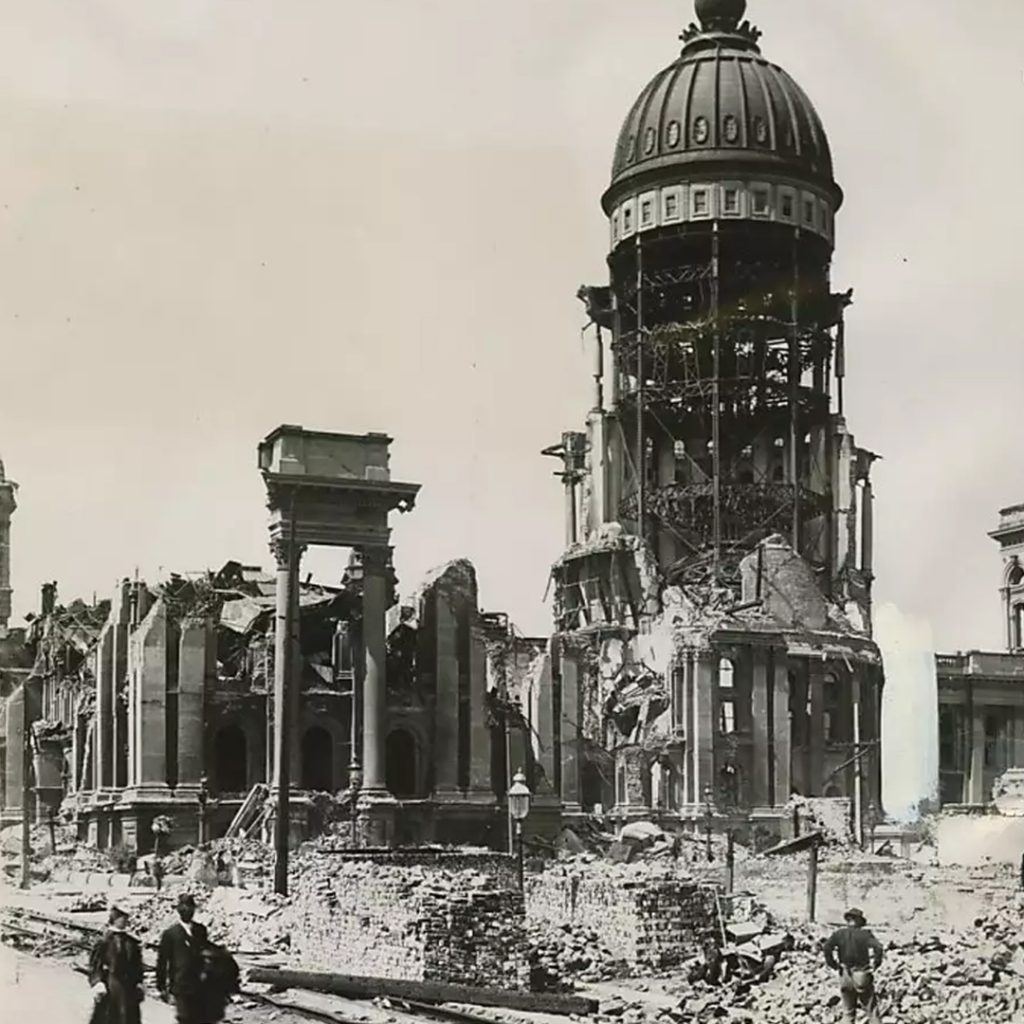
San Francisco City Hall in ruins after the 1906 earthquake and fires. While the city crumbled physically, white officials used the chaos to rebuild social boundaries.
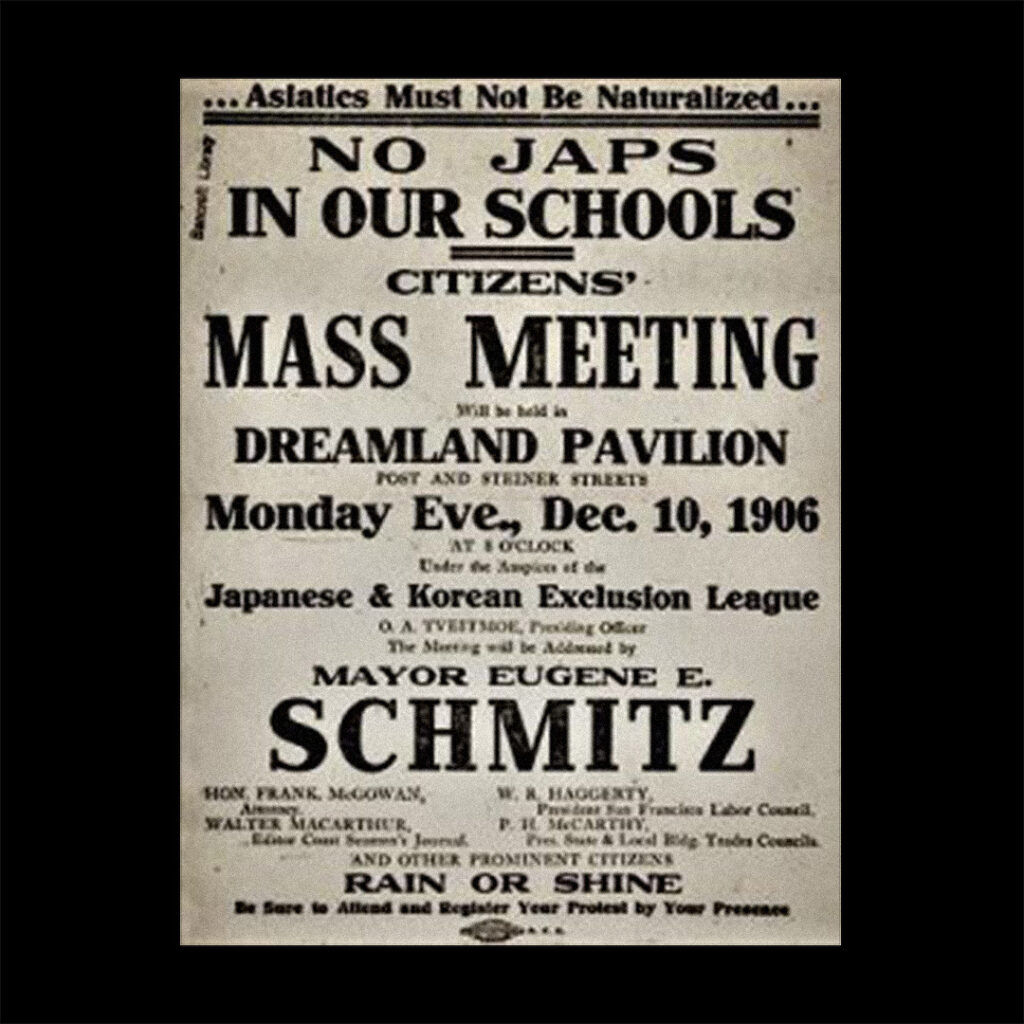
Racism in bold type: A 1906 poster from the Japanese & Korean Exclusion League. It was was backed by city officials including Mayor Eugene Schmitz to fan anti-Asian hatred.
The city simply renamed the existing “Chinese Primary School” to “Oriental Public School,” lumping Japanese and Korean children in with Chinese students.
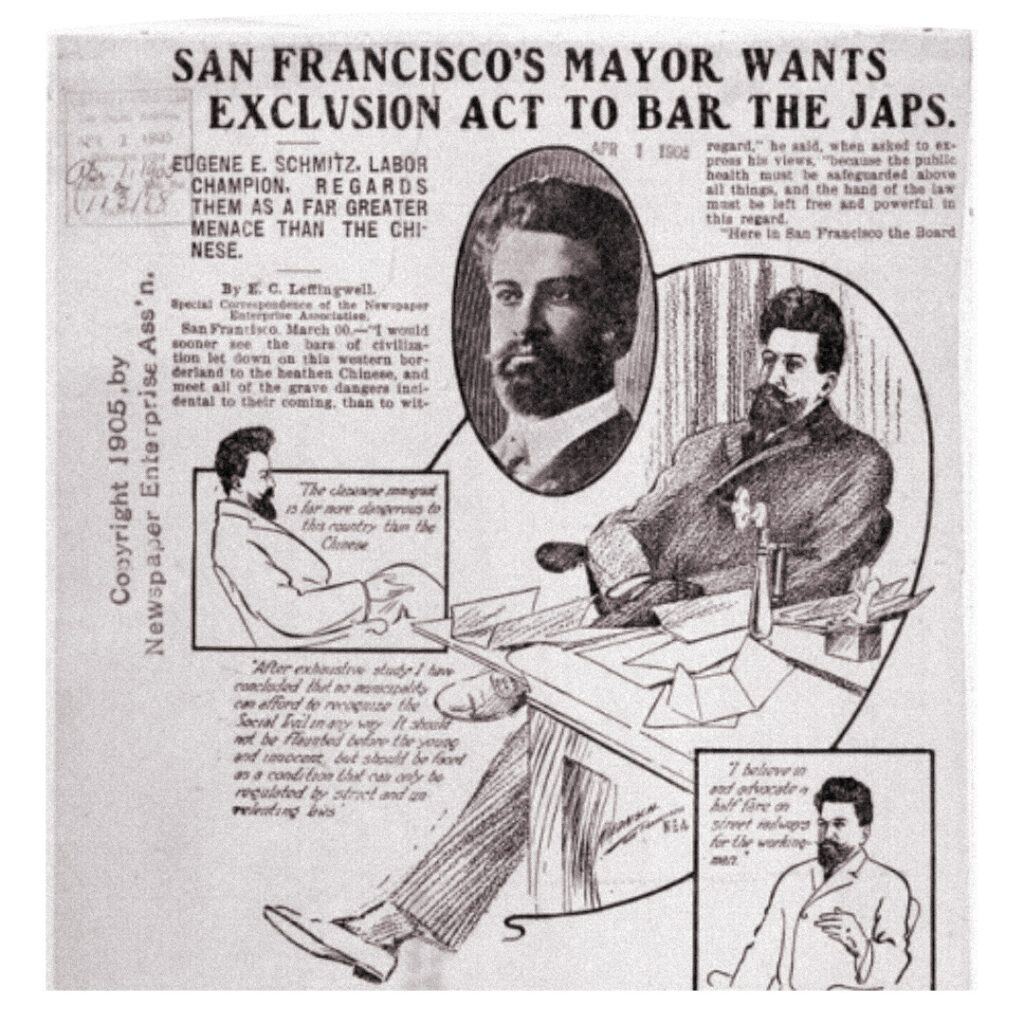
A year before the earthquake and the school segregation order, the city’s mayor was already pushing national lawmakers to halt Japanese immigration altogether.
Opposition to Segregation
The vote didn’t happen in a vacuum. It came under pressure from the Asiatic Exclusion League, a group formed in California with one mission: to stop Japanese immigration.
This wasn’t just about classrooms. It was about exclusion of immigrants, of citizens, of children who happened to be Japanese.
Parents protested. So did Japanese American community leaders. When those efforts failed, they turned to the Japanese press and government for help.
What happened next turned a local act of racism into an international incident.
An International Embarrassment
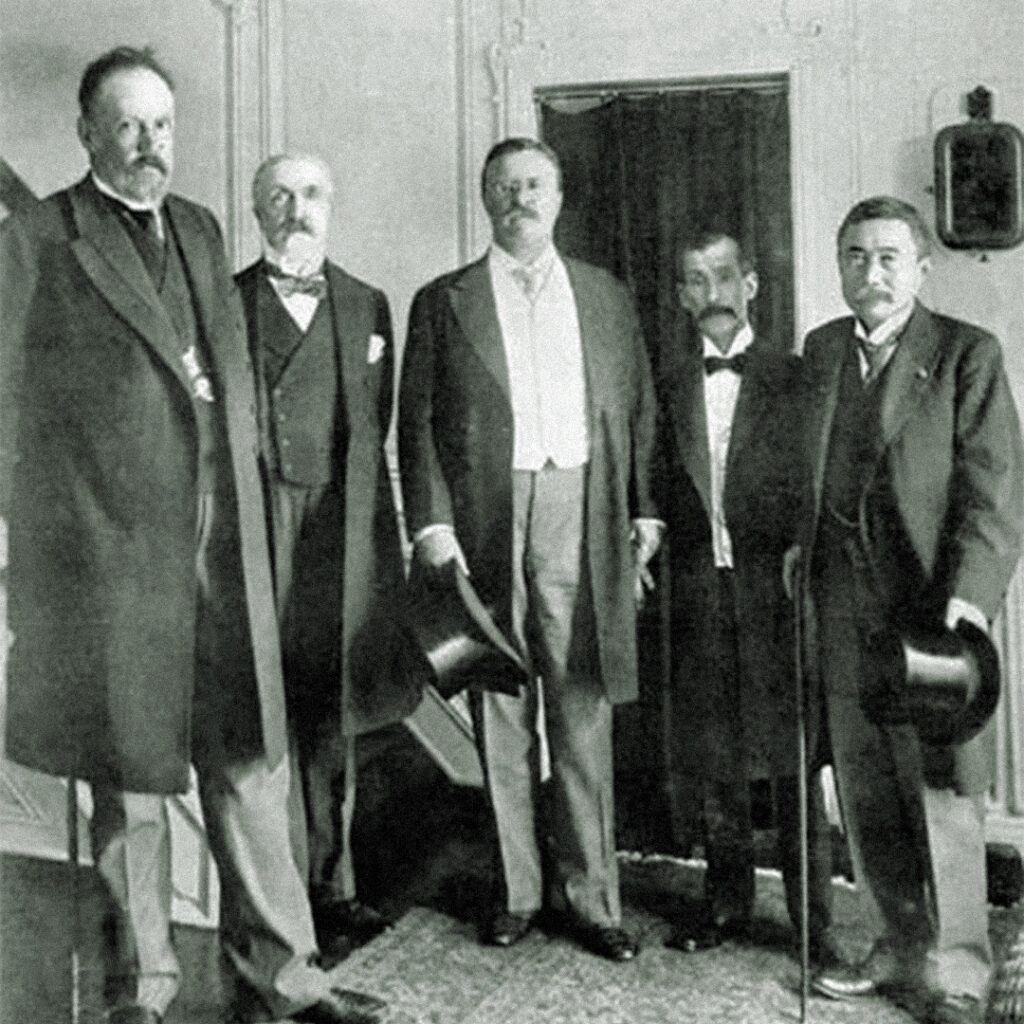
Japan, newly empowered by its victory in the Russo-Japanese War, lodged a formal protest. This posed a serious diplomatic problem for President Theodore Roosevelt, who was trying to build a strong relationship with Japan.
He sent Secretary of Commerce and Labor Victor H. Metcalf to investigate. The report was clear: aside from a few overage students, there was no educational justification for segregation.
On October 26, 1906, Roosevelt publicly denounced the school board’s decision. He later addressed the issue in his State of the Union speech, calling the move a “wicked absurdity” and warning of a growing “unworthy feeling” against Japanese people in America.
“We have as much to learn from Japan as Japan has to learn from us… No nation is fit to teach unless it is also willing to learn.”
— Theodore Roosevelt, December 3, 1906
For Roosevelt, the first U.S. president to win the Nobel Peace Prize for his role in ending the Russo-Japanese War, the Japanese school segregation was embarrassing.
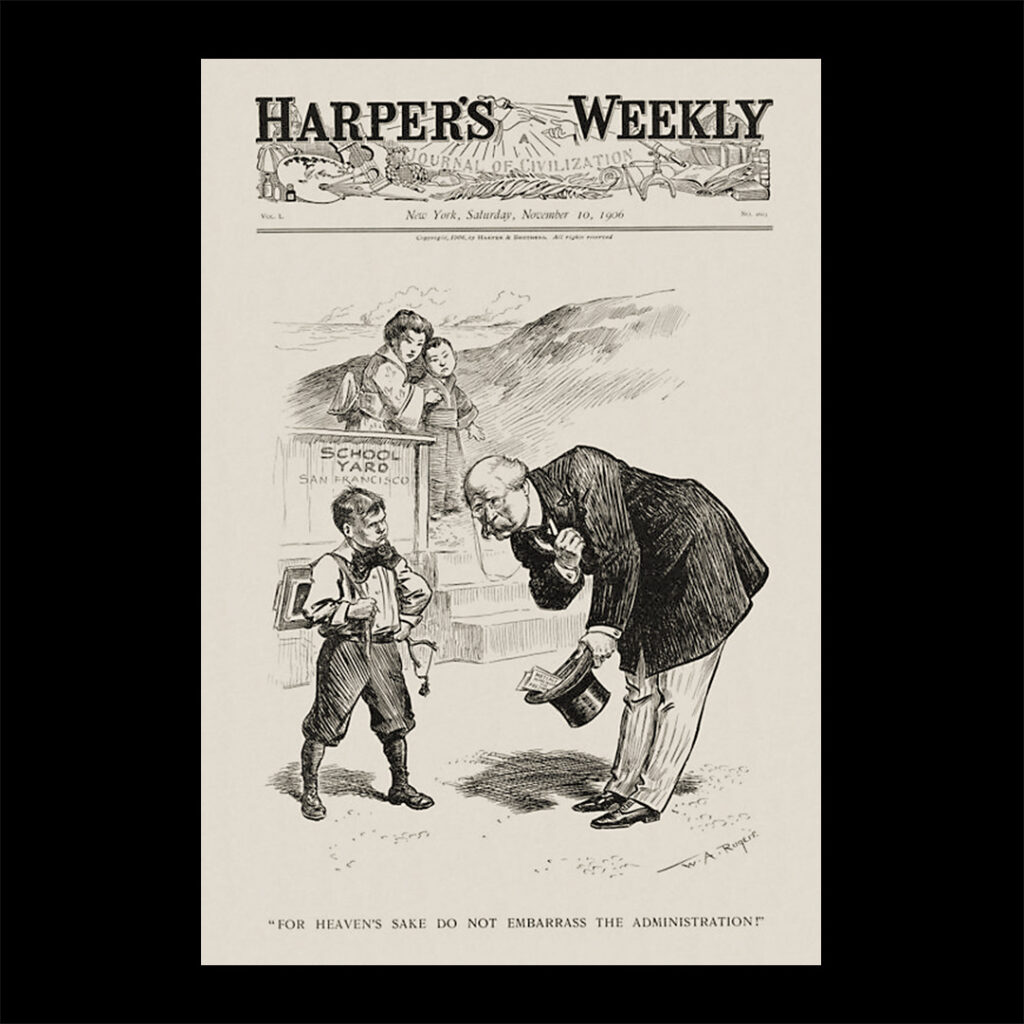
A 1906 cartoon shows a federal official pleading with a defiant child labeled “San Francisco,” with Japanese student with mother being excluded in the background.
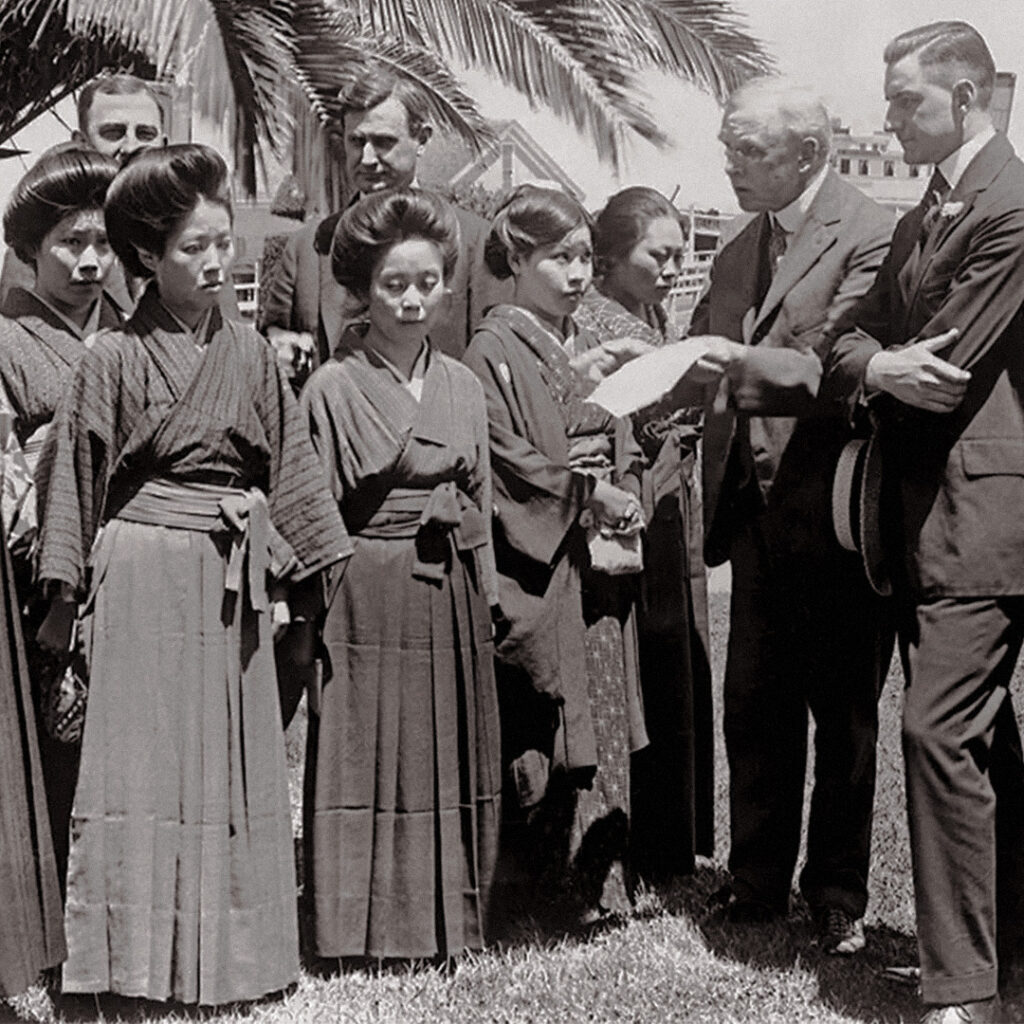
An unexpected loophole of the Gentlemen’s Agreement of 1907: Picture Brides. Japanese women were allowed to immigrate to the U.S. to join husbands they decided to marry.
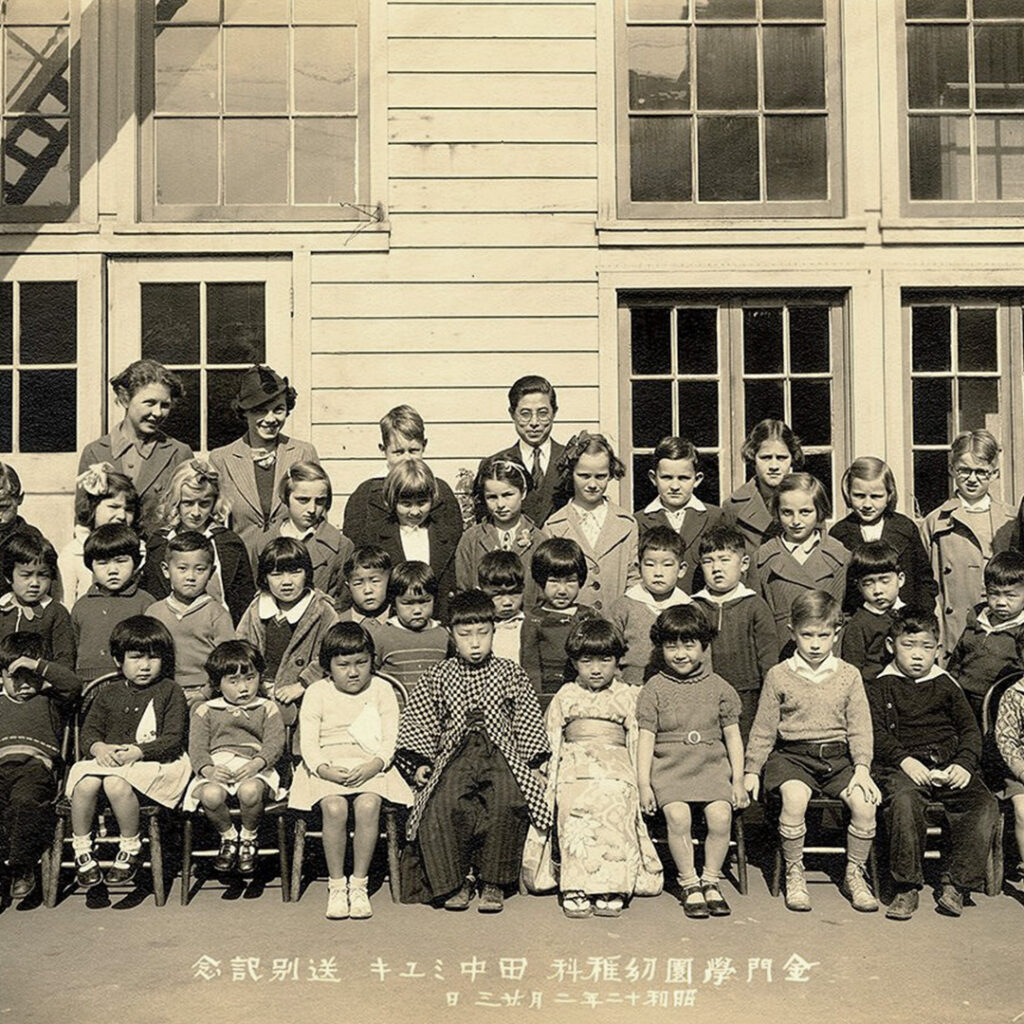
Founded in 1911, Kinmon Gakuen began as a response to exclusion, created by Japanese immigrants whose children were denied access to local schools.
The “Gentlemen’s Agreement”
After intense negotiations, a compromise was reached. At a January 3, 1907 meeting between Roosevelt and San Francisco representatives, the city agreed to rescind the segregation order.
In return, Roosevelt promised to curb immigration from Japan. That compromise became known as the Gentlemen’s Agreement of 1907, an unofficial understanding that allowed the U.S. to restrict Japanese labor immigration without enacting an explicit law.
In essence, Japanese children could attend public schools again, but fewer would be allowed to arrive in the first place. For the Asiatic Exclusion League, this was better for their bigger picture — fewer Asians in America.
Thank you for your continued research. It has been a life-long goal for my me to learn about the history of immigration from Asia to the United States. The good and the bad. Truth is rarely comfortable, but growth in understanding only comes with additional knowledge helping see the more complete history. Keep up the great work.
Thank you for your continued research. It has been a life-long goal for my me to learn about the history of immigration from Asia to the United States. The good and the bad. Truth is rarely comfortable, but growth in understanding only comes with additional knowledge helping see the more complete history. Keep up the great work.
Thank you for your kind comment. We will keep digging.