May 2, 1945: The 522nd Field Artillery Battalion, a unit of about 650 Japanese American soldiers, helped halt the Dachau Death March.
May 2, 1945: The 522nd Field Artillery Battalion halts Dachau Death March
Back home, their families were imprisoned behind barbed wire. In Germany, they came face-to-face with the unimaginable: the Holocaust.
The 522nd, made up of Americans of Japanese ancestry, played a little-known but extraordinary role in the final days of World War II. Racing across Germany, they helped liberate victims of one of history’s darkest chapters.
Activated in February 1943 at Camp Shelby, Mississippi, the 522nd had fought alongside the 442nd Regimental Combat Team in Italy and France. These Nisei soldiers, many of whom had strong science and engineering backgrounds, built a reputation for speed, accuracy, and precision in battle, contributing to victories from the Anzio campaign to the rescue of the “Lost Battalion” in the Vosges Mountains.
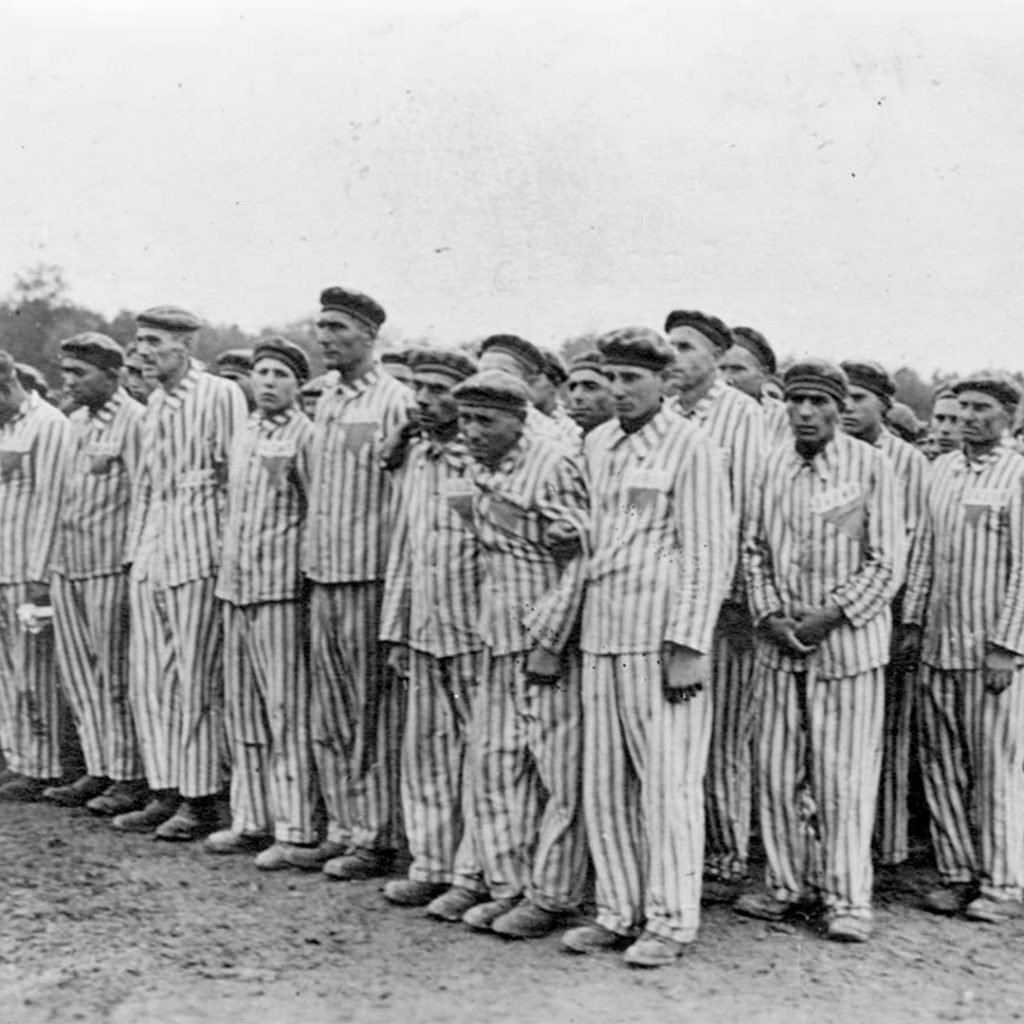
Prisoners at appel (the daily lineup), Dachau, Germany, 1938
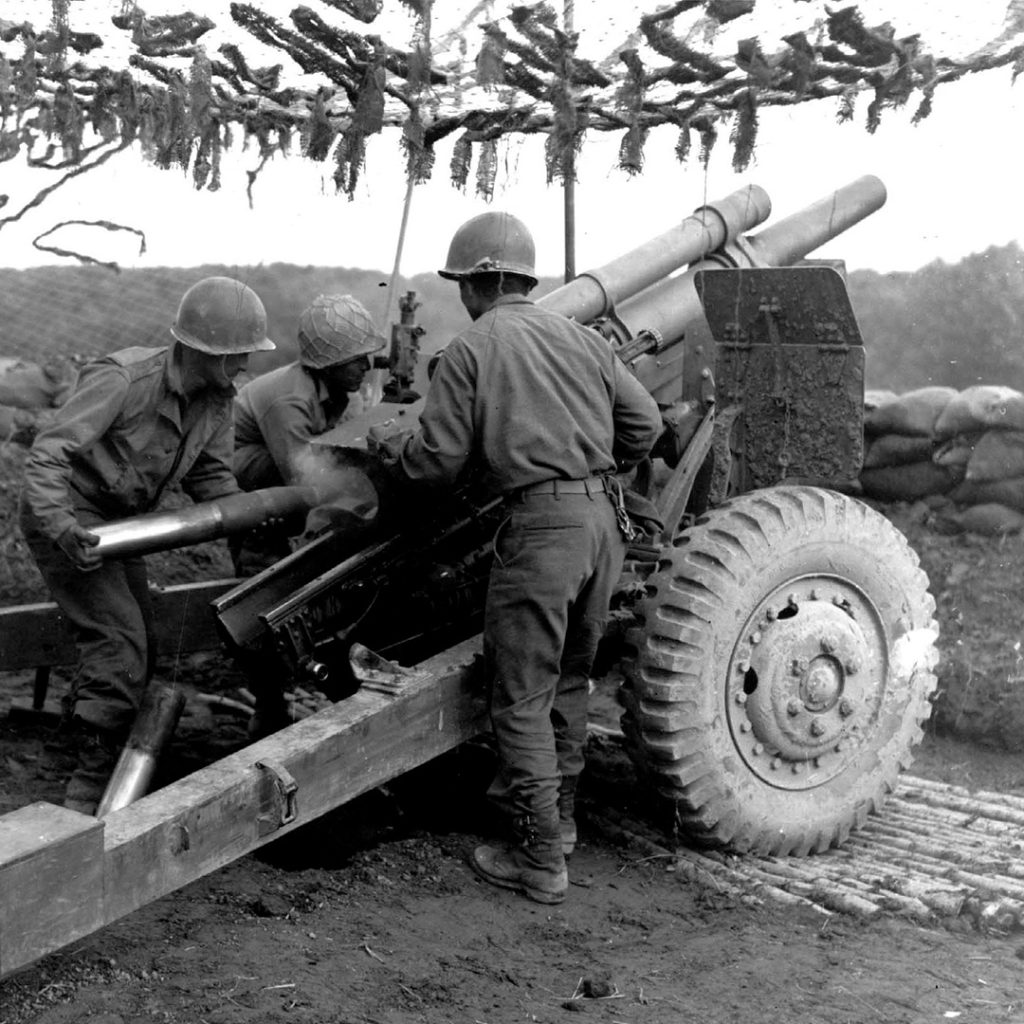
522nd Field Artillery Battalion throwing 105mm shells at Germans in Bruyéres Sector, France
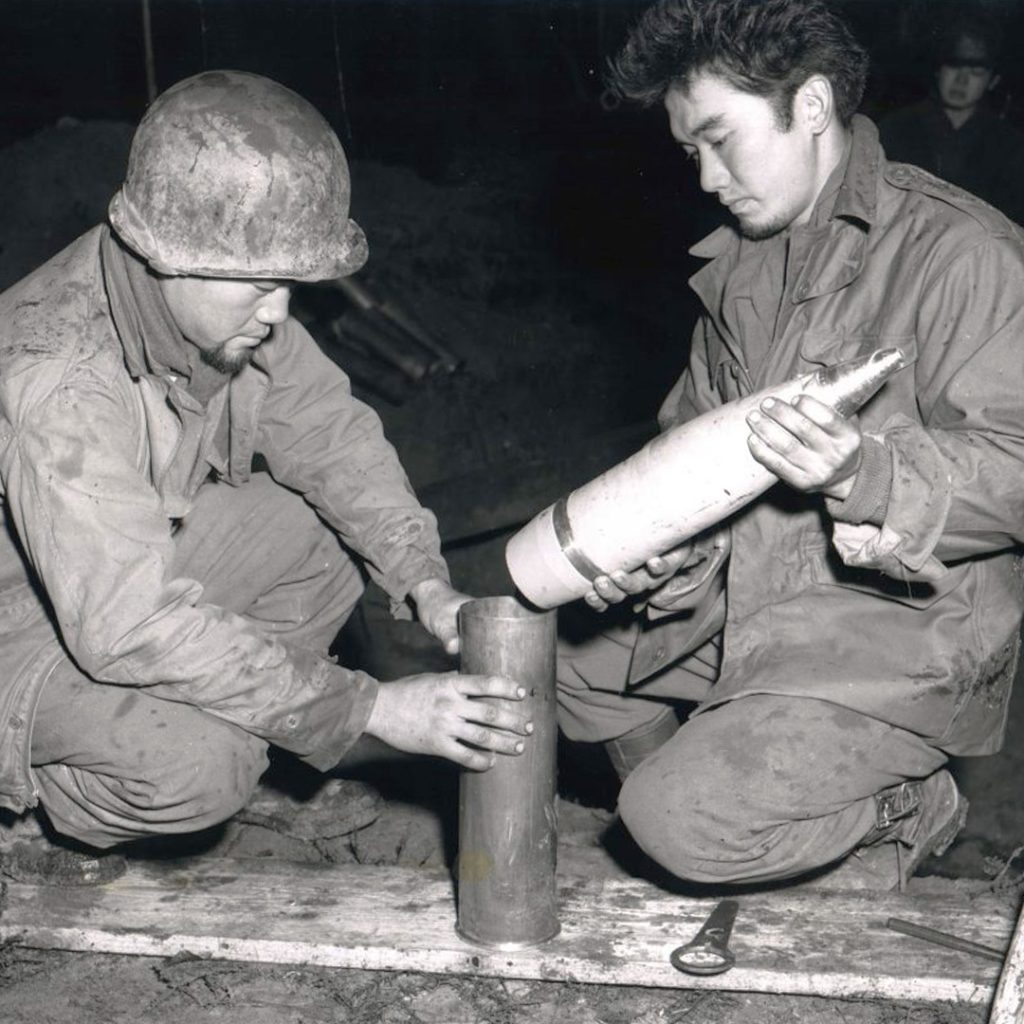
Two Nisei soldiers loading 105mm artillery shells for firing, Bruyéres, France, October 9, 1944, credit National Archives
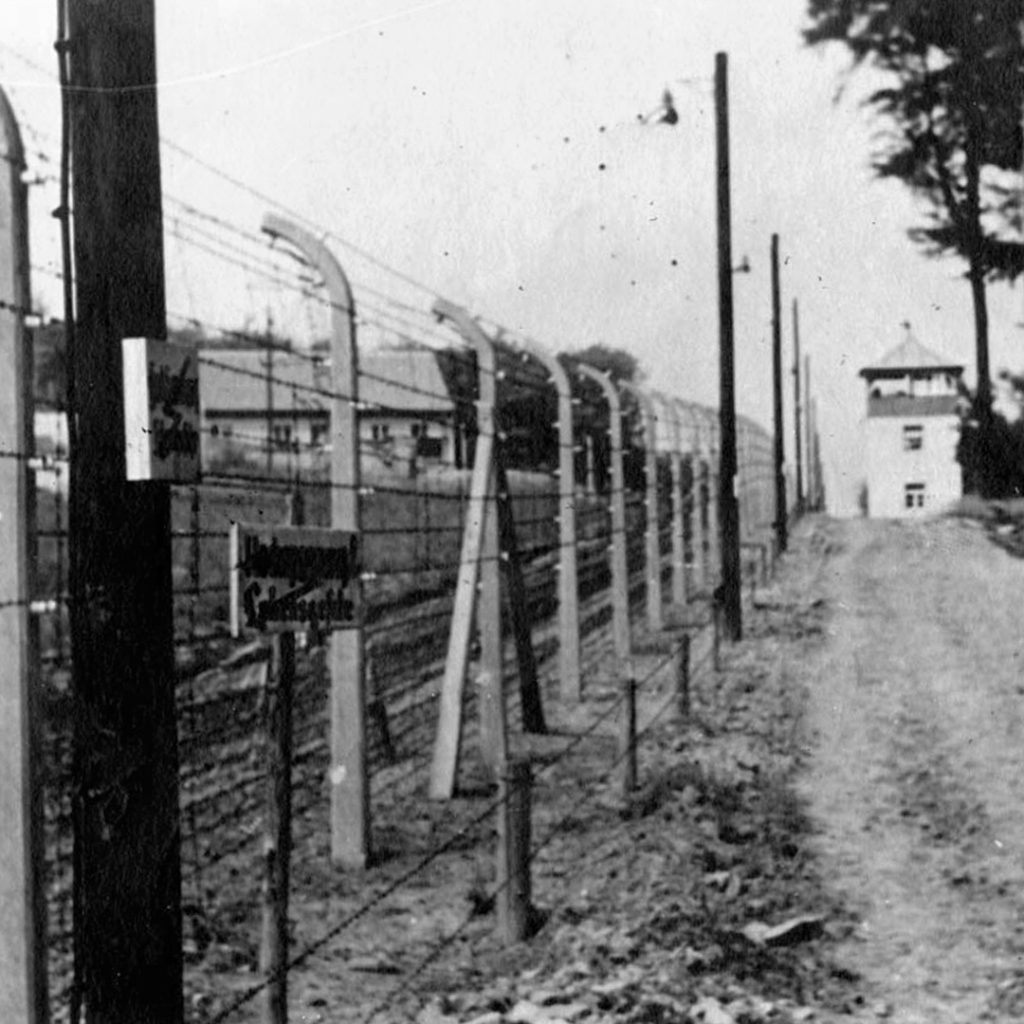
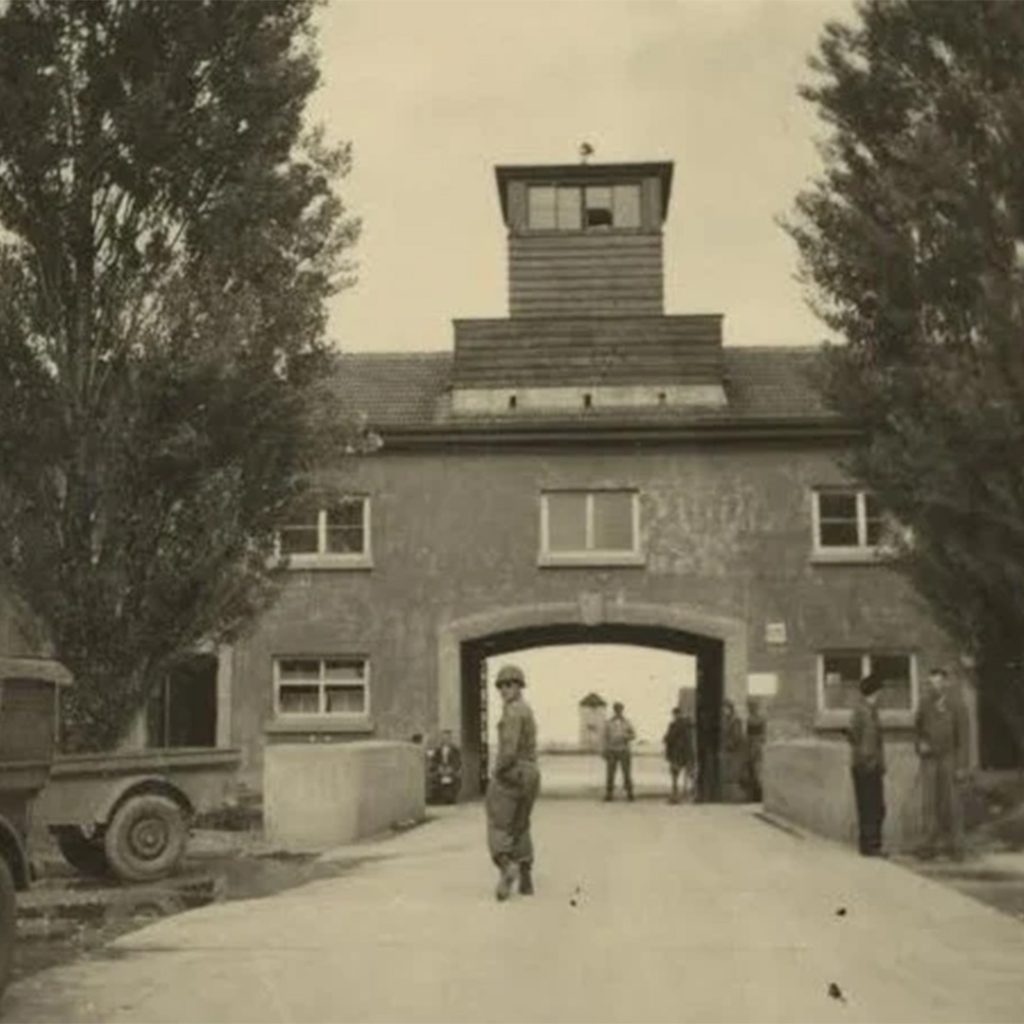
Watch tower and electric fence, Dachau, Germany
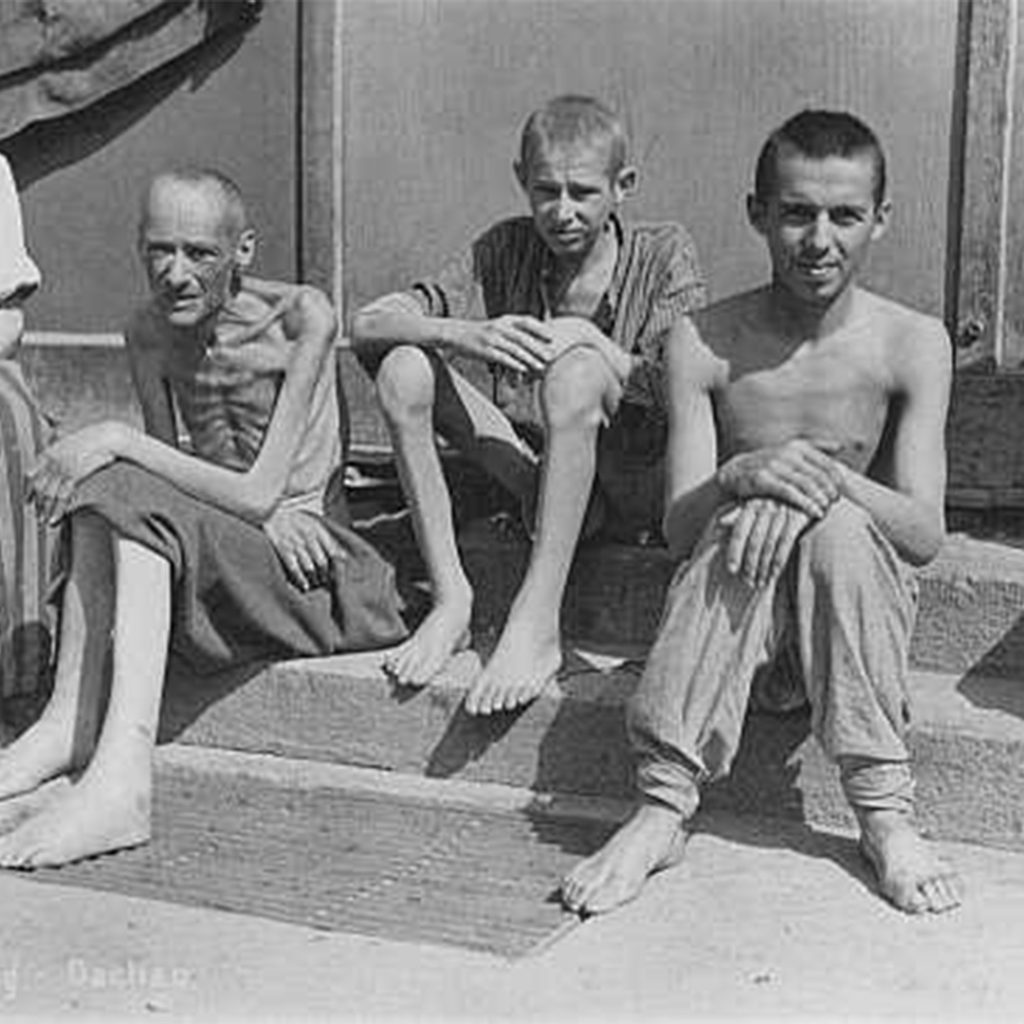
Emaciated survivors soon after liberation, Dachau, Germany, credit Ministere de la Defense
The Roving Battalion
But in the spring of 1945, as the 442nd infantry returned to Italy for one final push, the 522nd was reassigned as a “roving battalion,” ordered to help multiple American units advance deep into Nazi Germany. Over 60 days, the 522nd covered 1,100 miles, fought through 40 towns, and completed 52 different missions. Along the way, they captured enemy soldiers, seized German fighter aircraft, and liberated prisoners — all unheard-of feats for a field artillery unit.
Then came April 29, 1945. As scouts from the 522nd passed through the town of Lager Lechfeld, they stumbled upon a haunting sight: a barbed-wire enclosure. Breaking through the gates, they discovered emaciated prisoners, Jewish prisoners in striped uniforms struggled to stand, shivering in the snow.
“When the gates swung open, we got our first good look at the prisoners,” wrote Technician Fourth Grade Ichiro Imamura. “They were like skeletons — all skin and bones.”
The Horror
It was a sub-camp of Dachau, known as Kaufering IV. Many of the soldiers had never heard the word “Holocaust.” Now they were witnessing it.
Days later, on May 2, near the town of Waakirchen, the 522nd encountered the horrific aftermath of the Dachau Death March. Hundreds of Jewish prisoners, some dead, some barely clinging to life, lay collapsed in the snow, abandoned by fleeing Nazi guards. For the next three days, the Nisei soldiers turned houses and barns into makeshift shelters, covering survivors with blankets and offering food and water until medical teams could arrive.
In total, the 522nd helped liberate about 3,000 prisoners in Bavaria.
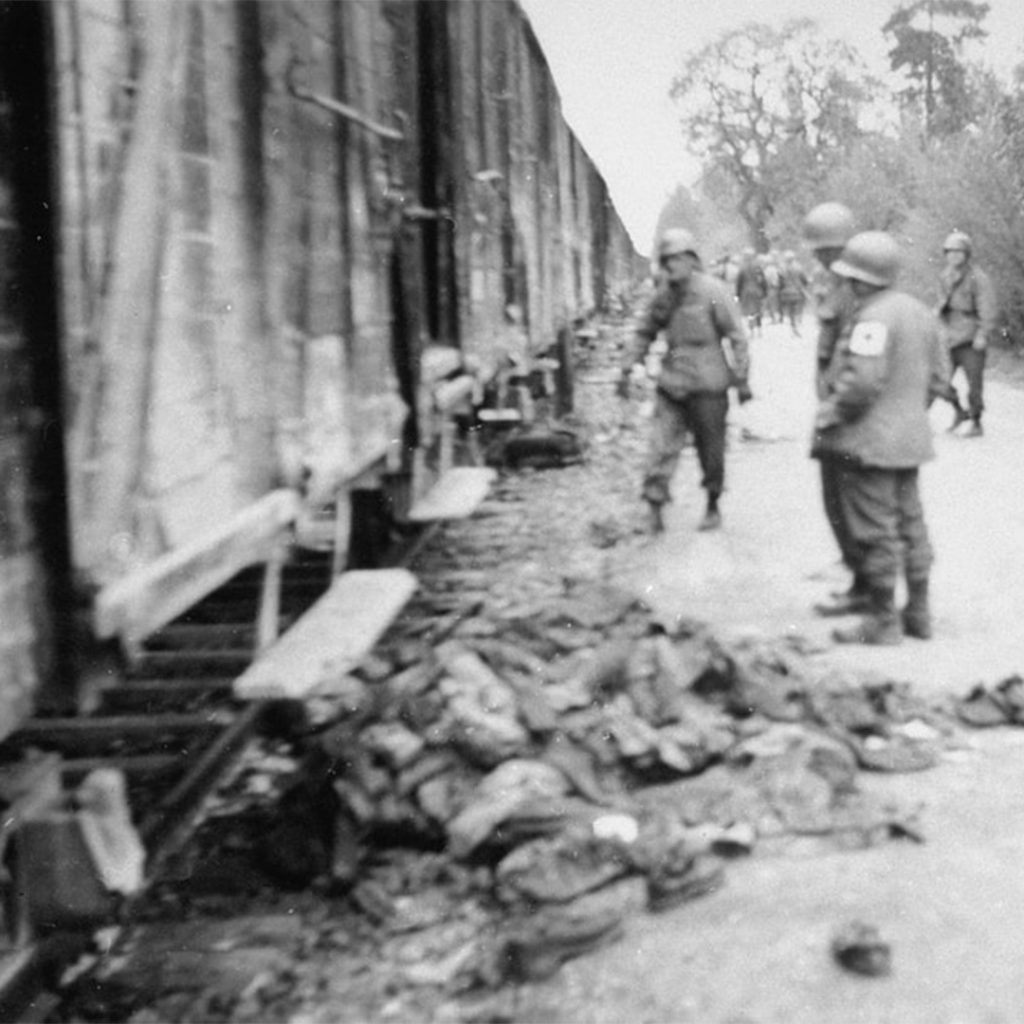
Dozens of dead bodies were discovered by American troops on a train, Dachau, Germany, April 1945, credit API
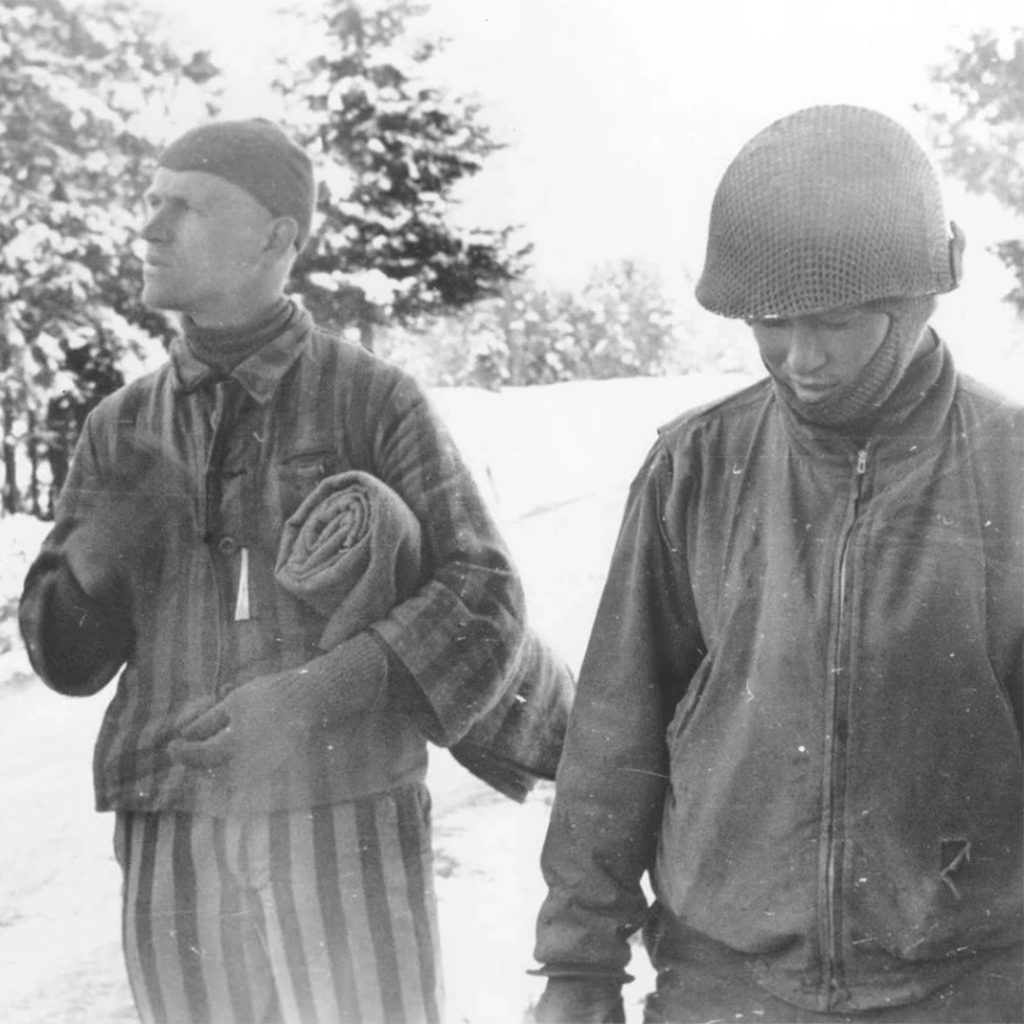
Tahae Sugita of the 522nd Field Artillery Battalion with camp survivor, Dachau, Germany, credit USHMM
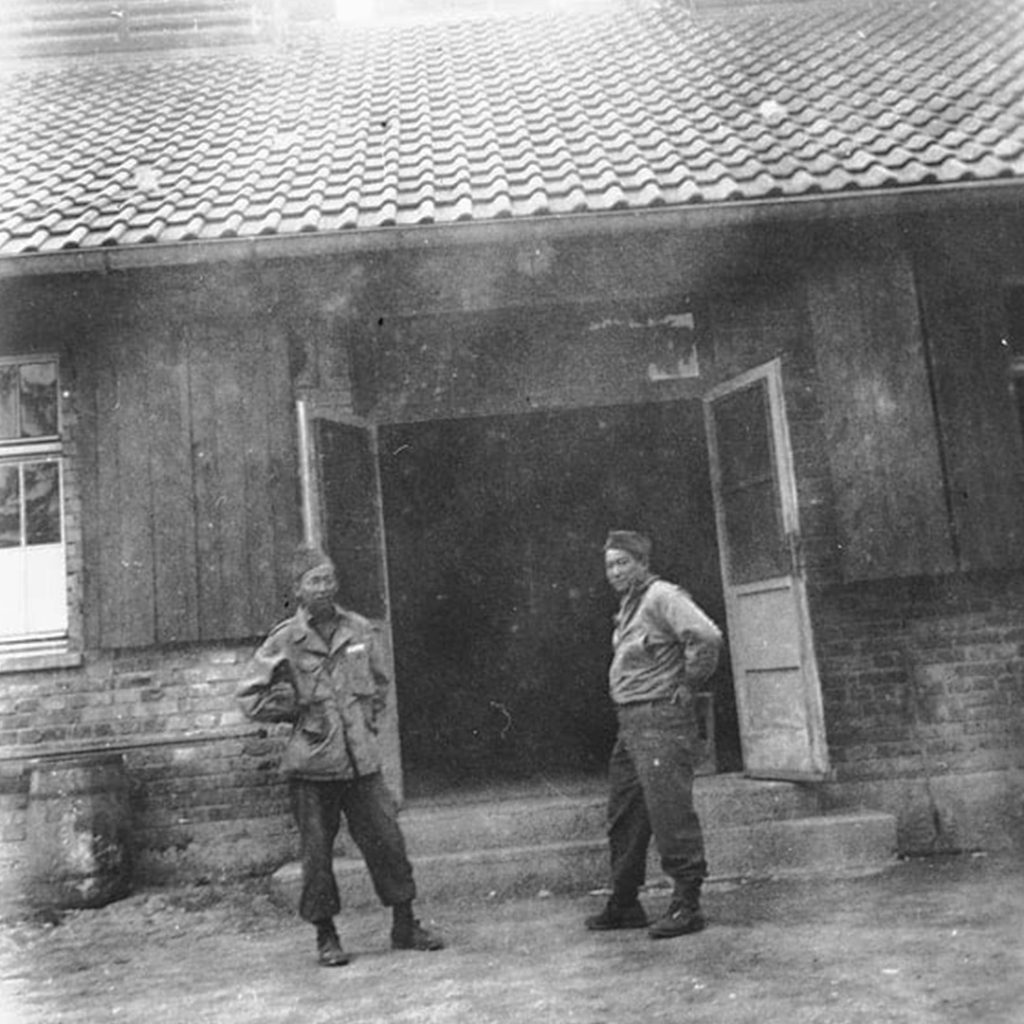
Two soldiers of the 522nd Field Artillery Battalion stand in front of the crematorium, Dachau, credit USHMM
A photo taken by Sus Ito, on the back is written, "Dachau Prison Camp," credit Japanese American National Museum
Classified and Unspeakable
Despite the enormity of what they had witnessed, the men of the 522nd rarely spoke about it after the war. Some were haunted by the memories. Others were ordered not to. Their encounter with the Holocaust was officially classified. Silence became both a personal burden and a government mandate.
It remains one of the greatest ironies of World War II:
Japanese American soldiers liberated Nazi death camps, even as their own rights were denied at home.
And on May 2 2025 we have inaugarated new Monument next to the Death March Monument at Waakirchen, exactly 80 years after the 522nd Field Artillery Bataillon have liberated them.
And on May 2 2025 we have inaugarated new Monument next to the Death March Monument at Waakirchen, exactly 80 years after the 522nd Field Artillery Bataillon have liberated them.
Search for Waakirchen, Nisei and May 2 2025
Thank you for your work in remembrance. It means a lot that these stories continue to be honored:
https://java-us.org/newsletters/java-special-edition-the-80th-anniversary-of-v-e-day-series-part-2/