It was unusual for a white woman to visit the incarceration camp. Particularly since it was her husband who put them there.
April 23, 1943: Eleanor Roosevelt visits Gila River War Relocation Center
It was unexpected that the visitor was the First Lady of the United States. Plus, the person who created those camps — was her husband.
President Franklin D. Roosevelt had signed Executive Order 9066, setting in motion the forced removal and incarceration of over 120,000 Japanese Americans. But Eleanor Roosevelt, despite FDR’s own objections, made her way to Gila River War Relocation Center to see it for herself.
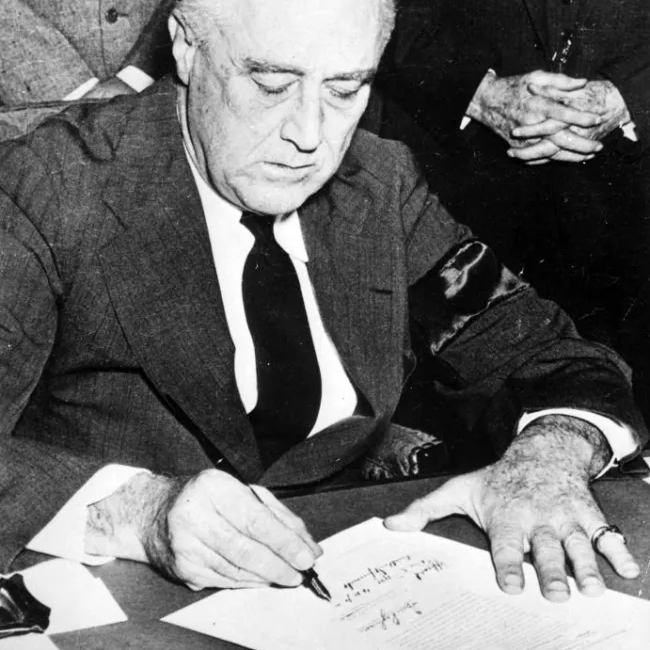
February 19, 1942 — Franklin Roosevelt signs Executive Order 9066, setting in motion the mass incarceration of over 120,000 Japanese Americans during WWII
Gila River War Relocation Center during WWII. First Lady Mrs. Roosevelt after her visit was quoted saying, “I wouldn’t like to live that way.”
Eleanor Roosevelt receiving flowers from Mrs. Yamamoto at the Gila River War Relocation Center, April 23, 1943
Mrs. Roosevelt was advocating for Japanese Americans even before Executive Order 9066, January 1942
What she saw disturbed her. She met with incarcerees, witnessed their living conditions, and spoke out publicly against the policy. She wrote:
“We have no common race in this country, but we have an ideal to which all of us are loyal.”
Eleanor Roosevelt used her platform to push back — advocating for closing the camps, championing civil rights, and questioning whether fear had overridden American values.
She stood up, even when it meant going against her own husband. Even when it meant walking into a prison camp built by her own government. Even when most Americans chose to stay silent.
She continued her commitment to racial justice throughout her life. Years later, Dr. Martin Luther King Jr. would reflect on her legacy, saying:
“Her life was one of the bright interludes in the troubled history of mankind.”
Eleanor Roosevelt fought for human rights during the time it was considered incredibly dangerous to do so
Mrs. Roosevelt was also an early member of the NAACP
Mrs. Roosevelt and WRA Director Dillon Myer visiting Gila River War Relocation Center